SIGGRAPH Asia 2024 Convenes in Tokyo, Charting the Future of Computer Graphics Amidst AI Revolution


Tokyo, Japan – The global vanguard of computer graphics, animation, and interactive techniques converged in Tokyo for SIGGRAPH Asia 2024, an event that underscored the rapid evolution of the field, particularly under the pervasive influence of artificial intelligence. Held from December 10-13, 2024, at the Tokyo International Forum, the conference served as a pivotal platform for leading researchers, innovators, and industry professionals to unveil groundbreaking discoveries, dissect emerging trends, and forge the collaborations that will define the next generation of digital media. This year’s gathering provided a comprehensive look at how disciplines from computer vision to robotics are intertwining with traditional computer graphics, all while navigating the transformative power of generative AI. The vibrant Tokyo backdrop also facilitated crucial after-hours networking, proving that some of the most impactful ideas are often born outside the formal sessions.

A Legacy of Innovation: SIGGRAPH’s Enduring Relevance
Since its inception in 1974, SIGGRAPH (Special Interest Group on Graphics and Interactive Techniques) has been the premier international conference on computer graphics and interactive techniques, continuously pushing the boundaries of visual computing. SIGGRAPH Asia, established in 2008, extends this legacy to the Asia-Pacific region, a dynamic hub for technological innovation and digital content creation. The annual event alternates locations across major Asian cities, with Tokyo having previously hosted, highlighting the region’s significant contributions to the global CG landscape. The conference is renowned for its rigorous peer-reviewed technical papers, avant-garde art installations, emerging technologies showcases, and an expansive exhibition floor, making it a crucial barometer for industry direction. This year’s Tokyo edition, led by Conference Chair Professor Takeo Igarashi, further solidified its reputation as a nexus for interdisciplinary dialogue, attracting a diverse array of minds from academia and industry.

Generative AI: The Unifying Force
The overwhelming sentiment among this year’s attendees and featured experts was the unprecedented impact of generative AI. Professor Takeo Igarashi, Conference Chair and a distinguished figure in human-computer interaction, succinctly stated, "generative AI changes everything." This sentiment resonated throughout the technical sessions and discussions. The rapid advancements in AI, particularly in areas like text-to-image and text-to-3D generation, are fundamentally altering content creation workflows, democratizing access to complex tools, and shifting the very "value system" of how digital content is produced and consumed. This paradigm shift was a central theme, explored not just in its technical intricacies but also in its broader implications for creativity and industry structure.

Professor Ariel Shamir, Technical Papers Chair, noted that AI has virtually "taken over" the field of computer vision, a foundational component of computer graphics. This integration means that many traditional computer vision problems are now being tackled with AI-driven solutions, leading to more robust and sophisticated graphic applications. From enhancing image quality to automating complex animation tasks, AI’s presence is pervasive. Professor Yuki Ban, Emerging Technologies Chair, further emphasized that generative AI has become a "very hot topic," appearing across diverse emerging technologies from VR to AR and haptics, signaling its widespread adoption and integration into future interactive experiences.
Bridging Disciplines: Graphics, Robotics, and Beyond

Beyond AI’s overarching influence, SIGGRAPH Asia 2024 highlighted a growing trend towards the convergence of computer graphics with other scientific and engineering disciplines. Professor Ruizhen Hu, Technical Communications Chair, underscored the "definitely the trend of combining computer graphics with robotics." Traditionally, graphics research might have been perceived as solely for "games and video," struggling to secure substantial funding in some regions. However, the application of computer graphics technologies to boost robot intelligence and improve human lifestyles is changing this perception, making it a vital area for societal and industrial advancement. This integration encompasses sophisticated path planning for autonomous systems, object recognition, and even human-robot interaction design, moving CG beyond entertainment into critical real-world applications.
The conference also celebrated the interdisciplinary nature of computer graphics, a quality that Professor Ariel Shamir finds particularly appealing. He noted, "What I like about the environment is the interdisciplinary nature. They have, of course, science, which is where I fit in. But they also have a lot of art. And this mixture of people is what draws me to these types of conferences." This blend of scientific rigor and artistic expression was evident in sessions that showcased everything from physically accurate simulations to stylized rendering techniques inspired by traditional art forms.

Japanese Content and Global Interpretations
Ken Anjyo, Featured Sessions Chair, provided a fascinating perspective on the state of computer graphics in Japan, particularly concerning the collaborative and innovative approaches to iconic Japanese intellectual properties. He highlighted the "new stream of Japanese content such as Shogun or Ultraman Rising." While Ultraman’s concept originates from Japan, Ultraman Rising represents a "new interpretation," often involving international collaboration in its production. Conversely, the critically acclaimed Godzilla Minus One was a testament to the capabilities of a single Japanese company, Shirogumi, which began with models and miniatures, showcasing the enduring power of homegrown talent and technical expertise. Anjyo’s curation of featured talks included insights from Godzilla Minus One‘s CG Director, emphasizing the blend of traditional craft and cutting-edge digital techniques. This dynamic interplay between local innovation and global collaboration is a hallmark of Japan’s contribution to the CG world.

Voices from the Frontier: Expert Perspectives
The core of SIGGRAPH Asia 2024 lay in the dialogues and insights from its leading minds. Six key players offered their unique perspectives on the current landscape and future trajectory of computer graphics.

Professor Takeo Igarashi: Reshaping Human-Computer Interaction
Professor Igarashi’s tenure as Conference Chair perfectly positioned him to observe the sweeping changes brought by generative AI. He elaborated on the shift from experts spending hours to create content to the current ease with which anyone can generate images or 3D models. His previous groundbreaking work, such as TEDDY (1999), a sketch-based 3D modeling system, was revolutionary for simplifying 3D content generation, which was once exceedingly complex. TEDDY’s intuitive interface, allowing users to draw 2D outlines that were instantly extruded into 3D forms, democratized 3D design in its era. Today, while AI handles many of those "easy content creation" tasks, Igarashi’s research interest has evolved to the "earlier stage to help people actually conceptualize what they want." This involves empowering individuals at the very genesis of their creative process.

Regarding human-computer interaction (HCI), Igarashi envisions two coexisting futures: one where computers become "invisible," augmenting humans like a "part of the body or brain" to create "superhuman" capabilities, and another where computers remain distinct tools or "agents." This dualistic view acknowledges the complex relationship between human agency and technological integration, suggesting that different contexts will call for different interaction paradigms.
Ken Anjyo: Blending Artistry and Engineering

Ken Anjyo’s distinguished career, spanning visual computing and differential geometry in graphics, exemplifies the art-meets-science ethos of SIGGRAPH. He described his work as "merging of 3D models naturally with the hand-drawn," developing "sophisticated tools to control light and shade" to achieve a "cartoon look" that feels hand-drawn. His approach to making complex concepts engaging, even to young learners, involves showcasing the "effect, the end result of the ideas," rather than abstract theory.
As Featured Sessions Chair, Anjyo highlighted sessions demonstrating how to integrate generative AI into production workflows, such as Director Shinji Aramaki’s talk on generative AI in film, and NVIDIA’s presentation on digital human techniques. He drew a parallel to his own 1995 SIGGRAPH paper on character walking, which used "heuristic" methods to control walk "briskness." Today, AI offers more advanced solutions for similar challenges. Anjyo’s personal journey from engineer to artist is particularly inspiring. He recalled working with Studio Ghibli on Princess Mononoke, where he developed a unique GUI to automate background animation from still images (presented at SIGGRAPH 97), a task now made simpler by AI. His passion for both technical innovation and artistic expression is deeply rooted in this early collaborative spirit.

Dylan Sisson: RenderMan’s Enduring Creative Frontier
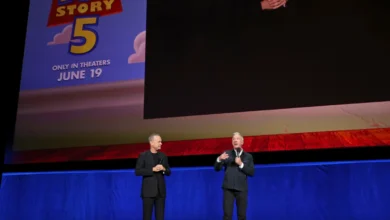
Dylan Sisson, a key figure at Pixar Animation Studios and the creator of the RenderMan Walking Teapot, offered a rich historical perspective on RenderMan’s influence. He explained how RenderMan, powered by the REYES (Renders Everything You Ever Saw) algorithm and micropolygon rendering, fundamentally expanded filmmakers’ storytelling capabilities. Early films like Toy Story (plastic toys) and Jurassic Park (scaly creatures) were crafted within the technological limitations of their time, yet maximized the new opportunities RenderMan provided, such as rendering "massive amounts of geometry with motion blur that was anti-aliased and composited into live action." Sisson also noted the invention of the alpha channel as one of the critical technologies that emerged from RenderMan’s development.

In the era of real-time rendering engines like Unreal, Sisson articulated RenderMan’s continued relevance: its focus on "that race towards the top and the most complex images with the most creative flexibility." While real-time rendering involves compromises and pre-computation, offline renderers like RenderMan excel at achieving the "final 10% or 5%" fidelity through "full on path tracing." Pixar’s ongoing innovations, such as creating characters from "volumes" rather than polygonal meshes (seen in Elemental), exemplify RenderMan’s commitment to pushing creative boundaries. Sisson emphasized empowering artists with "fast feedback" and "direct ability… to do new things," allowing animators and lighters to see final ray-traced reflections and simulations (hair, rain, snow) directly, fostering a more collaborative and efficient creative flow.
Professor Ariel Shamir: Curating and Personalizing the Digital World

Professor Ariel Shamir, known for his work intersecting graphics, vision, and machine learning, highlighted the challenge of SIGGRAPH’s growing popularity, leading to a record number of submissions and longer "fast forward" sessions. His research, including "Prompt Aligned Personalization of Text-to-Image Models," focuses on making generative AI more accessible. He explained that while models like DALL-E generate images from text, they struggle with "complex prompts" and "personalization" (generating specific subjects like pets or friends). His paper offers a solution for creating "highly detailed, complex images that are also personalized."
Shamir’s deep appreciation for Japanese culture and aesthetics, influenced by his time as a visiting professor at the University of Tokyo and collaboration with Takeo Igarashi, subtly informs his work on art and abstraction. His extensive patent portfolio, spanning driving performance to 3D modeling, stems from a profound curiosity and years of consulting for companies like Disney and Google. His "Story Albums" project at Disney, conceived before the advent of LLMs, aimed to transform personal photos into fictional narratives, giving new life and meaning to often-unseen memories, demonstrating a longstanding interest in computational storytelling.

Professor Ruizhen Hu: Robotics with Graphic Intelligence
Professor Ruizhen Hu’s work at Shenzhen University exemplifies the convergence of computer graphics and robotics. She discussed "PC Planner," a novel robot path planning method that aims to solve the Eikonal equation to find the shortest path efficiently. Unlike traditional sample-based methods that struggle with the "curse of dimensionality" in high-dimensional configuration spaces (e.g., a 20-dimension robot arm), PC Planner computes a gradient direction from a "time field" to navigate directly. While currently assuming a static environment, Hu acknowledged the crucial future challenge of dynamic environments, especially for applications like navigating "very crowded" cities like Tokyo, requiring "quick feedback and adjust[ed] strategy."

Her research also extends to high-level planning, using Large Language Models (LLMs) to enhance "household rearrangement." This involves analyzing scene graphs, understanding object context, and even inferring "personal preference for where those objects should go" to make intelligent decisions about tasks. Hu’s advice to young researchers — to "step out of your comfort zone, maintain your persistence, and really try to find something that can utilize your expertise" — reflects her own journey in combining geometric modeling with robotics.
Professor Yuki Ban: Illusions and Human Perception

Professor Yuki Ban, from the University of Tokyo, delves into the fascinating world of "cross-modal display" and illusions. She uses examples like Japanese kakigori (shaved ice) to illustrate how visual cues (color) and smell can alter the perception of taste, a classic cross-modal effect. Her work applies psychological illusions to engineering displays, such as using different images for each eye to create novel perceptions. Her current applications include entertainment, creating "magic effects or elements for horror" in VR, AR, or glasses-free 3D panels.
Ban’s research for the coming year focuses on "thermal grill" techniques and "making users perceive bright light in VR" by replicating bodily responses to intense stimuli, like afterimages. This creates powerful illusions that enhance virtual experiences. A significant achievement in her career is the "Fufuly" breathing cushion, a product born from her research on mimicking abdominal movements of deep breathing. This device, which helps users unconsciously synchronize their breathing for relaxation, moved from research to full production in 2018 and officially launched in September. This practical application of illusion and bio-feedback technology highlights Ban’s commitment to "making small but meaningful improvements in the world."

SIGGRAPH After Hours: The Unofficial Catalyst
While the formal sessions showcased cutting-edge research, the vibrant after-hours events in Tokyo proved equally crucial for fostering innovation and collaboration. These informal gatherings, echoing Ariel Shamir’s appreciation for SIGGRAPH’s interdisciplinary nature, created a dynamic melting pot of ideas. The first reception party, bustling with attendees, saw long lines for food but an even longer flow of conversations.

The Speakeasy event, a popular networking hub, was packed. Sergey Morozov from MARZA, a prominent animation studio, connected with a Canadian developer leading projects for the BC Attorney General’s Ministry, whose impressive photography and creative ventures added an unexpected dimension to the evening. Kasagi Natsumi, also from MARZA, focused on networking during her first experience with the party circuit. She met Frank Rousseau of CGWire, whose Kitsu project management tool is gaining traction among studios, and Gaku Tada, a Japanese developer known for his Deep Paint plugin and visual artistry at major studios like Digital Domain and ILM.
A serendipitous encounter brought Sergey and Kasagi together with Masha Ellsworth, a Lead TD from Pixar and another Ukrainian expat. Ellsworth shared invaluable insights into animation studio hiring practices, emphasizing that timing often dictates opportunities more than individual merit, offering a realistic perspective to aspiring professionals. Her appreciation for Japanese animation, particularly Chi’s Sweet Home, and her interest in MARZA’s Samurai Frog Golf, further exemplified the global cultural exchange facilitated by the event. These informal connections, where new friendships are forged and ideas freely exchanged, often lay the groundwork for future collaborations and innovations that drive the industry forward.

The Future Landscape: Accessible, Intelligent, Immersive
SIGGRAPH Asia 2024 painted a clear picture of a future in computer graphics that is more accessible, intelligent, and immersive than ever before. Generative AI is not merely a tool but a transformative force, reshaping creative workflows and challenging traditional notions of authorship. The integration of computer graphics with robotics promises practical applications that extend beyond entertainment, impacting industries and daily life. The emphasis on user experience, whether through intuitive interfaces, personalized content generation, or cross-modal illusions, signals a human-centric approach to technological advancement.

The discussions around RenderMan’s evolution highlight the continuous pursuit of artistic fidelity and creative control, even as real-time technologies gain prominence. The insights from Japanese content creators showcase a blend of cultural heritage and global collaboration, proving that unique national narratives can find universal appeal through cutting-edge CG. Ultimately, SIGGRAPH Asia 2024 reinforced that the field of computer graphics remains a vibrant, multidisciplinary frontier, where scientific discovery and artistic expression continually inspire and redefine each other.
As the curtains closed on a successful Tokyo conference, the anticipation for future gatherings was palpable. SIGGRAPH 2025 is set to take place in Vancouver, Canada, while SIGGRAPH Asia 2025 will bring the innovation to Hong Kong, promising continued advancements and further groundbreaking discussions in the dynamic world of computer graphics.