The Evolution of the 3D Asset Pipeline
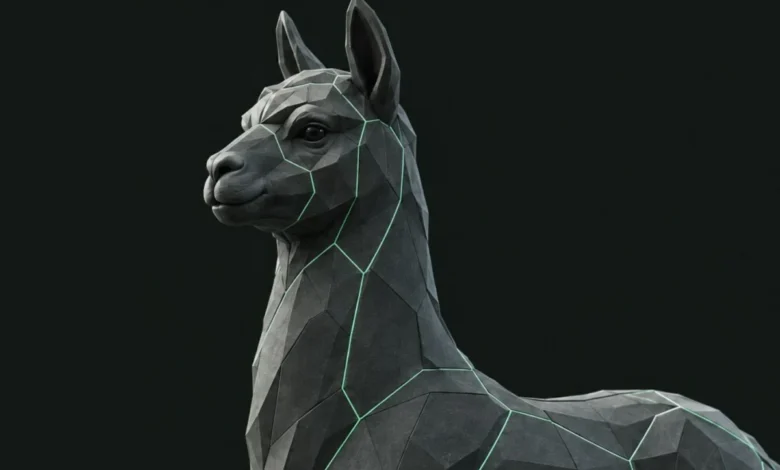
In the contemporary digital art landscape, the workflow between high-poly modeling and production-ready assets has historically been a multi-stage, multi-software process. Artists typically create complex, high-resolution models in packages such as ZBrush or Blender, which then require "retopology"—the process of creating a clean, lower-polygon mesh that mimics the form of the original. Following this, the model must be "unwrapped," a process known as UV editing, to ensure textures can be mapped onto the surface correctly. Finally, texture baking involves projecting the detail from the high-poly model onto the low-poly version through normal, ambient occlusion, and displacement maps.
For years, this process has necessitated jumping between different pieces of software, each with its own interface, hotkeys, and export/import settings. This fragmentation often leads to file corruption, loss of metadata, or simple time inefficiency. Alpaca3D addresses this by consolidating these three distinct pillars of 3D production into a single, streamlined application. The introduction of dedicated bridges for Blender and Maya further signals an understanding of the current industry standard, where artists rarely work in a vacuum but rather rely on a suite of interconnected tools.
Development Chronology and Software Architecture
The development of Alpaca3D has been marked by an iterative, community-driven approach. Stanislav Maraculin, the lead developer, has focused on a lean, performance-oriented architecture designed to handle the heavy computational requirements of retopology and baking. Unlike massive, all-encompassing DCC (Digital Content Creation) suites that are prone to bloat, Alpaca3D is purpose-built.
Early development focused on establishing a stable bridge between the software and industry-standard programs like Blender and Maya. The ability to export a high-poly mesh, perform retopology within a dedicated environment, and immediately bake maps without leaving the application environment allows for a non-destructive workflow that is increasingly favored in high-end game production. Recent updates have focused on refining the UV packing algorithms, ensuring that artists can maximize their texture space usage—a critical factor for optimizing performance in modern video games where texture memory is a finite resource.
Technical Specifications and Toolset
Alpaca3D operates on a workspace-driven interface, divided into three core modules:
- Retopology Workspace: This module provides tools for creating optimized geometry. It includes automatic retopology features as well as manual snapping tools, allowing users to define edge flows that are critical for character animation and deformation.
- UV Editing Workspace: This section focuses on the flattening of 3D meshes into 2D coordinates. Efficient UV packing is the hallmark of this workspace, providing tools that automate the arrangement of UV shells to minimize wasted space on the texture map.
- Baking Workspace: The final stage of the pipeline, this module uses ray-casting technology to project the geometric complexity of the high-poly source onto the low-poly destination. It supports standard map types, including Normal, Ambient Occlusion, Curvature, and Position maps.
The software is exclusively compatible with Windows, utilizing the platform’s widespread adoption in the gaming industry to ensure that the bridges for Maya and Blender are highly responsive.
Market Context and Data Analysis
The release of Alpaca3D arrives at a time when the "democratization of 3D" is a major trend in the technology sector. According to market research on 3D software usage, the global 3D rendering and design market is projected to grow significantly over the next five years, driven by the expansion of the Metaverse, VR/AR integration, and the increasing complexity of game assets.
However, the cost of entry for professional-grade software remains high. Subscription models for major industry suites can exceed thousands of dollars annually, creating a barrier for independent creators and small-to-medium-sized studios. By positioning Alpaca3D as a free tool—supported by voluntary contributions through platforms like Patreon—Maraculin is tapping into a growing movement of open-source and community-supported software that challenges the dominance of expensive, proprietary solutions.
Data from similar community-funded projects suggests that such tools often gain rapid traction when they solve a "pain point" rather than attempting to replace an entire software suite. The ability to integrate with existing, established pipelines (Blender/Maya) rather than forcing a "rip-and-replace" transition is a strategic move that significantly lowers the adoption threshold for professional artists.
Impact on Professional Workflows
The implications for professional studios and freelance artists are noteworthy. For a freelancer, reducing the time spent on technical "prep work"—the repetitive and often tedious tasks of UV unwrapping and baking—can translate to a direct increase in billable hours or creative capacity. In a high-pressure studio environment, where assets must be produced to strict technical specifications (such as polygon budgets and texture density requirements), tools like Alpaca3D offer a standardized way to ensure all artists are delivering consistent, optimized assets.
Furthermore, the integration of bridge plugins means that the software does not disrupt the "source of truth" in the artist’s primary DCC. An artist can continue to model in Blender, use Alpaca3D as a specialized processing unit, and return the finished, baked asset to their scene with minimal friction. This modular approach is becoming the preferred methodology for modern pipeline architects who prioritize flexibility and efficiency.
Community Involvement and Future Roadmap
A defining characteristic of Alpaca3D is its reliance on user feedback. Maraculin has explicitly stated that the tool’s development trajectory is shaped by the community. This feedback loop is facilitated through tutorial series and direct communication channels, where users can request specific features or report technical issues.
This model of development is not merely altruistic; it is highly efficient. By focusing on the features that the community actually uses—rather than adding "feature bloat" that looks good on a marketing brochure but provides little utility—the development team ensures that the tool remains performant and lean. The Patreon page serves as a barometer for this community support, providing the financial runway necessary to continue development while keeping the core software free.
Broader Implications for the 3D Industry
The emergence of niche, high-performance tools like Alpaca3D suggests a shift in how the 3D industry perceives software ecosystems. As the complexity of 3D models increases—partly due to the demand for photorealistic assets in virtual reality and high-end gaming—the need for specialized, modular software will only grow.
If Alpaca3D continues to gain market share, it could influence the development strategies of larger software companies. We may see a push toward more modular architectures in established programs, or a greater emphasis on "bridging" technology that allows different software packages to communicate more effectively. Furthermore, the success of the free-to-use, Patreon-supported model highlights a changing economic landscape for software developers, where user-driven funding provides a viable alternative to traditional licensing models.
Conclusion
Alpaca3D represents a practical, effective solution to a long-standing challenge in the 3D production pipeline. By centralizing the retopology, UV editing, and baking processes into a single, bridge-enabled application, Stanislav Maraculin has provided the digital art community with a tool that values efficiency and workflow integration. As the industry continues to move toward more complex asset requirements, the importance of such specialized, community-backed software will likely continue to increase. For professionals looking to streamline their production and independent artists seeking to professionalize their workflow without the burden of heavy licensing fees, Alpaca3D stands as a compelling, modern alternative.
For those interested in exploring the tool further, the official Alpaca3D website provides comprehensive documentation, while the associated YouTube channel offers a library of workflow tutorials that demonstrate the software’s capabilities in real-world scenarios. As the project continues to evolve through user feedback and Patreon support, it serves as a testament to the power of community-driven innovation in the rapidly evolving world of 3D digital creation.