Ilija Brunck and the Evolution of Design-Driven Storytelling at Woodblock

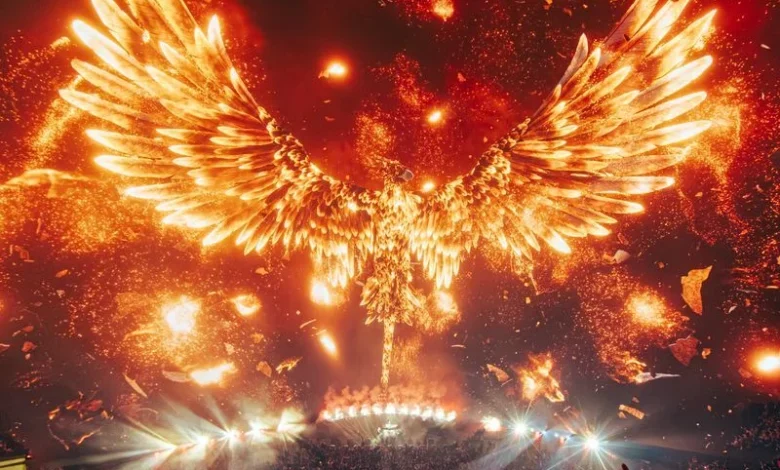
The landscape of contemporary visual storytelling has undergone a seismic shift, moving away from purely technical spectacle toward a more nuanced, design-first philosophy. At the center of this evolution stands Ilija Brunck, the CEO and co-founder of the Berlin-based studio Woodblock. By bridging the gap between high-concept experimental shorts and large-scale commercial output for global tech and entertainment giants, Brunck has helped redefine how studios approach the synthesis of narrative and technology. His trajectory—from the hallowed halls of the Filmakademie Baden-Wuerttemberg to the avant-garde frontiers of the Las Vegas Sphere—serves as a case study in the power of creative discipline in an increasingly automated production environment.
The Foundation: Academic Roots and Early Recognition
The genesis of Woodblock lies in the collaborative environment of the Filmakademie Baden-Wuerttemberg, one of the world’s most prestigious institutions for film and digital media. Brunck, alongside co-founder Uli Staiger, established the studio with a mandate to prioritize visual integrity over the common industry trap of "feature creep"—the tendency to rely on technical complexity at the expense of narrative clarity.
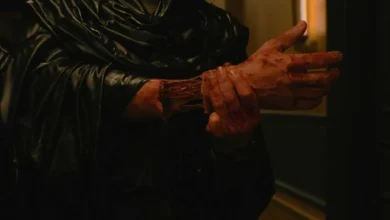
This philosophy was codified early through a series of seminal short films that garnered international acclaim. Works such as Loom, 458nm, and Bye Bear provided a blueprint for the studio’s signature aesthetic: a masterful balance of emotional weight, often centering on themes of mortality and existential introspection, supported by a minimalist yet precise visual language. These projects were not merely technical exercises; they were narrative investigations. Their recognition at major industry forums—including the Ars Electronica Festival, where the studio earned a Golden Nica, and SIGGRAPH, which awarded them Best in Show—signaled to the broader animation industry that Woodblock was an entity to be watched.
Chronology of Creative Expansion
The progression of Woodblock’s portfolio reveals a deliberate, strategic expansion. Following the success of their independent shorts, the studio began to attract high-profile commercial partnerships.
- 2006–2010: The formative years. Development of the core studio philosophy and production of experimental shorts that established their reputation for "deceptively simple" visual design.
- 2011–2018: The commercial pivot. Leveraging their reputation for design, Woodblock secured contracts with major global entities including Microsoft, Nike, and Apple. During this period, the studio refined its ability to deliver premium content across various formats, from traditional broadcast to digital campaigns.
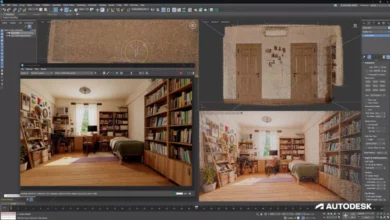
- 2019–2022: The shift toward real-time workflows. As the industry moved toward interactive media and game-engine-driven production, Woodblock adapted its pipeline to integrate real-time rendering, facilitating faster iteration cycles without sacrificing quality.
- 2023–Present: The immersive era. The studio’s recent engagement with the Las Vegas Sphere represents a culmination of its long-standing focus on spatial storytelling and large-format digital environments.
The Sphere and the New Frontier of Immersive Cinema
The most significant inflection point in Brunck’s career, and by extension Woodblock’s history, is the studio’s deep involvement in large-scale immersive projects at the Las Vegas Sphere. The Sphere, a 160,000-square-foot LED display, presents an unprecedented challenge for visual artists: the requirement to move beyond the frame and account for a fully wraparound, 12K resolution, immersive environment.
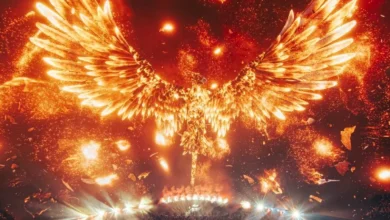
Woodblock’s contribution to Anyma: The End of Genesys was a critical test of their ability to scale character-driven storytelling to a massive architectural canvas. Following this, the collaboration with Illenium for Odyssey showcased a 90-minute, fully CG cinematic experience that challenged the limits of current production pipelines. The project required a year of intense development, involving partnerships with The Third Floor and Silent House. The result was not just a film, but a continuous environment that functioned as a singular, immersive entity, viewed by tens of thousands of audience members nightly.
Industry analysts note that this shift to "spatial-first" production requires a fundamental change in how animators approach camera movement and composition. Traditional cinematic rules—such as the 180-degree rule or standard focal lengths—must be re-evaluated when the viewer can look in any direction. Brunck’s ability to guide his team through this transition highlights his role as not just a CEO, but a creative director who understands the physics of digital space.
Sustainable Production and Industry Influence
Amidst the rapid adoption of AI-generated assets and the increasing bloat of large-scale production pipelines, Brunck has emerged as a vocal advocate for "agile production." He frequently argues that the future of the industry lies in smaller, highly specialized teams rather than massive, bloated departments. By prioritizing clear, intentional design at the pre-production stage, Woodblock has successfully minimized the "fix-it-in-post" mentality that leads to spiraling costs and environmental waste in digital media.
This stance on sustainability extends to his work with the Filmakademie Baden-Wuerttemberg. By mentoring the next generation of artists, Brunck is ensuring that the industry’s future talent pool is trained in a methodology that values efficiency and conceptual depth over raw computational output. His international panel presence has served as a platform to disseminate these views, challenging the status quo in a field that often prioritizes technical trends over long-term creative health.
Analytical Implications: Design vs. Spectacle
The success of Woodblock offers a clear insight into the current state of the global animation market. While major studios often face diminishing returns on "spectacle-heavy" productions, Woodblock’s consistent ability to deliver design-driven stories suggests a market pivot. Consumers and corporate clients alike are increasingly seeking work that possesses a distinct, hand-crafted "voice."
Furthermore, the studio’s ability to transition from short-form shorts to 90-minute immersive cinematic experiences suggests that their foundational approach to storytelling is highly scalable. The reliance on real-time rendering and collaborative, cross-studio pipelines (as seen in the Odyssey project) indicates that the future of large-scale production will be defined by interoperability. Studios that can effectively bridge the gap between creative storytelling and complex technical infrastructure—as Brunck has done—will likely lead the next decade of digital content creation.
Conclusion: A Legacy in Motion
Ilija Brunck’s career trajectory is characterized by a refusal to be siloed. Whether he is producing an experimental short film or navigating the logistical complexities of a 12K-resolution installation in Las Vegas, his focus remains consistent: the story must dictate the technology, never the other way around.
As Woodblock continues to navigate the evolving demands of immersive media and global commercial storytelling, the studio remains a vital reference point for the industry. By maintaining its commitment to education, sustainable production, and design-led narrative, Brunck and his team are not merely participating in the current media landscape—they are actively architecting its future. For those tracking the intersection of art and technology, Woodblock stands as a testament to the fact that, even in an era of unprecedented technical capability, the most powerful tool remains the human ability to craft a compelling, resonant narrative.
As the industry looks toward the next iteration of immersive experiences, the lessons learned from the studio’s transition to the Sphere will likely serve as a foundational manual for future creators. Brunck’s influence, therefore, extends far beyond his own filmography, acting as a catalyst for a more disciplined, thoughtful, and artistically rigorous approach to the craft of digital animation.
Related posts: