Ilija Brunck and the Evolution of Immersive Storytelling at Woodblock


Ilija Brunck occupies a singular position at the intersection of traditional craft and the rapidly evolving frontier of digital media. As the co-founder and CEO of the Berlin-based production house Woodblock, Brunck has spent the better part of two decades steering a studio that refuses to be confined by standard industry silos. By bridging the gap between high-end commercial advertising, narrative short-form animation, and the burgeoning field of spatial computing, Brunck has transformed Woodblock from a boutique collective born out of the Filmakademie Baden-Württemberg into a global powerhouse of design-driven storytelling.
The Origins of a Creative Philosophy
The trajectory of Woodblock began with the collaboration between Brunck and fellow artist Uli Staiger. Emerging from the prestigious Filmakademie Baden-Württemberg—a breeding ground for some of the world’s most innovative animators—the founders sought to build a studio that prioritized intellectual and visual precision over mere technical bravado.
In the mid-2000s, the digital animation landscape was heavily saturated with studios competing to produce the most photorealistic render possible. Brunck and his team, however, took a different approach. They championed a "less is more" philosophy, where the strength of the concept and the resonance of the theme superseded the complexity of the assets. Early shorts such as 458nm, Loom, and Bye Bear became seminal works in the animation community, characterized by a haunting, minimalist aesthetic. These films were not merely exercises in software proficiency; they were explorations of human fragility, life, and mortality, underscored by evocative musical scores that left a lasting impact on audiences at major festivals like SIGGRAPH and the Ars Electronica Festival. The recognition earned—including the Golden Nica and Best in Show awards—solidified the studio’s reputation as a creative force capable of transcending the commercial sector.
Expanding the Commercial Portfolio
While the studio’s experimental work garnered critical acclaim, its commercial operations established its viability. Under Brunck’s strategic guidance, Woodblock began collaborating with industry titans, including Apple, Microsoft, Nike, Netflix, and Greenpeace. Despite the diverse requirements of these global clients, the studio maintained a rigid adherence to design-led storytelling. Whether delivering a 30-second broadcast spot or a digital social campaign, the focus remained on the narrative arc.
This period of growth saw Woodblock successfully navigate the transition from traditional 2D and 3D broadcast work to the complexities of real-time engine integration. By adopting workflows that allowed for faster iteration and tighter collaborative feedback loops, Brunck positioned the studio as a partner for companies that required high-fidelity output within the demanding timelines of modern advertising.
The Shift Toward Large-Scale Spatial Media
The most significant turning point in the studio’s recent history is its entry into the realm of immersive, large-format environments. The emergence of the Las Vegas Sphere—a 160,000-square-foot LED screen—presented a canvas unlike any other in the history of cinema. Designing for the Sphere requires a complete departure from traditional cinematic framing; the audience is not watching a screen; they are inside of it.
Woodblock’s contribution to this space began with Anyma: The End of Genesys. The project required a massive scale-up of production capacity and a complete rethinking of spatial audio-visual synchronization. This was followed by the ambitious 90-minute Odyssey experience for artist Illenium. Produced over the course of 12 months, Odyssey is a fully CG, 12K resolution cinematic journey that envelops the viewer in a 360-degree narrative.
Collaborating with high-profile partners such as Sphere Entertainment Co., The Third Floor, and Silent House, Brunck oversaw a project that pushed the boundaries of real-time rendering and data management. For a project of this magnitude, the data throughput alone necessitated a sophisticated pipeline. The collaboration required managing thousands of assets that had to remain consistent across the massive curved display, ensuring that the visual integrity held up even when viewed from the periphery of the audience’s field of vision.
A Data-Driven Approach to Sustainable Production
Brunck has frequently argued that the increasing complexity of digital production is a vulnerability rather than an asset. He advocates for "agile production," a methodology that encourages smaller, high-functioning teams over bloated, hierarchical structures. By streamlining workflows, the studio aims to reduce the "technical debt" that often plagues large animation projects—where excessive rendering times and overly complex setups hinder the creative process.
From an industry analysis perspective, Brunck’s focus on sustainability is timely. As global production budgets face tightening constraints and the demand for content increases, the ability to produce high-quality work with a smaller carbon footprint and a more efficient team is becoming a competitive advantage. This philosophy is not merely about cost-saving; it is about preserving the clarity of the artistic vision. When teams are smaller and more integrated, the communication between the director and the artists is more direct, which is essential when crafting stories that aim to resonate on an emotional level.
Educational Commitment and Industry Influence
Beyond his work as CEO, Brunck maintains a deep connection to the educational sector. His ongoing involvement with the Filmakademie Baden-Württemberg serves as a bridge between the academic study of animation and the practical requirements of the professional world. By mentoring the next generation of digital artists, Brunck contributes to a cycle of talent development that ensures the industry continues to evolve.
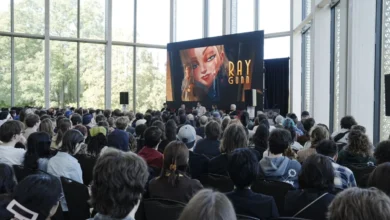
His presence on international panels and at industry conferences highlights a commitment to shaping the future of the medium. Brunck’s stance on the importance of "story-first" production has become a recurring theme in his public addresses, serving as a counterpoint to the trend of prioritizing generative AI and automated tools over human creative direction.
The Future of Immersive Narrative
The work done by Woodblock on the Las Vegas Sphere projects provides a blueprint for what the next decade of entertainment might look like. As immersive technology becomes more accessible—not just in massive venues like the Sphere, but in VR, AR, and mixed-reality applications—the demand for directors who understand spatial storytelling will grow exponentially.
Brunck’s transition from the concise, character-driven shorts of his early career to the massive, multi-sensory spectacles of today illustrates a deliberate progression. While the scale of the projects has increased by several orders of magnitude, the underlying principles remain identical to his earliest work: a focus on controlled visual design, the primacy of the musical and thematic atmosphere, and a dedication to the craft of storytelling.
Summary of Impact
The influence of Ilija Brunck and Woodblock on the digital arts can be categorized through three primary pillars:
- Narrative Consistency: Despite the radical shift in formats—from short films to 12K immersive experiences—the studio has maintained a distinct aesthetic signature.
- Technological Agility: By resisting the trend of industry bloat, Woodblock has proven that high-fidelity, high-impact content can be produced through streamlined, sustainable workflows.
- Pioneering Immersive Formats: Through its leadership on projects like the Sphere’s Odyssey, Woodblock is helping to define the grammar of spatial cinema, a field that is still in its infancy.
As the industry moves toward more interactive and enveloping forms of media, Brunck’s focus on human-centric design suggests that the next phase of digital storytelling will be defined by those who can successfully merge deep technical knowledge with an unwavering commitment to the emotional core of the story. Whether in a 30-second commercial or a 90-minute immersive film, the goal remains the same: to create work that, while technically precise, resonates with the viewer long after the screens go dark.
The studio’s portfolio, spanning nearly two decades, stands as a testament to the idea that the tools may change, but the fundamental requirement for compelling, thoughtful, and expertly crafted narratives remains constant. Through his dual roles as a creative director and a strategic leader, Ilija Brunck continues to be a pivotal figure in the global animation landscape, guiding Woodblock into a future where the line between the viewer and the medium is increasingly erased.
Related posts: