The Best Engagement Photography Locations in Southwest Florida for Stunning Portraits

Southwest Florida, widely recognized as the "Paradise Coast," has become a premier destination for professional portraiture, particularly engagement photography. Stretching from the northern reaches of Fort Myers to the southern tip of Naples, this region offers a diverse topography that ranges from protected coastal ecosystems to historic urban landscapes. As photographers and couples increasingly seek natural, high-quality backdrops for their pre-wedding sessions, the management of state and county parks has become a central point of interest, balancing the preservation of fragile wildlife habitats with the growing demand for commercial photography access.

The Ecological Significance of the Paradise Coast
The region’s appeal lies primarily in its unique environmental conservation efforts. Much of the coastline is maintained as part of an expansive network of state and county parks, which serve as critical habitats for indigenous wildlife. According to data from the Florida Fish and Wildlife Conservation Commission (FWC), the Gulf Coast of Florida is a sanctuary for manatees, bottlenose dolphins, sea turtles, and various avian species, including the American bald eagle.

The integration of these natural elements into photography sessions has elevated the region’s status in the professional wedding industry. Photographers operating in the area note that the "golden hour"—the period shortly before sunset—provides specific lighting conditions over the Gulf of Mexico that are frequently sought after for high-end aesthetic imagery. However, this popularity has necessitated stricter regulatory oversight to ensure that human activity does not disrupt the delicate ecological balance of these preserves.

A Chronology of Access and Regulation
The evolution of photography access in Southwest Florida parks has followed a timeline of increasing popularity and subsequent policy tightening. In the early 2010s, many of these coastal parks were primarily utilized by local residents for recreation. By 2015, the rise of destination wedding photography and social media-driven tourism led to a significant influx of professional crews.

By 2019, major sites such as Koreshan State Park, which hosts a historic, non-denominational settlement dating back to the late 19th century, began implementing rigorous guidelines. These rules were established to protect the structural integrity of the historic buildings and the surrounding vegetation. Currently, regulations across the region prohibit the use of non-biodegradable materials such as confetti, the use of pyrotechnic props like smoke bombs, and unauthorized climbing on rocks or trees. These policies reflect a broader trend in Florida’s park management: prioritizing preservation over commercial utilization.

Regional Photography Hubs: A Comparative Analysis
Lover’s Key State Park (Bonita Springs)
Lover’s Key offers a multi-faceted environment for photographers, including a butterfly garden, a fishing pier, and an extensive beach. The park operates a trolley system for visitor transport, which typically ceases operations at 4:45 PM. While the park provides essential amenities like Wi-Fi and designated parking for an $8 fee, photographers must account for the logistical constraints of the trolley schedule. The site is particularly favored for its "offset" sunset views, which differ from the standard horizon alignment found elsewhere on the coast.

Bowditch Point Park (Fort Myers Beach)
Located at the northern tip of Estero Island, Bowditch Point is noted for its dual-function landscape, offering both lush green spaces and natural beach environments. During the peak of the rainy season, the park experiences a seasonal bloom of native yellow flora, which adds a distinct color profile to portrait sessions. The park is highly regulated, with strict "leave no trace" policies and a requirement that visitors vacate the premises shortly after sunset. Parking is metered at $2 per hour, making it a relatively accessible option for shorter sessions.

Barefoot Beach Preserve (North Naples)
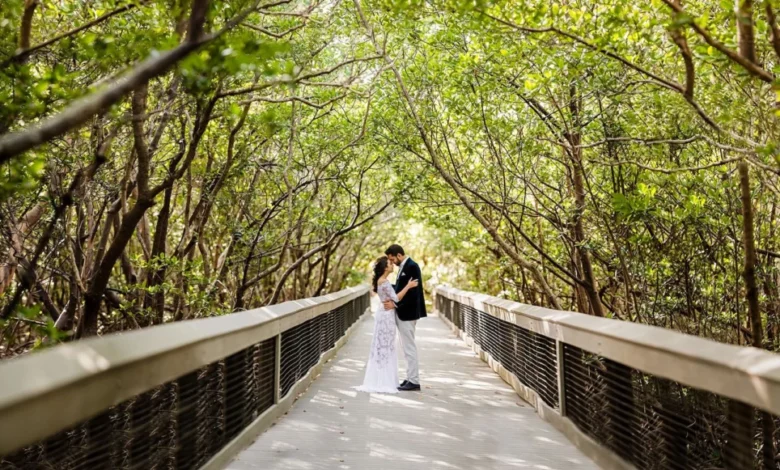
As a component of the Collier County Parks & Recreation system, Barefoot Beach represents one of the few remaining undeveloped barrier islands. The preserve is a vital nesting site for sea turtles, which influences the strict adherence to lighting and noise regulations. For local residents, the county beach sticker offers a cost-effective alternative to the standard $8 parking fee. The location is highly regarded for its variety, featuring boardwalks, dense mangrove forests, and expansive seagrass flats that provide texture and depth to photographic compositions.

Wiggins Pass State Park (North Naples)
Wiggins Pass is recognized for its "old Florida" aesthetic, characterized by a smaller, more intimate shoreline. The park’s character changes significantly with the tides; at low tide, the beach expands, offering more room for equipment and staging. The $8 admission fee covers the entirety of the park’s amenities, which include nature trails and observation areas.

Koreshan State Park (Estero)
Unlike the beach-centric locations in the region, Koreshan offers a historic, inland experience. The park contains preserved 19th-century architecture that provides a structural, moody aesthetic that contrasts with the typical sun-drenched beach look. Given its status as a registered historic site, the park authorities enforce the most stringent rules in the region. Failure to comply with these rules—which include a total ban on set-ups and climbing—can lead to immediate expulsion from the grounds.

Economic and Logistical Implications
The surge in demand for professional photography in these locations has had a measurable impact on local park budgets. Fees collected from parking and permits provide essential funding for the maintenance of these areas. For example, the tiered parking structure in Naples—where visitors pay by the hour or utilize annual resident stickers—helps manage the volume of visitors while ensuring the upkeep of the facilities.

However, the high demand has also led to "crowding," particularly at popular landmarks like the Naples Pier. To combat this, photographers have adopted a strategy of scheduling "sunrise sessions." This shift not only mitigates the impact of crowds on the quality of the portraits but also helps distribute the visitor load more evenly throughout the day, reducing the strain on park resources during the peak evening hours.

Official Responses and Future Outlook
Local authorities and park rangers emphasize that the primary mission of these spaces is conservation. Statements from the Florida Department of Environmental Protection (FDEP) consistently reiterate that commercial activities are permitted only to the extent that they do not infringe upon the "natural, cultural, or historical integrity of the parks."

Photographers are increasingly expected to act as stewards of the environment. The expectation is that any group entering a preserve must practice "Leave No Trace" principles. The professional community has largely responded positively to these requirements, acknowledging that the preservation of these unique backdrops is essential for the longevity of their businesses.

Conclusion: A Sustainable Future for Creative Industry
The synergy between the natural beauty of the Paradise Coast and the professional photography industry is a testament to the region’s enduring appeal. By adhering to the established guidelines—respecting the wildlife, following permit protocols, and maintaining the cleanliness of the sites—photographers and their clients ensure that these locations remain viable for future generations. As the region continues to grow in popularity, the collaborative relationship between park management and creative professionals will remain the defining factor in the sustainability of Southwest Florida as a world-class photography destination. The focus remains on striking a balance: allowing the capture of "perfect" moments while ensuring that the wild, natural heart of Florida remains untarnished by the very attention it attracts.
Related posts: