The Great AI Laptop Paradox: Sorting Through the Hype and Hardware Reality of Modern Creative Computing

The rapid integration of artificial intelligence into consumer electronics has fundamentally altered the landscape of the personal computer market. As manufacturers increasingly pivot toward branding their devices as AI-ready, a clear divide has emerged between marketing terminology and functional utility. This transition, marked by the widespread inclusion of Neural Processing Units (NPUs) and AI-optimized software suites, is forcing a re-evaluation of what constitutes a "high-performance" workstation for creative professionals.
The Evolution of the AI-Branded Laptop
The current industry trend of suffixing product names with "AI" is a direct response to the generative AI boom that began in late 2022. Following the release of large-scale models like Stable Diffusion and the integration of machine learning into professional suites such as Adobe Creative Cloud, hardware manufacturers moved quickly to align their roadmaps.
Historically, laptop segmentation was defined by raw clock speed, core counts, and discrete GPU performance. Today, the focus has shifted toward dedicated silicon designed to handle tensor operations—the mathematical foundation of AI models. This shift, while technically significant, has been accompanied by aggressive marketing campaigns that often blur the lines between genuine hardware advancement and superficial branding. For the average consumer or creative professional, this creates a challenging purchasing environment where the term "AI" is frequently applied to devices with vastly different capabilities.
Chronology of the AI Hardware Shift
The timeline of this transition can be traced back to the broader technological shifts in chip architecture:
- Late 2022: The emergence of accessible generative AI tools creates an immediate demand for higher local compute power, as cloud-based solutions prove costly and privacy-intensive for creative firms.
- Early 2023: Silicon giants, including Intel, AMD, and NVIDIA, announce roadmaps for chips featuring integrated NPUs designed to offload AI tasks from the CPU and GPU.
- Late 2023: Manufacturers begin a rebranding campaign for their flagship laptop series, specifically targeting creative professionals with "AI" nomenclature.
- 2024: The saturation point is reached, with nearly every mid-to-high-tier laptop series adopting AI-centric marketing, regardless of the specific efficacy of their onboard AI silicon.
Testing the Limits: Practical Performance Metrics
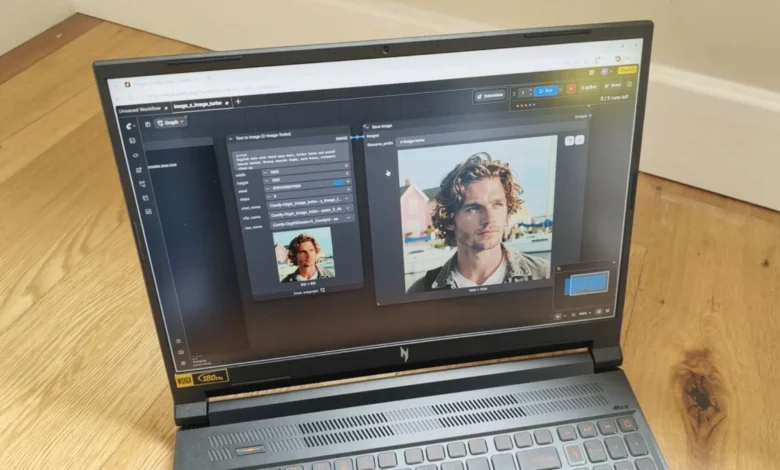
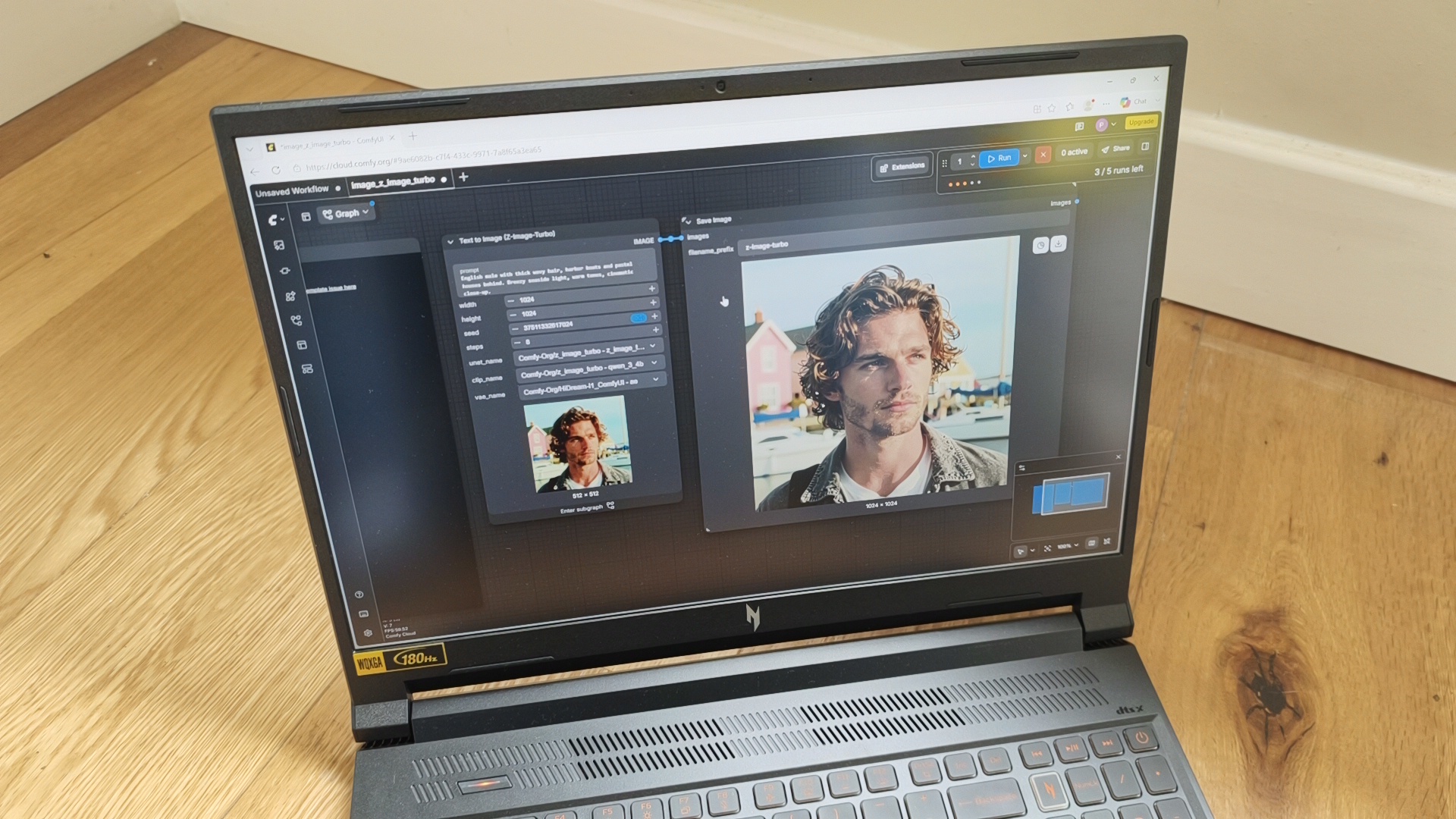
Recent stress testing of devices marketed under this banner, such as the Acer Nitro V 16 AI, provides a critical data point in evaluating these claims. When subjected to intensive creative workflows—including ComfyUI local image generation, Photoshop’s Generative Fill, and real-time AI-based video processing via NVIDIA Broadcast—the performance metrics tell a more nuanced story than marketing brochures suggest.
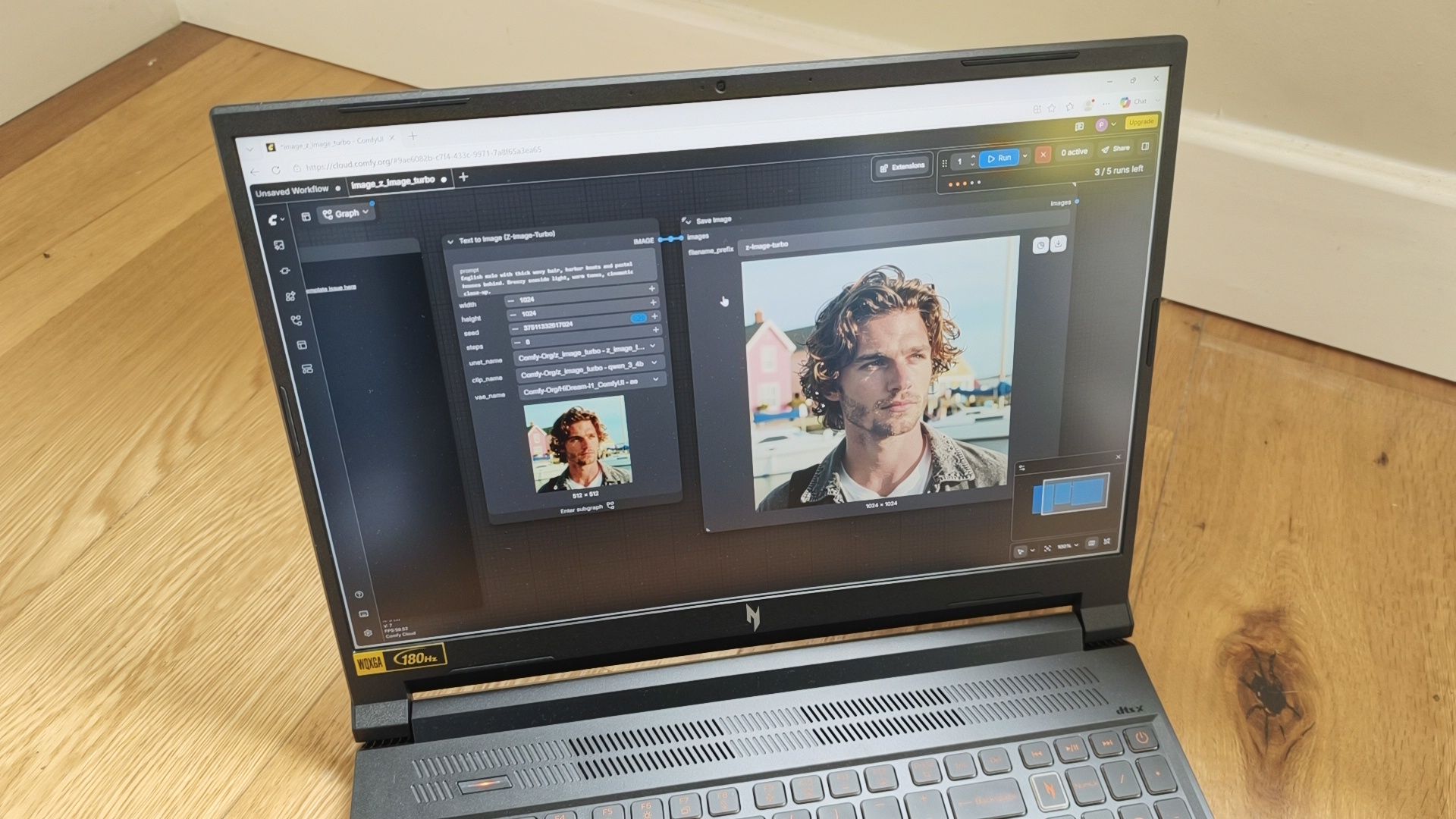
Rather than struggling under the weight of these workloads, modern laptops equipped with current-generation hardware demonstrate that "AI" capabilities are not merely a gimmick. In testing scenarios, these devices have shown a consistent ability to handle background generative tasks without compromising the responsiveness of primary applications. The bottleneck for creative professionals remains the synergy between software optimization and hardware, yet the data suggests that for tasks involving neural network inference, the current generation of hardware is objectively more capable than its predecessors.
Industry Perspectives and Economic Implications
The conversation surrounding AI in hardware is inextricably linked to broader economic discussions within the creative industries. During recent industry forums, representatives from AI-focused startups, such as Flow Studio, have posited that AI integration could reduce production costs by up to 95% in specific workflows.
This assertion has met with a mix of optimism and concern from the creative community. For independent filmmakers and designers, the ability to automate labor-intensive processes—such as rotoscoping, color grading, or asset generation—could democratize high-end production. However, industry analysts caution that such cost-cutting measures may lead to significant shifts in workforce requirements. The "AI-ready" laptop, therefore, is not just a tool; it is an entry point into a restructured production model.
Hardware Infrastructure and Future-Proofing
The inclusion of an NPU is increasingly being viewed as a requirement for "future-proofing" a professional workstation. As operating systems—most notably Windows 11 and its successors—integrate AI deeper into the kernel, the demand for local silicon to handle background tasks will only increase.
A factual analysis of the current market reveals that the "AI" label often signals the presence of three specific hardware components:
- High-VRAM GPU: Necessary for loading large models into local memory.
- Dedicated NPU: Essential for energy-efficient handling of background inference.
- Unified Memory Architectures: Vital for managing the rapid data throughput required by modern machine learning models.
When these components are absent, the "AI" label is largely performative. When they are present, they provide a tangible, if niche, benefit to the professional workflow.
The Problem of Market Saturation
The primary challenge facing the industry is the dilution of technical standards. If the industry moves toward further fragmentation—such as the hypothetical introduction of an "AI Pro" tier—it risks creating confusion among professional users. For hardware to remain a tool rather than a marketing vessel, transparency regarding NPU TOPS (Tera Operations Per Second) and actual performance benchmarks is required.
The creative industry currently finds itself at a crossroads. While the marketing of AI-branded laptops has reached a point of exhaustion for many reviewers and users, the underlying technology has matured to the point where it can genuinely assist in demanding creative environments.
Implications for the Creative Professional
For those in the market for new hardware, the advice from industry experts is clear: look past the marketing terminology and focus on the hardware specifications that dictate AI performance. The presence of the "AI" tag should be treated as a starting point for inquiry, not a guarantee of professional-grade capability.
As the industry moves into the next phase of development, we can expect the "AI" moniker to become standard across all computing tiers, eventually becoming as ubiquitous—and as unremarkable—as "Bluetooth" or "Wi-Fi" support. Until that point, the burden remains on the consumer to distinguish between marketing-driven branding and the genuine performance gains offered by modern silicon.
Ultimately, the goal of these technological advancements should be to augment human creativity rather than replace it. The hardware is now capable of performing tasks that were once impossible on a portable device, and for the creative professional, this presents a unique opportunity to experiment with new workflows, provided they are equipped with the correct tools to handle the increased computational demand. The future of creative computing is clearly tied to the integration of these AI systems, and those who learn to utilize this hardware effectively will likely hold a distinct advantage in an increasingly automated marketplace.