The Evolution of the Foldable Smartphone Market in 2026 and the Arrival of the Apple iPhone Duo


The smartphone landscape is currently undergoing its most significant transformation since the introduction of the modern touchscreen device, as the long-anticipated entry of the Apple iPhone Duo into the foldable market marks a pivotal shift in consumer electronics. While industry incumbents like Samsung, Motorola, and Honor have spent years refining hinge mechanisms, display durability, and foldable-specific software, Apple’s recent announcement underscores the transition of folding screens from a niche experimental category to a mainstream flagship requirement. With a starting price of $1,999, the iPhone Duo enters a highly competitive ecosystem where hardware innovation, software optimization, and aggressive pricing strategies define market share.
A Chronology of the Foldable Revolution
The foldable journey did not begin with the current generation of devices; it traces its roots back to early prototypes displayed at trade shows in the mid-2010s. Samsung took the first major step toward commercialization with the original Galaxy Fold in 2019. Despite early setbacks regarding screen durability and hinge integrity, the company persisted, iterating through several generations to perfect the book-style folding design.
By 2022 and 2023, the market began to diversify. Motorola successfully leveraged nostalgia with its Razr series, popularizing the "clamshell" form factor that prioritized pocketability over tablet-like screen real estate. Simultaneously, Chinese manufacturers like Honor and Huawei pushed the boundaries of industrial design. The Honor Magic series focused on extreme thinness and weight reduction, while Huawei’s recent unveiling of the Mate XT Ultimate introduced the world to the "tri-fold" concept, expanding the usable screen area to an unprecedented 10.2 inches.
Apple’s entry in 2026 comes after nearly seven years of competitor-led development. By waiting, Apple has bypassed the "early adopter" phase, characterized by brittle displays and software instability, choosing instead to enter the market when the supply chain for flexible OLED panels and specialized hinge lubricants has reached a mature, reliable state.
Comparative Market Analysis and Pricing Structures
The arrival of the iPhone Duo has immediately reshaped the pricing landscape. At $1,999, the device positions itself at the premium end of the spectrum, forcing competitors to adjust their retail strategies to maintain relevance.
Samsung’s Galaxy Z Fold8 Ultra, often considered the industry benchmark for multitasking and ecosystem integration, carries a list price of $2,099. However, in response to the looming threat of the iPhone Duo, retailers have begun aggressive discounting. Current market data indicates that the Z Fold8 Ultra is frequently available at $1,799, a $300 reduction from its MSRP. This pricing adjustment highlights the intense competition for consumers who are wary of the "early adopter tax" often associated with new product lines.
In international markets, the competition is equally fierce. In the United Kingdom, the Honor Magic V6 has seen a significant promotional reduction, dropping from £1,999 to £1,499. This £500 discount serves as a strategic move to capture market share among professional users who prioritize hardware thinness and advanced camera optics over the brand recognition associated with Apple.
Technical Specifications and Hardware Divergence
The 2026 foldable market is defined by a clear split in design philosophy:
- The Productivity Powerhouses: Devices like the Galaxy Z Fold8 Ultra and the new iPhone Duo focus on wide, book-style displays. These are designed for users who require multi-window functionality, sophisticated note-taking, and complex media editing. Samsung continues to lead in software optimization for these tasks, leveraging its deep integration with Microsoft and Google Workspace.
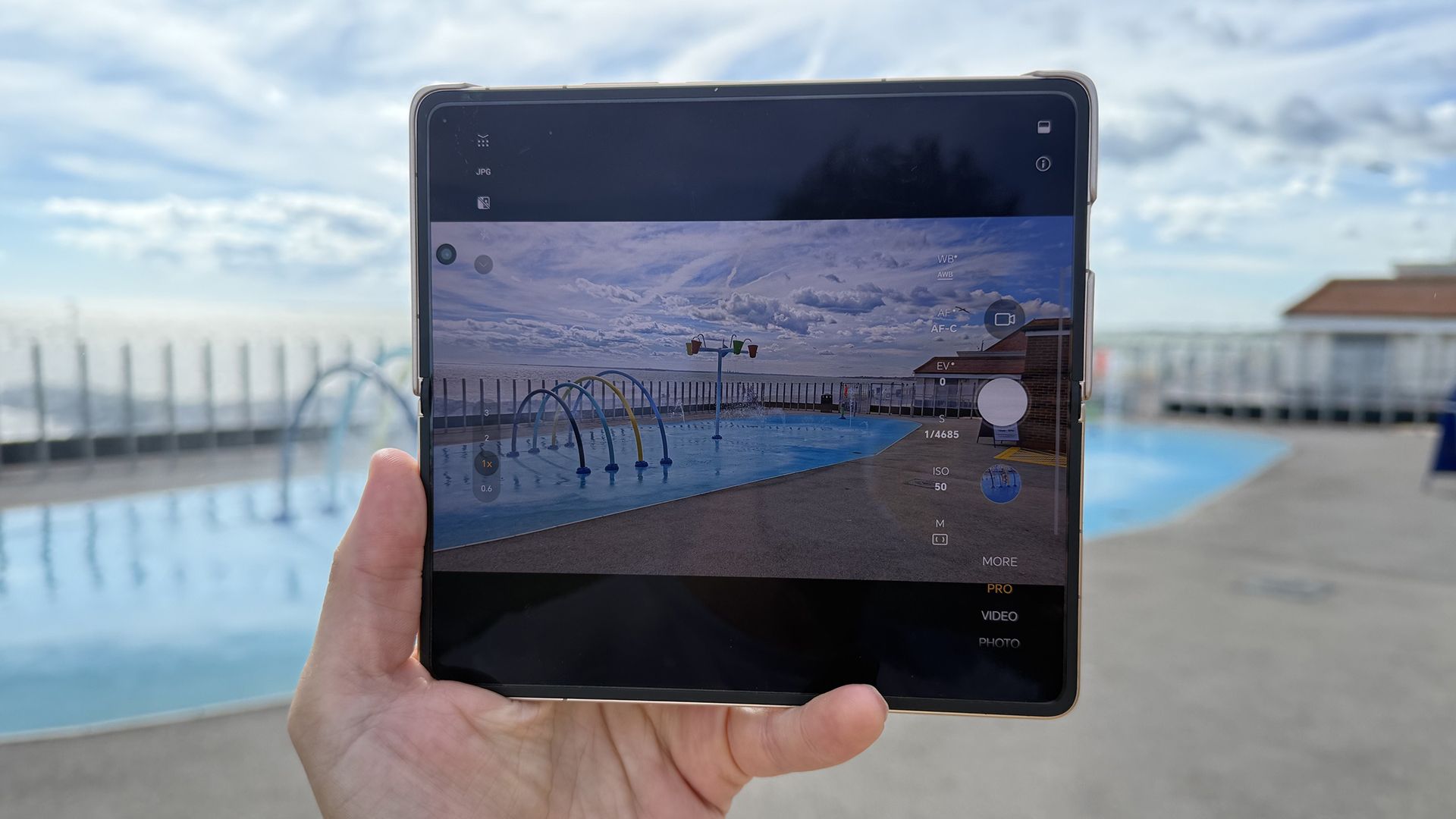
- The Design Innovators: The Honor Magic V6 represents a different priority: portability. By achieving a profile thickness that rivals traditional "slab" smartphones, Honor is addressing the primary consumer complaint regarding foldables—bulk. With IP68 and IP69 ratings, the Magic V6 also addresses durability concerns that hampered earlier generations of folding devices.
- The Experimental Tier: Huawei’s Mate XT Ultimate operates in a class of its own. By utilizing a dual-hinge system to achieve a 10.2-inch display, it effectively replaces the need for a separate tablet. While impressive, analysts note that the complexity of the screen substrate and the fragility of the device remain barriers to widespread adoption.
Industry Implications and the "Dumb Phone" Counter-Trend
The industry is currently facing a paradox. As screens grow larger and more complex, there is a burgeoning segment of the market trending in the opposite direction. "Dumb phones"—devices with limited connectivity and monochrome displays—are seeing a resurgence among users seeking a digital detox. This movement suggests that while the foldable market is expanding in terms of technological capability, it is simultaneously alienating a portion of the user base that is suffering from "screen fatigue."
For Apple, the challenge will be to prove that the iPhone Duo is not merely a novelty, but a productivity tool that justifies its high cost. Market analysts suggest that the company’s success will depend on its ability to integrate the device into the existing iOS ecosystem. If the iPhone Duo can facilitate a seamless transition between the handheld and unfolded modes—a feat that Android manufacturers have struggled to perfect consistently—it could trigger a mass migration of users who have been waiting for an "Apple-certified" folding experience.
Official Responses and Future Outlook
While manufacturers rarely comment directly on competitors’ products, the tone from social media and press releases indicates a defensive posture. Samsung, which notably manufactures many of the flexible displays used by its rivals, has emphasized its "pioneering history" and the refinement of its hinge technology in recent advertising campaigns.
The broader implications of the iPhone Duo’s launch are two-fold. First, it validates the foldable form factor as a legitimate, long-term evolution of the smartphone. Second, it will likely lead to a standardization of components. As Apple begins to source components at scale, the supply chain for flexible glass and hinge assemblies will likely become more efficient, potentially lowering the barrier to entry for mid-range manufacturers.
Looking ahead to the remainder of 2026, the focus will shift from hardware form factors to software utility. The integration of generative AI into the foldable UI—allowing the screen to intelligently rearrange apps and content based on the degree of the fold—will be the next major frontier. With the iPhone Duo arriving next month, the industry is bracing for a period of rapid innovation as competitors rush to update their software suites to compete with the expected polish of the Apple experience.
Ultimately, the 2026 market is no longer about whether a phone can fold, but how that folding capability changes the nature of digital interaction. As the gap between the premium foldable and the standard smartphone continues to close, the next twelve months will be critical in determining whether these devices become the standard for the next generation of mobile computing.