SIRUI Swift Series Launch Redefines Entry-Level Full-Frame Autofocus Prime Optics

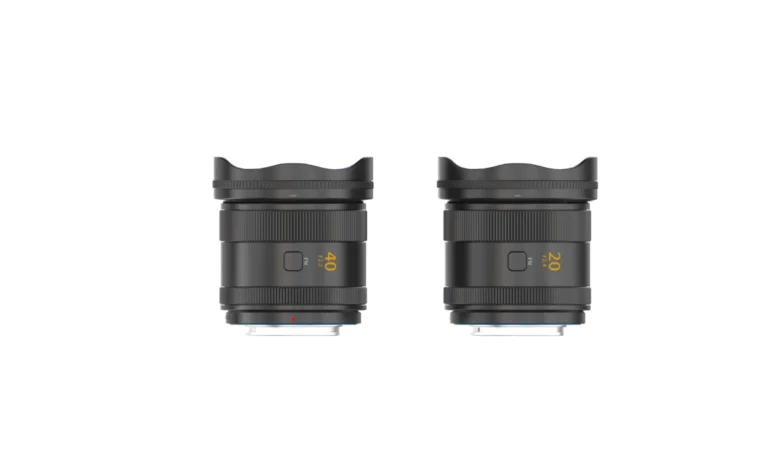
SIRUI, a manufacturer historically recognized for its precision tripod systems and innovative anamorphic cinema lenses, has officially entered the competitive full-frame autofocus market with the introduction of its Swift series. The new lineup, which debuted with the release of a 20mm f/2.4 wide-angle prime and a 40mm f/2.2 standard prime, represents a strategic pivot for the brand. By focusing on ultra-compact form factors and all-glass optical construction, SIRUI aims to capture the attention of content creators, travel photographers, and videographers who prioritize portability without compromising the performance standards associated with full-frame sensors.
The release of the Swift series marks a significant milestone in SIRUI’s corporate evolution. While the company spent years refining its position in the specialty lens market—particularly through its development of accessible anamorphic glass—the transition into high-volume autofocus (AF) prime lenses signals a broader ambition to compete with both native lens manufacturers and established third-party players like Tamron, Sigma, and Samyang.
Technical Architecture and Engineering Philosophy
The defining characteristic of the SIRUI Swift series is the commitment to all-glass optical elements within a chassis that weighs approximately 210 grams per unit. In an era where many manufacturers rely on specialized plastics or complex, heavy internal focusing mechanisms to reduce manufacturing costs, SIRUI’s decision to utilize a glass-heavy design is a notable technical choice. By eschewing overly complex mechanical designs, the engineers have achieved a minimalist footprint that maintains high optical resolution.
Both the 20mm f/2.4 and the 40mm f/2.2 lenses share a common design language, including a nine-blade circular aperture diaphragm. This design choice is intended to produce a smooth, natural bokeh, minimizing the "onion ring" artifacts often seen in lower-cost, high-production-volume glass. The integration of an STM (stepping motor) autofocus system is a critical inclusion for the modern creator, as it facilitates the quiet, rapid-focus acquisition required for contemporary hybrid video workflows.
Furthermore, SIRUI has addressed the practical needs of field users by standardizing the front filter thread at 58mm across both lenses. This uniformity simplifies the kit requirements for creators, allowing for the shared use of circular polarizers, neutral density filters, and diffusion filters, thereby reducing both the weight and the cost of the peripheral equipment necessary to support the lenses.
Chronology of Development and Market Entry
SIRUI’s trajectory toward the launch of the Swift series can be viewed as a logical progression of its recent portfolio diversification. In the mid-2010s, the company gained global traction primarily through its carbon-fiber tripods and support equipment. By 2019, SIRUI disrupted the independent filmmaking sector with the release of its 50mm f/1.8 anamorphic lens, which brought cinematic, wide-aspect-ratio shooting to the budget-conscious consumer.
The intervening years saw a rapid expansion of the anamorphic line, covering focal lengths from 24mm to 135mm. However, these lenses were almost exclusively manual focus, leaving a gap in the company’s offering for the burgeoning "run-and-gun" market. The development of the Swift series likely began in early 2022, following market research indicating a high demand for lightweight, autofocus-enabled primes that could complement the compact mirrorless camera bodies being released by Sony, Fujifilm, and Panasonic.
The decision to launch with 20mm and 40mm focal lengths is particularly tactical. The 20mm wide-angle serves the needs of vloggers and landscape photographers, while the 40mm occupies the "near-normal" space, offering a wider field of view than the traditional 50mm while remaining more versatile for street photography than a 35mm.
Market Positioning and Compatibility
SIRUI has adopted an aggressive cross-platform strategy for the Swift launch. At the time of the announcement, the lenses are available for Sony E-mount and L-mount systems, with a Fujifilm X-mount variant also explicitly listed on the company’s retail platforms. This multi-mount approach acknowledges the current landscape of the camera industry, where manufacturers are increasingly opening their protocols to third-party developers, or where mount adapters have become sophisticated enough to maintain electronic communication.
Notably, the absence of a Nikon Z-mount version at launch has been a point of inquiry among potential users. While SIRUI has suggested that additional mount options are in the pipeline, the company has remained non-committal regarding a specific timeline for Nikon compatibility. This is likely due to the complexities surrounding the reverse-engineering of Nikon’s proprietary autofocus protocols, a challenge that many third-party lens manufacturers have navigated with varying degrees of success over the last two years.
Pricing Analysis and Economic Impact
The retail price point of $149 per lens places the Swift series firmly in the "budget-entry" segment of the market. When compared to the native lens offerings from Sony or Fujifilm, which can often range from $400 to over $1,000 for comparable primes, SIRUI’s pricing is intentionally disruptive.
From an economic perspective, this pricing model serves two functions: it lowers the barrier to entry for novice creators who are still building their initial lens kits, and it offers an attractive value proposition for professional photographers who require a secondary, "disposable" kit for high-risk shooting environments where damaging expensive gear is a genuine concern. By pricing the lenses at $149, SIRUI is effectively targeting the "kit lens upgrade" market, providing an immediate improvement in optical quality and aperture performance over the variable-aperture zoom lenses bundled with most entry-level mirrorless bodies.
Broader Industry Implications
The entry of SIRUI into the autofocus market with such an aggressively priced and compact lineup is indicative of a broader trend toward the democratization of high-quality optics. The manufacturing capabilities of companies based in the Pearl River Delta have matured significantly over the last decade, allowing for higher tolerance levels and more consistent quality control.
Analysts monitoring the optics sector note that the "optical integrity" mentioned by SIRUI refers to the company’s ability to maintain a consistent image character despite the small size. By focusing on the fundamentals—sharpness, focus speed, and build durability—rather than over-engineering the lens with unnecessary features, SIRUI is betting that the market will reward efficiency.
If the Swift series proves successful in terms of autofocus reliability and optical longevity, it may prompt a shift in how major camera manufacturers approach the "compact prime" market. If consumers prove willing to adopt third-party glass that matches the portability of native lenses at a fraction of the cost, the premium pricing models of native lens ecosystems may face increased pressure.
Future Outlook and Support
Looking ahead, the long-term success of the Swift series will depend on the performance of the lenses’ firmware. As camera manufacturers frequently update their bodies with new autofocus algorithms and tracking capabilities, third-party manufacturers like SIRUI must provide timely firmware updates to ensure compatibility. The inclusion of a USB-C port on the lens barrels—a feature now standard for modern primes—suggests that SIRUI is prepared to facilitate these updates.
Furthermore, the brand’s ability to scale production while maintaining the current price point will be a critical metric to watch. Should the series expand to include other popular focal lengths, such as an 85mm portrait prime or a 28mm "everyday" lens, SIRUI could effectively establish itself as a primary supplier for the entry-to-mid-level creator demographic.
Ultimately, the launch of the Swift series is more than a simple product release; it is a declaration of intent. SIRUI is signaling that it is no longer satisfied with being a niche player in the anamorphic or support equipment markets. By leveraging its manufacturing expertise to provide affordable, high-performance autofocus optics, the company is positioning itself to be a permanent fixture in the camera bags of the next generation of photographers and videographers. Whether the market is ready to embrace a new, low-cost powerhouse remains to be seen, but the initial specifications and aggressive pricing structure of the Swift 20mm f/2.4 and 40mm f/2.2 suggest that the competition in the prime lens segment is about to become significantly more intense.