The world of high-end vintage photography collecting is bracing for yet another landmark event as Leica Auction prepares for its upcoming 49th installment. Among the crown jewels heading to the auction block are two extraordinary pieces of photographic history, each telling a drastically different story about the evolution of the camera and the nature of visual storytelling. The headlining lots include an ultra-rare, half-frame 18x24mm Leica prototype from the 1950s—valued in the neighborhood of €500,000—and a heavily battle-tested Leica R6 that witnessed some of the most harrowing moments of modern history in the hands of legendary photojournalist Sebastião Salgado during the Gulf War.
This juxtaposition of meticulous engineering experimentation and raw, journalistic documentary work encapsulates the enduring appeal of the Leica brand. While one artifact represents a road not taken by optical designers in Wetzlar, Germany, the other stands as a testament to the brutal realities of armed conflict and the resilience required of both photographer and tool. As collectors, historians, and enthusiasts turn their attention toward the catalogue for Leica Auction 49, interest has surged not only around the monetary valuation of these items, but also regarding the broader implications they hold for the secondary camera market and the preservation of photographic heritage.

The €500,000 Half-Frame Prototype: A Glimpse Into Wetzlar’s Experimental Past
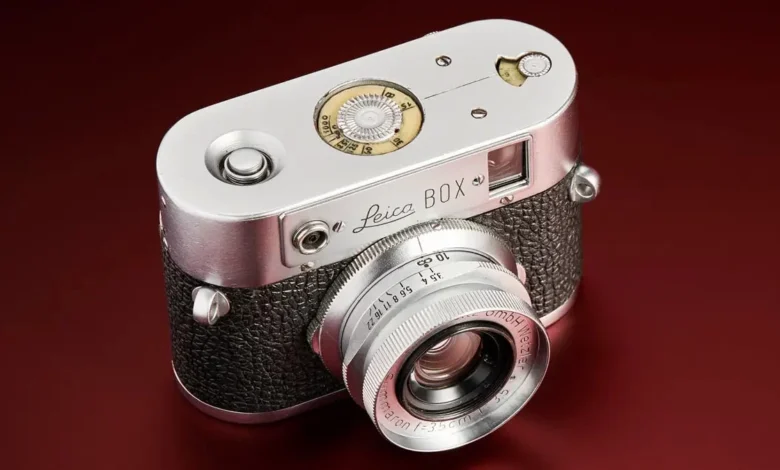
The most financially anticipated item in the upcoming auction is an elusive 18x24mm half-frame camera prototype developed by Leica during the 1950s. Long before the digital era introduced sensor-crop factors and half-frame formats gained popularity among budget-conscious film shooters in the later decades of the 20th century, engineers at Ernst Leitz GmbH were quietly experimenting with alternative film formats to maximize exposure efficiency.
During the mid-20th century, standard 35mm photography utilized a full-frame 24x36mm format, providing 36 exposures on a standard roll of film. However, experimental departments frequently toyed with concepts that could double the frame count to 72 exposures per roll by cutting the individual image size in half to 18x24mm. This design choice theoretically reduced operational costs for users and allowed for more compact camera bodies, yet it posed significant optical challenges concerning grain structure, enlargement limits, and lens resolving power.
The prototype surfacing in Leica Auction 49 represents a rare surviving artifact from this internal research and development phase. Historically, Leica rarely mass-produced half-frame cameras for the consumer market, choosing instead to focus its prestige and manufacturing prowess on full-frame rangefinders like the Leica M series. Consequently, prototypes of this nature were typically constructed in extremely limited quantities—often as single-digit test beds or handmade mock-ups.

Industry experts and auction houses have estimated the pre-sale value of this half-frame prototype to be around €500,000, driven primarily by its extreme scarcity, pristine historical provenance, and the insatiable demand among high-tier collectors for unique pieces of Leitz engineering history. Unlike standard production models that regularly change hands on the collector market, experimental prototypes offer institutional and private buyers a direct window into the theoretical discussions and design iterations that shaped the iconic manufacturer’s legacy.
Sebastião Salgado’s Gulf War Leica R6: Documenting History Through Scars
In stark contrast to the pristine, experimental nature of the 1950s half-frame prototype, the second major highlight of Leica Auction 49 carries the undeniable physical and emotional weight of frontline photojournalism. The lot features a Leica R6 SLR camera used by world-renowned Brazilian social documentary photographer and photojournalist Sebastião Salgado during his harrowing coverage of the Gulf War in the early 1990s.
Salgado’s assignment during the Gulf War required documenting the catastrophic environmental and human toll of the conflict, most notably the burning oil fields of Kuwait. The conditions were nothing short of apocalyptic: blinding thick black smoke that turned daytime into pitch darkness, intense radiant heat that warped metal and degraded mechanical lubricants, and fine, abrasive desert sand that infiltrated every crevice of photographic equipment.

The Leica R6, a mechanical, manual-focus SLR introduced by Leica in the late 1980s, was chosen by Salgado precisely for its rugged, battery-independent reliability. While electronic cameras of the era were susceptible to total failure when exposed to extreme moisture, dust, or power loss, the R6’s purely mechanical shutter relied on batteries solely for its metering system. This made it an ideal tool for harsh environments where failure was not an option.
The specific R6 featured in the auction bears the physical scars of its deployment in Kuwait: brassing on the edges, dust-sealed seals tested to their absolute limits, and cosmetic wear that narrates a story far more compelling than any pristine collector’s item. It represents an era when mechanical cameras served as vital instruments of truth-telling, capturing imagery that shaped global public perception of modern warfare.
Chronology of the Leica Collector Market and Valuation Trends
The appearance of these two distinct lots reflects a broader, multi-decade evolution in the vintage camera collecting ecosystem. Over the past twenty years, the market for rare Leica equipment has undergone a significant transformation, shifting from a niche hobby for mechanical enthusiasts into a high-stakes asset class dominated by institutional buyers, affluent private collectors, and speculative investors.

In the early 2000s, vintage cameras were largely valued based on their operational condition and utility for working film photographers. However, as digital photography came to completely dominate commercial and consumer workflows, physical film cameras transitioned into cultural artifacts. Rare black-paint models, military-issued gear, and factory prototypes began commanding exponential price increases at specialized auctions held in Vienna, Hong Kong, and London.
Milestones in this market evolution include the historic sale of various Leica 0-Series prototypes—some of which have broken records by fetching millions of euros. The valuation of the 18x24mm half-frame prototype at approximately €500,000 aligns with this established upper tier of rare experimental hardware. Meanwhile, items associated with master photographers like Sebastião Salgado introduce a secondary valuation metric: provenance connected to major historical events and culturally significant figures. When a camera is certified as having captured defining images of the 20th century, its value transcends pure mechanics, entering the realm of fine art and historical memorabilia.
The Broader Implications for Camera Preservation and Institutional Archives
As specialized auctions continue to command global headlines with multi-million-euro sales, industry analysts and museum curators frequently debate the broader cultural implications of this hyper-financialized market. On one hand, high valuations incentivize careful preservation. Private collectors and auction houses invest heavily in authentication, climate-controlled storage, and meticulous documentation, ensuring that rare technological artifacts are not lost to time or discarded as obsolete electronics.

Conversely, soaring prices can create accessibility barriers, pricing out public institutions, photographic museums, and independent archives that lack the capital to compete with wealthy private investors. Items like the €500,000 half-frame prototype run the risk of vanishing into private bank vaults, remaining unseen by the public and researchers who study the history of industrial design and optical engineering.
Yet, events like Leica Auction 49 also serve an important educational purpose. By cataloging, photographing, and publicly detailing these rare instruments, auction houses generate renewed public interest in the mechanics of photography and the history of visual communication. They remind contemporary audiences of the physical processes required to capture images before the advent of digital sensors and automated processing algorithms.
Conclusion: A Bridge Between Innovation and Human Experience
Leica Auction 49 succeeds in capturing two fundamentally opposing yet complementary pillars of photographic history: the pursuit of technical perfection and the raw documentation of human reality. The €500,000 half-frame prototype represents the internal ambitions of engineers striving to redefine how film is consumed and structured within a camera body. It is an intellectual artifact, born in the quiet drafting rooms and laboratories of Wetzlar.

In contrast, Sebastião Salgado’s Gulf War Leica R6 represents the ultimate test of those engineering principles under extreme duress. It is an artifact of consequence, shaped by fire, smoke, and sand, utilized in service of bearing witness to history. Together, these two cameras offer a comprehensive look at the legacy of a legendary brand—one that continues to resonate deeply within both the technical and artistic dimensions of modern photography. As the bids open and these historical pieces find new custodians, their stories will undoubtedly continue to inspire new generations of photographers, historians, and collectors around the globe.