The Mandler 50mm f/1.4 Pre-A Review: A New Benchmark for Affordable Leica M-Mount Optics

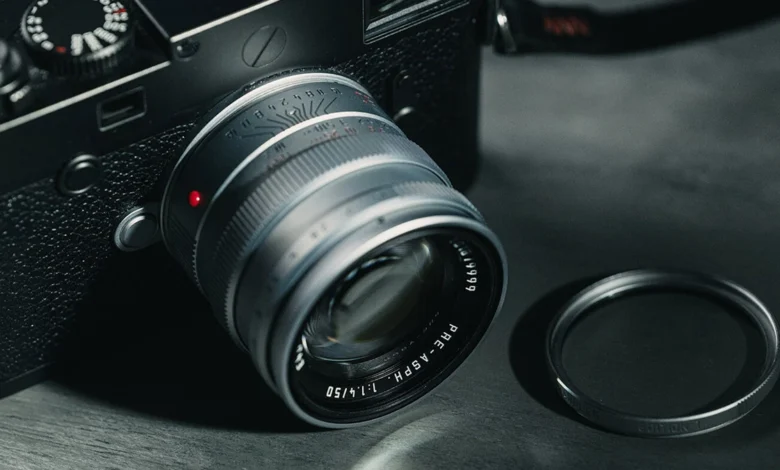
The landscape of M-mount photography has shifted significantly with the arrival of the Mandler 50mm f/1.4 Pre-A lens, an optical instrument that challenges the long-standing hegemony of premium-priced, legacy-branded glass. While market discourse has fixated on its visual and performance parallels to the legendary Leica Summilux-M 50mm f/1.4 E46, the lens represents a broader trend in the independent manufacturing sector: the democratization of high-end tactile and optical experiences. By offering a sophisticated brass or aluminum construction at a fraction of the cost of its German-engineered inspiration, Mandler has positioned itself as a disruptive force for rangefinder enthusiasts who prioritize utility and craftsmanship over brand exclusivity.
Historical Context and the Evolution of the 50mm Prime
The 50mm f/1.4 configuration, often referred to as the "Summilux" standard in the Leica ecosystem, has historically been the cornerstone of street and reportage photography. The original Leica E46 pre-aspherical design, developed by legendary optical engineer Walter Mandler, is celebrated for its distinct "vintage" rendering—a quality characterized by a soft, ethereal glow when shot wide open and clinical sharpness when stopped down.
In recent years, the market for M-mount lenses has seen a surge in third-party manufacturers, such as Voigtländer, 7Artisans, and TTArtisan, attempting to replicate this specific aesthetic. The release of the Mandler 50mm f/1.4 is the latest, and perhaps most direct, attempt to capture the "Mandler look" for a new generation. This movement is a response to the rising prices of original, vintage Leica glass, which have seen a consistent appreciation on the secondary market, often reaching valuations between $3,000 and $5,000 depending on condition.
Technical Specifications and Manufacturing Standards
The Mandler 50mm f/1.4 is available in two distinct configurations, each catering to a different segment of the photography market. The brass version, finished in silver, weighs 385 grams, providing a dense, reassuring heft that appeals to traditionalists who favor the weight of vintage M-system gear. The aluminum variant, finished in black, reduces the weight to 290 grams, targeting street photographers who require agility and reduced fatigue during extended shooting sessions.
Both models feature a 12-blade aperture diaphragm, which is essential for achieving smooth, circular bokeh—a hallmark of high-quality prime lenses. The construction relies on precision-machined metal, eschewing the plastic components often found in lower-cost optics. The focus throw is engineered for accuracy, offering sufficient resistance to prevent accidental shifts, while the aperture ring provides tactile, "clicky" feedback, ensuring that photographers can adjust settings without removing the camera from their eye.
Chronology of Market Disruption
The emergence of the Mandler brand follows a multi-year trend of niche lens manufacturers bridging the gap between budget-friendly "toy" lenses and professional-grade optics.
- 2020-2021: Independent manufacturers began shifting from experimental, budget-tier designs to more ambitious, premium-feel manual focus lenses.
- Early 2023: Market rumors surfaced regarding a new optic that would specifically target the "Pre-A" (pre-aspherical) signature look, a move that piqued the interest of forum communities and professional reviewers alike.
- Q3 2024: The official release of the Mandler 50mm f/1.4 provided the public with an alternative that mimics the Leica Summilux-M 50mm f/1.4 E46 aesthetic down to the engraving style and retractable hood design.
Comparative Performance Analysis
Technical evaluations of the lens reveal a dual-personality optical performance. At f/1.4, the lens exhibits classic characteristics: a slight softness toward the periphery and a dreamy, organic transition between the subject and the out-of-focus areas. This performance is widely considered a successful emulation of the original 1960s and 70s-era optical designs, which were favored for portraiture and low-light environmental shots.
When stopped down to f/2.8 and beyond, the lens undergoes a transformation. The introduction of the 12-blade aperture allows for increased contrast and edge-to-edge sharpness that rivals modern, clinically corrected lenses. This flexibility allows a photographer to utilize the same tool for artistic, atmospheric work and high-detail landscape or architectural documentation. When compared to the original Leica Summilux, independent testers have noted that while the Mandler lens does not replicate the specific micro-contrast signature of Leica glass—a subjective metric that varies from user to user—it meets or exceeds the objective sharpness levels of the older, used Leica counterparts.
Economic Implications for the M-Mount Ecosystem
The economic reality of the Mandler 50mm f/1.4—priced at $368 for the aluminum version and $568 for the brass—creates a significant ripple effect in the photography gear market. For many, the cost barrier to entry for the Leica ecosystem has long been the primary deterrent. By providing a high-quality, metal-bodied, M-mount compatible lens, Mandler is effectively lowering the cost of entry for photographers who own Leica M bodies but are hesitant to invest thousands in a single prime lens.
From a value-proposition standpoint, the lens acts as a "gateway" optic. It provides the tactile experience of a high-end Leica lens—the smooth dampening of the focus ring, the cold feel of brass, and the visual symmetry of a rangefinder-coupled optic—without the associated four-figure price tag. This forces a re-evaluation of how gear is valued: if a $400 lens can provide 90-95% of the functional and aesthetic performance of a $4,000 lens, the diminishing returns of premium branding become increasingly difficult to justify for the working professional.
Industry Feedback and Professional Reception
While official responses from Leica Camera AG regarding third-party lens manufacturers are typically neutral, the wider community of professional photographers and gear reviewers has been overwhelmingly positive. The consensus is that the Mandler 50mm is not merely a "clone" but a functional, well-engineered tool that stands on its own merits.
Reviewers have highlighted that the "Leica look" is often a combination of lens rendering and sensor tuning. Because the Mandler 50mm uses a different optical formula than the original, it produces its own unique signature. This distinction is vital; it suggests that Mandler is not just copying a legacy, but contributing to the evolution of the 50mm prime market. For the end user, this means that the choice is no longer between "cheap and bad" or "expensive and perfect." Instead, the market now offers "affordable and high-quality."
Future Outlook for Independent Optics
The success of the Mandler 50mm suggests that the demand for "classic" optical character in a digital world is at an all-time high. Modern lenses are often criticized for being "too perfect," lacking the soul or organic flaws that defined the film era. By intentionally designing a lens that behaves like a vintage classic, Mandler has tapped into a specific desire among photographers to rediscover the joy of manual focus and the aesthetic of imperfect, but beautiful, imagery.
As the industry moves forward, it is likely that we will see more manufacturers adopting this strategy: combining high-quality, tactile metal construction with optical designs that favor character over clinical perfection. This shift benefits the entire ecosystem, encouraging competition and forcing innovation in a sector that has, for too long, relied on heritage to maintain high price points.
In conclusion, the Mandler 50mm f/1.4 Pre-A is a testament to the fact that photographic excellence is no longer the sole domain of legacy manufacturers. Through rigorous engineering and a clear understanding of the photographer’s needs—durability, portability, and beautiful rendering—Mandler has provided a viable, high-performance alternative to the industry standard. Whether used on a vintage M3 or a modern digital M-system body, the lens delivers a professional experience that warrants consideration from both the budget-conscious and the seasoned professional. The era of the "affordable luxury" prime has arrived, and it is here to stay.