Apple Introduces the iPhone Duo as its First Foldable Smartphone Featuring Dual Displays and A20 Pro Performance

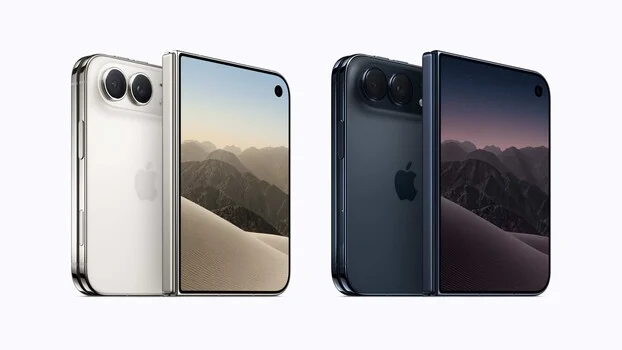
Apple has officially entered the foldable smartphone market with the debut of the iPhone Duo, a sophisticated device that bridges the gap between a standard smartphone and a portable workstation. Unveiled at a keynote event at Apple Park, the device marks a significant departure from the company’s traditional design language, centering on a dual-display configuration that pairs a 5.4-inch outer screen with a massive 7.6-inch foldable internal panel. Starting at $1,999, the device is positioned as a high-end tool for creative professionals, power users, and those seeking to integrate tablet-like multitasking into a pocketable form factor.
The release of the iPhone Duo represents a multi-year effort to refine foldable technology, a sector previously dominated by competitors like Samsung and Google. Apple has spent significant research and development resources ensuring that the mechanical durability of the device meets the company’s stringent reliability standards, opting for a 3D-printed titanium hinge and a proprietary polymer-glass hybrid display layer.
Technical Architecture and Durability
The core of the iPhone Duo is its innovative display system. The 5.4-inch outer Super Retina XDR display provides standard smartphone utility, while the 7.6-inch inner display offers a tablet-class viewing experience. Both panels utilize ProMotion technology with a variable refresh rate and support Always-On functionality, reaching a peak outdoor brightness of 3,000 nits.
To mitigate the common industry struggle of display creases, Apple has implemented a nano-texture finish on the inner display, which is designed to diffuse light and minimize the visual impact of the fold. The structural integrity of the chassis is anchored by a Grade 5 titanium frame. The hinge mechanism, a complex assembly of over 100 components, is reinforced by internal support ribs and ceramic fiber inserts to ensure longevity. Apple has also reinforced the device with its latest iteration of Ceramic Shield, marking a significant step up in drop and scratch resistance for foldable panels.
Biometric security has been shifted away from Face ID to a Touch ID sensor integrated into the side power button, a decision likely necessitated by the complexity of the foldable form factor. Furthermore, the device is fully compatible with Apple’s existing ecosystem, including seamless unlocking via Apple Watch and future support for the Apple Pencil, which is expected to arrive later in 2026 to facilitate professional note-taking and digital illustration.
Imaging Capabilities and the Power of Two Displays
The iPhone Duo’s camera system is arguably its most transformative feature for content creators. It utilizes a dual 48 MP array, featuring a Main Fusion camera and an Ultra Wide camera. The primary sensor supports sensor-shift optical image stabilization and a computational imaging pipeline that allows for 24 MP standard files, with the capability to output full 48 MP RAW images.
The inclusion of two displays allows for unique camera workflows, most notably the "Duo Preview" feature. This enables a subject to view their own framing on the outer display while being photographed by the main rear-facing camera system. This effectively eliminates the traditional quality trade-off between using a front-facing selfie camera and the superior rear optics. Other software-driven features include "Smart Take," which uses AI to detect ideal posing conditions for group shots, and "Kid Cue," which uses the outer screen to display animations to keep children’s eyes focused on the lens.
Video production has also seen a significant upgrade, with the ability to record 4K video at 120 fps in Dolby Vision. The folding chassis acts as its own kickstand, allowing for stabilized time-lapse or long-form video capture without the need for auxiliary equipment. Furthermore, the ability to apply Cinematic effects post-capture at 60 fps offers creators a new degree of flexibility in their editing suites.
Software Innovation: iOS 27 and Multitasking
The iPhone Duo runs on a custom version of iOS 27, which has been architected to leverage the expanded real estate of the 7.6-inch screen. A major highlight is the introduction of Split View for iPhone, allowing two applications to run side-by-side or two windows of the same app to coexist. This functionality is supported by a redesigned Dynamic Island that adapts its orientation based on whether the device is folded or open.
The software is tightly integrated with the device’s physical state, as apps are capable of "handing off" content from the inner to the outer screen automatically as the device is closed. This fluid transition is supported by a robust multitasking engine that allows users to save "app pairs," streamlining workflows for those who frequently switch between communications, research, and content creation tools.
Silicon Performance: The A20 Pro
Powering the device is the A20 Pro processor, fabricated on a 2 nm process. This chip represents a major leap in mobile computing, offering a 6-core CPU that is 20% faster than its predecessor and a 7-core GPU that provides a 40% increase in efficiency. A significant addition is the inclusion of a custom vapor chamber thermal management system, which Apple claims allows for a 35% improvement in sustained performance during heavy tasks—a necessary inclusion for a device capable of running multiple intensive applications simultaneously.
The device also incorporates a Dual 16-core Neural Engine to handle the heavy lifting required for Apple Intelligence. These AI capabilities include "Spatial Reframing" for post-capture composition and "Clean Up" for removing unwanted objects from images. Future updates are expected to bring SynthID support, helping users verify the authenticity of AI-generated or modified content.
Market Context and Timeline
The release of the iPhone Duo follows a cautious trajectory by Apple, which historically waits for hardware components to mature before entering new categories. The following timeline outlines the release schedule for this product:
- October 16, 2026: Global preorders open at 5:00 a.m. PT.
- October 23, 2026: Initial availability in 70 countries and regions.
- October 30, 2026: Secondary rollout to an additional 28 countries.
At a starting price of $1,999 for the 256 GB model, the iPhone Duo is positioned firmly in the "ultra-premium" segment. While some market analysts suggested the price might deter casual consumers, the target demographic—professional photographers, journalists, and enterprise users—is expected to view the device as a productivity investment rather than a standard consumer upgrade.
Broader Implications for the Industry
The launch of the iPhone Duo creates a ripple effect across the smartphone landscape. By standardizing the foldable form factor with its specific brand of software polish, Apple is likely to accelerate the adoption of foldable devices among mainstream consumers.
From an industry perspective, the most critical implication is the shift toward "post-capture" creative workflows. By integrating AI tools for reframing, composition, and post-production video editing directly into the device, Apple is attempting to redefine the smartphone as an all-in-one studio. The absence of a physical SIM tray, coupled with the introduction of "iPhone Handoff" for users to share a single phone number across two devices, further highlights Apple’s vision for a future where hardware barriers between mobile and stationary computing are dismantled.
As the device reaches consumers, the true test will be the reliability of the folding display under long-term, intensive use. If the device proves as durable as Apple’s marketing suggests, it could signal the beginning of a multi-year transition toward foldables becoming the primary standard for the high-end iPhone line. The iPhone Duo is not merely a new product; it is a foundational change in how Apple expects its users to interact with digital content on the go, prioritizing flexibility, raw processing power, and professional-grade imaging tools.