Motorola Unveils the Flagship Signature 27 Smartphone Powered by Snapdragon 8 Elite Extreme Gen 6 at Qualcomm Snapdragon Summit

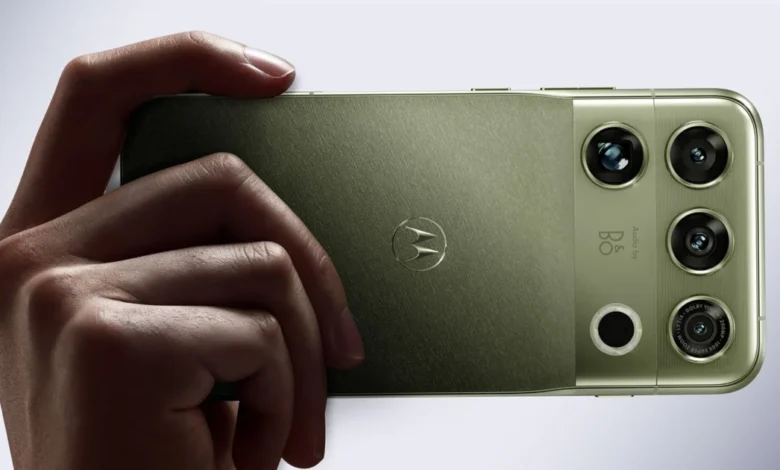
The mobile technology landscape experienced a significant shift today as Motorola took center stage at the annual Qualcomm Snapdragon Summit to preview its next-generation flagship smartphone, the Motorola Signature 27. Unveiled alongside Qualcomm’s newly announced Snapdragon 8 Elite Extreme Gen 6 Mobile Platform, the device is engineered to redefine the limits of mobile imaging, artificial intelligence processing, and premium hardware design. While Motorola has positioned the handset as its most advanced and powerful mobile device to date, the company has released only a curated set of specifications ahead of a broader commercial rollout slated for later this year.
The announcement underscores a deepening strategic alignment between Motorola and Qualcomm, leveraging cutting-edge silicon architecture to enable professional-grade computational photography and real-time AI workflows. As manufacturers race to integrate advanced generative AI tools and high-bitrate video capabilities directly into handheld devices, the Motorola Signature 27 emerges as a key contender in the ultra-premium smartphone segment.
Main Facts and Hardware Specifications
At the core of the Motorola Signature 27 is the newly minted Qualcomm Snapdragon 8 Elite Extreme Gen 6 Mobile Platform. This cutting-edge processor serves as the computational engine for the device, unlocking advanced machine learning workloads, enhanced power efficiency, and unprecedented multimedia handling—including support for complex AI algorithms executed locally on the device.
The most striking revelation surrounding the Signature 27 centers on its imaging architecture. Motorola has incorporated Sony’s latest sensor technology to construct what company executives have termed an industry-leading camera system. The primary wide-angle camera utilizes the 50-megapixel Sony Lytia 910 LOFIC (Lateral Overflow Integration Capacitor) image sensor. Featuring a Type 1/1.28 optical format, the sensor is designed to capture an exceptionally wide dynamic range, effectively mitigating the common issue of blown highlights and crushed shadows in high-contrast environments. By managing charge overflow at the pixel level, the Lytia 910 aims to deliver DSLR-like tonal gradations and color fidelity previously difficult to achieve in compact mobile form factors.

Complementing the primary shooter is a dedicated telephoto camera driven by the 200-megapixel Type 1/1.12 Sony Lytia 901 sensor, a component initially introduced to the market late last year. While Motorola has yet to disclose the precise optical zoom magnification parameters of this telephoto module, the sheer pixel density and large physical sensor size suggest robust lossless cropping capabilities and high-resolution distant subjects capture.
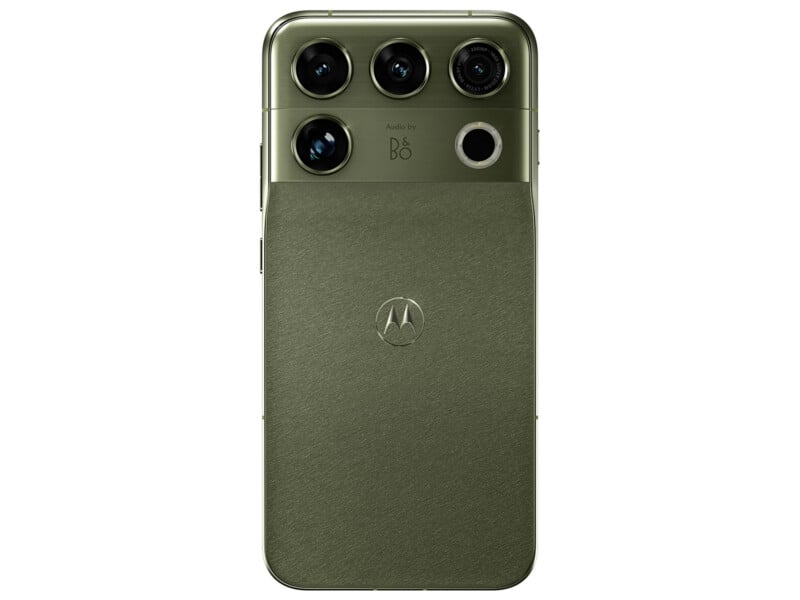
Despite the physical prominence of a multi-lens rear camera module—clearly housing more than the two explicitly detailed Sony-powered sensors—Motorola has remained tight-lipped regarding the specifications of its ultra-wide-angle camera and auxiliary sensors. Industry analysts anticipate further disclosures as the official launch date approaches.
Computational Photography and the Video Enhancement Engine
Hardware improvements are heavily supplemented by proprietary software innovations. The Signature 27 introduces Motorola’s new Video Enhancement Engine, an AI-driven processing suite that operates as a real-time intelligence layer during video capture. Unlike traditional post-processing pipelines that apply filters or adjustments after a file is saved, this engine dynamically analyzes incoming frame data to adjust color balance, exposure, and local contrast on the fly.
According to Motorola representatives, this real-time optimization is specifically tailored for challenging shooting scenarios, such as low-light concert venues, nocturnal streetscapes, or complex sunset gradients. By leaning on the immense neural processing unit (NPU) throughput of the Snapdragon 8 Elite Extreme Gen 6 chip, the device aims to maintain low-light clarity and natural skin tones without introducing excessive digital noise or unnatural sharpening artifacts.
Stabilization has similarly received an overhaul. The device pairs physical optical image stabilization (OIS) hardware with Qualcomm’s advanced software stabilization algorithms. This dual approach is designed to smooth out erratic hand movements during high-resolution video recording, potentially rivaling dedicated handheld gimbals for mobile creators and mobile journalists.

Design Language and Acoustic Partnership
Beyond pure performance and imaging capabilities, Motorola is explicitly targeting the luxury consumer market through refined industrial design and high-end acoustic engineering.
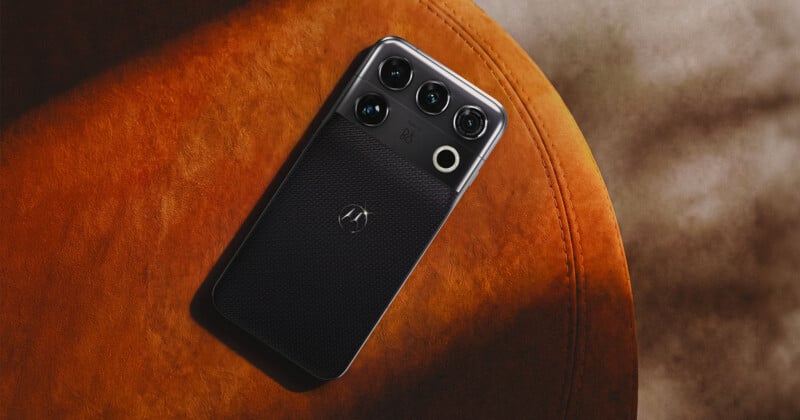
The exterior of the Signature 27 features a sleek aluminum chassis paired with tactile rear panel treatments. The device will be offered in two distinct finishes at launch: a "coal smoke" variant utilizing a technical weave texture, and a striking "Capulet olive" option featuring a brushed textile finish. These materials have been chosen not only for durability and ergonomics but to create a distinct tactile identity that differentiates the handset from smooth glass-backed competitors.
In parallel with the hardware unveiling, Motorola highlighted a newly announced multi-year strategic partnership with legendary Danish audio manufacturer Bang & Olufsen (B&O). The collaboration brings B&O acoustic tuning and audio engineering directly to the Signature 27, aiming to deliver an elevated sound signature for media consumption, speaker playback, and content creation.
Background Context of the Event and Chronology
The debut of the Motorola Signature 27 occurred on the opening day of the Snapdragon Summit, an annual showcase hosted by Qualcomm in Hawaii to highlight its upcoming mobile silicon architecture. Historically, the summit serves as the launchpad for the semiconductor industry’s most powerful processors, drawing major original equipment manufacturers (OEMs) from across the globe to demonstrate hardware designed around Qualcomm’s latest platforms.
Motorola’s presence at the event reflects its aggressive push to reclaim market share in the high-end flagship tier. Over the past several years, the brand—owned by Lenovo—has successfully expanded its footprint in the foldable and mid-range segments. However, the introduction of the Signature series represents a concerted effort to compete directly with established ultra-premium heavyweights from Apple, Samsung, and Chinese OEMs that dominate the luxury market.
The timeline leading up to the device’s commercial availability follows a calculated preview strategy. By teasing the camera architecture, AI capabilities, and design aesthetics at the Snapdragon Summit, Motorola aims to build anticipation ahead of a full technical reveal and regional rollout schedules expected later in the year.
Broader Industry Impact and Implications
The announcement of the Motorola Signature 27 highlights several broader trends shaping the contemporary smartphone industry.
First, the integration of LOFIC sensor technology—such as the Sony Lytia 910 found in the Signature 27—marks a critical turning point in mobile sensor design. As physical pixel sizes approach optical limits, manufacturers are increasingly turning to advanced capacitor architectures to solve dynamic range limitations. By preventing pixel saturation in high-brightness areas, sensors utilizing LOFIC technology bridge the gap between traditional professional cinema cameras and pocket-sized mobile devices.
Second, the reliance on specialized AI processing layers, exemplified by Motorola’s Video Enhancement Engine running on Qualcomm silicon, demonstrates that mobile photography has fundamentally transitioned from an optical challenge to a computational one. The ability to execute complex neural network calculations in real-time during high-bitrate video recording changes consumer expectations, shifting the burden of optimization from the user’s editing suite directly to the device’s internal processor.
Finally, Motorola’s emphasis on tactile materials and co-branding partnerships—such as its collaboration with Bang & Olufsen—reflects a maturing luxury smartphone market where hardware specifications alone are insufficient for differentiation. As performance plateaus across flagship tiers, aesthetic uniqueness, haptic quality, and acoustic fidelity increasingly dictate consumer choice.
As Motorola prepares for the full commercial launch of the Signature 27, industry observers will be watching closely to see how the device’s pricing, regional availability, and unannounced specifications measure up against an intensely competitive global flagship market.