Fujifilm Enters the Specialized Spectrum Market With the GFX100 II Infrared Medium Format Camera


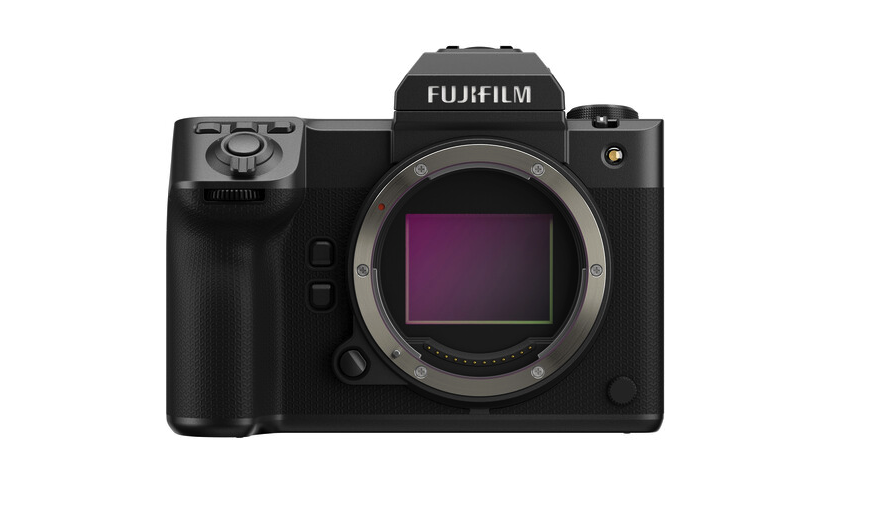
Fujifilm has officially announced the expansion of its high-resolution medium format lineup with the introduction of the Fujifilm GFX100 II Infrared. Built upon the robust technological foundation of the standard GFX100 II body, this specialized variant is engineered specifically to capture the invisible electromagnetic spectrum. By removing the standard hot-mirror filter overlying the sensor, Fujifilm aims to serve a dedicated niche of scientific researchers, fine-art photographers, and technical imaging professionals who require absolute precision in infrared (IR) documentation.
The announcement highlights a growing trend among camera manufacturers to support specialized imaging applications directly from the factory floor, minimizing the risks and warranty voids historically associated with third-party conversions. While consumer-grade infrared cameras have occasionally surfaced in the market through aftermarket modifications, a factory-produced medium-format infrared system represents a significant milestone for high-end digital capture.

Understanding the Technology: How Infrared Medium Format Works
At the heart of the GFX100 II Infrared is a massive 102-megapixel large-format CMOS II HS sensor. In a standard digital camera, a specialized glass filter known as a hot-mirror blocks infrared and ultraviolet light to ensure that the final image mirrors human vision, displaying natural color fidelity. However, the GFX100 II Infrared is designed to bypass these limitations, allowing near-infrared wavelengths to reach the sensor photodiodes directly.
Wavelengths in the infrared spectrum—typically ranging from 700 nanometers to over 1,000 nanometers—interact with organic and inorganic materials in fascinating ways. Foliage reflects near-infrared light intensely, resulting in the classic "Wood effect," where vegetation appears glowing white. Meanwhile, atmospheric haze is dramatically reduced due to lower light scattering at longer wavelengths, making infrared ideal for distant landscapes, aerial surveillance, and architectural analysis.

By combining this specialized spectral sensitivity with a 102-megapixel resolution, Fujifilm offers an unprecedented level of detail. Fine textures, deep tonal gradations, and intricate details previously lost in lower-resolution modified DSLRs or crop-sensor mirrorless cameras are now preserved with exceptional clarity.
Background Context and Evolution of Specialized Imaging
The release of the GFX100 II Infrared did not occur in a vacuum; it is the culmination of years of iterative advancements in medium format versatility. When Fujifilm introduced the original GFX system, the primary goal was to democratize large-sensor photography by making it lighter, faster, and more accessible than traditional digital backs. Over successive generations, the company integrated high-speed processing engines, improved autofocus algorithms, and advanced video capabilities.

Historically, photographers interested in infrared work had to purchase a standard camera and send it to specialized third-party technicians to remove the internal blocking filter. This process, often referred to as "full-spectrum" or "IR-conversion," introduced several variables, including potential calibration issues, autofocus discrepancies, and the forfeiture of the manufacturer warranty. Furthermore, adapting filters to complex medium format lenses often created vignetting or optical aberrations.
By engineering an infrared variant natively, Fujifilm ensures that sensor alignment, phase-detection autofocus (PDAF) arrays, and internal processing pipelines are meticulously calibrated for the altered spectrum out of the box. This drastically reduces the technical hurdles faced by institutional buyers and creative professionals alike.
Target Audiences and Practical Applications
The market for a factory-built infrared medium format camera spans several diverse industries, ranging from artistic expression to rigorous scientific analysis.
Fine-Art Landscape and Creative Photography
For decades, landscape artists have utilized infrared capture to evoke a surreal, dreamlike aesthetic. Traditional black-and-white infrared film, pioneered by emulsions like Kodak Infrared, required meticulous handling and darkroom wizardry. Digital infrared brought immediate feedback, but resolution limits often hindered large-format printing. The 102-megapixel output of the GFX100 II Infrared enables massive exhibition-grade prints with virtually imperceptible digital noise, opening new creative avenues for fine-art photographers exploring the surreal interplay of light and shadow.
Cultural Heritage and Archival Preservation
Museum conservators, art historians, and forensic documentarians frequently rely on infrared reflectography to peer beneath the visible surface of paintings, ancient manuscripts, and historical artifacts. Infrared light can penetrate upper layers of varnish or superficial pigments, allowing researchers to examine underdrawings, hidden signatures, alterations made by the original artist, or modern forgeries. The expansive sensor real estate of the GFX100 II provides the necessary resolution to map microscopic details across large historical canvases without requiring complex stitching procedures.

Scientific Research and Remote Sensing
In agricultural research, environmental science, and forestry, near-infrared reflectance is a primary metric for assessing plant health, moisture stress, and ecological changes. While specialized multispectral drones and satellite imaging systems handle macro-scale geographic analysis, ground-truth research and high-precision localized studies demand ultra-high-resolution imaging tools. The GFX100 II Infrared offers researchers a reliable, standardized platform for capturing calibrated spectral data in the field.
Integration and Ecosystem Compatibility
One of the most critical challenges of shooting infrared photography is managing the light spectrum physically through optical glass. The GFX100 II Infrared retains the Fujifilm G-mount, granting users access to a growing lineup of high-performance GF lenses.

Because many modern lenses are designed with internal coatings to suppress internal reflections and flare—phenomena that can be exacerbated by infrared light bouncing between sensor glass and lens elements—Fujifilm has optimized the camera’s internal architecture to mitigate hot-spots and internal internal reflections. Photographers can also utilize specialized external screw-in or drop-in filters to isolate specific wavebands, such as 720nm or 850nm filters, tailoring the camera’s response for specific artistic or scientific outcomes.
Industry Implications and Future Outlook
The introduction of the Fujifilm GFX100 II Infrared signals a broader industry shift toward catering to niche, high-value professional workflows. As consumer camera sales face stagnation due to the maturation of smartphone photography, manufacturers increasingly rely on specialized, high-margin gear designed for specialized professionals, institutions, and advanced hobbyists.

By providing an off-the-shelf solution for infrared imaging, Fujifilm removes the barrier to entry for institutions that previously avoided modified consumer hardware due to procurement policies or warranty constraints. Universities, museums, and governmental research bodies often require factory-certified equipment backed by official manufacturer support and servicing agreements.
As deliveries and institutional evaluations begin, industry analysts will closely monitor the adoption rate of the GFX100 II Infrared. If successful, it may pave the way for further spectral variations within the medium format ecosystem, such as dedicated ultraviolet (UV) systems or specialized monochrome variants. For now, Fujifilm has firmly established its commitment to pushing the physical boundaries of digital imaging, offering creators and scientists a powerful new lens through which to view the unseen world.