Native Instruments Launches Super*Saw a Collaboration with PC Music Founder A G Cook for Next Generation Electronic Production.

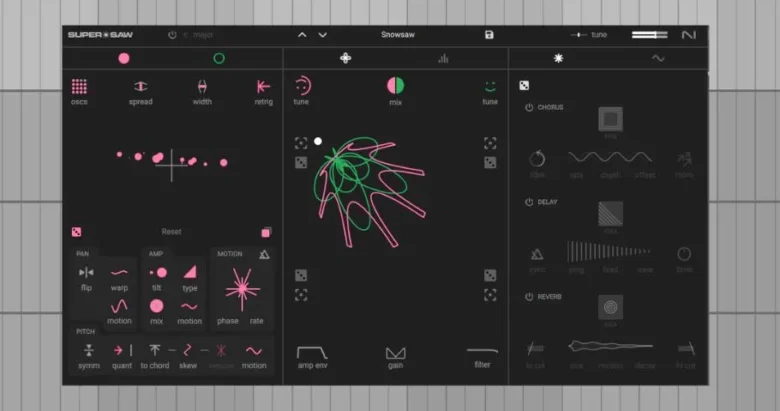
The global music technology leader Native Instruments has officially announced the release of SuperSaw, a specialized software synthesizer developed in close partnership with the influential British producer and PC Music founder A. G. Cook. This new digital instrument is designed to codify and streamline the complex, multi-layered production techniques that have become synonymous with Cook’s signature sound, which has shaped the landscape of modern electronic pop through collaborations with high-profile artists such as Charli xcx, Caroline Polachek, Beyoncé, and Oklou. By condensing what traditionally requires dozens of plugin instances and intricate signal routing into a singular, intuitive interface, SuperSaw aims to provide producers with a powerful tool for creating the dense, harmonically rich textures that define contemporary hyperpop and experimental electronic genres.

The Architectural Evolution of the Supersaw Sound
To understand the significance of Super*Saw, one must look at the history of the "supersaw" waveform itself. Originally introduced in 1996 with the Roland JP-8000 hardware synthesizer, the supersaw is created by layering multiple sawtooth waves—traditionally seven—and detuning them against one another. This process creates a thick, swirling, and harmonically aggressive sound that became the backbone of the 1990s and early 2000s trance and rave movements.
In the hands of A. G. Cook and the PC Music collective, this classic sound was recontextualized. Rather than using it solely for euphoric trance leads, Cook utilized the supersaw as a versatile building block for "maximalist" pop. Super*Saw, the plugin, expands on this legacy by utilizing dual oscillator banks, each capable of generating up to 16 individual sawtooth waves. This total of 32 oscillators allows for a level of sonic density that surpasses traditional virtual analog emulations. The plugin provides precise control over the detuning, phase, level, and stereo positioning of these waves, enabling users to move from thin, piercing leads to wall-of-sound atmospheres that retain clarity even in complex arrangements.

A Two-Year Development Cycle and Creative Partnership
The journey to bring Super*Saw to market was a multi-year endeavor. According to development notes from Native Instruments, the project spanned over 24 months, during which the company’s engineering and design teams worked directly with Cook. The objective was not merely to create a preset bank, but to reverse-engineer Cook’s actual production sessions and sound design workflows.
The development team analyzed the "stacks" Cook famously used in his productions—often involving the layering of multiple software synthesizers like Serum, Sylenth1, and Massive, followed by extensive external processing. By identifying the common denominators in these chains, Native Instruments was able to build a dedicated engine that handles the heavy lifting of phase alignment and harmonic balancing internally. This "single-instrument" philosophy reduces CPU overhead and simplifies the automation process, allowing producers to focus on the creative aspects of composition rather than technical troubleshooting.

Technical Specifications and the X/Y Morphing Engine
At the heart of SuperSaw’s innovative workflow is the four-corner X/Y Morpher. While many modern synthesizers utilize macro knobs to control multiple parameters, the Morpher in SuperSaw allows users to save four distinct "states" or "snapshots" of the entire synth engine—one in each corner of the X/Y grid. By moving a cursor across this grid, the user can interpolate between these four states in real-time.
This functionality is particularly relevant for the "shifting" textures found in hyperpop, where a sound might transition from a metallic, percussive pluck to a wide, shimmering pad within a single bar. Instead of drawing dozens of automation lanes for filter cutoffs, oscillator levels, and effect dry/wet mixes, a producer can simply automate the X and Y coordinates of the Morpher. This results in more fluid, organic transitions that are difficult to achieve through traditional linear automation.

Beyond the morphing engine, Super*Saw includes a suite of harmonic tools designed for modern songwriting:
- Harmonic Frameworks: Built-in chord, scale, and quantization functions ensure that even complex, multi-voice patches remain within the desired musical key.
- Controlled Dissonance: Users can introduce "deviations" from standard tuning, a technique Cook often uses to add a sense of tension or "uncanny" digital grit to his productions.
- Advanced Modulation: Per-voice glide and offset controls allow for detailed adjustment of how pitch moves between notes and how the sound occupies the stereo field.
Visual Identity and Interface Design
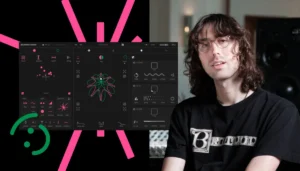
The aesthetic of Super*Saw is as much a part of its identity as its sound engine. The interface was developed in collaboration with Simon Whybray, a long-term visual partner of A. G. Cook. Whybray’s influence is evident in the synth’s minimalist yet vibrant UI, which departs from the "skeuomorphic" look of many vintage-style plugins in favor of a clean, modern digital aesthetic.

The interface is divided into three primary functional areas:
- The Oscillator and Morphing Core: Where the primary sound generation and X/Y movement take place.
- Modulation and Harmonic Tools: Housing the scale quantizers and envelope controls.
- The Effects and Filter Section: Featuring a selection of high-quality filters (low-pass, band-pass, and high-pass with 2-pole and 4-pole slopes) and essential temporal effects like chorus, delay, and reverb.
Integration within the Native Instruments Ecosystem
As a product of Native Instruments, Super*Saw is fully integrated into the NKS (Native Kontrol Standard) ecosystem. This ensures that the plugin is "plug-and-play" for users of Komplete Kontrol keyboards and Maschine hardware. The Morpher, in particular, is mapped to hardware touchstrips and joysticks, allowing for tactile control that bridges the gap between software flexibility and hardware playability. This integration is vital for live performers who wish to bring Cook’s studio-grade textures to the stage without relying solely on a mouse and keyboard.

Market Context and Professional Implications
The release of Super*Saw comes at a pivotal moment in the music industry. The "Brat Summer" phenomenon of 2024, driven largely by the production work of A. G. Cook and his peers on Charli xcx’s latest album, has brought the hyperpop aesthetic into the mainstream. There is a surging demand among bedroom producers and professional composers alike for the tools that facilitate this specific sound.
Priced at $99 (€99), SuperSaw enters a competitive market. However, its value proposition lies in its specificity. While "workhorse" synths like Xfer Records’ Serum or Vital Audio’s Vital offer infinite flexibility, they require significant expertise to yield the specific "A. G. Cook sound." SuperSaw acts as a shortcut to a curated sonic palette, making high-end production techniques accessible to a broader range of creators.

Industry analysts suggest that this collaboration marks a shift in how music technology companies approach artist partnerships. Rather than simple "signature" expansion packs, companies are increasingly developing bespoke engines that reflect an artist’s entire philosophy of sound.
Broader Impact on Electronic Music Production
The release of Super*Saw is expected to have a lasting impact on how electronic music is composed. By lowering the barrier to entry for complex supersaw production, the plugin may lead to a further proliferation of the "maximalist" pop sound. Furthermore, the emphasis on the X/Y Morpher encourages a more performative approach to sound design, where the movement of the sound is as important as its initial timbre.

For A. G. Cook, Super*Saw represents the culmination of over a decade of experimentation with PC Music. It serves as a digital archive of his contribution to the "supersaw" lineage, moving it from the raves of the 90s to the avant-garde pop of the 2020s. For Native Instruments, it reinforces their position as a brand that is not only looking back at the history of synthesis but is actively participating in the creation of its future.
Conclusion and Availability
Super*Saw is available now via the Native Instruments website and authorized retailers. It supports VST3, AU, and AAX formats, ensuring compatibility with all major Digital Audio Workstations (DAWs) including Ableton Live, Logic Pro, FL Studio, and Pro Tools. The plugin includes a comprehensive library of presets, ranging from "metallic textures" and "monophonic leads" to "stacked polyphonic chords," providing a robust starting point for users of all skill levels.

As the industry continues to move toward more specialized, artist-driven software tools, SuperSaw stands as a prime example of how collaboration between engineers and visionaries can result in an instrument that is both a technical achievement and a creative catalyst. Whether used for chart-topping pop hits or experimental underground tracks, SuperSaw is poised to become a staple in the toolkit of the modern producer.
Related posts: