Dirk Ulrich Reacquires Brainworx and Plugin Alliance from inMusic Under New Rockforce Tech Holding Umbrella

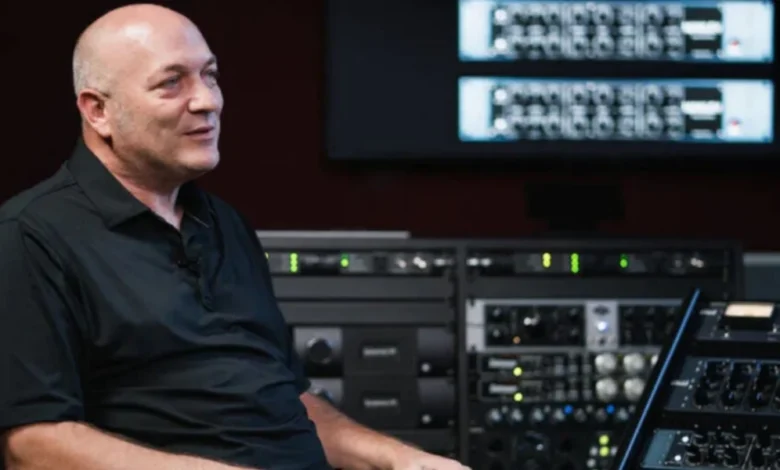
The professional audio industry witnessed a significant shift in its corporate landscape this July as Dirk Ulrich, the original founder of Brainworx and Plugin Alliance, successfully completed the reacquisition of both entities from the inMusic Group. This transaction, finalized on July 15, 2026, marks the return of two of the most influential brands in the digital signal processing (DSP) and plugin distribution sectors to founder-led management. The move comes during a period of intense consolidation and subsequent fragmentation within the music technology market, signaling a potential move away from the large-scale private equity models that have dominated the sector over the past five years.
The acquisition was executed through Ulrich’s new holding company, Rockforce Tech Holding Inc. (RCKFRC), which has rapidly positioned itself as a major player in the high-end audio market. By bringing Brainworx and Plugin Alliance back under his control, Ulrich aims to restore consumer confidence and stabilize the brands following a tumultuous period of ownership changes that began in 2022.
The Restoration of Founder-Led Operations
Dirk Ulrich’s return to the helm of Brainworx and Plugin Alliance is viewed by industry analysts as a strategic "course correction." Ulrich founded Brainworx over two decades ago, initially gaining international acclaim for the development of innovative Mid-Side (M/S) equalization technology, most notably the bx_digital plugin. In 2011, he launched Plugin Alliance, a unique distribution platform that brought together various boutique hardware manufacturers—such as SPL, Shadow Hills Industries, and Maag Audio—to offer high-fidelity digital emulations under a unified licensing system.
The reacquisition follows a brief but complex period under the stewardship of the inMusic Group, which had acquired the assets earlier in 2026. Ulrich, who had transitioned from CEO to an advisory role and eventually stepped away entirely during the previous ownership regime, cited a sense of responsibility toward the user base as a primary motivator for his return. The move is expected to address long-standing customer concerns regarding license longevity, product support, and the future development roadmap of the expansive Plugin Alliance catalog.
Historical Context: The Soundwide Era and Private Equity Influence
To understand the significance of this reacquisition, one must look back at the aggressive consolidation efforts that characterized the early 2020s. In January 2021, the private equity firm Francisco Partners acquired a majority stake in Native Instruments. Seeking to create a dominant force in the music production software market, Francisco Partners subsequently acquired Brainworx and Plugin Alliance in April 2022.
These brands, along with the audio repair specialists iZotope, were grouped under the corporate umbrella known as "Soundwide." This era was defined by a leveraged-buyout strategy, with Francisco Partners reportedly investing approximately $5 billion into various music industry acquisitions. However, the Soundwide initiative struggled to integrate the disparate company cultures and technological infrastructures. The resulting entity faced significant debt burdens and a perceived disconnect from its core professional user base.
By January 2026, the parent organization entered preliminary insolvency proceedings, a move that shocked the industry but highlighted the risks associated with high-leverage private equity involvement in niche technology markets. This led to a fire sale of assets, with the inMusic Group—owners of Akai Professional, Denon DJ, and Alesis—initially acquiring the bulk of the software portfolio in May 2026.
Chronology of Ownership and Corporate Transitions
The following timeline illustrates the rapid succession of ownership changes that led to the current state of Brainworx and Plugin Alliance:
- 2000s – 2011: Dirk Ulrich establishes Brainworx and later Plugin Alliance, operating as independent, founder-led entities.
- January 2021: Francisco Partners acquires Native Instruments, beginning the consolidation phase.
- April 2022: Francisco Partners acquires Brainworx and Plugin Alliance; the Soundwide group is officially formed.
- 2022 – 2024: Dirk Ulrich serves as CEO of the brands under Soundwide, eventually moving to an advisory role before departing.
- July 2025: RCKFRC (Dirk Ulrich’s new company) acquires the legendary hardware manufacturer Manley Labs in an all-cash transaction.
- November 2025: RCKFRC acquires Apogee Electronics, further expanding its portfolio of high-end audio brands.
- January 2026: The Native Instruments/Soundwide umbrella enters preliminary insolvency.
- May 2026: inMusic Group acquires the assets of the insolvent group.
- July 2026: The fragmentation of the inMusic acquisition begins; Boris FX acquires iZotope, and Dirk Ulrich (RCKFRC) reacquires Brainworx and Plugin Alliance.
Strategic Vision of Rockforce Tech Holding Inc. (RCKFRC)
The reacquisition of Brainworx and Plugin Alliance is not an isolated event but the centerpiece of a broader strategy by RCKFRC. Unlike the large-scale, debt-heavy acquisitions seen during the Francisco Partners era, RCKFRC appears to be building a curated ecosystem of premium audio brands. With the inclusion of Manley Labs and Apogee, Ulrich has assembled a portfolio that covers the entire spectrum of professional audio, from high-end analog hardware and AD/DA conversion to industry-standard DSP software.
Industry observers note that this "boutique conglomerate" model may be more sustainable than previous iterations. By maintaining a smaller, more focused group of companies, RCKFRC can leverage cross-brand synergies—such as integrated hardware/software workflows—without the administrative bloat associated with multi-billion-dollar mergers. The all-cash nature of previous RCKFRC deals, such as the Manley Labs acquisition, suggests a more stable financial foundation compared to the leveraged models used by private equity firms.
Official Statements and Commitment to Innovation
In a formal communication addressed to the global community of producers and engineers, Dirk Ulrich emphasized a return to the core values that originally built Brainworx and Plugin Alliance. He acknowledged the uncertainty of recent years and outlined a clear path forward for the brands.
"This marks the beginning of a new chapter—not only for the companies but also for the millions of producers, engineers, musicians, and creators who have trusted our products over the years," Ulrich stated. He further detailed the immediate priorities for the "PA/BX universe," which include:
- License Protection: Ensuring that existing user licenses and project compatibility remain secure.
- Renewed Innovation: Re-engaging the Brainworx engineering team to solve real-world problems for professional users.
- Transparency: Establishing direct lines of communication with the customer base.
- Roadmap Visibility: Introducing the new leadership team and sharing a long-term vision for product development.
Addressing the reasons for his return, Ulrich highlighted a desire to rectify the "disconnect" that occurred during the corporate transition. He indicated that the future of these brands would be defined by a greater sense of responsibility toward the end-user, particularly regarding the maintenance of perpetual licenses in an industry increasingly dominated by subscription models.
Broader Implications for the Music Technology Market
The return of Brainworx and Plugin Alliance to founder control occurs simultaneously with Boris FX’s acquisition of iZotope. These parallel moves suggest a wider trend of "unbundling" in the music software industry. As the Soundwide experiment concluded, the market is seeing a return to specialized ownership where companies are managed by entities with specific expertise in their respective niches—Boris FX in post-production and visual effects, and RCKFRC in professional audio engineering.
One of the most pressing concerns for the user base is the future of licensing models. Under previous corporate structures, there was significant pressure to shift toward mandatory subscription services to ensure recurring revenue for investors. The reacquisition by Ulrich has been met with cautious optimism by those who prefer perpetual licensing. Given Ulrich’s history of offering flexible purchasing options, it is anticipated that RCKFRC will maintain a hybrid model that respects the investment of long-term customers while providing accessible entry points for new users.
Furthermore, the integration of Brainworx’s modeling expertise with the hardware legacies of Manley and Apogee presents intriguing possibilities for the future. Analysts expect to see deeper integration between Apogee’s DSP-enabled interfaces and Brainworx’s TMT (Tolerance Modeling Technology), potentially creating a more seamless ecosystem for recording and mixing.
Conclusion
The reacquisition of Brainworx and Plugin Alliance by Dirk Ulrich marks the end of a turbulent era and the beginning of what many hope will be a period of stability and innovation. By removing these brands from the pressures of high-leverage corporate debt and placing them back into the hands of their creator, RCKFRC has the opportunity to rebuild the trust that was eroded during the Soundwide years.
As the industry moves into the second half of 2026, the focus will shift to Ulrich’s ability to execute his promised roadmap. With a portfolio that now includes some of the most respected names in both the analog and digital domains, Rockforce Tech Holding Inc. is uniquely positioned to define the next generation of professional audio workflows. For the millions of users who rely on these tools daily, the "return of the Captain" is a significant development that promises a renewed focus on quality, transparency, and the art of sound.
Related posts: