Gavin Harrison Opens Up on Juggling Prog Rock’s Elite Bands and His Masterclass in Drumming Production

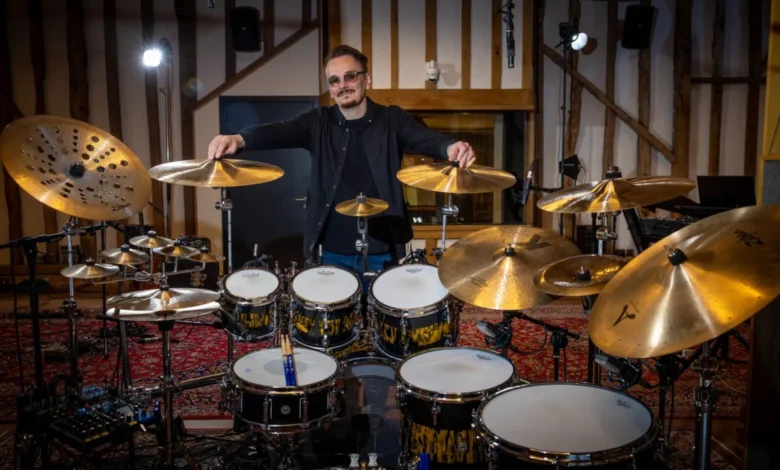
Widely celebrated as one of the most technically accomplished and musically sophisticated drummers of his generation, Gavin Harrison has built a legendary career defining the rhythmic spine of modern progressive rock. However, maintaining a central role in three of the genre’s most demanding groups simultaneously—Porcupine Tree, King Crimson, and The Pineapple Thief—presents an ongoing logistical and physical puzzle. In a recent extensive interview, Harrison reflects on the intricacies of calendar management, the rigorous technical demands of legendary repertoire, and the meticulous multi-mic recording techniques that define his signature sound.
The Logistics of Managing a Progressive Rock Triple-Threat
Harrison’s tenure across these three monumental bands spans more than two decades. He joined Porcupine Tree in 2002, laying the foundational grooves for albums that bridged the gap between classic 1970s art-rock and modern heavy alternative music. In 2008, he was recruited into the legendary ranks of King Crimson by guitar innovator Robert Fripp, a partnership that required adapting to some of the most complex rhythmic structures in contemporary music. Later, in 2016, he became an integral member and co-writer in The Pineapple Thief, continuing a deep creative partnership with frontman Bruce Soord.
Balancing the demands of these outfits required clinical precision, particularly when overlapping tours threatened to burn him out. Harrison notes that because major progressive rock tours are typically mapped out 18 months in advance, scheduling operated much like a high-stakes puzzle.
"There was quite a lot of time where I was in King Crimson and The Pineapple Thief at the same time," Harrison explains. "And I don’t like to come off one tour and then the next day go out on another tour. I need time to recover and to change my mental hard drive."
To manage the overlapping commitments, Harrison became a master coordinator. He would proactively analyze tour gaps with The Pineapple Thief, reassuring them of windows where he knew King Crimson was inactive. The management of King Crimson itself involved delicate negotiations between Fripp, bassist Tony Levin—who famously balanced commitments with Peter Gabriel—and Harrison’s own dense calendar. If Fripp proposed a fall tour that clashed with Levin’s or Harrison’s pre-existing plans, the dates would smoothly shift to the subsequent spring, illustrating a rare level of professional synergy within the upper echelons of art-rock.
With Porcupine Tree entering an extended hiatus between 2010 and 2021, the direct strain of balancing all three groups was temporarily mitigated. By the time Porcupine Tree returned with their critically acclaimed 2022 comeback album Closure/Continuation, King Crimson had stepped back into an indefinite state of inactivity, aligning the timeline neatly for Harrison.
Future Horizons: Porcupine Tree, King Crimson, and The Pineapple Thief
As the music industry looks toward the mid-2020s, the operational status of Harrison’s primary projects varies wildly. The Pineapple Thief stands as the most currently active engine, hitting the road in early 2027 following the October 2026 release of their 16th studio album, Far And Wide.
King Crimson, conversely, remains entirely dormant. Clarifying his relationship with the avant-rock pioneers, Harrison points out that his status is simply inactive rather than resigned. "Well, King Crimson is completely inactive. So, I haven’t left it, I haven’t joined it—it’s just inactive. There’s no news in the King Crimson world at the moment," he states. Asked if he would return to the fold should Robert Fripp initiate a reunion call, Harrison’s answer is immediate and affirmative: "Yeah, if I could, sure."
The narrative surrounding Porcupine Tree has faced mixed messaging in music press outlets. Frontman Steven Wilson recently suggested to Prog magazine that the band had struggled to accumulate enough finished material for a full-length follow-up to Closure/Continuation, estimating that a new record could be years away. Harrison, however, provides a more optimistic update from the rhythm section.
"Porcupine Tree is still an ongoing concern," Harrison counters. "We are writing another album. And next year we’re hoping to get together and finish that album off."
Deconstructing the Polyrythmic Masterclass
Throughout his career, Harrison has developed a reputation for executing astonishingly complex time signatures with effortless musicality. Looking back at his time with King Crimson, he previously singled out the track Discipline as one of the most formidable challenges in the band’s catalog, noting the intense cognitive load required to lock intricate polyrhythms against interlocking guitar parts.

Within Porcupine Tree’s extensive discography, the ultimate physical endurance test arrives with Anesthetize, the 17-minute epic from the 2007 landmark album Fear Of A Blank Planet—a progressive masterwork featuring a guest guitar solo by Rush’s Alex Lifeson. Harrison breaks down the grueling physiological demands of performing the piece live:
"That song is incredibly hard to play if you play the whole thing—17 minutes. From a drummer’s point of view, your heart rate probably gets up to maximum in the middle. The hard bit is that when you play it live as a 17-minute song, you play the first five or six minutes all on the toms. The muscles in your arms really start aching because you’re only playing the toms. So if you haven’t paced yourself carefully, your arms are really, really tired by the time you get to the heavy section in the middle—the bit where you really need them."
Another career-defining standout is Start Of Something Beautiful, co-written by Harrison and Steven Wilson for the 2005 album Deadwing, a track Harrison notes is deceptively heavy and demanding to deliver on stage.
When shifting focus to The Pineapple Thief, Harrison highlights the deep catalog of material he has helped shape over the past decade. While his immediate focus remains anchored on rehearsing and perfecting the new arrangements from Far And Wide, he holds a special fondness for tracks like Our Mire (from 2020’s Versions Of The Truth), White Mist (from 2018’s Dissolution), and In Exile, the very first song he recorded with the band, which remains a permanent fixture of their live setlists.

Inside Harrison’s Studio Engineering and Gear Philosophy
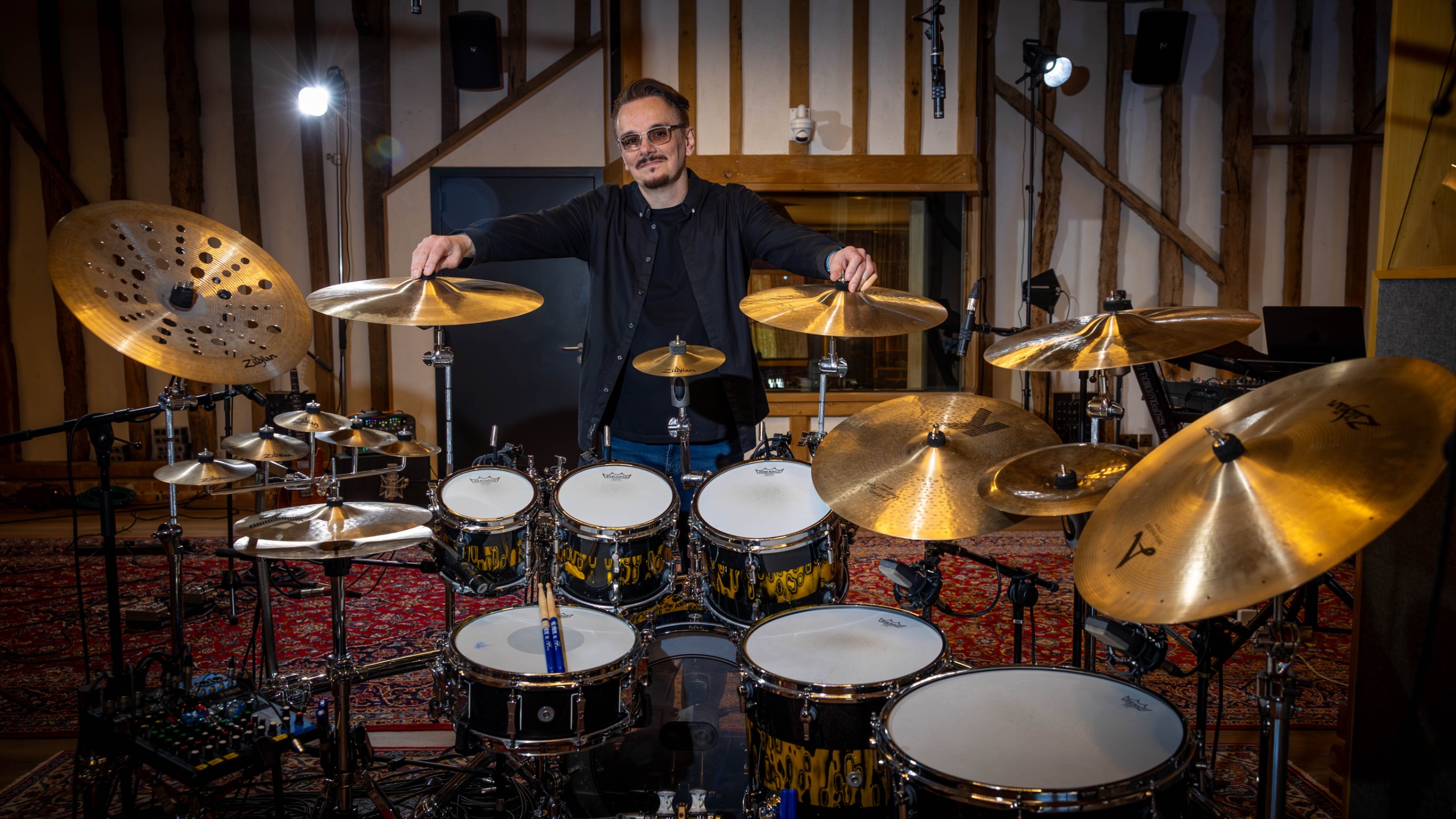
Beyond his physical performance capabilities, Harrison is renowned for his innovative approach to drum production, miking, and mix integration. Rather than relying solely on traditional close-miking techniques, his personal studio setup utilizes a sprawling acoustic environment to capture natural depth.
"I’ve got this drum kit in my home studio close-mic’d. I also have some overhead mics, mics from the ceiling," Harrison explains. "I’ve got this massive hall. The room is about 50 foot high by 50 foot wide, and I have some microphones placed out there. So I’ve got this massive reverb and ambient hall sound. I record that on four different mics out in the hall."
This configuration yields a staggering 20-microphone tracking footprint, offering maximum flexibility during the mixing stage. Harrison can effortlessly shift from a tight, dead, close-miked studio booth aesthetic to an expansive, cavernous hall ambiance, or blend any combination in between.
This setup facilitates a unique collaborative workflow with The Pineapple Thief’s Bruce Soord. Rather than tracking drums over a completed instrumental bed, Harrison frequently establishes the initial rhythmic framework:
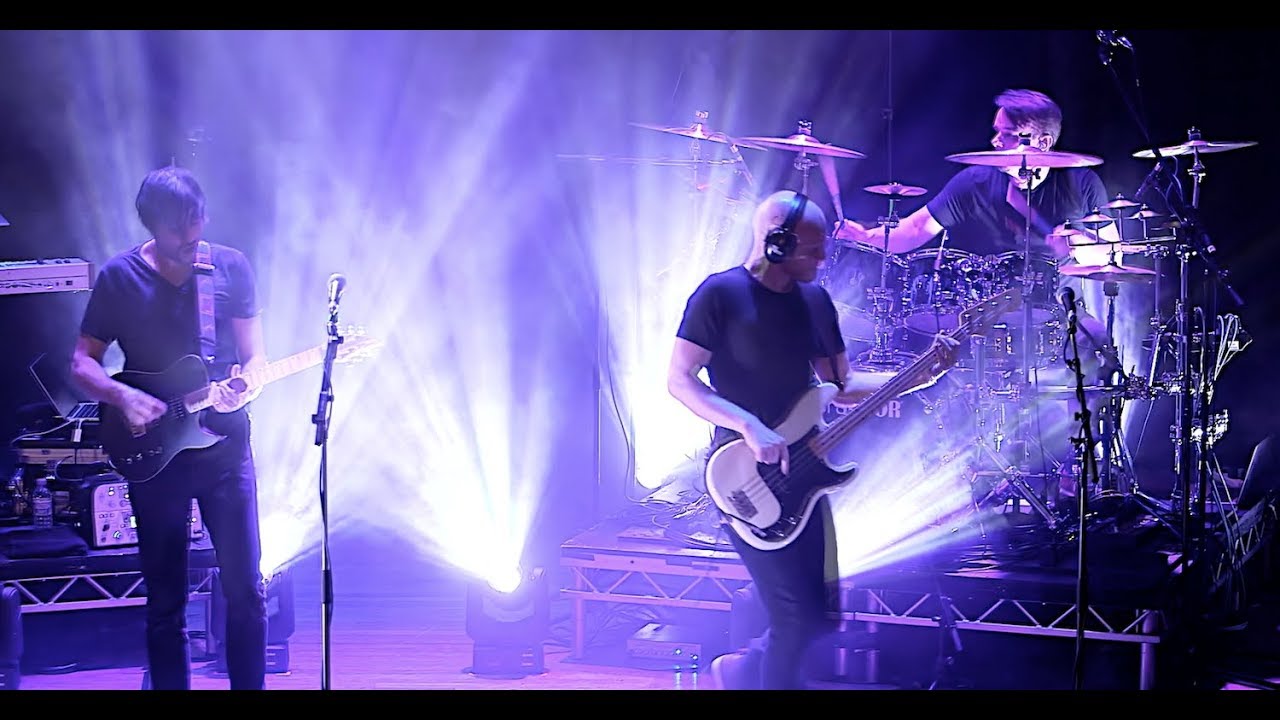
"The way we do it is I do a stereo mix of the drums, and I send that to Bruce, and he mixes everything else to my stereo mix. We keep updating. He’ll send me that mix with his mix on top, and then he’ll send me a drum-less version, and I’ll do another mix. That could happen 10, 15 times over a month for each song. So I keep refining the drums based upon how I’m hearing the guitars, the bass, the keyboards, the vocals. I make decisions, and then I’ll print another stereo mix and send it to Bruce. I always mix the drums, and he mixes the rest of the band."
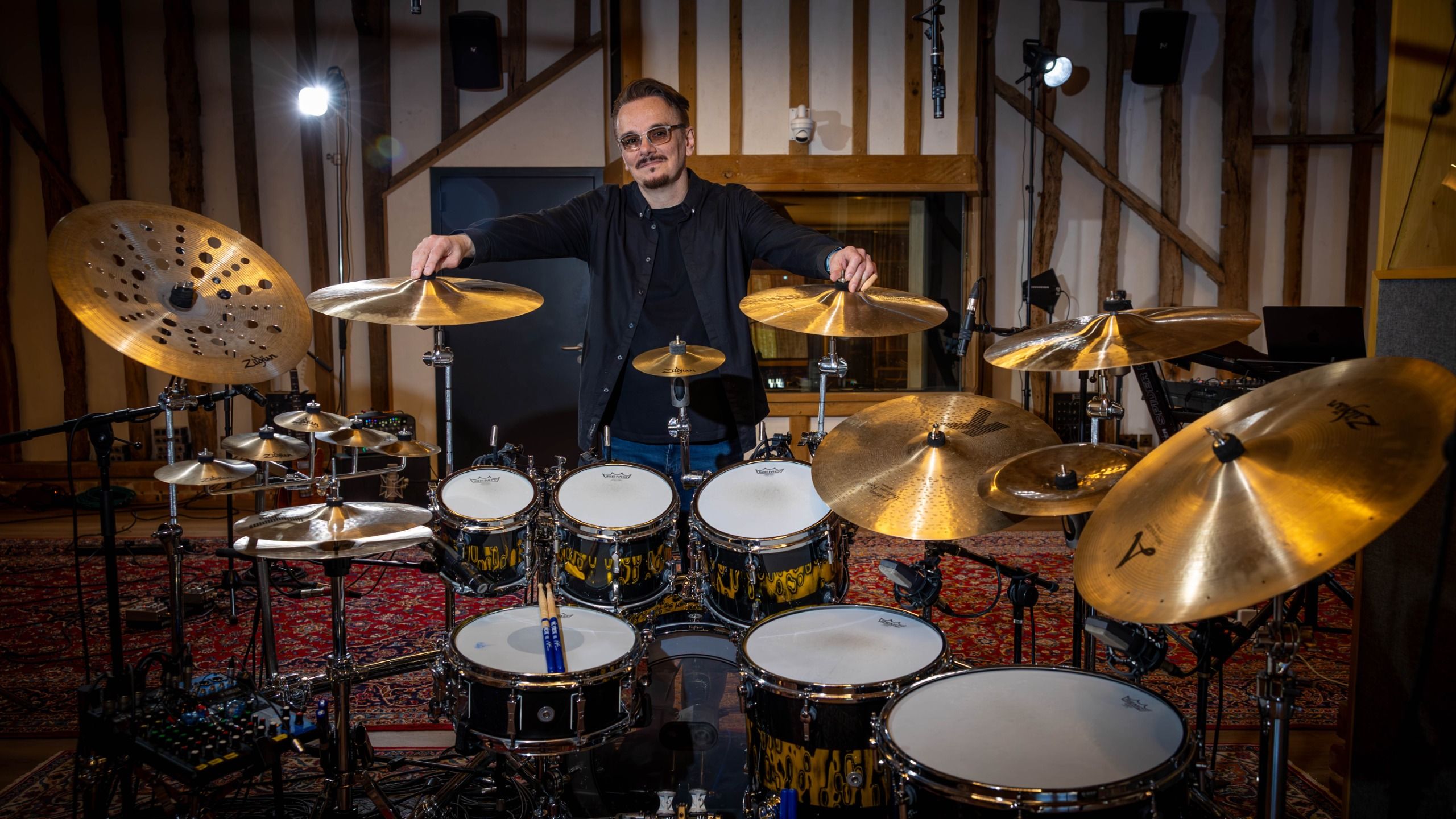
When transitioning from the controlled environment of his home studio to international live stages, Harrison maintains rigorous consistency. His touring kit mirrors his recording setup precisely, utilizing identical shell configurations, cymbals, and tuning. The only exception lies in the microphone selection; delicate, high-end studio valve microphones remain safely in the studio, replaced by road-worthy alternatives capable of enduring the rigors of touring.
A final, defining hallmark of Harrison’s sound is his distinct preference for cymbal tonality. Favoring the darker, warmer timbres of the Zildjian K series, he avoids overly bright, high-frequency, brash cymbals—an aesthetic preference shared by former bandleader Robert Fripp, who famously voiced his appreciation for Harrison’s choice of darker brass.
Industry Implications and Legacy
Gavin Harrison’s continued dominance across multiple premier progressive rock projects highlights a shifting paradigm within the genre. As legacy acts navigate intermittent schedules and modern touring economics, musicians of Harrison’s caliber act as vital connective tissue, keeping classic compositional rigor alive while driving contemporary studio innovation. Whether he is laying down complex time signatures in a massive acoustic hall for a new Pineapple Thief release or hashing out unreleased arrangements for a prospective Porcupine Tree record, Harrison’s commitment to precision, tone, and relentless creativity ensures his masterclass in modern drumming will continue to set the standard for decades to come.