How Underworld Built Their 1996 Masterpiece Second Toughest in the Infants in a Romford Spare Bedroom

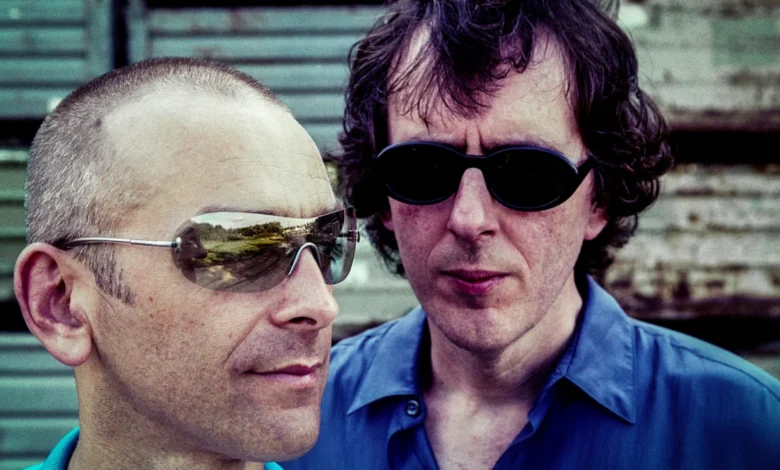
The creation of electronic music in the mid-1990s often conjures images of massive, state-of-the-art commercial recording studios equipped with towering mixing consoles, soundproofing, and teams of audio engineers. However, some of the most influential and enduring records of the era were forged in far more humble surroundings. Among these is Underworld’s seminal 1996 album, Second Toughest in the Infants. Released just months before the trio would achieve global household recognition with their generational anthem "Born Slippy .NUXX"—which propelled them into the cultural mainstream via the soundtrack to Danny Boyle’s generation-defining film Trainspotting—the album captured the collective creative brilliance of Rick Smith, Darren Emerson, and Karl Hyde at a pivotal turning point in electronic music history.
In a retrospective look at the production of the album, founding member and production mastermind Rick Smith opened up about the arduous, unconventional, and remarkably lo-fi conditions under which the record was assembled. Rather than working in a premier London recording facility, the vast majority of Second Toughest in the Infants was constructed inside a cramped, domestic spare bedroom in Smith’s house located in Romford, Essex. This gritty reality highlights the resourcefulness required by electronic music pioneers during an era when hardware synthesis, MIDI sequencing, and early digital recording tools were rapidly evolving, yet still severely limited compared to modern digital audio workstations (DAWs).
The Domestic Studio Environment and Noise Constraints
The spatial constraints of the Romford residence presented an immediate and ongoing challenge to the group’s creative process. The spare bedroom used as the primary studio measured approximately twelve by fourteen feet—a modest footprint for crafting dense, layered electronic compositions. Furthermore, acoustic isolation was virtually non-existent, turning the home recording experiment into a test of domestic endurance.

Reflecting on the grueling production schedule, Smith recalled the immense pressure placed on his personal life by the relentless nature of electronic music production. The creation of complex rhythmic structures and intricate synthesizer patches required endless repetition, often running continuously for weeks or months at a time. The resulting environment was defined by persistent, overlapping frequencies and heavy low-end thumps echoing through the house. Despite the friction inherent in running a professional-grade electronic music operation out of a suburban spare room, the project survived largely due to exceptional patience from Smith’s partner, whose tolerance for months of continuous repetitive beats ultimately enabled the completion of the record.
Hardware and Technological Limitations
The sonic architecture of Second Toughest in the Infants was built upon a specific ecosystem of vintage hardware, synthesizers, and early digital processing tools that defined the mid-90s underground electronic scene. Far from utilizing modern software plugins or virtually infinite multitrack hard-drive recording, Smith relied on a heavily integrated hybrid setup combining MIDI sequencing, analog synthesizers, and compact tape machines.
At the center of the mixing setup was a Soundcraft S600 series mixing console. Described by Smith as beautiful, very basic, and raw, the desk served as the focal point for summing various audio signals. Sequencing duties were handled by an Atari ST 1040 computer running C-Lab Creator, a piece of software that remains fondly remembered by producers of that era for its tight timing and rock-solid MIDI performance.
One of the most defining characteristics of the album’s analog-digital hybrid workflow was the absence of a unified master digital clock. Because the various sound sources running through the mixing console were not all clocked off the same digital clock, subtle timing drifts and latency variations naturally occurred. Smith noted that this technical imperfection introduced a unique, organic magic into the space between the notes, giving the tracks a breathing, human quality rarely found in rigidly quantized modern productions.

To record and manage multitrack audio, Smith utilized an Akai MG14D 12-track tape recorder. This unit was synchronized to the Atari ST using a legacy Fostex synchroniser, allowing MIDI sequences to lock up with physical tape simultaneously—a process Smith described as delicate and touch-and-go. Sampling capabilities were similarly constrained by budget realities; rather than utilizing higher-end industry standards like the Akai S900, Smith relied on a Casio FZ-1 sampler, demonstrating the resourceful adaptation of accessible consumer and mid-tier gear.
The Comprehensive Hardware Arsenal
The roster of instruments and outboard processors deployed in the Romford spare bedroom reads like a wishlist for vintage electronic music enthusiasts. For microphone duties, the production team relied on a Neumann TLM 170 condenser microphone—a high-end studio staple that Smith continues to utilize in his modern workflow.
The melodic and harmonic elements of the album were shaped by an extensive collection of classic hardware synthesizers and sound modules. The gear list included a vocoder, an ARP 2600 semi-modular synthesizer, an OSCar synthesizer, legendary Roland TB-303 bassline synthesizers, Roland TR-909 rhythm composers, a Nord lead synthesizer for heavy bass frequencies, and a Yamaha DX7 Mk1 digital synthesizer famous for its signature FM synthesis tones. Additional MIDI sequencing and sound module support came via a Roland MT-32 unit and a Roland SD-3000 digital delay line.
Audio capture and mixing procedures were similarly bare-bones. All primary recording sessions were executed using an early Sony portable DAT machine operated via battery power. Hard-drive recording was virtually nonexistent during the primary tracking phase, though Smith eventually rented a hard-drive recording unit later in the process to assist with final track assembly and arrangement.
Mixing sessions were conducted entirely live through the Soundcraft console. Multiple MIDI tracks and physical tape tracks were summed in real-time, with hardware effects patched directly into the console auxiliary sends. Outboard processing was strictly limited to a pair of Yamaha SPX90 multi-effects processors—one configured for stereo pitch-shifting and the other for stereo delay—alongside a Roland SD-3000 mono delay line dedicated to feedback and dub delays. The entire production chain operated entirely without software plugins, software compressors, or digital noise gates, relying instead on the instinctive mixing decisions and physical dexterity of the engineer.
The Genesis of Pearl’s Girl and Genre-Crossing Experimentation
Among the standout achievements on Second Toughest in the Infants is the album’s acclaimed lead single, "Pearl’s Girl." The track serves as a prime example of the organic, collaborative trial-and-error method that characterized Underworld’s studio sessions during this period.
According to Smith, the composition of "Pearl’s Girl" developed over roughly a month. Initial jam sessions involving Smith, Karl Hyde, and Darren Emerson produced a promising germ of an idea that initially lacked a clear direction. The project was temporarily shelved before Smith revisited it a month later. During this phase, studio engineer Mike Nielson constructed a quick mix while Smith was midway through developing the arrangement.
This unexpected intervention proved crucial to the track’s evolution. The resulting mix captured a distinct sonic identity that broke away from conventional four-to-the-floor house and techno conventions of the mid-90s. Instead of adhering to rigid, predictable club structures, "Pearl’s Girl" embraced a rowdier, more aggressive aesthetic that successfully bridged the stylistic divide between house, techno, and early drum and bass sensibilities. The conspicuous absence of a traditional four-to-the-floor kick drum pattern marked a deliberate departure for the group, signaling their broader artistic ambition to dissolve genre boundaries within electronic music.
Broader Impact and Legacy in Electronic Music Production
The release of Second Toughest in the Infants solidified Underworld’s reputation as visionary architects of electronic music, paving the way for their subsequent global superstardom. By combining the raw, visceral energy of underground club culture with cinematic ambience and intricately constructed rhythmic sequencing, the trio demonstrated that electronic music could possess both intellectual depth and physical power.
Looking back at the conditions under which the album was created offers valuable context for contemporary music producers. In an era dominated by infinitely expandable digital audio workstations, native virtual instruments, and automated mixing tools, the creation of a landmark electronic album in a cramped residential spare bedroom serves as a testament to the power of human ingenuity over technological abundance. The limitations imposed by tight budgets, inadequate acoustic treatment, and early digital-analog synchronization quirks did not stifle Underworld’s creativity; rather, they forced the trio to extract maximum character from their limited gear inventory, resulting in a timeless sonic document that continues to resonate decades after its initial release.
Related posts: