Native Instruments Launches Super*Saw Synthesizer in Collaboration with PC Music Founder A. G. Cook

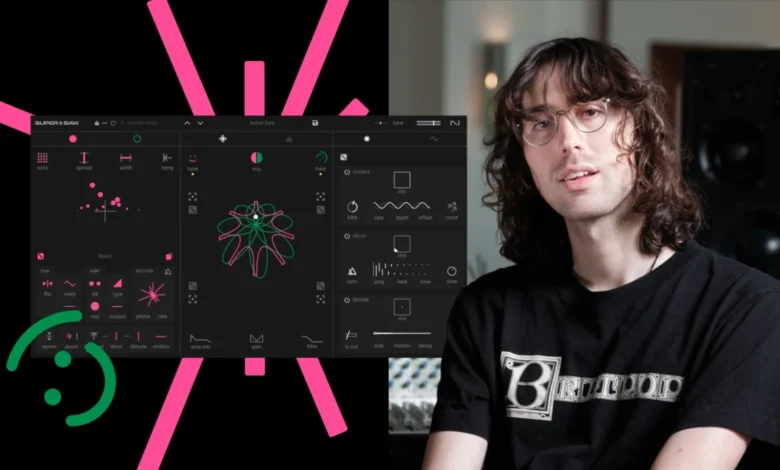
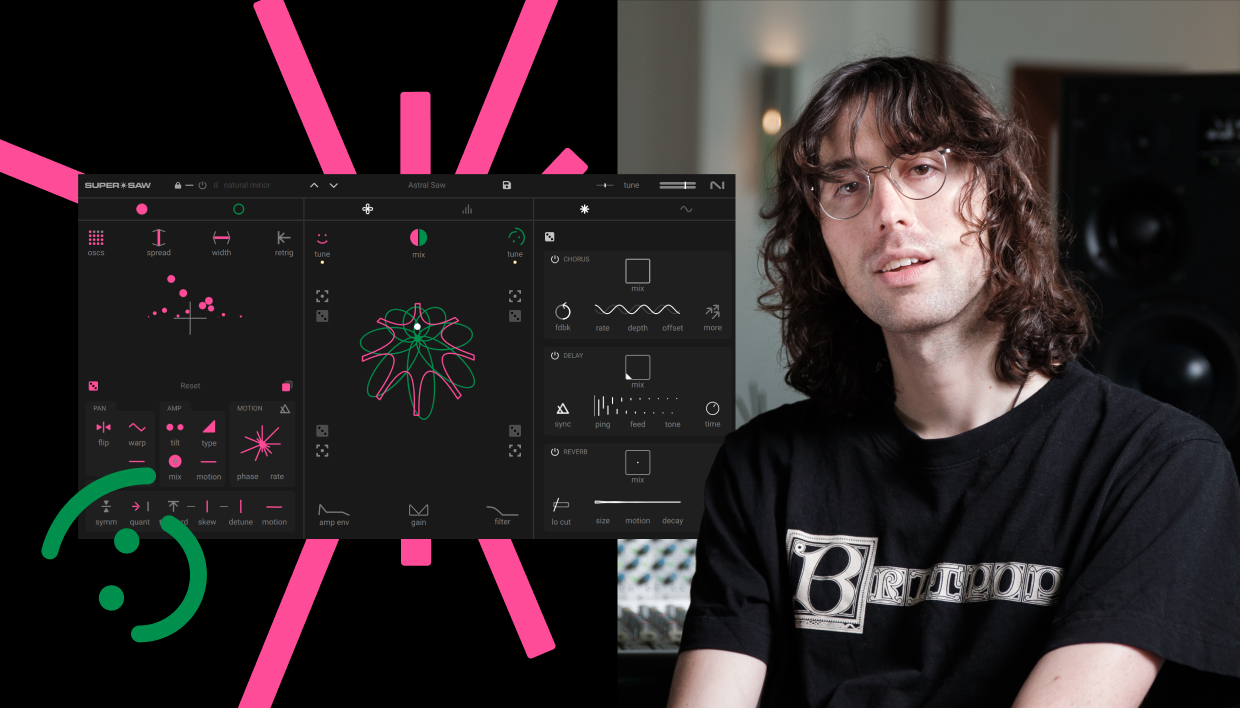
The landscape of electronic music production and contemporary sound design has long been defined by the unmistakable presence of the stacked sawtooth wave. Born from the digital virtual-analog revolution of the 1990s, the supersaw rapidly evolved into the foundational architectural element for era-defining rave anthems, euphoric pop productions, and wall-of-sound club compositions. Extending this rich sonic legacy, industry-leading software developer Native Instruments has officially announced the global release of Super*Saw, phonetically styled as SuperStarSaw. Developed in close partnership with visionary producer, songwriter, and PC Music founder A. G. Cook, the innovative virtual instrument is designed to consolidate complex, multi-layered oscillator workflows into a singular, highly responsive software interface.
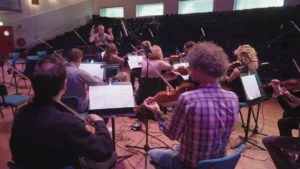
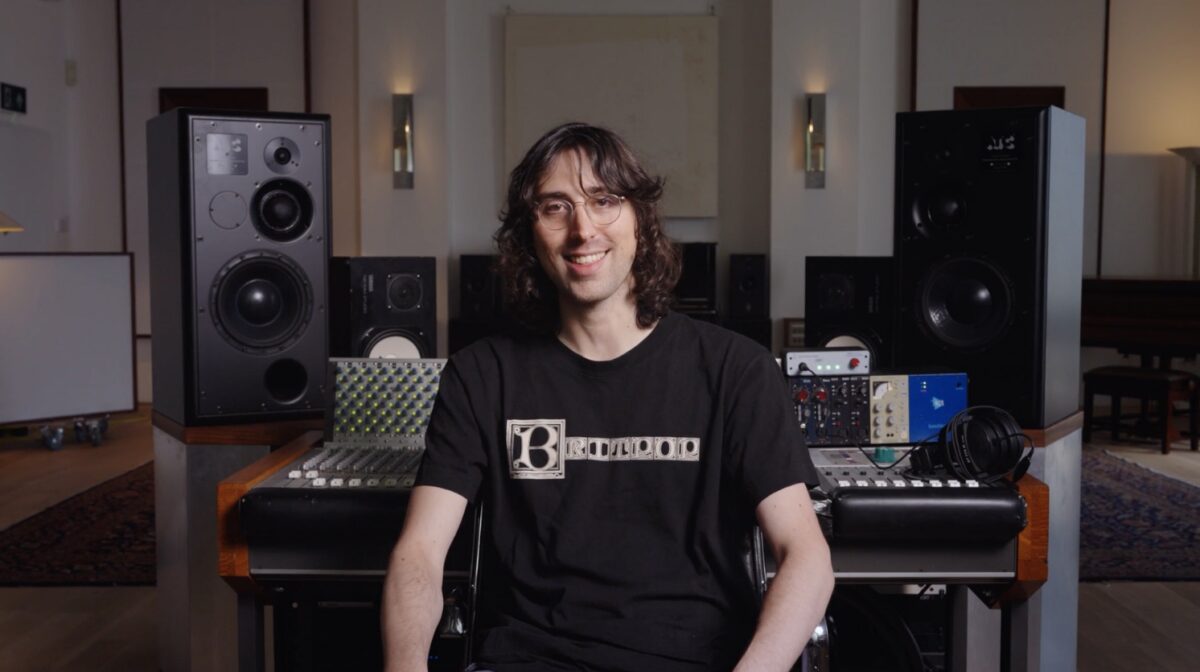
The launch event, accompanied by an exclusive production walkthrough and interview session recorded at the historic Baltic Studios in London, highlights the intersection of modern digital sound design and nostalgic 1990s synthesis. By streamlining the traditionally laborious engineering processes associated with hyper-layered synthesizer patches, Super*Saw aims to provide producers across genres with immediate access to rich, harmonically dense textures.
Historical Context and Evolution of the Supersaw
To fully understand the significance of the Super*Saw plugin, industry analysts look back to the mid-1990s hardware market. The terminology and foundational concept of the supersaw trace directly to Roland’s iconic JP-8080 and JP-8000 synthesizers, released in 1996 and 1998, respectively. These instruments introduced a specialized oscillator mode that combined multiple detuned sawtooth waves simultaneously within a single voice. This breakthrough allowed a single keypress to generate the sonic equivalent of a massive ensemble, quickly becoming the signature aesthetic of trance, techno, and commercial dance music throughout the late 20th and early 21st centuries.
In the decades that followed, producers working within the digital audio workstation (DAW) environment sought to replicate and expand upon this hardware capability by manually stacking multiple software instrument instances, meticulously offsetting detune parameters, and automating complex routing pathways. Over the past ten years, A. G. Cook—widely recognized as a central figure in the hyperpop movement through his pioneering work with the PC Music record label, his extensive collaborations with pop icon Charli XCX, and critically acclaimed solo projects including 7G, Apple, and Britpop—became known for pushing these stacked sawtooth techniques to their absolute structural limits.
Architecture and Design Philosophy
During the development process at Baltic Studios, Cook and the engineering team at Native Instruments focused on solving a common production bottleneck: the tedious multi-plugin routing required to achieve massive, evolving sawtooth textures. Historically, complex tracks such as Cook’s composition "Stargon" required elaborate session configurations utilizing disparate third-party plugins and mismatched detune algorithms, significantly distancing the producer from the tactile experience of playing the instrument.
Super*Saw addresses these operational hurdles by confining its architecture entirely to the purity of the sawtooth wave, directing user focus exclusively toward the creative manipulation of oscillator density. The instrument features a robust dual 8-voice sawtooth oscillator system. Visually and structurally, these voices are divided into two distinct, color-coded layers: a vibrant pink layer and a vivid green layer.
According to Cook, this dual-layer conceptualization mirrors his own compositional methodology. By treating the two groups independently—such as utilizing one layer to anchor the fundamental frequencies while allowing the opposing layer to execute complex, modulated movements—producers can achieve a dynamic balance between harmonic clarity and controlled chaos. Furthermore, the inclusion of a specialized four-corner Morpher interface enables real-time spatial and textural transitions, moving far beyond static MIDI automation to offer genuine performance-level interaction.
Production Integration and Workflow Implications
The release of Super*Saw arrives at a transitional moment for modern electronic music software, where the demand for intuitive, CPU-efficient, and character-driven instruments continues to grow. By encapsulating decades of specialized sound-design knowledge into a dedicated plugin, Native Instruments and Cook have effectively democratized a workflow that previously demanded advanced technical proficiency in routing and mixing.
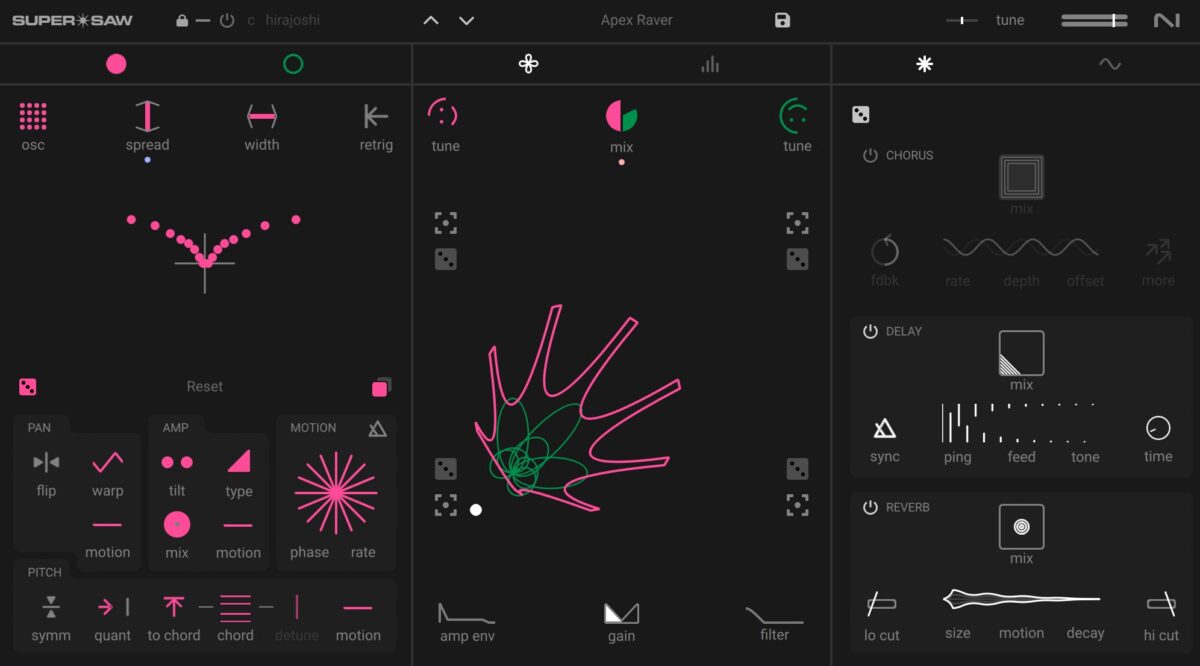
Industry observers note that the instrument’s design philosophy—embracing both minimalist clarity and maximalist density—reflects the broader trajectory of contemporary pop and electronic production. Tracks that transition seamlessly from sparse acoustic elements to towering, percussive walls of sound can now execute these shifts natively within a single instance of the plugin. The integration of randomization functions, such as instant layer copying and interactive parameter dice rolls, further encourages spontaneous experimentation, aligning with modern producers’ needs for rapid ideation workflows.
Broader Market Impact and Availability
The introduction of SuperSaw is expected to resonate strongly not only within the hyperpop and electronic dance music communities but also among film composers and contemporary pop producers seeking to inject aggressive, harmonically rich elements into their arrangements. By branding the instrument as a conceptual coda to his previous artistic eras—notably echoing the pink-and-green visual and sonic palettes of his album Britpop*—A. G. Cook bridges the gap between underground aesthetic innovation and accessible commercial tools.
Super*Saw is currently available for purchase and immediate download through the official Native Instruments distribution network. As producers begin integrating the dual-layer 8-voice architecture into their commercial projects, the instrument stands as a testament to the enduring evolution of digital synthesis, transforming a classic 1990s hardware concept into a modern, highly expressive software standard.