For decades, wired internet connections have remained the gold standard for users prioritizing uncompromising performance, minimal latency, and steadfast reliability. While competitive gamers and data-heavy professionals have long sworn by hardwired setups, the convenience and stability of Ethernet cables are increasingly finding favor among everyday remote workers and smart-home enthusiasts. Yet, despite being a foundational pillar of modern digital infrastructure, the humble Ethernet cable is frequently overlooked. Consumers typically select a cord that matches their immediate bandwidth needs, plug it in, and relegate it to the background of their consciousness until a technical failure forces it back into focus.
This raises a practical and enduring question for network administrators and home users alike: Do Ethernet cables expire, and what is their actual operational lifespan?
Unlike perishable goods or even certain software licenses, Ethernet cables do not possess a printed expiration date, nor do they carry a strict manufacturer-mandated shelf life. Under optimal conditions—which include careful physical routing, protection from extreme environmental factors, and the absence of mechanical stress—a standard Ethernet cable can function seamlessly for a decade, or even longer. In professional IT forums and consumer tech communities, it is not uncommon to find reports of structured cabling networks operating continuously after being installed twenty or thirty years ago.
However, this durability is far from universal. While some cables outlast the very hardware they connect, others degrade or fail prematurely. Understanding the longevity of a network cable requires looking beyond simple calendar time and examining the intersection of material science, environmental exposure, handling practices, and technological obsolescence.
The Material Science of Network Longevity: Copper vs. Aluminum
The structural integrity of an Ethernet cable begins deep inside its insulating jacket. The choice of conductor material plays a decisive role in determining how many years of service a cable can deliver before performance begins to degrade.
High-performance, durable Ethernet cables utilize pure, solid, or stranded bare copper conductors. Copper offers exceptional electrical conductivity, minimal resistance, and superior resistance to structural fatigue caused by minor vibrations or temperature fluctuations. A pure copper cable properly installed inside a climate-controlled environment can easily surpass a ten-year operational window.
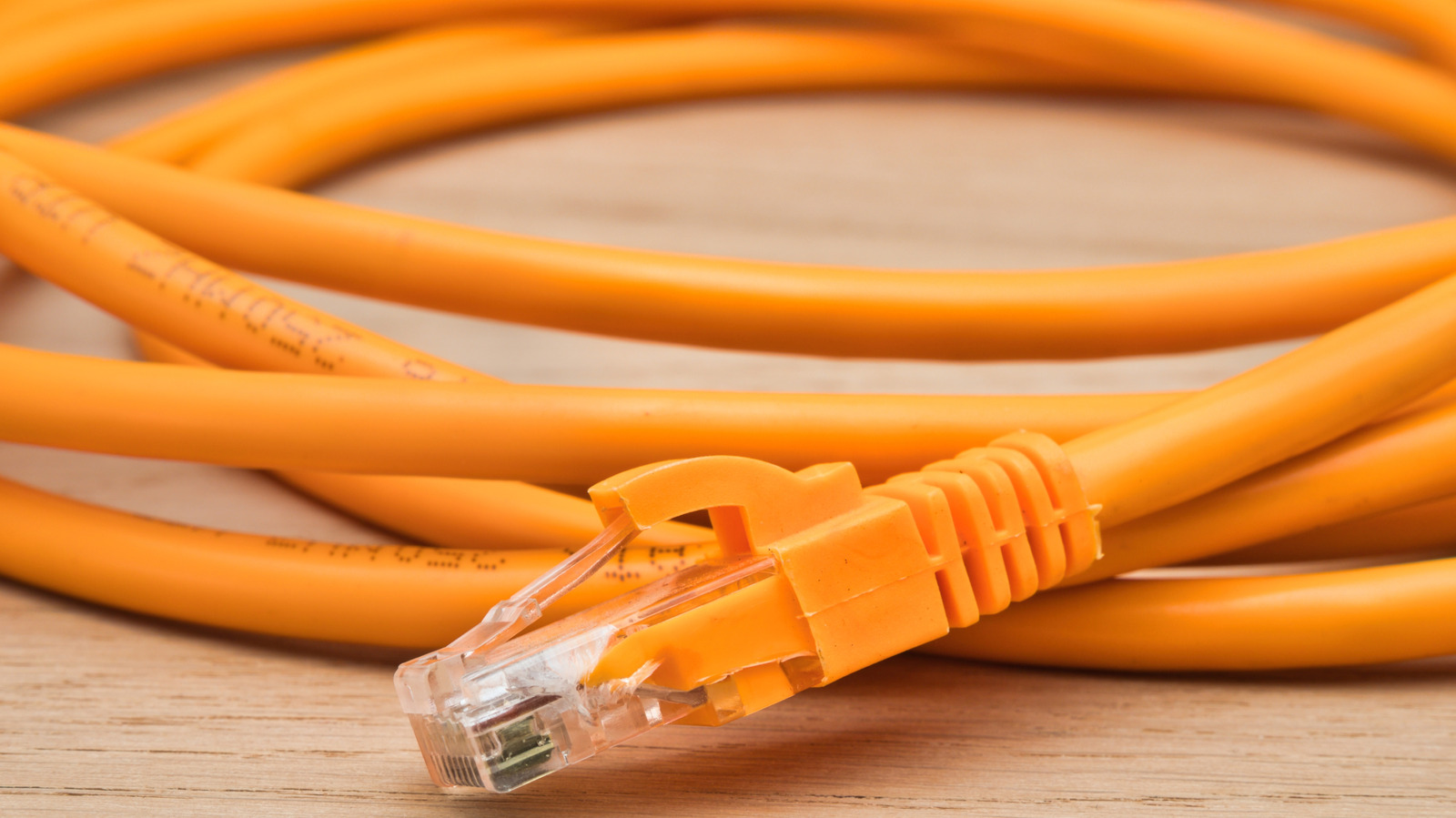
Conversely, budget-oriented manufacturers sometimes utilize Copper-Clad Aluminum (CCA) to cut production costs. While CCA cables are lighter and cheaper, they present significant drawbacks over time. Aluminum is inherently more brittle than copper and possesses lower tensile strength, making CCA cables far more susceptible to snapping when bent or tensioned. Furthermore, aluminum has a higher electrical resistance, which causes CCA cables to generate more heat when carrying electrical current. This heat buildup accelerates the degradation of the surrounding plastic insulation, leading to premature cable failure and, in worst-case scenarios involving Power over Ethernet (PoE), potential hardware damage or fire hazards.
Beyond the internal conductors, the overall build quality—including the thickness of the PVC or plenum outer jacket, the presence of internal foil shielding, and the inclusion of a plastic spline to separate twisted pairs—directly dictates how well a cable withstands the rigors of daily physical stress.
Environmental Factors and Physical Handling
Even the highest-grade pure copper cable can suffer an abbreviated lifespan if subjected to poor installation practices or harsh environmental conditions. Among the primary culprits of early cable failure is improper physical handling during the routing process.
Every Ethernet category has a specified minimum bend radius—the tightest allowable arc to which a cable can be curved without causing physical damage to the internal wire twists or impedance mismatches. Exceeding these limits by forcing cables around sharp 90-degree corners or pinching them under heavy furniture can permanently distort the geometry of the twisted pairs. This distortion leads to increased crosstalk, signal reflection, packet loss, and severely diminished data transmission speeds.
Environmental exposure represents another critical vector of degradation. Indoor-rated cables (typically jacketed in standard PVC) are engineered for controlled ambient temperatures and humidity levels. When deployed outdoors or exposed to direct ultraviolet (UV) radiation, rain, and freezing temperatures, standard indoor jackets rapidly dry out, crack, and disintegrate. This exposes the internal conductors to moisture and oxidation, rendering the cable unusable within a fraction of its expected lifespan. For exterior or in-wall runs, specialized outdoor-rated cables featuring polyethylene (PE) jackets and water-blocking gel or tape are required to ensure long-term survivability.
Mechanical trauma, such as heavy foot traffic stepping directly over unmanaged floor runs, construction activity, or household pets chewing on exposed lines, also cuts short the operational timeline of a network link.
Furthermore, the vulnerability extends to the physical interfaces. The small plastic retention clips on RJ45 modular connectors are notorious weak points. Repeatedly plugging and unplugging a cable, or yanking it out of a port by the cord rather than the boot, can snap the locking tab. While a broken clip does not alter the electrical properties of the copper wire, it causes loose connections that drop link states at the slightest vibration.
Diagnostic Signs: When Is It Time to Replace an Ethernet Cable?
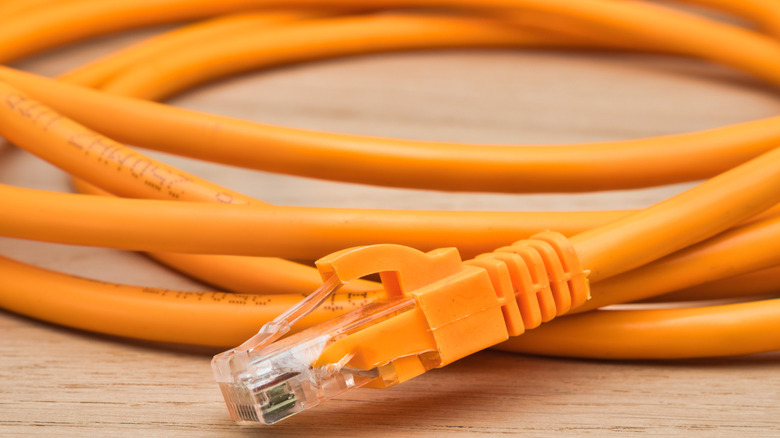
Because Ethernet cable degradation is typically an incremental process rather than a sudden catastrophic failure, diagnosing a failing cable can sometimes be challenging. Users cannot always visually distinguish a compromised cable from a healthy one, as internal micro-fractures in the copper or localized insulation breakdown remain hidden beneath the outer sheath.
However, a degrading or failing cable manifests distinct operational symptoms over time. Network administrators and home users should look out for several key indicators:
- Intermittent Connectivity: Devices frequently drop their network connection, requiring manual reconnection or router reboots to restore access.
- Degraded Transfer Speeds: Large file transfers take significantly longer than expected, or network diagnostic tools report high rates of packet loss and retransmission.
- Negotiation Fallbacks: Gigabit or multi-gigabit connections unexpectedly drop their link speed to 100 Mbps or 10 Mbps due to increased resistance or signal interference across damaged pairs.
- PoE Failure: Devices powered via Power over Ethernet—such as security IP cameras, VoIP desk phones, or wireless access points—begin rebooting randomly or fail to power on entirely due to excessive electrical resistance and voltage drop within the degraded cable.
When these symptoms appear, troubleshooting should systematically isolate the cable by swapping it with a known working unit to determine if the fault lies in the wiring, the switch/router port, or the end-device network interface card (NIC).
Technological Obsolescence: When Functional Cables Must Be Retired
Interestingly, many Ethernet cables are retired not because they have physically failed, but because they have been rendered obsolete by rapid advancements in telecommunications and networking technology.
Digital infrastructure has evolved at a breathtaking pace over the past two decades. A historical review of Ethernet standards illustrates this rapid technological turnover:
- Cat5 (Introduced c. 1995): Designed to support Fast Ethernet speeds up to 100 Mbps over a 100 MHz bandwidth. While still physically functional, Cat5 is wholly inadequate for modern gigabit-plus internet service plans.
- Cat5e (Introduced 2001): The "enhanced" standard capable of supporting Gigabit Ethernet (1 Gbps) and 100 MHz bandwidth. Cat5e became the ubiquitous backbone of home and office networks for well over a decade.
- Cat6 and Cat6a (Introduced 2002–2008): Cat6 doubled bandwidth specifications to 250 MHz and supported 10 Gbps speeds over limited distances, while Cat6a expanded that capacity to 500 MHz, enabling reliable 10 Gbps transmission across full 100-meter channel lengths.
- Cat7 and Cat8 (Introduced 2010s–Present): Engineered for extreme enterprise data centers, shielding frequencies up to 2,000 MHz to support 25G and 40G Ethernet applications.
Home users subscribing to multi-gigabit fiber internet packages (1 Gbps to 5 Gbps and beyond) will find that older Cat5 or early Cat5e cables act as a severe performance bottleneck. Even if the cable physically transmits data without errors, it cannot negotiate the higher signaling frequencies required to deliver modern bandwidth speeds to the endpoint device. Consequently, upgrading the physical cabling infrastructure becomes necessary to fully leverage contemporary internet service provider (ISP) speeds.
Best Practices for Maximizing Network Infrastructure Lifespan
For organizations and individuals seeking to minimize replacement costs and maintain peak network performance, adhering to professional cabling best practices is essential.
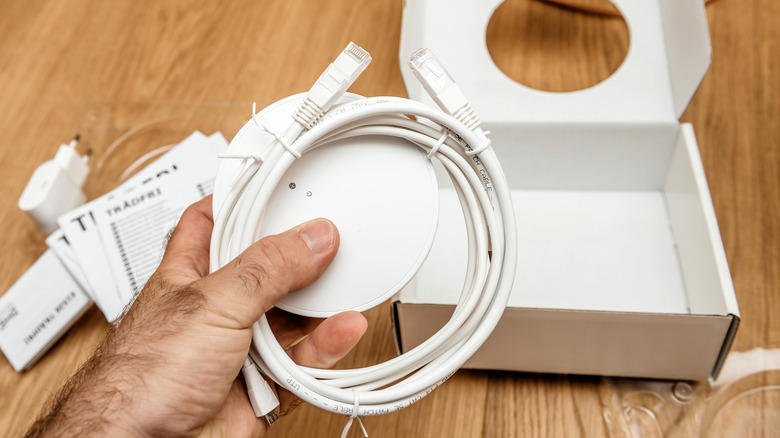
First, purchase quality over economy. Investing in certified, pure copper cables from reputable manufacturers prevents the hazards associated with CCA alternatives and ensures compliance with strict industry safety and performance standards.
Second, respect physical routing guidelines. Avoid tight radius bends, use cable management trays, Velcro straps (rather than over-tightened zip ties that can pinch internal conductors), and protective conduit when running cables through high-risk areas.
Third, match the cable type to the environment. Ensure outdoor runs utilize UV-resistant, weatherproof cabling, while plenum-rated cables are deployed within drop ceilings and HVAC air-handling spaces to comply with local fire safety codes and prevent toxic smoke emissions during a thermal event.
Finally, distinguish between permanent structured cabling and flexible patch cords. Solid-core cables are engineered for long, permanent runs inside walls, floors, and conduits, terminating cleanly into wall jacks or patch panels. Stranded patch cables, which offer greater flexibility and resistance to physical fatigue, should be reserved for short-distance connections between wall plates and active devices within the same room.
Ultimately, while Ethernet cables do not carry a strict expiration date, they are active participants in a complex digital ecosystem. By understanding their material limitations, protecting them from environmental and physical stress, and remaining mindful of technological obsolescence, users can ensure their wired networks deliver peak performance for years—and potentially decades—to come.