Summer temperatures across the United States have reached historic highs, creating an unprecedented demand for residential cooling. According to data released by the National Centers for Environmental Information—a division of the National Oceanic and Atmospheric Administration (NOAA)—July 2026 was officially recorded as the warmest month in the United States over the past 132 years. From the high-elevation heat of Wyoming to the oppressive, moisture-laden humidity of Florida, millions of Americans rely heavily on residential air conditioning systems to maintain safe and habitable indoor environments.
However, this widespread reliance on climate control systems introduces a significant economic burden for households. Data compiled by the U.S. Energy Information Administration (EIA) indicates that home cooling accounts for nearly 20% of the average household’s total annual electricity expenditure. When combined with the electrical demands of heating water, laundering clothes, running refrigeration units, and powering lighting systems, air conditioning costs can rapidly inflate monthly utility bills. Consequently, homeowners and renters alike face the dual challenge of enduring extreme ambient heat while managing escalating utility expenditures.
To address these financial and operational pressures, energy experts emphasize the importance of maximizing air conditioner efficiency. Enhancing the performance of a cooling system not only curtails unnecessary energy consumption and lowers monthly utility outlays, but it also extends the operational lifespan of the equipment. Because modern cooling efficiency is dictated by a multitude of factors—ranging from initial equipment selection and structural home modifications to routine maintenance and user behavior—industry professionals recommend a comprehensive, multi-step approach to optimizing residential climate control.
Proper Equipment Sizing and Selection
A foundational element of achieving optimal air conditioning efficiency begins well before the peak summer months arrive: selecting the correct equipment size. A prevalent misconception among consumers is that purchasing the largest, most powerful air conditioning unit available will result in superior cooling performance. According to guidance from the Energy Star program—a joint initiative of the U.S. Environmental Protection Agency (EPA) and the U.S. Department of Energy (DOE)—oversized air conditioning units are both economically wasteful and operationally inefficient.
An air conditioner that possesses an excessive BTU (British Thermal Unit) capacity for a given space will cool the room too quickly, causing the system to cycle on and off in short bursts. This rapid cycling prevents the unit from adequately dehumidifying the air, leading to a clammy indoor climate, while placing unnecessary wear and tear on the compressor motor. Conversely, an undersized unit will run continuously without achieving the target temperature, driving up electricity consumption and accelerating mechanical degradation.
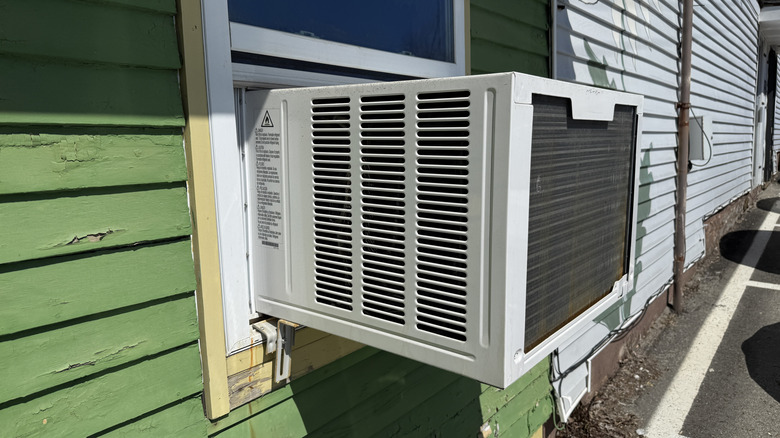
To determine the appropriate size for a room air conditioner, consumers must calculate the square footage of the space and account for variable factors such as ceiling height. Energy Star guidelines dictate that a room measuring between 400 and 450 square feet typically requires a unit with a 10,000 BTU capacity, assuming a standard eight-foot ceiling height. Spaces with higher ceilings or excessive sunlight exposure require scaled-up capacity calculations to maintain efficiency.
In addition to sizing, selecting advanced mechanical technology plays a critical role in long-term energy conservation. Traditional single-stage air conditioners operate on a binary, on-off mechanism, drawing maximum electrical current every time the compressor engages. In contrast, modern variable-speed technology allows the compressor motor to modulate its operational output continuously based on real-time environmental conditions. Variable-speed systems avoid the energy spikes associated with constant startup cycles, maintaining steady indoor temperatures while operating at lower, quieter, and more energy-efficient thresholds.
Structural Modifications and Environmental Controls
Beyond the air conditioning unit itself, the structural integrity and immediate environment of a residence heavily influence cooling efficiency. Minimizing heat gain through architectural adjustments and proactive landscaping can drastically reduce the workload placed on an HVAC system.
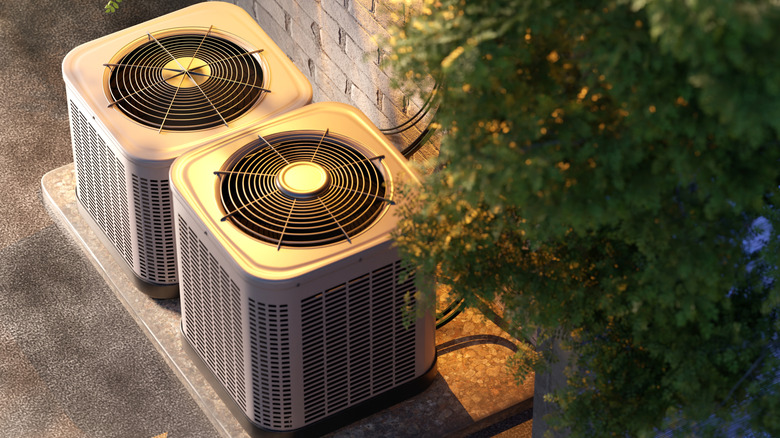
The U.S. Department of Energy strongly advocates for the strategic placement of shade trees and exterior shrubs around a home. Planting deciduous trees on the southern and western exposures of a building blocks intense solar radiation from striking exterior walls and windows during the hottest hours of the day. While research regarding the direct shading of outdoor condenser units yields modest efficiency gains—often estimated at less than a 1% improvement—shading the building envelope itself yields substantial reductions in overall cooling loads.

Concurrently, homeowners must address air leakage through structural seals and insulation. Poorly sealed windows, uninsulated exterior doors, and gaps in central ductwork allow conditioned air to escape while permitting humid exterior air to infiltrate the living space. For central air systems, inspecting ductwork for disconnected joints, sagging sections, and unsealed seams is vital. For room and window air conditioners, replacing flimsy accordion-side panels with rigid, airtight insulating materials prevents thermal bridging and significantly enhances operational efficiency.
Attic and wall insulation represent another critical, albeit often overlooked, barrier against heat intrusion. Insulation thermal performance is measured by R-value, with higher values denoting greater resistance to heat flow. Energy Star guidelines vary by climate zone; for example, uninsulated attics in hot, dry climates benefit from an R-49 insulation rating, whereas colder zones may require up to R-60. Upgrading deficient insulation significantly curtails heat transfer from the roof into the living areas below, reducing the duration and frequency of air conditioner cycles.
Routine Maintenance and Operational Best Practices
Preventative maintenance is widely recognized by federal energy agencies as the single most effective methodology for preserving air conditioning efficiency. Over time, dust, pet dander, pollen, and other particulate matter accumulate within the system’s filtration media and internal coils.
According to the U.S. Department of Energy, cleaning or replacing a dirty air conditioning filter is the single most impactful action a homeowner can take to reduce cooling energy consumption. A clogged filter severely restricts airflow across the evaporator coil, forcing the system to work substantially harder to transfer heat. Neglecting routine filter replacements can increase an air conditioner’s energy consumption by 5% to 15%. Consumers are advised to inspect and clean or replace filters monthly during heavy cooling seasons, utilizing washable filters or high-efficiency disposable media depending on manufacturer specifications.

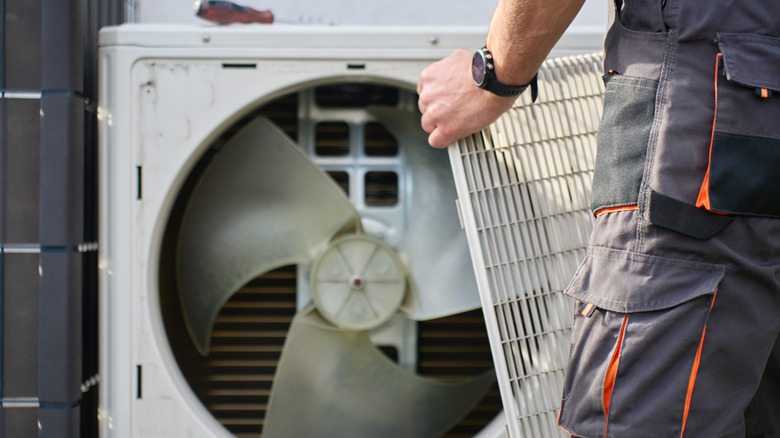
In addition to filters, routine maintenance must encompass the cleaning of condensate drains, the removal of exterior debris surrounding outdoor compressors, and the inspection of evaporator coils. Accumulations of leaves, grass clippings, and dirt on condenser coils impede heat dissipation, forcing the compressor to operate under higher pressures and temperatures.
Operational habits within the home also dictate overall efficiency. Utilizing ceiling fans in conjunction with an air conditioner allows occupants to raise thermostat set points without sacrificing personal comfort. Ceiling fans generate a wind-chill effect that enhances human thermal comfort by accelerating the evaporation of perspiration from the skin. The U.S. Department of Energy notes that running ceiling fans counterclockwise during summer months effectively circulates cool air downward. However, federal agencies caution that fans cool people rather than spaces; consequently, fans should be switched off when rooms are unoccupied to conserve electricity. Furthermore, the EPA advises against relying solely on fans for cooling during extreme heat events exceeding 95 degrees Fahrenheit, as they fail to prevent heat-related illnesses at elevated ambient temperatures.
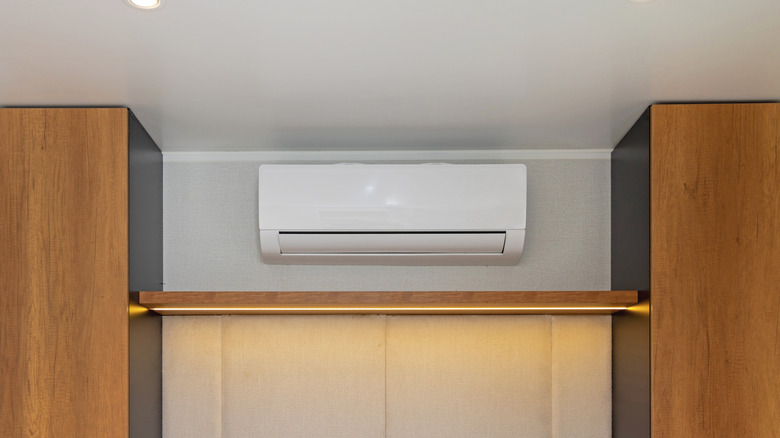
Vent management further refines system efficiency. In homes utilizing central forced-air systems or multi-split configurations, directing high-wall or ceiling vents downward encourages the downward circulation of dense, conditioned air. Ensuring that all interior vents remain unobstructed and open prevents localized pressure imbalances that can overwork the blower motor.
The Role of Automation and Human Intervention
As residential climate control systems become increasingly integrated with smart technology, the interaction between occupants and automated thermostats has become a subject of economic and environmental study. Modern programmable and smart thermostats are engineered to optimize cooling schedules, leverage variable-speed compressor technology, and adhere to strict operational parameters, such as the standard "three-minute rule" that prevents rapid compressor short-cycling and premature mechanical failure.
Despite the sophisticated algorithms embedded within modern smart thermostats, human behavioral patterns often undermine energy-saving initiatives. Research conducted by the National Bureau of Economic Research (NBER) into smart-technology efficiency revealed that household occupants frequently engage in manual thermostat overrides during periods of high ambient temperature. Unfortunately, empirical data from the NBER working paper indicates that these manual adjustments routinely dampen projected energy savings, proving less efficient than the automated schedules and algorithms designed by the climate control systems themselves.
To maximize the long-term efficiency of an air conditioning system, energy analysts recommend deferring to certified equipment performance standards, maintaining rigorous cleaning and sealing schedules, and minimizing unnecessary manual overrides of automated temperature controls. By adopting a comprehensive strategy that bridges proper equipment sizing, structural insulation, preventative maintenance, and disciplined thermostat management, consumers can successfully navigate historic summer heat waves while mitigating the financial strain of rising electricity expenditures.