Explore historic synthesizers (TR-909, ARP 2600, and more) with Ultrastation

The Amsterdam Dance Event and the Splice Pop-Up Studio
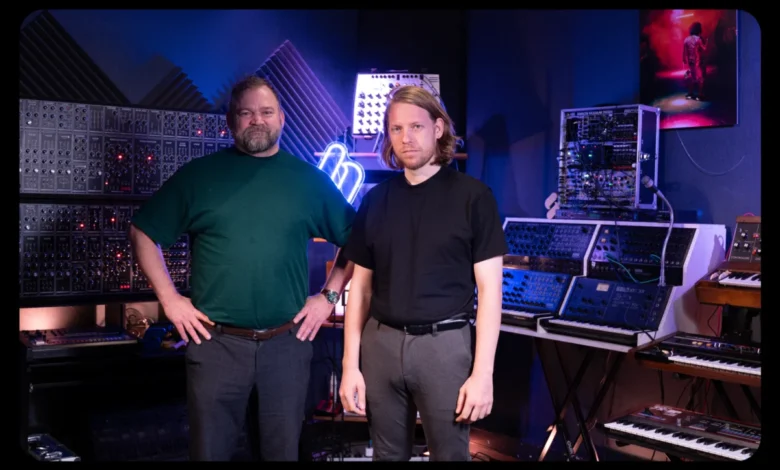
During the recent Amsterdam Dance Event (ADE), a global gathering that serves as the nexus for electronic music culture, Splice, the cloud-based music creation platform, partnered with Ultrastation to host an exclusive, interactive pop-up studio at BUNK Amsterdam. The installation was designed not merely as a showcase, but as a live laboratory where the tactile, unpredictable nature of hardware synthesis could be explored by industry professionals and visiting artists.
The event served as a bridge between the digital-first workflows prevalent in modern music production and the analog foundations that defined the genre’s evolution. By placing historic equipment in a public-facing, professional setting, Splice provided a tangible narrative on how the tools of the 1980s continue to dictate the rhythm and timbre of modern dance music.
Chronology of Electronic Sound: From Analog Roots to Modular Futures
To understand the significance of the equipment showcased at the BUNK Amsterdam studio, one must view it through the lens of technical evolution. The instruments featured—the Roland TR-909, the ARP 2600, the EMS Synthi A, and the Minimoog—represent distinct eras of electronic engineering.
- The Minimoog (1970): Often cited as the first truly portable synthesizer, it moved synthesis out of academic labs and into the hands of performers. Its contribution to the "lead" synth sound is unparalleled.
- The EMS Synthi A (1971): A British-designed, portable patch-matrix synthesizer. Its unique pin-matrix interface allowed for complex signal routing, making it a favorite for sound designers seeking experimental textures.
- The ARP 2600 (1971): Renowned for its versatility and semi-modular nature, this instrument became a staple in film scoring. It famously provided the voice for R2-D2 in the Star Wars franchise, proving that synthesis was as much about character design as it was about music.
- The Roland TR-909 (1983): The cornerstone of house and techno music. Utilizing a hybrid of analog synthesis and digital sampling for its cymbals and hi-hats, it provided the punchy, relentless drive that characterizes club music to this day.
The curation of these specific units at the Splice pop-up was intentional, illustrating a lineage of sound that moves from the melodic capabilities of the 1970s to the percussive, rhythmic dominance of the 1980s.
Technical Analysis: The Modular Philosophy
The inclusion of Eurorack systems at the ADE studio highlighted a resurgence in modular synthesis—a workflow where signal paths are manually created using patch cables. Unlike software plugins, which operate within a rigid architecture, Eurorack allows for infinite variability.
Ben Spaander of Ultrastation noted that this environment is fundamentally collaborative. When a producer uses a modular system, they are not simply selecting a preset; they are building a circuit. When multiple producers interact with the same setup, the result is an emergent process. Spaander explained that the spontaneity of these tools often leads to breakthroughs that a single individual, working in isolation within a Digital Audio Workstation (DAW), might never encounter.
Data from the professional audio industry indicates a growing trend in "hybrid workflows." While software remains the primary medium for final arrangement and mixing due to its efficiency, a significant percentage of professional electronic producers are moving back to hardware for sound design, citing a need for the "human error" and tactile resistance that digital systems often seek to eliminate.
Industry Implications and the Future of Music Creation
The partnership between Splice and Ultrastation serves as a microcosm of a broader industry shift. As music production becomes increasingly digitized—facilitated by artificial intelligence and high-speed cloud computing—there is a counter-movement toward tangible hardware. This is not a rejection of technology, but a refinement of it.
The implications for sound design are significant. By integrating the unpredictability of analog circuits into the controlled environment of a modern studio, producers can achieve textures that are harmonically dense and spatially dynamic. This approach, which the Splice studio tour highlights, suggests that the future of electronic music is not purely virtual. Instead, it is likely to be a hybrid, where the efficiency of the computer is married to the physical soul of the synthesizer.
Furthermore, the pedagogical value of such showcases cannot be understated. By documenting the history and operation of instruments like the ARP 2600 or the TR-909, industry leaders are ensuring that the next generation of producers understands the "why" behind the sound, not just the "how." Knowing how a 909 kick drum is generated—through voltage-controlled oscillators and specific decay envelopes—allows a producer to manipulate that sound with far greater precision than any software preset would allow.
The Role of Collaborative Environments
The BUNK Amsterdam studio emphasized the social aspect of hardware. In a digital DAW environment, collaboration is often asynchronous, with files being passed back and forth over the internet. In a hardware setting, collaboration is immediate and synchronous.
Spaander’s comments regarding his collaborators echo a sentiment shared by many in the hardware community: the equipment acts as a mediator for communication. When two artists look at a patch bay, they are looking at a shared map of possibilities. The physical constraints of the gear force artists to make choices, and those choices often define the signature sound of a track.
Broader Impact on the Electronic Music Landscape
The Splice ADE pop-up studio serves as a case study for how brands in the music technology space are shifting their focus from pure utility to community-driven education. By facilitating these artist-led tours, Splice is fostering an ecosystem where the history of music technology is preserved and actively engaged with.
As we look toward the trajectory of electronic music in the coming decade, the focus is likely to remain on the tension between the infinite possibilities of software and the grounding influence of hardware. The "808 vs. 909" debate—a shorthand for the evolution of rhythm and sonic depth—remains a core part of the producer’s lexicon.
By providing access to these legacy instruments, the ADE event effectively demystified the "magic" behind the music. It transformed these iconic machines from distant, expensive collector’s items into accessible tools for creation. This accessibility is essential for the democratization of music production. When artists have the opportunity to interact with the foundational tools of their craft, the standard of production across the board inevitably rises.
Conclusion
The collaborative effort between Ultrastation and Splice during ADE provided more than just a tour of vintage synthesizers; it provided a narrative for the evolution of modern sound. By grounding their exploration in the history of the ARP 2600, the TR-909, and the Eurorack movement, the organizers highlighted that the future of music production is inextricably linked to its past.
For the modern producer, the lesson is clear: the DAW is an essential tool for organization and final output, but the creative spark often resides in the physical, the modular, and the spontaneous. As the industry continues to evolve, the integration of these analog philosophies into the digital workspace will likely remain the gold standard for innovation in electronic music. The BUNK Amsterdam installation stands as a testament to this, reminding us that while technology changes the way we listen to music, the drive to push the boundaries of what is possible remains a constant, human endeavor.