Laowa ACRIS 35mm f/2.8 1X AF Macro APO Unveiled as the World’s First Full-Frame Autofocus 35mm Lens with 1:1 Macro Magnification

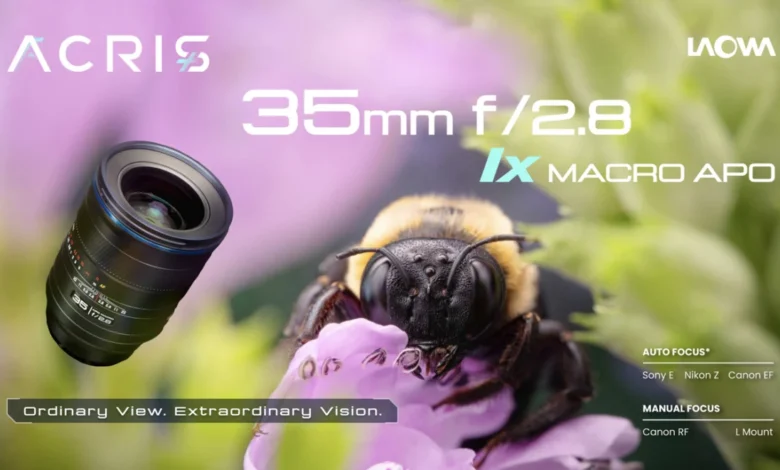
Venus Optics, widely recognized in the photography industry under the brand name Laowa, has officially announced the launch of the ACRIS 35mm f/2.8 1X AF Macro APO. This new addition to the manufacturer’s catalog represents a significant technical milestone, as it is the world’s first full-frame autofocus 35mm lens capable of achieving true 1:1 macro magnification. By bridging the gap between wide-angle environmental photography and high-magnification macro work, Laowa aims to provide a versatile solution for photographers who previously required multiple lenses to capture similar perspectives.

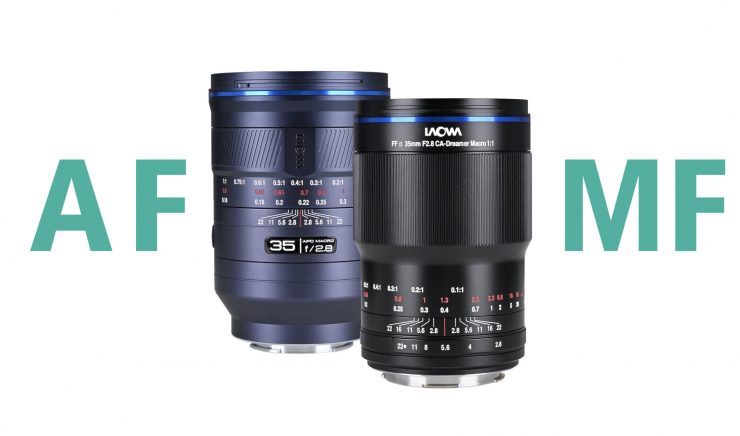
The lens is currently available in native autofocus configurations for the Sony E, Nikon Z, and Canon RF mount systems, with specific variations regarding focus capabilities. While the Sony and Nikon iterations feature full autofocus functionality, the Canon RF and Leica L mount versions are being released strictly as manual-focus lenses. This distinction is important for professionals and enthusiasts who prioritize specific camera ecosystems and may influence purchasing decisions based on their current gear architecture.
Technical Evolution and Design Philosophy
The development of the ACRIS 35mm f/2.8 1X AF Macro APO stems from a long-standing challenge in macro photography: the trade-off between magnification and context. Traditional macro lenses, typically featuring focal lengths between 90mm and 180mm, are designed to isolate the subject from the background, often resulting in a highly compressed aesthetic. While this is ideal for entomology or clinical specimen photography, it often lacks the storytelling capability of a wider field of view.
By utilizing a 35mm focal length, Laowa has created an optic that allows the photographer to capture the subject while retaining environmental context. Unlike standard close-up lenses or "macro-capable" primes that often limit magnification to 0.5X (half-life size), the ACRIS 35mm pushes the boundaries of optical engineering to reach a 1:1 ratio. This means the subject is rendered on the camera’s sensor at the same size it exists in reality, allowing for extreme detail without sacrificing the surrounding environment.
The optical construction consists of 13 elements arranged in 10 groups. To ensure high image fidelity, the lens utilizes Laowa’s signature Apochromatic (APO) design. The APO designation indicates that the lens is corrected for chromatic aberrations (CA) at multiple wavelengths, effectively minimizing color fringing in both the high-contrast in-focus areas and the bokeh-heavy out-of-focus areas. This is a critical feature for macro work, where fine details like the edges of an insect wing or the texture of a flower petal are highly susceptible to purple or green fringing.

Dual-Mode Focusing and Mechanical Construction
One of the most innovative features of the ACRIS 35mm is its dual-mode focusing system, which addresses the difficulty of achieving precise focus at high magnification levels. The lens employs a segmented approach:
- Standard Autofocus Mode (Infinity to 0.5m): In this range, the lens functions as a standard, high-speed prime. It is optimized for portraiture, street photography, and general landscape work, providing responsive subject acquisition consistent with modern mirrorless standards.
- Macro Focus Assistance (0.5m to 1:1): When the photographer enters the macro range, the system transitions to a specialized focus assistance mode. This is specifically designed to handle the precision required for 1:1 magnification, where the depth of field is incredibly shallow.
The lens housing is constructed from high-grade metal, reflecting a commitment to durability and longevity in field conditions. The barrel is weather-sealed to protect the internal optical elements from dust and moisture ingress, a requirement for outdoor macro photography where shooters often find themselves in humid or dusty environments. Furthermore, the lens features an internal focusing design. This means the physical length of the lens remains constant throughout the entire focusing range, preventing the front element from extending—a feature that prevents the lens from casting shadows on the subject when working at extremely close distances.

A dedicated Focus Assist Button allows users to toggle between these modes, providing a tactile and intuitive interface for switching between general photography and detailed macro shots. The lens is also differentiated by its filter thread sizes: the autofocus versions utilize a 72mm filter thread, while the manual-focus variants are equipped with 67mm threads.
Market Positioning and Competitive Landscape
Priced at $449 USD, the ACRIS 35mm f/2.8 1X AF Macro APO is positioned as an accessible, high-performance optic. This pricing strategy places it in direct competition with premium third-party lenses and some entry-to-mid-level manufacturer-branded primes. However, by introducing the 1:1 macro feature into a 35mm focal length, Laowa is effectively creating a niche market segment.

For years, photographers have relied on extension tubes or diopter filters to achieve 1:1 magnification with wide-angle lenses. However, these methods often degrade image quality, introduce distortion, or complicate the autofocus performance. By integrating these capabilities into the native optical design, Laowa eliminates the need for these accessories, offering a streamlined workflow that is likely to appeal to commercial photographers, nature documentarians, and product specialists.
The decision to limit autofocus functionality on certain mounts, such as the Canon RF and Leica L, may be viewed as a strategic choice influenced by licensing agreements or the specific requirements of the mount protocols. It suggests that while Laowa is aggressively pursuing the autofocus market, they remain committed to supporting the manual-focus heritage that built their reputation.

Implications for Future Optical Engineering
The release of the ACRIS 35mm highlights a broader trend in the camera industry: the shift toward multifunctional optics. As mirrorless camera technology continues to advance, providing better image stabilization and higher-resolution sensors, the demand for lenses that can handle multiple tasks—such as a 35mm that doubles as both an environmental lens and a macro tool—is rising.
The integration of advanced electronic components, such as the focus-mode toggle and sophisticated AF motors, into a compact, weather-sealed package, indicates that Venus Optics is evolving from a specialized manufacturer of "niche" lenses into a full-service optical brand capable of competing with the industry’s established giants.

For the end user, this lens represents a reduction in the "kit burden." A photographer can now carry a single 35mm prime that covers the requirements of street photography, environmental portraiture, and extreme close-up work. The implications for travel photographers, who often struggle with the weight and space constraints of carrying multiple dedicated lenses, are substantial.
Summary of Specifications
- Focal Length: 35mm
- Aperture Range: f/2.8 to f/22
- Magnification: 1:1 (Life-size)
- Optical Design: 13 elements in 10 groups (APO correction)
- Focusing System: Dual-mode (AF for infinity to 0.5m; Focus Assist for 0.5m to 1:1)
- Build: All-metal, weather-sealed
- Compatibility: Sony E, Nikon Z (AF); Canon RF, Leica L (Manual Focus)
- Filter Thread: 72mm (AF versions), 67mm (MF versions)
- Retail Price: $449 USD
As of late 2026, the ACRIS 35mm is available through authorized retailers and the official Venus Optics website. With the market for mirrorless optics showing no signs of slowing, the success of this lens will likely depend on its real-world performance in the field—specifically the accuracy of the autofocus system in the macro range and the edge-to-edge sharpness that the company claims is maintained across the entire focal distance. Given Laowa’s track record for high-quality, innovative glass, the industry will be closely monitoring how this lens performs in the hands of professionals who require both versatility and optical precision.
Related posts: