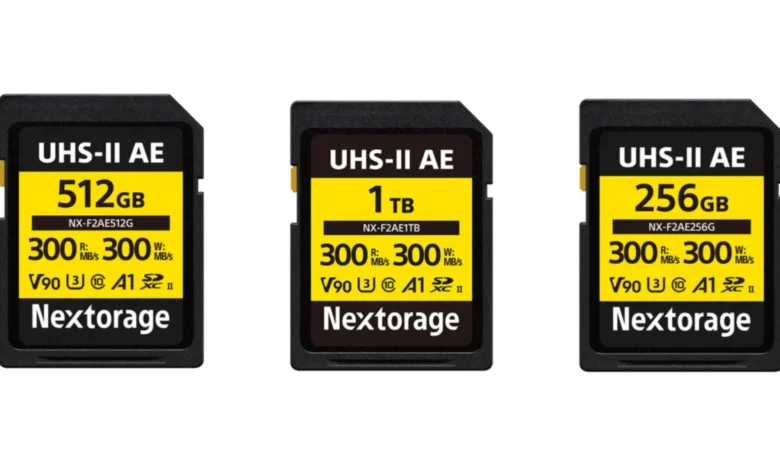
As digital cinema cameras continue to push the boundaries of data throughput, the reliance on stable, high-speed storage media has become a critical bottleneck for production houses and independent filmmakers alike. The NX-F2AE Series enters a competitive market where reliability is often prioritized over raw speed, yet these cards aim to bridge that gap by offering both sustained performance and robust physical durability.
Technical Specifications and Performance Metrics
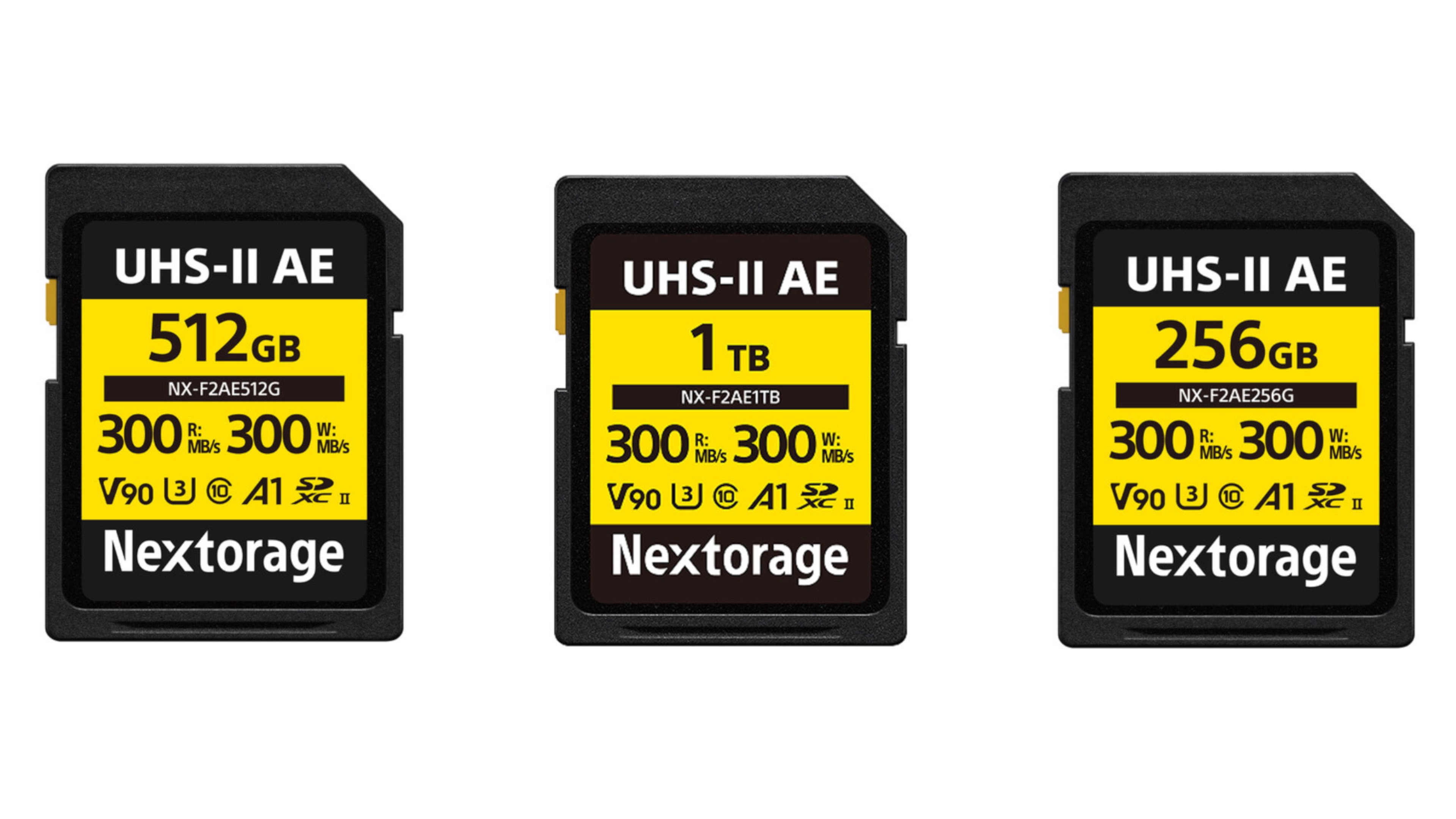
The core value proposition of the Nextorage NX-F2AE series lies in its adherence to the V90 Video Speed Class standard. This classification ensures a minimum sustained write speed of 90 MB/s, a necessary threshold for cameras capturing high-bitrate codecs such as Apple ProRes, Blackmagic RAW, or various H.265-based high-efficiency formats.
Beyond the baseline requirements, Nextorage claims peak read and write speeds of up to 300 MB/s. In real-world production environments, these speeds are pivotal for two primary tasks: the initial in-camera recording of high-resolution video streams and the subsequent "offloading" of data to a post-production workstation. For a filmmaker managing 1TB of footage, the difference between a 300 MB/s transfer rate and a slower, standard UHS-II card is measured in hours of saved production time.
The series is available in three distinct capacity tiers: 256 GB, 512 GB, and a flagship 1 TB model. The inclusion of a 1 TB capacity is particularly significant, as it allows for extended recording sessions in high-bitrate modes without the need to swap media, thereby reducing the risk of file corruption or missed shots during card changes—a common pain point in documentary and event cinematography.
Chronology of the Nextorage Evolution
To understand the positioning of the NX-F2AE, one must look at the trajectory of the Nextorage brand. Originally a subsidiary with strong ties to Sony’s memory technology division, Nextorage transitioned into an independent entity with a sharp focus on professional-grade storage.
- Initial Market Entry: Nextorage began by establishing its reputation through CFexpress Type A and Type B cards, which are essential for high-end Sony Alpha and Cinema Line cameras.
- Expansion into SD Media: Having captured a share of the high-end CFexpress market, the company began diversifying its portfolio into the SDXC space to serve a wider demographic of hybrid shooters who utilize both mirrorless cameras and cinema-grade camcorders.
- 2026 Innovation Cycle: Throughout the first three quarters of 2026, Nextorage signaled a pivot toward "professional-first" durability. The NX-F2AE series represents the culmination of this research, specifically targeting the environmental volatility often faced by news gatherers and remote production crews.
Durability and Field Reliability
In the professional production environment, a memory card is only as good as its ability to survive the elements. Nextorage has subjected the NX-F2AE series to a rigorous seven-point durability testing regimen. While specific technical details on these tests are proprietary, industry standards for such professional-grade cards generally include resistance to X-rays, magnetic fields, extreme temperature fluctuations, electrostatic discharge, UV radiation, water immersion, and physical impact.
For the working professional, these certifications serve as an insurance policy. In scenarios ranging from desert heat to arctic cold, the integrity of the NAND flash memory is paramount. By hardening the physical chassis of the card, Nextorage is signaling its intent to compete directly with established industry leaders like ProGrade Digital, SanDisk, and Angelbird, who have built their reputations on the same promise of "data resilience."
Ecosystem Integration: The Role of the NX-DF1CL Reader
A memory card’s performance is frequently throttled by the card reader used during the ingest process. Recognizing this, Nextorage has explicitly recommended the use of its proprietary NX-DF1CL Dual-Slot SD Card Reader alongside the new cards.
The NX-DF1CL is designed to maximize the UHS-II bus architecture. A common issue in digital workflows is "bottlenecking," where a high-speed card is limited by a slow or outdated reader. By promoting a unified hardware ecosystem, Nextorage aims to ensure that the 300 MB/s theoretical limit is actually realized during data offloading. Furthermore, the dual-slot configuration allows for the simultaneous ingestion of two cards, effectively halving the time required for a DIT (Digital Imaging Technician) to back up footage on set.
Market Analysis and Implications
The release of the NX-F2AE series comes at a time when the camera market is transitioning from 4K/60p to 8K/30p and 4K/120p as standard professional offerings. This shift exponentially increases the data load per second. Consequently, storage media that could handle the demands of 2022-era cameras are increasingly failing or dropping frames when tasked with modern, high-bitrate workflows.
From a broader economic perspective, the professional memory card market is becoming increasingly commoditized. However, differentiation is now occurring in the areas of "sustained write performance" and "firmware longevity." Unlike consumer-grade SD cards, which may experience performance degradation as the card fills up, the NX-F2AE is marketed with a focus on "uninterrupted recording performance." This implies that the card’s controller manages background tasks—such as garbage collection and wear leveling—in a way that prevents the "stuttering" often seen in cheaper media.
Industry Feedback and Expectations
While independent benchmarks are still forthcoming as the cards reach the hands of early adopters, the initial reaction from the cinematography community has been cautiously optimistic. Professionals look for consistent "write-to-card" reliability. If the NX-F2AE can maintain its V90 speed rating consistently throughout a 1TB write cycle, it will likely see rapid adoption in the broadcast and independent film sectors.
Furthermore, the pricing strategy for this series is designed to undercut the premium "cinema-only" brands while offering performance specifications that exceed standard retail-grade memory cards. By positioning itself in this "pro-sumer" sweet spot, Nextorage is attempting to capture the loyalty of a growing class of content creators who operate at a professional level but maintain lean, cost-conscious production budgets.
Conclusion and Future Outlook
The launch of the NX-F2AE series by Nextorage is a clear indicator of the company’s maturation in the storage sector. By combining high-capacity 1TB options with the V90 speed class and a rigorous durability testing program, the company is addressing the specific pain points of modern video production.
As we move toward the end of 2026, the success of this series will depend on its long-term compatibility with the next generation of mirrorless and cinema cameras. Should these cards prove as reliable as their marketing suggests, they are poised to become a staple in the gear bags of professionals worldwide. The emphasis on ecosystem integration, specifically with the NX-DF1CL reader, demonstrates a sophisticated understanding of the entire data pipeline—from the moment the sensor captures light to the moment the footage reaches the edit suite.
For the professional filmmaker, the NX-F2AE series represents more than just a storage medium; it is a critical component of a reliable workflow, ensuring that the heavy investment in high-end camera bodies and glass is not undermined by storage failure. As production requirements continue to escalate in resolution and bitrate, the industry will undoubtedly continue to rely on manufacturers like Nextorage to push the limits of what a small, portable SD card can achieve.