GrowFrame: A New Desktop Utility Empowers Solo Creators to Document and Visualize Long-Term Artistic Progress

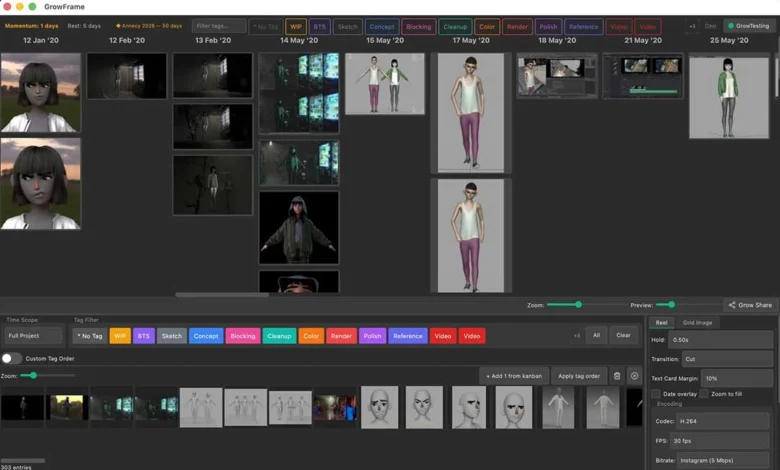
In an era defined by rapid-fire generative AI and the constant pressure for instantaneous content production, the value of slow, deliberate craftsmanship is often obscured by the sheer volume of digital noise. For artists, animators, and independent filmmakers, the multi-year journey of a "passion project" is frequently punctuated by periods of isolation and a lack of tangible progress tracking. Addressing this specific niche, Miquel Campos—the developer behind the widely recognized mGear framework—has released GrowFrame, a desktop application designed to bridge the gap between complex enterprise production tracking and the needs of the individual creator.
The Genesis of a Productivity Tool for Solopreneurs
The development of GrowFrame was not an exercise in market research but a direct response to a personal requirement. Campos, an industry veteran based in Tokyo, began the application while working on a long-form animated short film. As the project stretched across several years, the difficulty of maintaining consistent motivation became a significant hurdle. Enterprise-grade production tracking software, such as Autodesk’s Flow Production Tracking (formerly ShotGrid), is designed for large teams with complex pipelines and multi-tiered oversight. For a solo artist, these systems are often prohibitively expensive and functionally bloated, offering features that solve problems a one-person studio simply does not have.
Campos recognized that while he did not need complex version control or database synchronization, he did need a way to visualize the "slow crawl" of his daily efforts. After iterating on a local tool to manage his own project, he realized that the same friction points—the inability to see the cumulative impact of daily, incremental work—were common among his peers in the animation and independent design communities. Consequently, he pivoted his internal tool into a consumer product, launching it as a local-first desktop application.
Chronology and Development Cycle
The development of GrowFrame follows a trajectory typical of high-end, developer-centric creative software. Having established his reputation with the mGear framework—a popular rigging and animation suite for Maya—Campos applied his deep understanding of studio pipelines to a smaller, more focused scope.
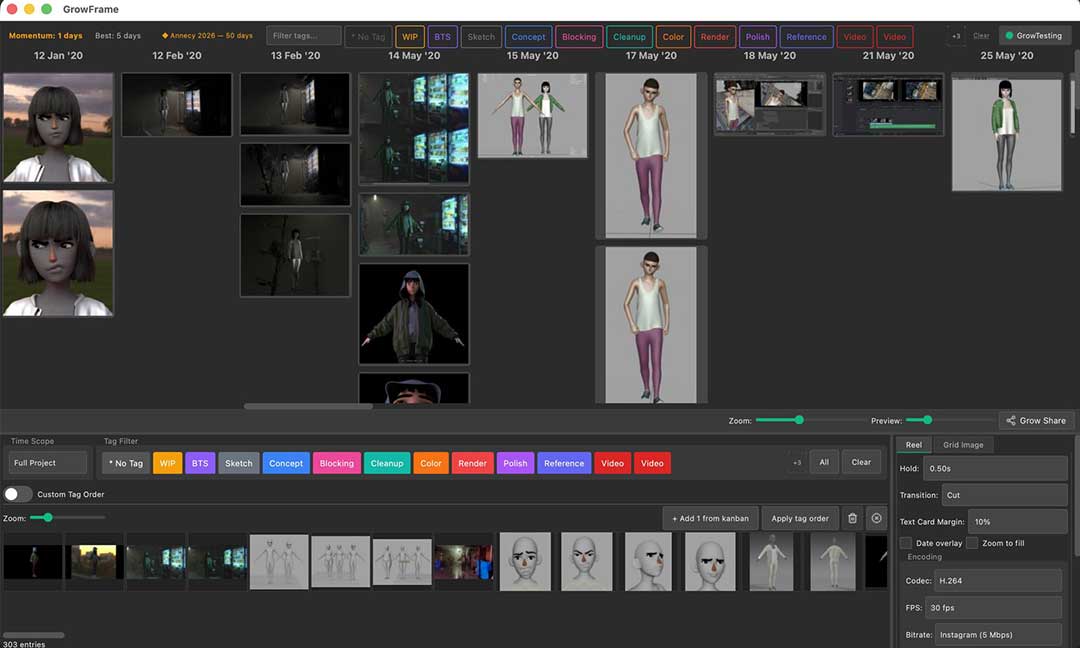
During the beta phase, the application gained traction among a select group of independent animators and educational institutions. Teachers at animation schools identified that the software could serve as a "digital portfolio log" for students, allowing them to track the evolution of their skills over the course of a multi-year degree program. By the time of its official release, GrowFrame had moved beyond a simple progress tracker, incorporating features that allow for the export of "progress reels"—automated video montages that summarize months of work into a digestible social media format. This transition from a internal script to a polished, commercial desktop app highlights a shift in the creative software landscape, where the needs of the independent "creator economy" are finally being met with professional-grade, albeit simplified, utilities.
Technical Architecture and the Local-First Philosophy
A defining feature of GrowFrame, and one that distinguishes it from the broader SaaS (Software as a Service) trend, is its "local-first" architecture. In a market dominated by cloud-based subscriptions and constant internet connectivity requirements, GrowFrame opts for a traditional, permanent license model.
The application operates entirely on the user’s local hardware. This choice has significant implications for privacy, data security, and long-term accessibility. By eschewing cloud storage, GrowFrame eliminates the monthly subscription fees that have become a point of contention for many independent artists. Furthermore, because the software does not rely on external telemetry or cloud servers to function, it remains usable regardless of the status of the developer’s servers or the user’s internet connection. This design philosophy reflects a growing desire within the creative community to reclaim agency over their local files and workspace, moving away from the "rented software" paradigm that has become the industry standard.
Supporting Data and Market Context
The creative software market is currently bifurcated. On one end, massive corporations provide heavily subsidized or enterprise-priced solutions for large studios. On the other, there is a burgeoning market for specialized, lightweight utilities. According to recent industry reports on the "creator economy," the number of solo independent animators and digital artists has grown by approximately 15% annually since 2020. However, most productivity tools remain tailored for team collaboration rather than individual momentum.
GrowFrame fills a void in "psychological productivity." Research in creative management suggests that for long-term projects, the "visual feedback loop"—the ability to see a tangible record of daily progress—is the primary driver for sustained motivation. By allowing users to input varied media types—including frame renders, animation tests, sketches, and physical photography of sculptures—the software acts as a "visual diary" that mitigates the burnout often associated with long-term creative output.
The Stance Against Generative Accelerationism
Perhaps the most significant aspect of GrowFrame is its philosophical stance in the current technological climate. Miquel Campos has been vocal about the application’s role in protecting the "human-made" element of art. While he maintains that he is not opposed to artificial intelligence as a technology, he views GrowFrame as a counter-measure to the "content flood" created by generative tools.
In a market where AI can generate hundreds of images in seconds, the time-intensive process of manual animation or illustration risks being devalued. GrowFrame serves as a repository for the struggle, the revisions, and the slow, iterative process that characterizes human craftsmanship. By making the "process" visible, the app provides a way for artists to prove and document the hours, days, and months of labor that went into their work. This documentation is increasingly important for creators looking to differentiate their portfolios from AI-assisted imagery, providing a provenance of labor that cannot be replicated by automated tools.
Broader Implications for Creative Pipelines
The implications of such a tool extend beyond simple time management. As independent creators take on larger, more complex projects, the ability to maintain a professional, organized pipeline becomes essential. GrowFrame allows a solo creator to simulate the documentation standards of a professional studio without the overhead.
The educational sector has also taken note of this development. By integrating the software into the classroom, instructors can monitor the development of student projects with a granularity that was previously impossible. Rather than evaluating only the final submission, teachers can review the "GrowFrame timeline" to see how a student solved specific technical problems, how their aesthetic choices evolved, and how they managed their time over the course of a semester.
Conclusion and Future Outlook
GrowFrame represents a significant shift in how individual artists perceive their own workflows. By prioritizing a permanent, local-first license and focusing on the psychological needs of the creator rather than the collaborative needs of a team, the application positions itself as a staple tool for the modern, independent artist.
As the project continues to evolve under Campos’s direction from his Tokyo studio, it serves as a reminder that software development in the creative arts is at its best when it solves specific, real-world problems. For the animator spending years on a single project, or the student documenting their growth, GrowFrame offers a rare thing in today’s digital landscape: a permanent record of human effort. With the software now available to the public, the creative community will soon see whether this "local-first" approach will inspire a wider trend of utility-focused, independent software development. Interested parties can access the software directly through the official GrowFrame website, which also provides resources for educational institutions looking to incorporate the tool into their curricula.