After Effects Portal October 2026: Navigating the Adobe Ecosystem, Emerging AI Competitors, and the New Era of Motion Design

The motion graphics industry is currently experiencing a period of profound transformation, characterized by the continued evolution of Adobe After Effects and the sudden emergence of disruptive, AI-driven alternatives. As of October 2026, the landscape is defined by a dichotomy: while Adobe maintains its dominance through a massive third-party ecosystem and a steady release cadence, a new wave of software startups is attempting to challenge the Creative Cloud monopoly with lean, "vibe-coded" applications. This shift follows a busy first half of the year for Adobe, which saw a series of significant updates, AI integrations, and a strategic pivot toward addressing user feedback regarding performance and workflow efficiency.
The State of Adobe After Effects in Late 2026
The current industry standard, After Effects version 26.5, was officially unveiled at the International Broadcasting Convention (IBC) in September 2026. This release represents the culmination of a year-long effort to stabilize the platform while introducing advanced AI-assisted features. For professional motion designers, the version 26.x cycle has been marked by a focus on "Fixed Issues" and "Known Issues" documentation, signaling a clear shift in priority toward software reliability—a critical demand from the professional post-production community.
Looking ahead, industry analysts and users are turning their attention to the upcoming Adobe Max conference, scheduled for November 8–12, 2026. Adobe typically utilizes this venue to announce major feature rollouts and beta milestones for the following calendar year. Given the current trajectory of the beta applications, the community expects further integration of generative AI tools that aim to automate tedious tasks such as rotoscoping, object removal, and motion tracking.
The Rise of Artcraft and the Vibe-Coded Challenge
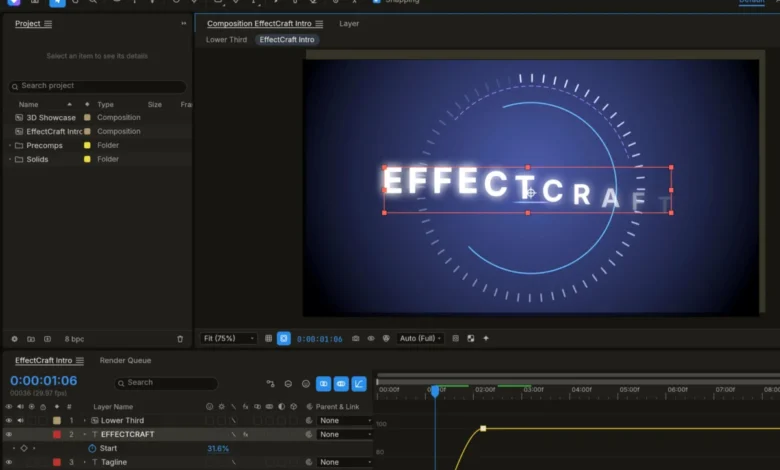
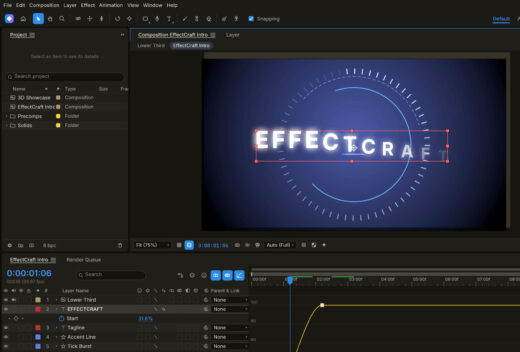
Perhaps the most significant development in the software market this month is the emergence of Artcraft, a suite of 14 applications designed to replicate the functionality of Adobe Creative Cloud. Its flagship animation tool, EffectCraft, has captured the attention of the industry by positioning itself as a modern, lightweight alternative. The software utilizes "vibe-coding"—a method of development that prioritizes user intent and natural language interaction over traditional, rigid command structures.
While the market response to EffectCraft has been intense, a factual assessment reveals that the software is still in its nascent stages. Crucially, EffectCraft does not currently support native After Effects projects, plugins, or complex expressions, which are the backbone of professional motion design. For an industry that relies heavily on a deep library of third-party plugins—such as Trapcode, Element 3D, and various scripting tools—the lack of interoperability remains a significant barrier to entry for professional studios.
However, the implications of this competition cannot be ignored. The existence of EffectCraft suggests a shift in the market toward software that requires less overhead and potentially lower subscription costs. As the development team behind Artcraft continues to iterate, they are actively crowdsourcing feedback, leading to rapid, transparent feature updates that contrast with the more traditional, slower-moving release cycles of legacy software giants.
Competitive Landscape and Freemium Alternatives
Adobe is not solely competing with startups like Artcraft. The "freemium" and open-source landscape has become increasingly sophisticated. Industry alternatives such as Cavalry, Maxon’s Autograph, and the Blackmagic Design ecosystem continue to gain ground. These platforms are increasingly viewed as specialized tools that, while not replacing After Effects entirely, are finding success in niche workflows.
Data from industry usage reports suggest that while the "Big Three" alternatives (Cavalry, Autograph, and Blackmagic) have successfully captured a segment of the motion graphics market, none have yet achieved the critical mass required to unseat After Effects. The strength of the Adobe ecosystem lies in its "network effect": the sheer volume of tutorials, plugins, presets, and collaborative workflows available to a professional user. This barrier to entry is substantial, as studios often cannot afford the downtime required to retrain staff or port legacy projects to a new platform.
Empowering the Workflow: Free Tools and Community Innovations
While Adobe continues to refine its core software, the independent developer community has stepped in to fill functional gaps with free, high-utility tools. Recent innovations in the After Effects plugin space include:
- Motion Dock (Davey Design): A comprehensive toolkit that consolidates 28 disparate tools into a single, customizable interface. This addresses a common pain point: workspace clutter and the inefficiency of managing multiple floating panels.
- Preset Browser (Jake In Motion): A free, open-extension that allows users to visually browse, preview, and apply over 600 built-in presets. This tool is a direct response to the "black box" nature of Adobe’s native preset library, which previously required manual application to determine effect output.
These community-driven projects highlight a broader trend: as software becomes more complex, users are increasingly taking ownership of their workflow, building the interfaces and tools that suit their specific production needs.
Case Study: Abstract Expressionism in Mainstream Media
The versatility of the current motion graphics pipeline is best exemplified by the recent title sequence for HBO’s "War," produced by Imaginary Forces. The project serves as a masterclass in hybridizing traditional artistic methods with high-end digital post-production.
The production team utilized a multi-stage process:
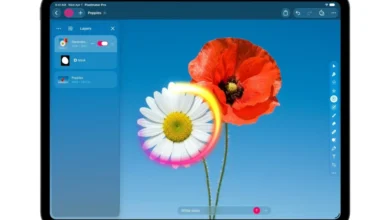
- Hand-Animation: Movement and performance were initially captured using Procreate and an Apple Pencil on an iPad.
- Texture Enhancement: The assets were migrated to Krita to achieve a richer, more tactile paint quality.
- Dimensional Integration: The project was finalized in Cinema 4D and Redshift to add physical canvas, lighting, and surface detail.
This project underscores a fundamental truth in the current industry: software is ultimately a vehicle for human creativity. While AI tools are being developed to automate the technical aspects of animation—such as SternFX’s recent experiments with AI-driven animation—the industry continues to value the "tactile" and "spontaneous" nature of human-led design.
Future Implications for the Industry
The rapid evolution of AI-integrated tools like EffectCraft and the continued dominance of After Effects suggest that the next twelve months will be a turning point for the profession. We are moving toward a dual-model industry:
- The "Legacy" Workflow: High-complexity, high-security projects will continue to rely on established ecosystems like Adobe for their stability, 3rd-party integration, and legacy support.
- The "Agile" Workflow: Newer, AI-forward projects may increasingly turn to lightweight, "vibe-coded" software that emphasizes rapid iteration and AI-assisted generation.
For professionals, the challenge lies in maintaining fluency across these platforms. As the line between manual animation and AI-assisted generation blurs, the most successful designers will likely be those who can leverage the precision of traditional toolsets like After Effects while incorporating the speed and innovation of emerging, agile alternatives.
As we approach the end of 2026, the industry remains in a state of productive tension. Adobe’s upcoming announcements at Max will be the next major indicator of whether the market leader intends to adopt the rapid, AI-centric pace of its new competitors or maintain its focus on the reliability and ecosystem-depth that has kept it at the forefront of motion design for decades. Regardless of the path, the tools of the trade are evolving faster than at any point in the last decade, and the motion graphics professional of 2027 will undoubtedly be a more versatile, tech-savvy creative than their predecessor.