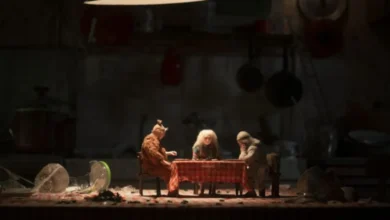
Warner Bros. Pictures Animation The Cat in the Hat opens with 30.5 million worldwide as Wildwood shows sustained strength at the box office.

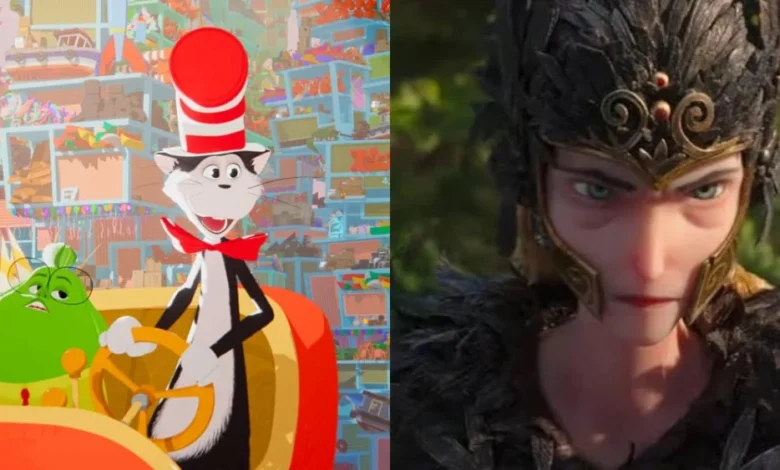
The domestic box office landscape underwent a notable shift this past weekend as Warner Bros. Pictures Animation released its latest feature, The Cat in the Hat. Directed by the tandem of Alessandro Carloni and Erica Rivinoja, the film arrived in theaters amidst significant industry scrutiny, given the storied history of Dr. Seuss adaptations in cinema. With a global opening of $30.5 million—comprised of $20.5 million domestically and an estimated $10 million in international territories—the film exceeded conservative projections that had pegged the opening in the high-teen millions.
Despite this positive momentum relative to initial expectations, the debut serves as a stark reminder of the evolving economics of animation. While the $30.5 million global haul is respectable for a mid-budget project, it stands in the shadow of previous animated behemoths based on the same source material. To contextualize the performance, Universal’s 2012 adaptation of The Lorax set a high watermark with a $70.2 million domestic opening, while Illumination’s 2018 iteration of The Grinch debuted to $67.5 million.
Box Office Performance and Financial Context
The narrative surrounding The Cat in the Hat is not merely one of gross revenue, but of fiscal discipline. According to industry reports, the production budget for this film is situated well under the $90 million threshold. This is a deliberate strategy shift from studios that have previously poured upwards of $150 million into animated features. By keeping costs contained, Warner Bros. Pictures Animation has effectively lowered the "break-even" bar, allowing the film to remain viable even if it does not reach the nine-figure domestic heights of its predecessors.
A pertinent point of comparison for the current market is Pixar’s Elio, which opened to a domestic debut of $20.8 million. While Elio ultimately garnered $72.9 million domestically, its significantly higher production cost necessitated a much more aggressive theatrical performance to achieve profitability. The Cat in the Hat, by contrast, is benefiting from favorable audience reception. Data from CinemaScore indicates an "A" rating, while PostTrak respondents have provided an 81% positive rating. These metrics are critical, as they suggest the film is poised for "legs"—a term used to describe a movie’s ability to maintain attendance over several weeks through positive word-of-mouth rather than relying solely on opening-weekend hype.
Competition and Market Dynamics
The weekend box office was topped by the spectacle-driven Godzilla Minus Zero, which dominated the market with a $31.61 million domestic haul and a global total of $63 million. The presence of such a heavy-hitting VFX film naturally siphoned off a portion of the family and general audience demographic. However, the fact that The Cat in the Hat maintained the second position indicates that there is still significant appetite for animated content, provided the budget-to-performance ratio remains favorable.
The industry is watching closely to see how these two films navigate the pre-holiday period. Traditionally, the weeks leading up to the Thanksgiving holiday in the United States represent a lucrative window for family entertainment. If The Cat in the Hat continues to sustain its current momentum, it could provide a steady stream of revenue for Warner Bros. through the end of the year, potentially offsetting the lack of a "blockbuster" opening weekend.
Wildwood and the Resilience of Stop-Motion
While much of the industry attention was focused on the debut of The Cat in the Hat, the true story of endurance in the current box office cycle is the performance of Wildwood. Directed by Travis Knight and produced by Laika, Wildwood is currently in its third weekend of release, demonstrating a level of "holding power" that is increasingly rare in the modern theatrical landscape.
Despite a 13% reduction in theater count—dropping from approximately 3,100 to 2,693 locations—the film saw a decline of only 20% from its sophomore weekend. It earned $7.21 million this frame, bringing its 17-day domestic total to approximately $40.05 million. To understand the significance of this trajectory, one must look at the historical performance of Laika’s portfolio. Wildwood has already eclipsed the entire North American theatrical runs of Missing Link ($16.6 million) and The Boxtrolls ($17.3 million).
Furthermore, the film is pacing ahead of the 17-day trajectory of Kubo and the Two Strings, which eventually finished its run with $48 million. Industry analysts suggest that Wildwood is now firmly on track to surpass the $56 million domestic total of ParaNorman. The per-theater average of $2,680 for its third weekend reinforces the idea that the film is finding a loyal, dedicated audience. This longevity is a testament to the niche but powerful appeal of high-quality stop-motion animation, which continues to differentiate itself in a market saturated with CGI-heavy offerings.

Broader Implications for Animation Studios
The concurrent performance of The Cat in the Hat and Wildwood provides a compelling case study for animation executives. We are witnessing a clear divergence in production philosophies. On one hand, studios are exploring how to make established intellectual property (IP) profitable through tighter cost controls and strategic release windows. On the other, boutique studios like Laika are proving that a distinct artistic vision can maintain long-term audience engagement even without the massive marketing spend typical of major franchise tentpoles.
The success of Wildwood suggests that audience fatigue regarding mass-market CGI may be creating a vacuum that more artistic, medium-specific animation can fill. Meanwhile, the relative success of The Cat in the Hat—at least when measured against its budget—indicates that the "safe" play of adapting recognizable literary classics remains a viable, if not spectacular, business model.
Looking Ahead: The Pre-Holiday Window
As we look toward the remainder of the fourth quarter, the theatrical release calendar remains crowded. The ability for The Cat in the Hat to secure an "A" CinemaScore is perhaps its most valuable asset. In the world of family films, parental recommendations are the primary driver of repeat business. If the film can maintain its hold during the upcoming holiday breaks, it may well solidify its position as a profitable endeavor for Warner Bros.
Similarly, the steady performance of Wildwood signals that the film will likely have a long tail, potentially extending its run well into the new year. As theater chains continue to optimize their schedules, the low volatility of Wildwood’s weekend-to-weekend revenue makes it an attractive proposition for exhibitors who want to ensure consistent foot traffic.
In summary, this past weekend has reinforced two distinct truths about the current animation market. First, that budget efficiency is becoming the dominant metric by which studio executives measure success, perhaps even more than raw box office totals. Second, that there remains a resilient, dedicated audience for high-craft animation that offers something distinct from the standard franchise fare. As the industry moves toward the final weeks of 2026, the contrast between the high-visibility debut of a major studio IP and the steady, quiet endurance of an auteur-driven project will continue to serve as a bellwether for the health of the theatrical exhibition industry.