Wildwood Sustains Steady Momentum at the Box Office as Laika Targets Long-Term Theatrical Success


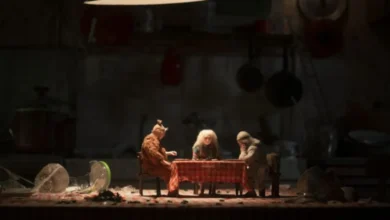
The latest stop-motion feature from Laika, Wildwood, has officially crossed the $20 million threshold at the North American box office after eight days of release. Directed by studio head Travis Knight, the film continues to solidify its place in the current theatrical landscape, with distributor Fathom Entertainment projecting a weekend haul of between $7 million and $8 million. This trajectory positions the film to surpass $25 million in cumulative domestic gross by the close of business this Sunday, marking a critical milestone in the studio’s ongoing efforts to broaden the reach of its distinctive, artisanal brand of animation.
Box Office Performance and Weekend Projections
On its second Friday, Wildwood pulled in approximately $2.4 million. While this figure represents an 18% decline from its opening Friday—excluding the impact of early preview screenings—the film is demonstrating a resilience that analysts often associate with Laika’s portfolio. With roughly 200 screens yet to report their final tallies, the studio and its distribution partners are optimistic that the final weekend earnings will fall within the projected 35% to 43% decline range relative to its $12.3 million opening weekend.
In a strategic move to bolster attendance, Fathom Entertainment has expanded the film’s footprint, adding 150 screens to the rollout. This brings the total count to 3,103 locations across the United States and Canada. This expansion is a deliberate attempt to counteract the natural "second-weekend slump" that typically affects animated features, providing greater accessibility for family audiences who may have missed the film during its initial debut period.
Comparative Analysis of Laika’s Historical Performance
To understand the current standing of Wildwood, it is necessary to examine the historical data of Laika’s previous feature film releases. The studio, known for its uncompromising commitment to physical, frame-by-frame animation, has historically seen its films exhibit specific patterns of audience retention.
The most direct point of comparison remains the 2016 feature Kubo and the Two Strings. That film debuted with $12.6 million, followed by a 37.8% drop to $7.8 million in its second frame. Wildwood appears to be tracking closely to this benchmark. Other entries in the studio’s filmography have experienced varied results: ParaNorman, released in 2012, saw a 38.7% decline after a $14.1 million start, while 2014’s The Boxtrolls experienced a more robust hold, slipping only 30.7% following a $17.3 million opening.

While Wildwood’s opening figures were more modest than some of the studio’s earlier, higher-grossing projects, the stability of its second-weekend performance suggests that word-of-mouth remains a powerful driver. The "A" CinemaScore assigned to the film upon its release indicates high levels of audience satisfaction, which serves as a vital indicator for sustained performance in the coming weeks.
Industry Context and the Challenges of Stop-Motion
The commercial landscape for stop-motion animation is uniquely challenging. Unlike computer-generated imagery (CGI) productions that can be scaled relatively quickly, stop-motion is a labor-intensive, time-consuming process. Reports indicate that Wildwood carried a production budget in the neighborhood of $100 million. Given this capital expenditure, the film must achieve a significant theatrical lifespan to approach profitability.
The industry at large has observed a shifting trend in how audiences consume animated features. While high-budget blockbusters from major studios often prioritize massive opening weekends, independent and specialty studios like Laika frequently rely on "long-tail" performance. The recent, extraordinary box office resurgence of Coraline—a 2009 title that continues to draw massive crowds during re-releases—has provided a blueprint for how Laika can leverage its back catalog and the enduring appeal of its craftsmanship to maintain brand relevance. Whether Wildwood can emulate this longevity remains to be seen, but the initial data suggests that the film is avoiding the steep, rapid decline that often plagues mid-budget films in a crowded theatrical market.
Official Commentary and Studio Strategy
Dave Burke, producer and Chief Marketing and Operations Officer at Laika, recently addressed the film’s progress, emphasizing the studio’s commitment to challenging its audience. "We made Wildwood for audiences who love bold, imaginative cinema, and our ambition has always been to expand the traditional family audience," Burke stated. "We trust audiences to embrace a film that takes risks, both in the story it tells and how it’s made. Passing $20 million in eight days, alongside an ‘A’ CinemaScore, gives us confidence as we continue bringing Wildwood to more moviegoers. This is a film made to be experienced on the big screen, and we’re proud to see audiences relishing it."
Burke’s remarks underscore a broader philosophy at Laika: the prioritization of artistic integrity over mass-market pandering. By framing the film as an experience designed specifically for the theater, the studio is attempting to distinguish itself from the influx of streaming-first animated content that has become prevalent in recent years.
The Road Ahead: Implications for the Animation Sector
The next two weeks will be decisive for Wildwood. As the film moves beyond the initial curiosity of its opening, it will face competition from incoming family-oriented titles and the holiday-season slate. The decision to expand the theater count at this juncture is a proactive measure by Fathom Entertainment to ensure that momentum is not lost.

From an industry standpoint, the performance of Wildwood serves as a litmus test for the viability of high-budget stop-motion in a post-pandemic, post-streaming-dominant world. If the film continues to hold steady, it may embolden other independent studios to pursue similar high-concept, physically crafted projects. Conversely, if the theatrical returns prove insufficient to cover the significant production costs, it could reinforce the trend of shifting such projects toward limited releases or hybrid distribution models.
Analytical Outlook
While it is premature to classify the film’s box office run as a definitive success, it is equally inaccurate to label it a failure. The film is currently performing exactly as expected for a high-quality, niche-market animated feature. The real indicator of success will be the film’s ability to maintain its audience during the mid-November lull before the major holiday tentpoles dominate the multiplexes.
Laika’s strategy is clearly focused on the long game. By building on the strong critical reception and the "A" CinemaScore, the studio hopes to cultivate a dedicated following that views Wildwood not just as a one-time watch, but as a staple of their collection. Whether this translates to a return on the $100 million investment through traditional theatrical windows will depend on the film’s ability to maintain its screen count and sustain interest through the remainder of the year.
As the industry watches the numbers roll in, the focus remains on the intersection of artistic craft and commercial viability. Wildwood represents a rare, large-scale investment in a traditional medium. For the time being, the film is holding its own, proving that even in an era of digital ubiquity, there remains a substantial and vocal audience for the tangible, handcrafted artistry of stop-motion animation. The coming weeks will reveal if this audience is large enough to sustain the film’s journey to profitability and its eventual legacy in the annals of animation history.