Suburban Subversion: How Industrial Light & Magic Brought Prehistoric Terror to Flowervale in The End of Oak Street

When Warner Bros. Pictures greenlit filmmaker David Robert Mitchell’s sci-fi thriller The End of Oak Street, the project immediately set itself apart from decades of standard creature-feature tropes. Rather than relying on the traditional, genetic-engineering cloning tropes popularized by the Jurassic Park franchise—where modern science resurrects extinct beasts in controlled theme park environments—Mitchell’s narrative employs an inexplicable, reality-bending cosmic event. This mysterious phenomenon physically transplants an entire residential American neighborhood into a brutal, prehistoric epoch.
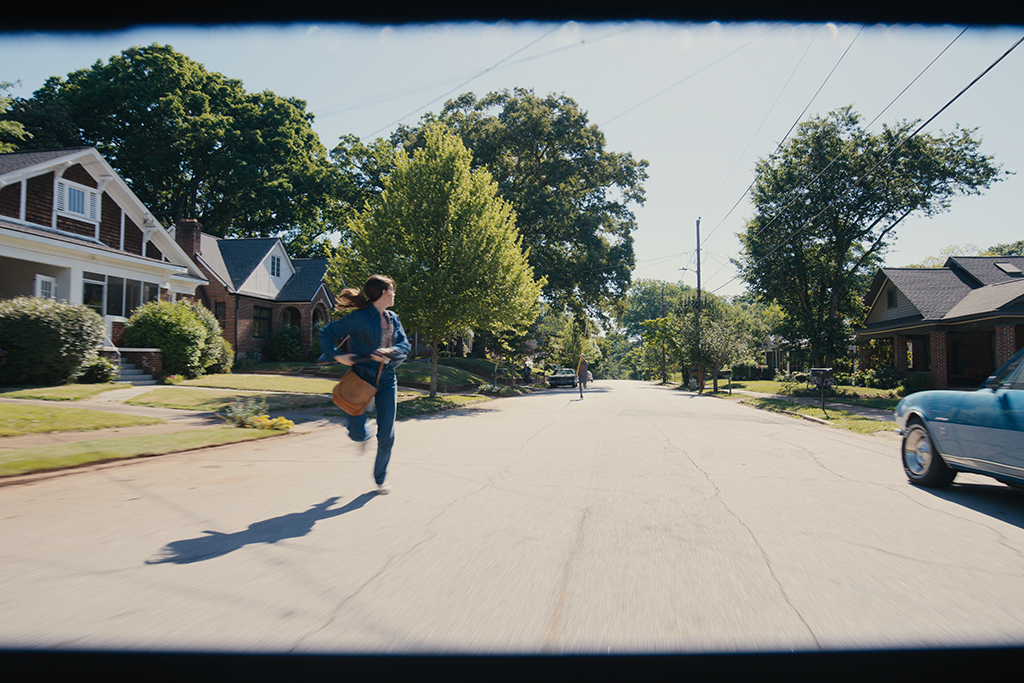
Bringing this conceptual high-wire act to the screen required an unprecedented visual effects campaign. Led by Production Visual Effects Supervisor Jay Cooper, a veteran of Industrial Light & Magic (ILM) since 1998, the production team faced the daunting challenge of seamlessly integrating terrifying, grounded dinosaurs into the familiar, mundane architecture of a 1980s-inspired suburban community. Working alongside a stellar cast that includes Ewan McGregor and Anne Hathaway, the visual effects department utilized approximately 700 digital shots, state-of-the-art real-time engines, and meticulous practical-digital crossover techniques to redefine cinematic prehistoric terror.
Reinventing the Prehistoric: Creature Design and Bird Ancestry
The creative mandate for The End of Oak Street was clear from the outset: abandon the majestic, John Williams-scored awe associated with classic dinosaur cinema in favor of persistent, claustrophobic dread. Cooper and director David Robert Mitchell envisioned creatures that felt weathered, wounded, aggressive, and deeply integrated into a harsh ecosystem. Instead of pristine scales and cinematic grandeur, these animals rummaged through suburban trash cans, left behind visceral dinosaur dung, smashed through residential structures, and hunted local residents with unrelenting hostility.
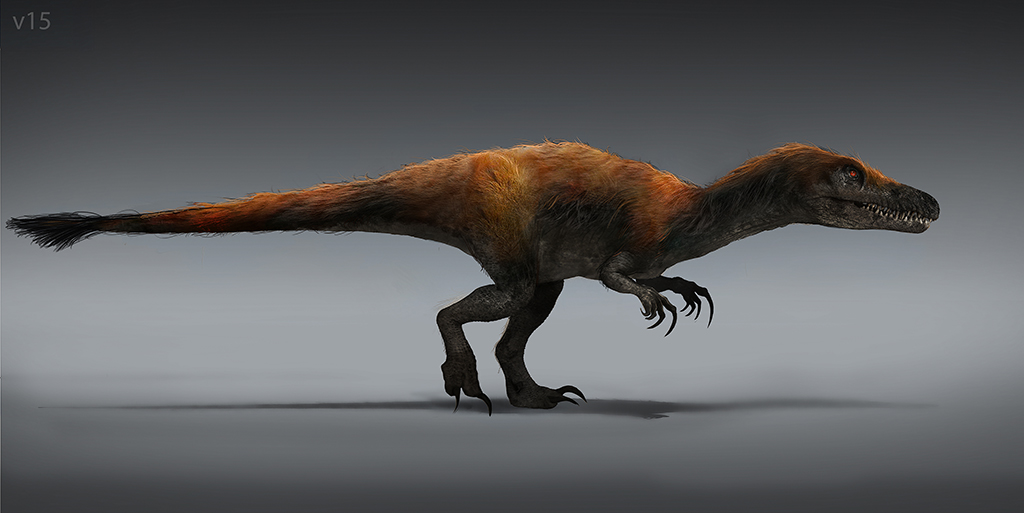
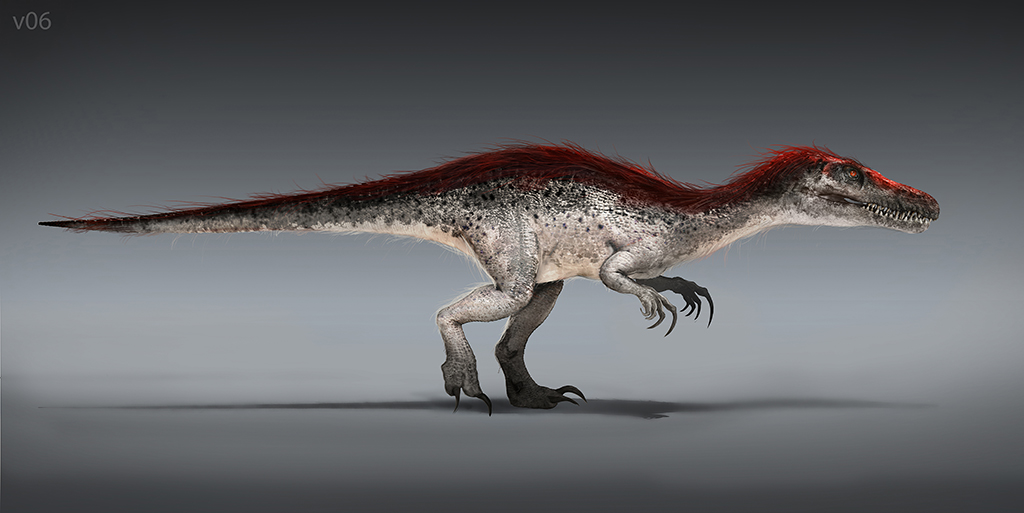
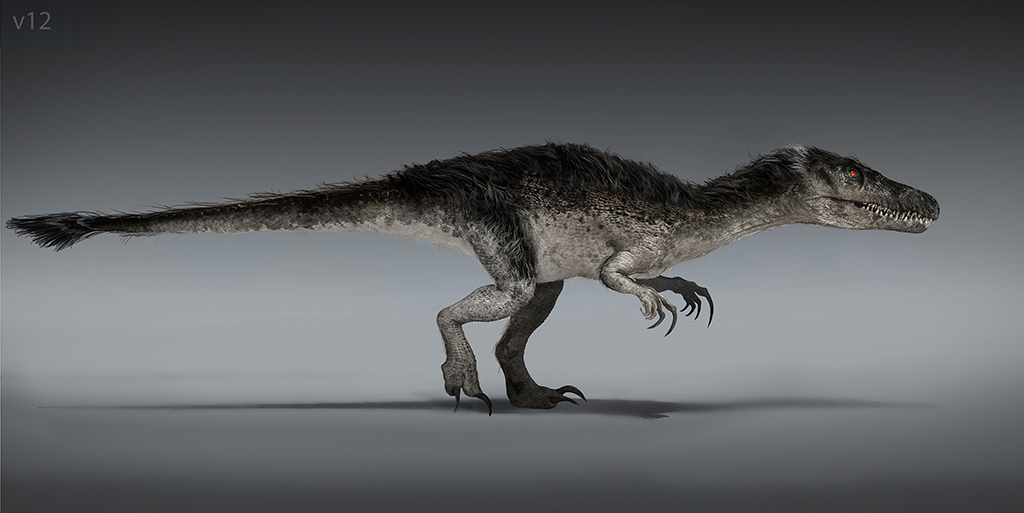
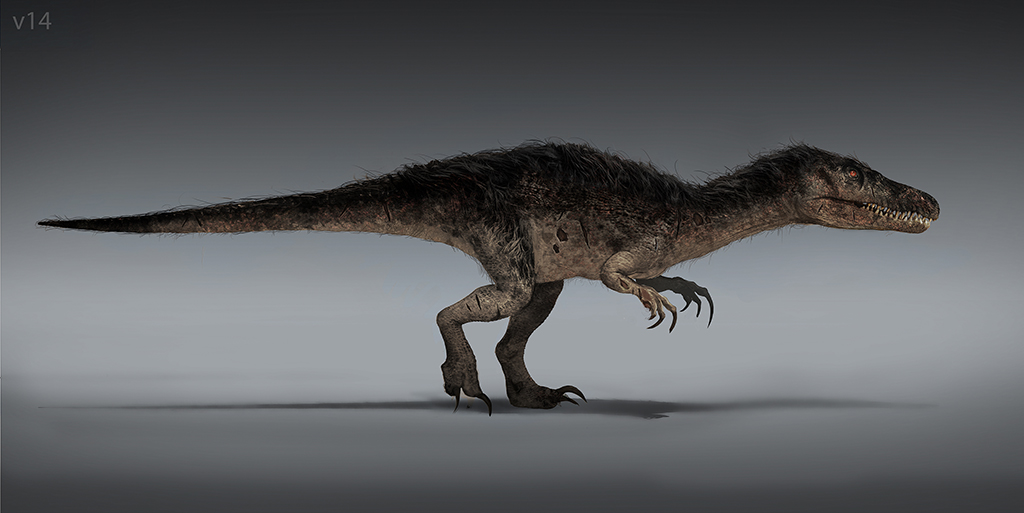
Under the guidance of Animation Supervisor Kevin Martel, the creative team heavily leaned into contemporary paleontological research regarding avian ancestry. This scientific influence is particularly evident in the depiction of the Coelophysis, a litany of which torment Ewan McGregor’s character, Gregg Platt. The animators studied the behavioral patterns of modern birds, such as emus, ostriches, and pigeons, infusing the digital dinosaurs with sudden, erratic head movements and signature sideways glances. This design choice created an unsettling psychological tension, leaving characters and audiences alike perpetually uncertain whether the predatory animal had fully registered its human prey.
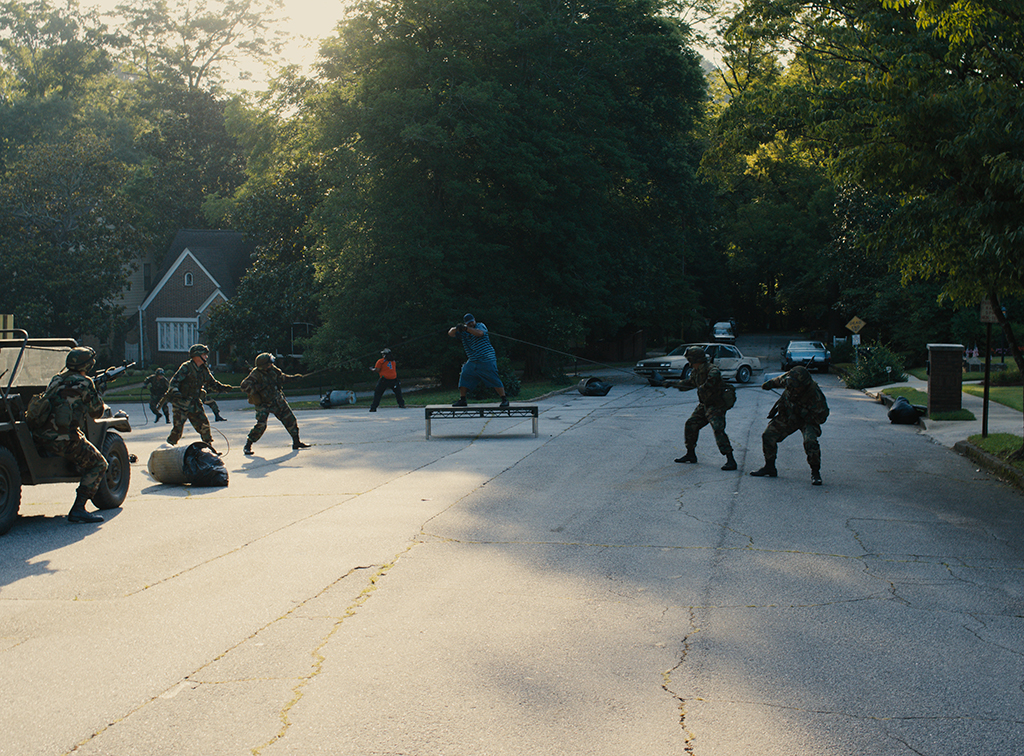
Alongside the Coelophysis, the film features an array of meticulously rendered prehistoric fauna, including the Allosaurus, Stegosaurus, Camarasaurus, Pterosaur, Ornithosuchus, and Ornithocheirus. To ensure these digital creations interacted convincingly with the live-action cast, the production utilized an extensive array of physical on-set stand-ins. Stunt coordinators deployed specialized proxy props—ranging from Coelophysis heads mounted on poles to stunt performers wearing detailed creature-head helmets—allowing actors like Anne Hathaway and Ewan McGregor to execute authentic physical reactions, defensive kicks, and spatial interactions that would later ground the digital compositing.
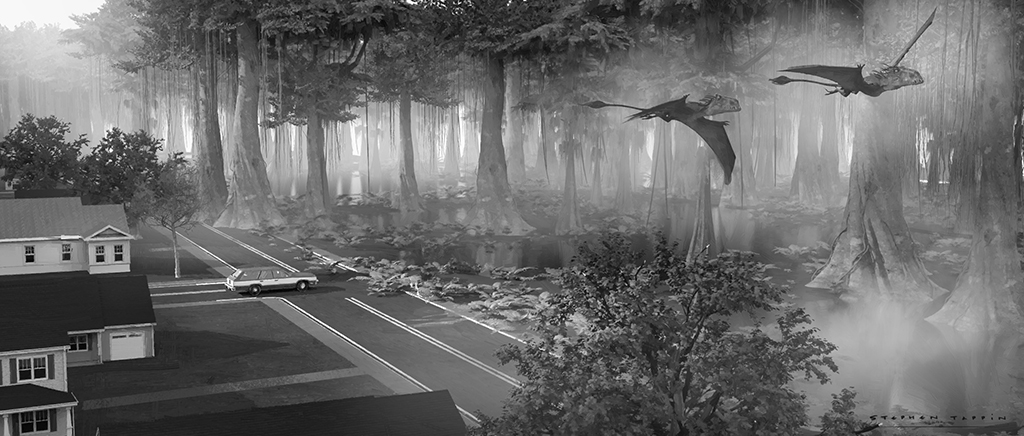
Architectural Jigsaw Puzzles: Constructing Flowervale, Michigan
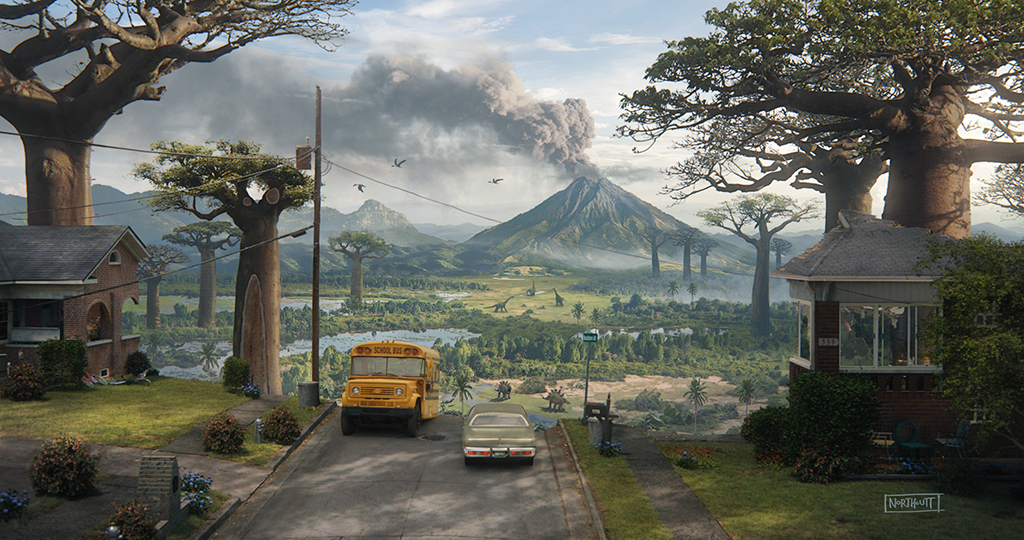
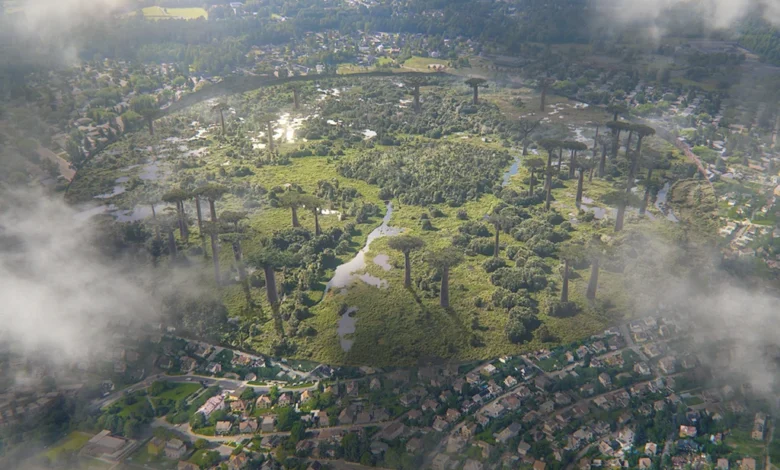
One of the most complex engineering feats of the production involved building the fictional town of Flowervale, Michigan. Principal photography primarily took place in targeted neighborhoods around Atlanta, Georgia, chosen for their architectural alignment with the director’s 1980s aesthetic vision. However, the physical geography of these real-world locations fell short of the narrative’s demanding topography, which required immediate transitions from domestic lawns to sheer cliff faces and deep bodies of water.
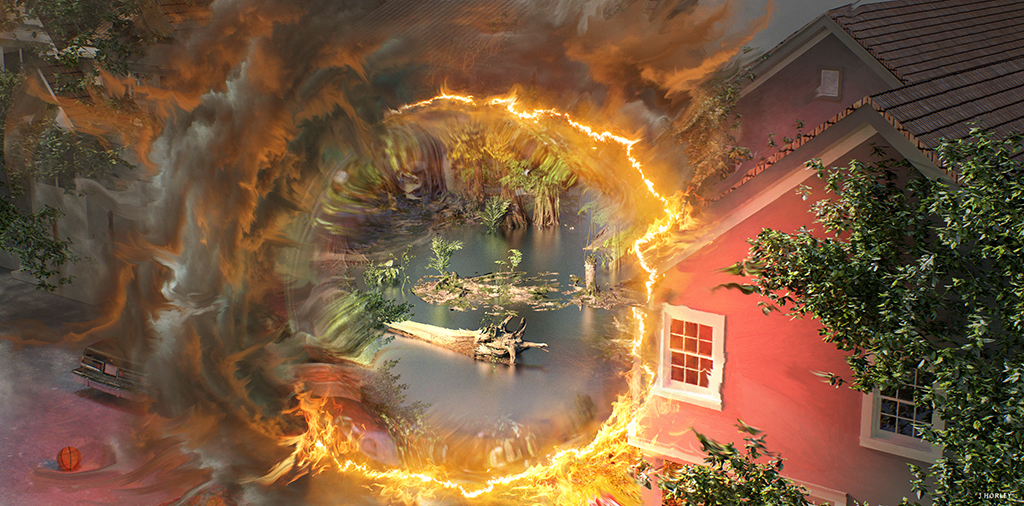
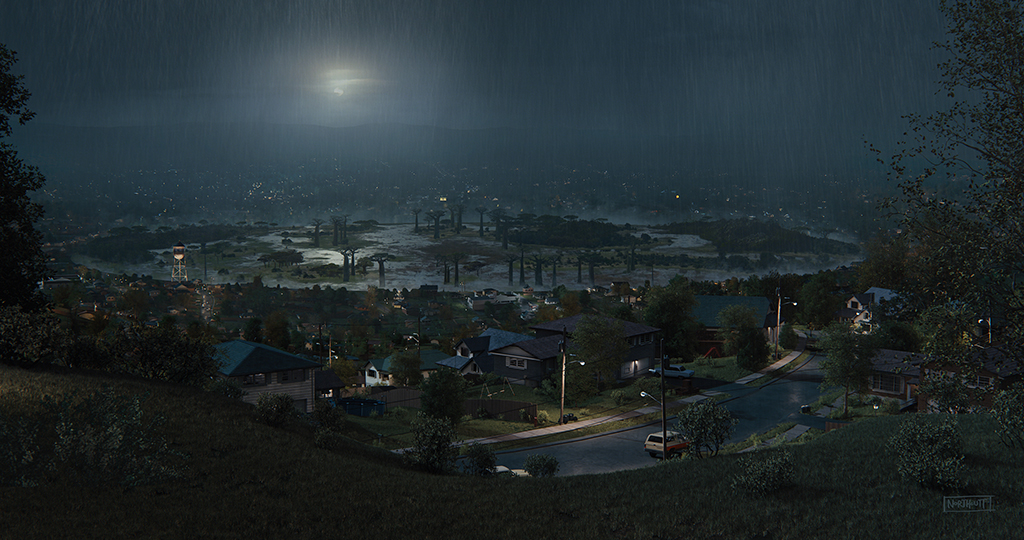
Consequently, the neighborhood itself functioned as the film’s largest digital monster. Any shots depicting houses situated on hills, expansive downward views into valleys, or the hazardous perimeter of the neighborhood required extensive digital recreation. Because no real-world geographical precedent exists for a residential community sliced cleanly out of the earth by a cosmic anomaly, ILM’s concept artists—including David Ratajczak and Kouji Tajima—had to invent a visual language for the portal’s aftermath.
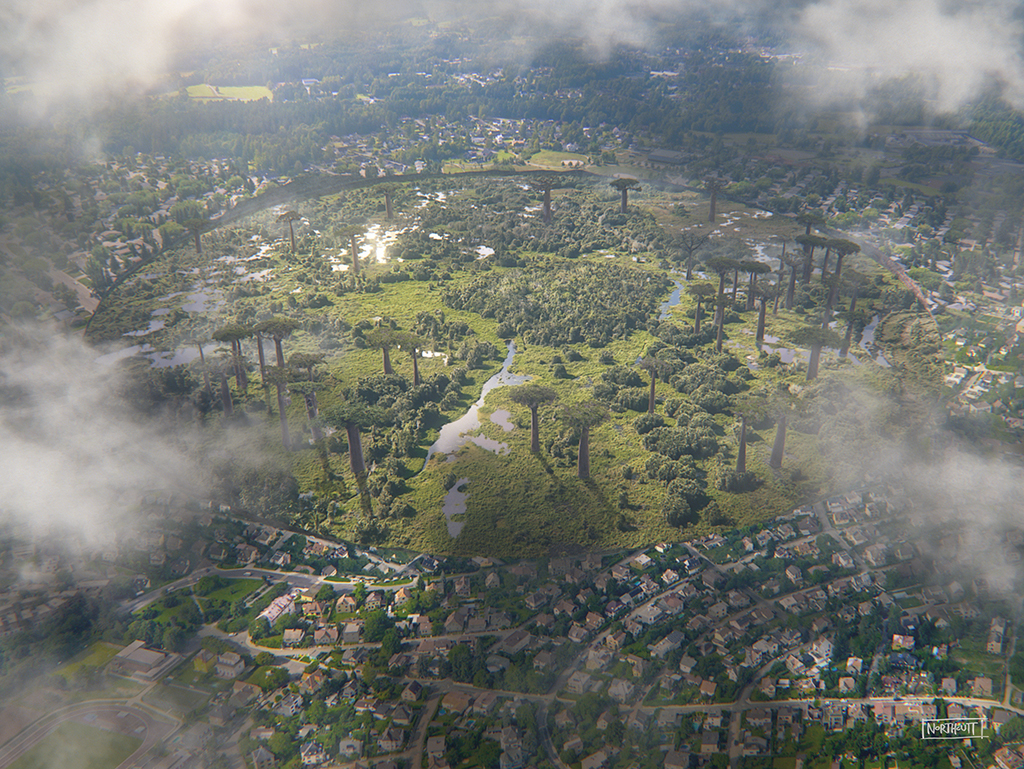
Cooper noted that narrative clarity consistently superseded strict scientific or geographical accuracy. The visual effects team frequently manipulated environmental parameters, such as artificially amplifying the scale of a cliff edge or introducing bodies of water, to ensure the audience could instantly comprehend the spatial geography within the span of a two-second cut.
Blending Practical Craftsmanship with Real-Time Rendering Innovation
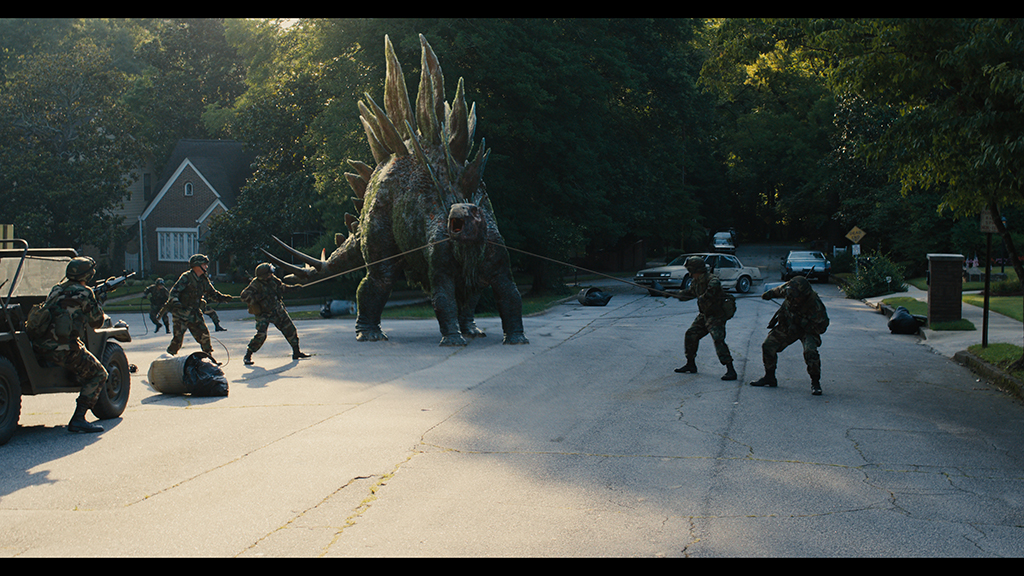
Achieving a tactile, lived-in aesthetic required deep collaboration between the visual effects department, Production Designer Maya Shimoguchi, and Special Effects Supervisor J.D. Schwalm. Wherever possible, practical sets were constructed on location to anchor the digital extensions. Notably, the sequence in which a vehicle is violently hurled into a residential home utilized a physical set built on a studio lot situated directly between two real houses in Atlanta, later augmented with digital lawn replacements and environmental debris.
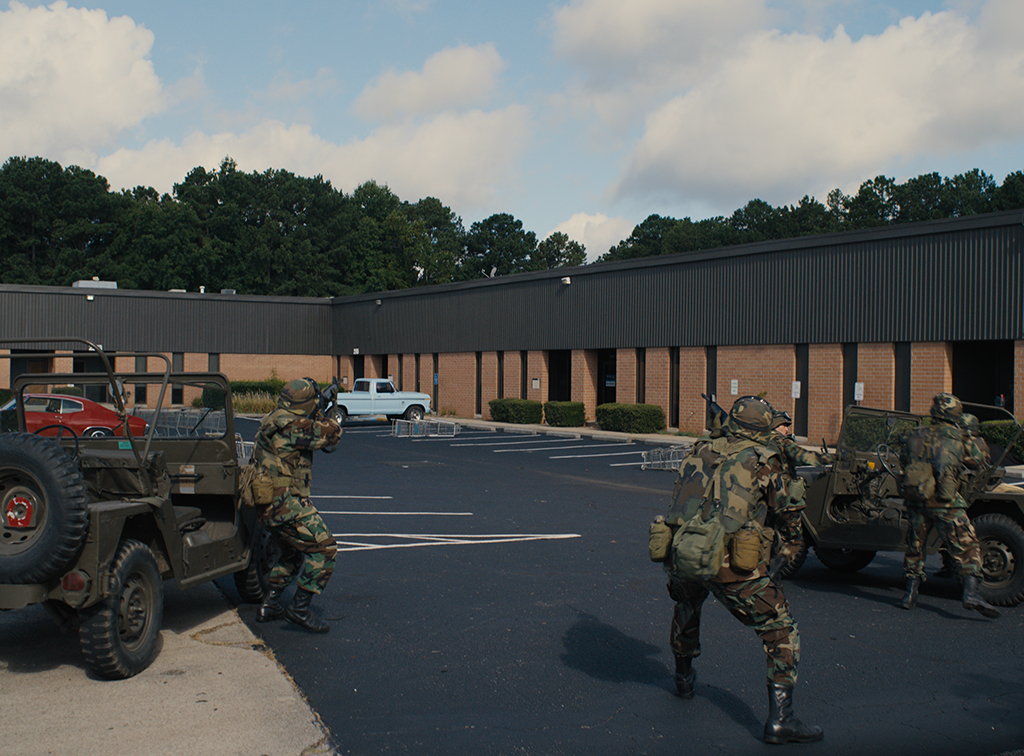
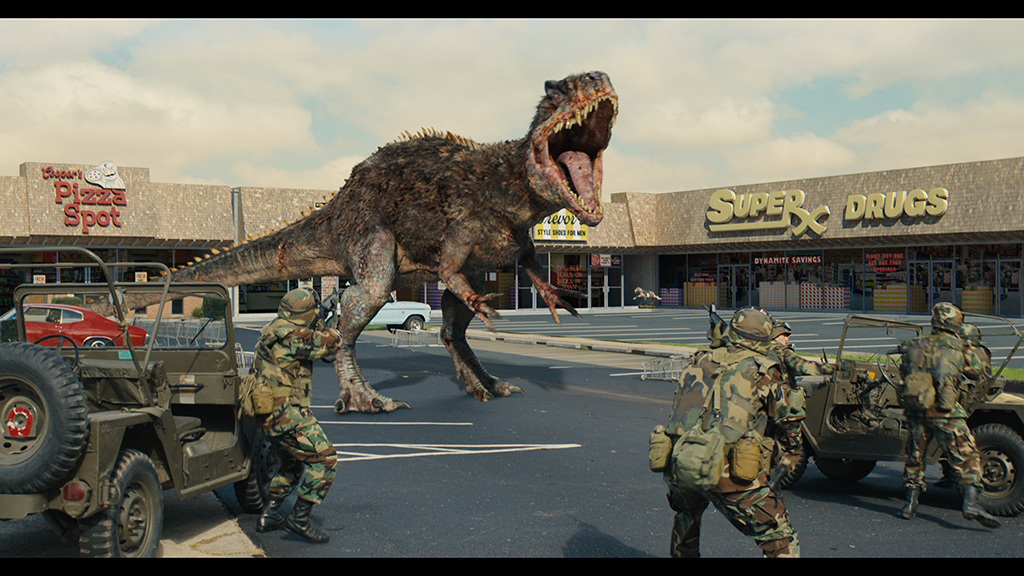
To optimize the staging and pre-visualization process, ILM deployed Helios, its proprietary real-time renderer and engine. This technological framework allowed director David Robert Mitchell to experiment dynamically with motion-capture dinosaur performances integrated directly with Unreal Engine assets and Gaussian environment splats. This real-time interactivity streamlined the director’s decision-making process, enabling precise framing of claustrophobic porch confrontations and chaotic nighttime strip-mall skirmishes against the military.
Atmospheric tension was further heightened through meticulous environmental design. The production utilized practical rain machinery complemented by digital mist to establish a pervasive, eerie atmosphere during nocturnal sequences. Furthermore, the prehistoric flora populating the newly formed ecosystem required extensive botanical research. Shimoguchi’s art department curated a diverse array of outlandish, real-world plants featuring unconventional silhouettes—such as oversized ferns and bizarre foliage reminiscent of remote, prehistoric-feeling jungles found in locations like Hawaii—to visually reinforce the jarring ecological displacement.
Strategic Suspense and Audience Impact
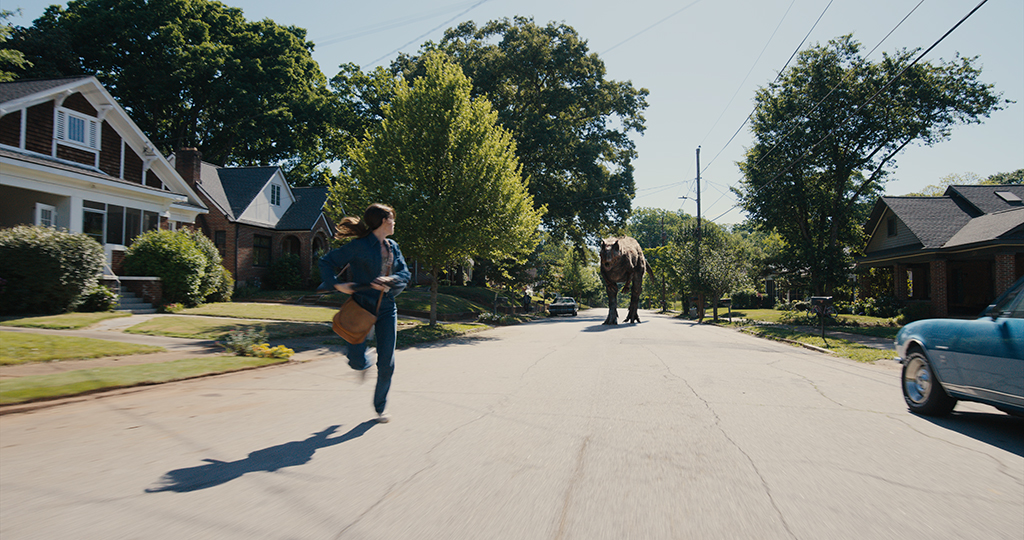
By deliberately withholding full, uninhibited views of the creatures during the film’s opening acts, Mitchell and Cooper deliberately mirrored the psychological suspense mechanics of classic thrillers like Steven Spielberg’s Jaws. Rather than exposing the antagonists immediately, the sound design and subtle environmental cues—such as structural shutters vibrating from an unseen Camarasaurus squeezing past a residential window—empowered audiences to mentally construct the terror themselves.
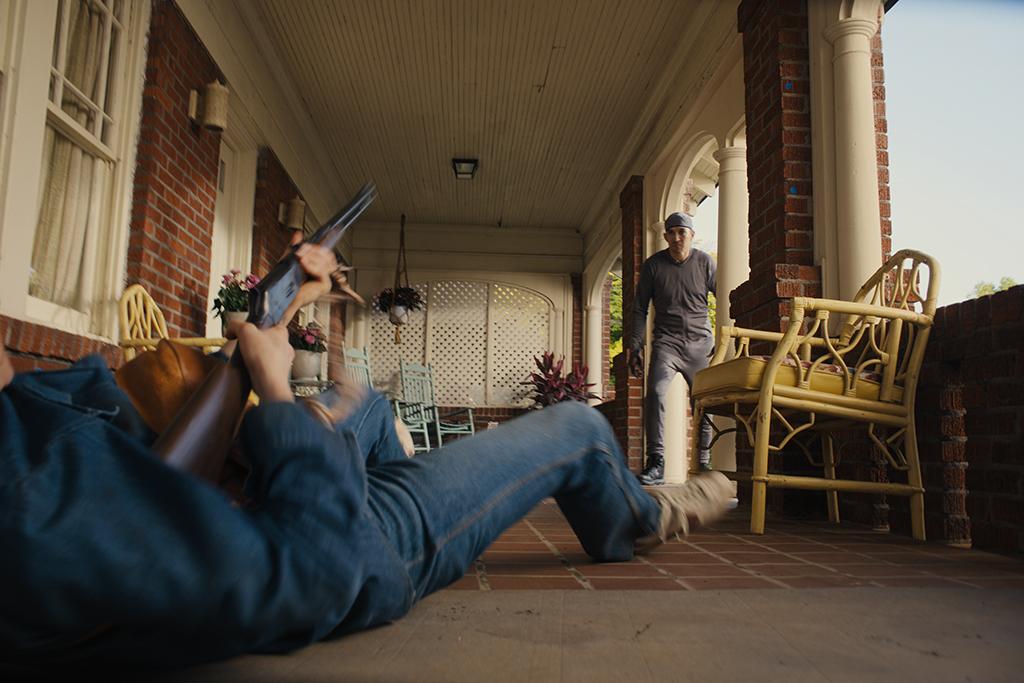
Operating on a significantly more modest budget than traditional multi-million-dollar studio monster franchises, The End of Oak Street relied heavily on intense character proximity, violent PG-13-rated close-quarters skirmishes, and rigorous technical execution to maximize its dramatic resonance. By marrying cutting-edge real-time rendering technology with classical principles of cinematic suspense, the production successfully transformed a suburban street into an uncompromising theater of prehistoric survival, setting a new technical benchmark for genre storytelling.