Recreating the Red Cosmos: How DNEG Brought Vintage Soviet Space Paranoia to Life in Star City

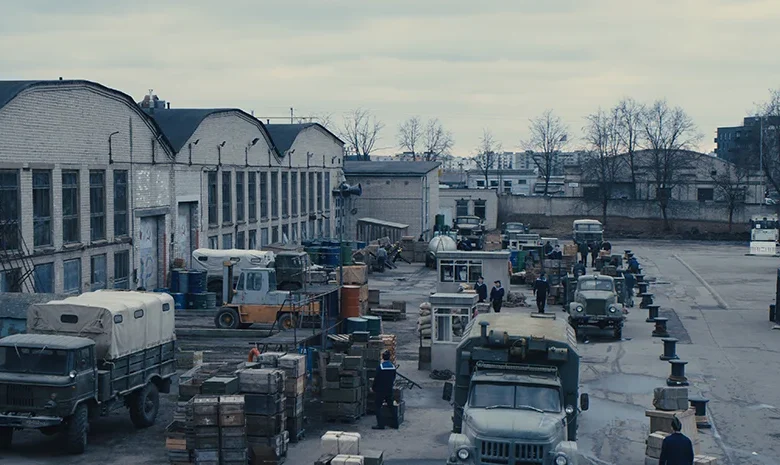
Apple TV+ has continued its deep dive into alternative history with Star City, a thrilling sci-fi drama series that serves as a companion piece to the critically acclaimed For All Mankind. While the parent series charted the American trajectory following a Soviet victory in reaching the moon first, Star City shifts the narrative lens entirely to the Eastern Bloc. Imagining a timeline where visionary Soviet rocket designer Sergei Korolev survived a fateful 1966 surgery, the series explores a world where the Soviet Union cements its dominance in the space race. Behind this gripping narrative is a massive visual effects undertaking, led by production visual effects supervisors Jay Redd and Todd Perry alongside powerhouse VFX house DNEG, which delivered 131 complex visual effects shots across 21 distinct sequences.
Rebuilding History Through a Cold War Lens
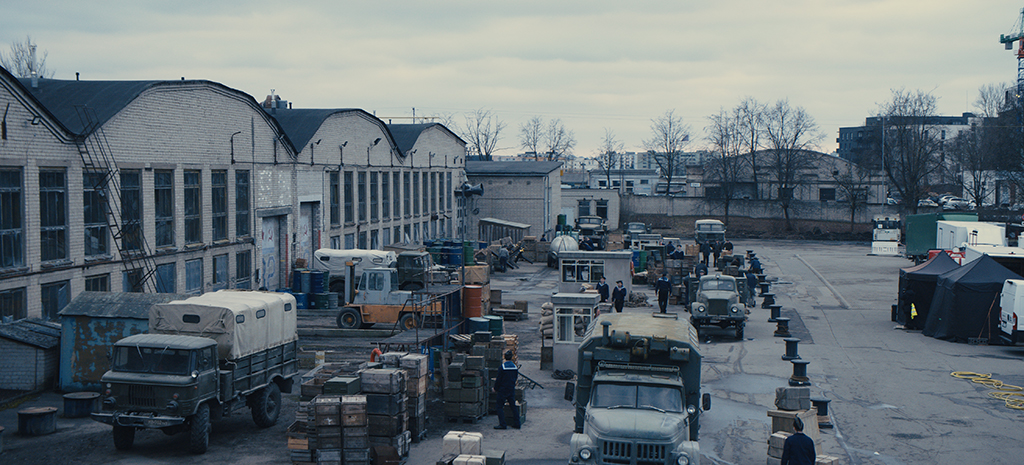
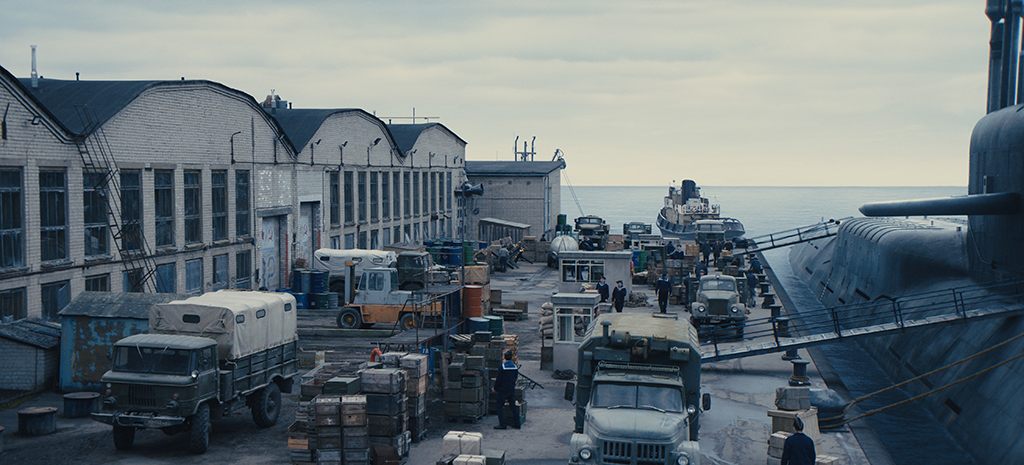
The production design of Star City deliberately evokes the tense, paranoid atmosphere of 1970s espionage and conspiracy cinema. Heavily utilizing shadows, high-contrast lighting, and a distinctively gritty visual texture, the series aimed to ground its alternative history in a tactile, believable reality. According to DNEG Visual Effects Supervisor Chris Keller, achieving this authentic period aesthetic began on set, where filmmakers shot on vintage Soviet glass lenses. These period-accurate optics introduced natural imperfections that the digital effects team needed to meticulously emulate in post-production.
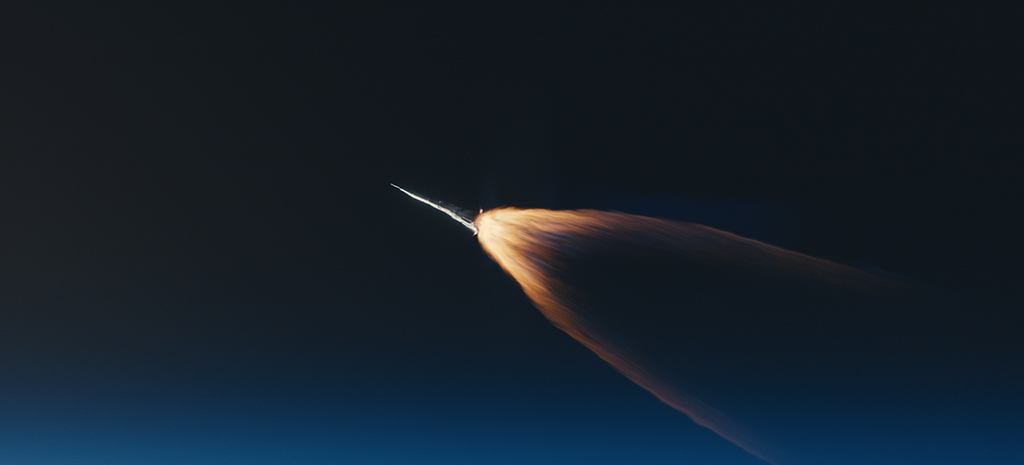
Rather than relying on standard digital filters, DNEG engaged in extensive research and development to replicate complex optical artifacts. The team introduced custom lens distortion, vignetting, and chromatic aberrations. Furthermore, they retooled a specialized defocus node found within the digital community to simulate hyper-complex visual aberrations—such as astigmatism, cat-eye shapes, and barn-door flares within the bokeh kernel. Combined with physical optical lens flares captured during production, these techniques imbued the digital shots with the organic warmth and grit of archival 1970s footage.
Expanding the Cosmonaut Archive: The Moon Landings
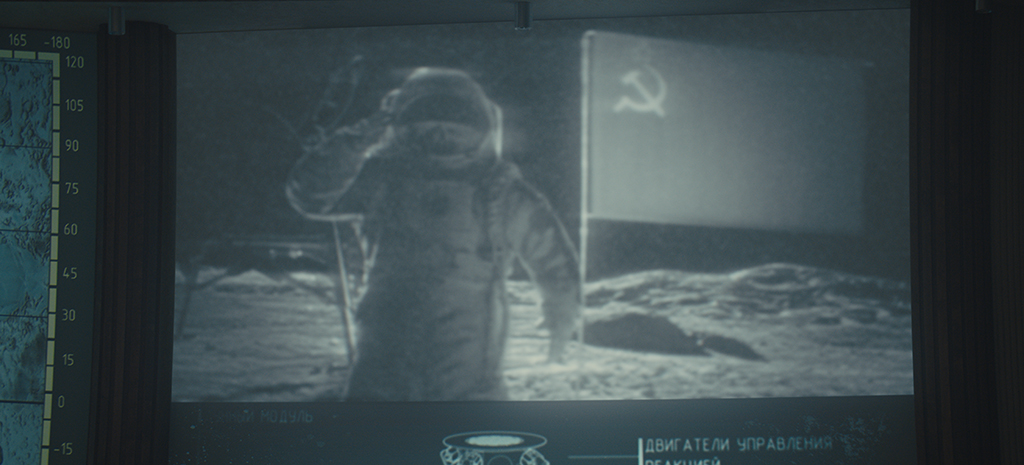
One of the most technically demanding tasks for DNEG involved expanding upon the landmark Soviet lunar landing originally glimpsed in the first season of For All Mankind. Because original visual effects data from the 2019 production of For All Mankind’s pilot episode was no longer available, the team had to work exclusively with legacy plate photography.
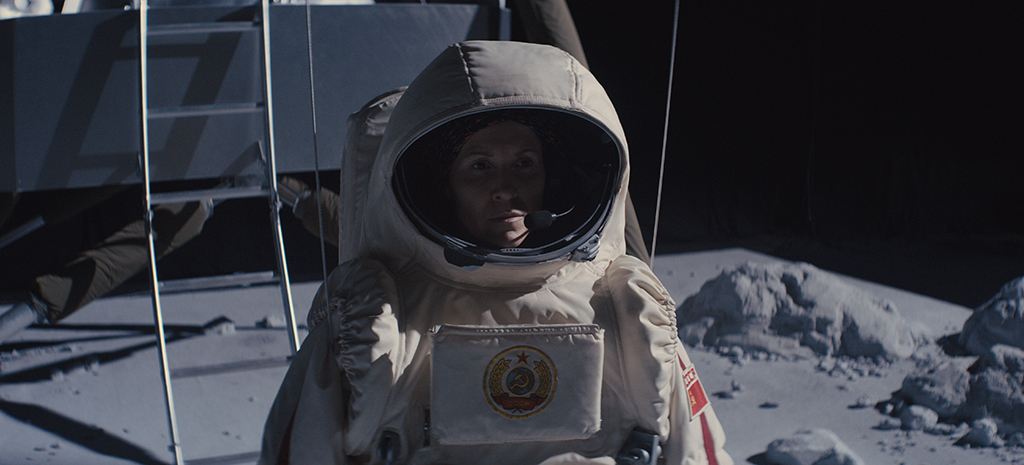
Certain shots of cosmonaut Alexei Leonov walking on the lunar surface were preserved from the original episode, but Star City required entirely new angles, updated environments, and fresh perspectives. DNEG utilized rotomation techniques on the vintage 2019 actor plates, integrating them into fully computer-generated lunar environments.
To achieve photorealism, the artists drew heavily on publicly available NASA data, analyzing lunar height maps, sub-surface characteristics, and the unique reflective properties of lunar regolith. Building a comprehensive library of procedural boulders, scattered rocks, craters, and ridges allowed artists to custom-compose each shot. Lighting on the lunar surface was intentionally treated as harsh and unforgiving, utilizing dramatic backlighting and deep, long shadows while omitting atmospheric haze or stars to capture the bleak, desolate isolation experienced by the cosmonauts.
A Hybrid Approach to Planetary Rendering
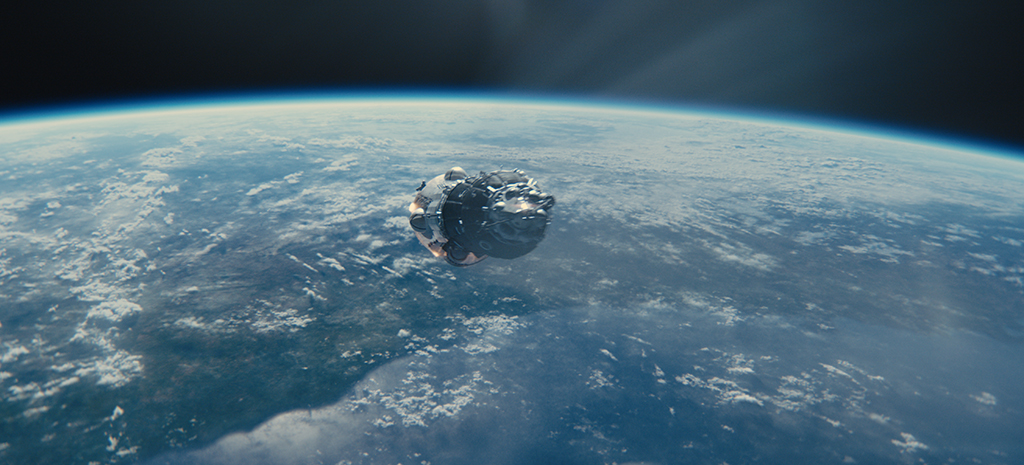
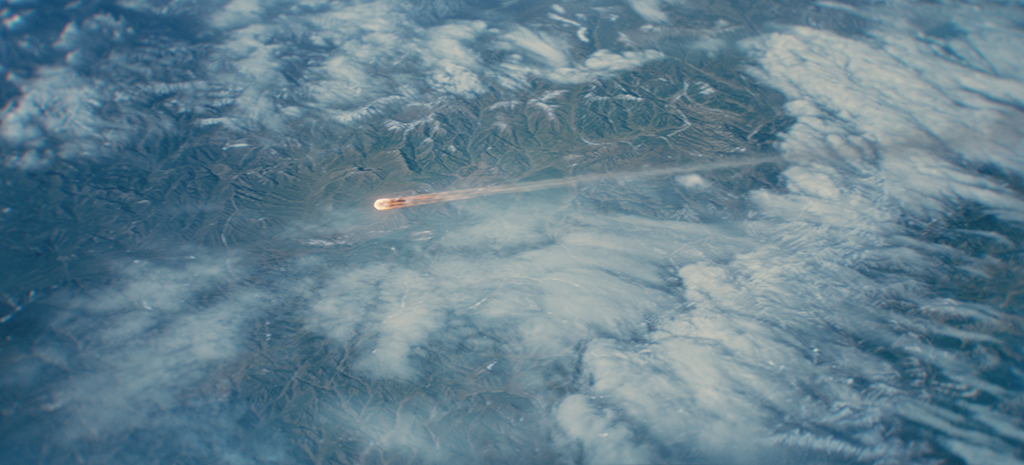
Among the most technically impressive achievements of the production are the sweeping orbital views of Earth, particularly those featured in Episode 107 during a critical orbital docking sequence. Traditional matte-painting workflows often suffer from patchwork lighting inconsistencies when combining multi-source satellite imagery at varying resolutions. To bypass this, DNEG engineered an innovative hybrid workflow.
Instead of traditional digital painting, the team compiled a robust library of extracted cloud textures derived from authentic weather systems captured across various global viewpoints. Rather than stamping these textures onto a flat backdrop, artists positioned them accurately onto a three-dimensional model of Earth. These textures then drove a volumetric shader within Terragen, ensuring that every cloud formation rendered under unified lighting conditions, consistent ray-tracing parameters, and synchronized atmospheric scattering. The resulting fidelity elevated the visual standard of the series, offering unprecedented realism for orbital cinematography.
The Soyuz-Salyut Orbital Ballet and Atmospheric Re-Entry
The centerpiece of Episode 107—a meticulous docking sequence between a Soyuz spacecraft and the Salyut-1 space station—pays stylistic homage to classic hard science fiction cinema, reminiscent of Stanley Kubrick’s 2001: A Space Odyssey. Rendered with long, deliberate takes, zero camera shake, and serene orbital pacing, the sequence highlights the physical intricacy of the spacecraft models. Because the Soviet Union historically maintained strict secrecy regarding its space program, high-resolution reference imagery for hardware like the Salyut-1 and Soyuz was scarce. DNEG artists scoured obscure digital archives to accurately model minute physical details, including structural panel lines, welding seams, rivets, and operational surface wear that react dynamically to direct, unyielding solar illumination.
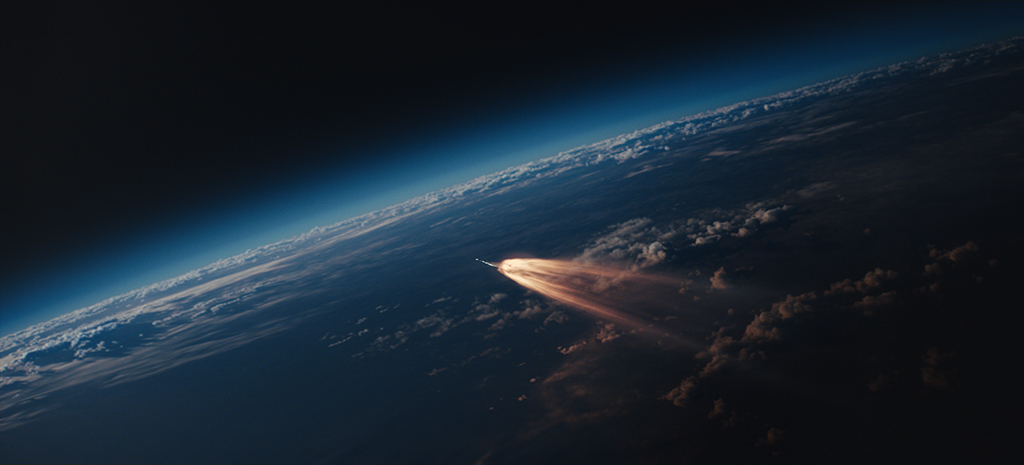
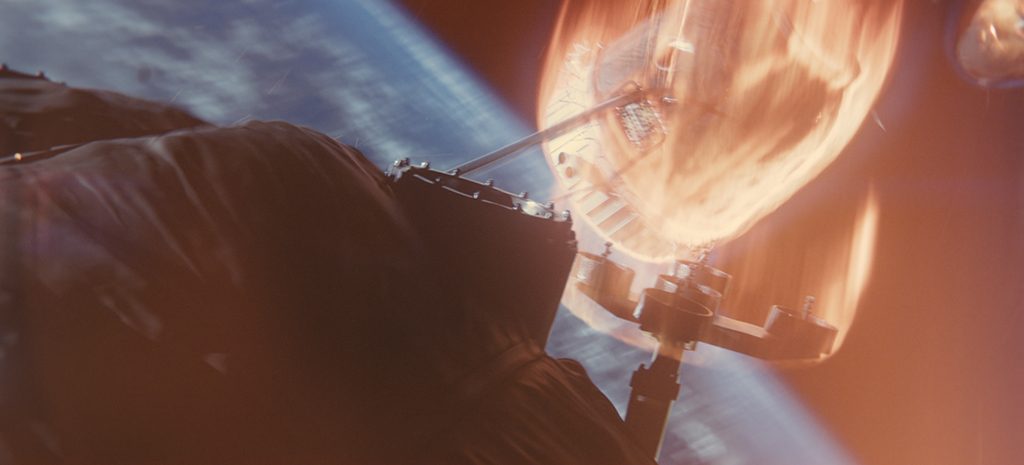
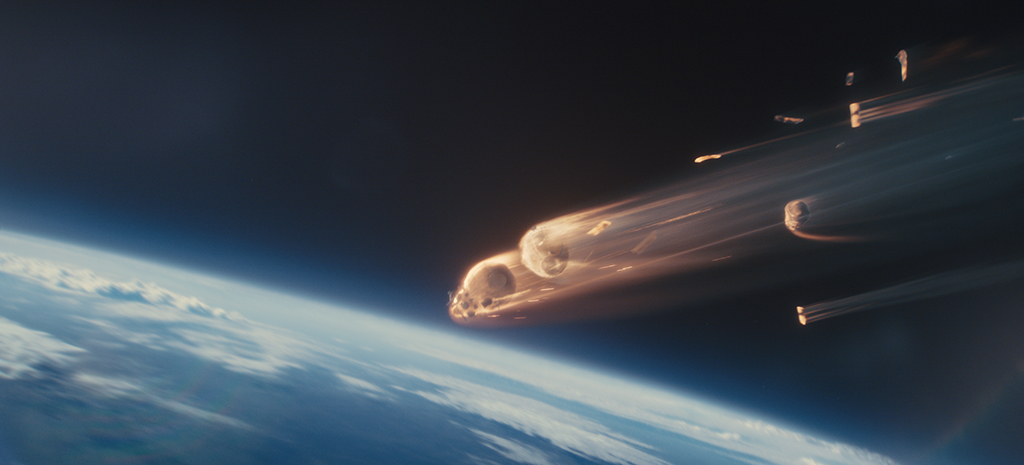
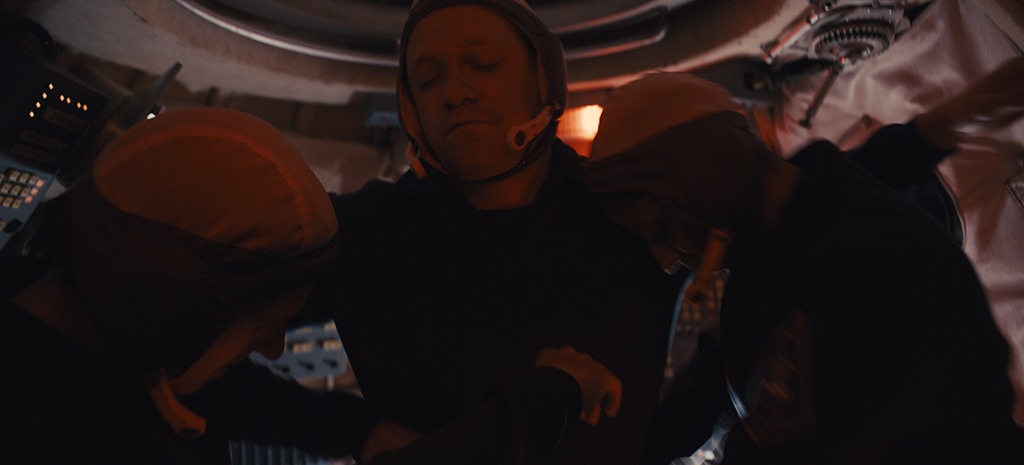
In stark contrast to the serene orbital docking, the series’ re-entry and action sequences required high-octane destruction simulations. In Episodes 102 and 108, descending Soyuz modules face catastrophic threats, including pursuit by a digital MiG-21 fighter jet firing heat-seeking missiles. Simulating the aerodynamic heating of re-entry demanded multi-layered visual effects. Guided by historical NASA animatics detailing thermal sheath formation, DNEG constructed complex particle and fluid simulations combining leading-edge fire, short and long sparks, and dense atmospheric smoke.
As the spacecraft transition from the thin upper atmosphere to denser air pockets, the visual effects depict a progressive escalation of thermal trauma: initial sparkling bursts give way to roaring flames, consuming outer protective layers like Kevlar before revealing the charred, oxidized metal hulls beneath. The subsequent mid-air missile detonations required careful camera work, balancing violent physical buffeting and dynamic shockwaves to ensure the kinetic impact remained clear to the audience without sacrificing cinematic weight.
Broader Implications and Technical Legacy
The completion of Star City marks another milestone in Apple TV+’s expanding portfolio of high-concept speculative science fiction. By bridging narrative threads from For All Mankind while establishing a distinct stylistic identity rooted in Cold War paranoia and rigorous technical fidelity, the production has set a new benchmark for television visual effects. DNEG’s blend of archival historical research, custom-engineered optical emulation, and innovative volumetric planet-rendering techniques demonstrates how modern digital artistry can honor the past while pushing the boundaries of alternative-history storytelling.
Related posts: