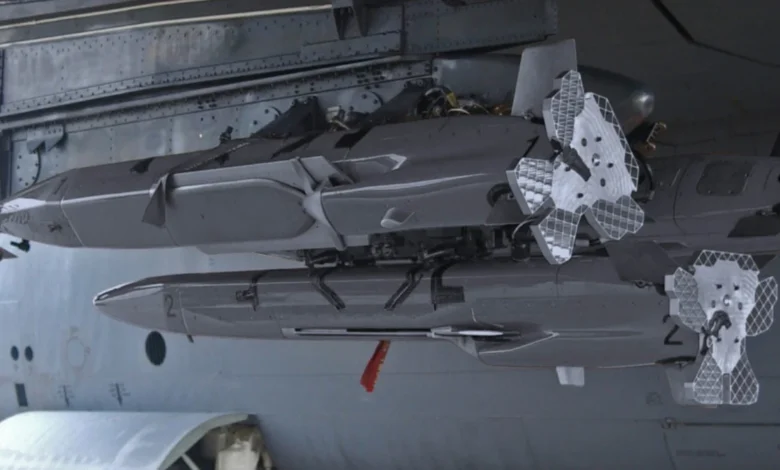
The landscape of aerial warfare is in a constant state of evolution, driven by the imperative to protect aircrews and ensure mission success against increasingly sophisticated adversarial defense systems. Among the array of countermeasures available to modern air forces, decoys have long been a vital component. Now, Raytheon’s Miniature Air-Launched Decoy (MALD) system, particularly its advanced MALD-J variant, is proving to be a critical asset, effectively replicating fighter jets to confound enemy radar and safeguard piloted aircraft. This article delves into the intricacies of the MALD system, its historical development, operational capabilities, and its significant impact on contemporary military operations, including its recent deployment in the Russo-Ukrainian War.
The Genesis and Evolution of a Deception Strategy
The concept of aerial decoys is not new, tracing its roots back to the mid-20th century. However, the technological advancements of the late 20th and early 21st centuries have transformed this strategic tool into a highly sophisticated electronic warfare asset. The MALD program itself was initially conceived in the 1990s, stemming from a Defense Advanced Research Projects Agency (DARPA) initiative. The early stages of development saw Teledyne Ryan, later acquired by Northrop Grumman, awarded the initial contracts. This foundational work laid the groundwork for what would become a pivotal system in the modern air combat arsenal.
Raytheon took over the MALD program in 2003, focusing on the development of the ADM-160B. This marked a significant step forward, leading to the subsequent development of the ADM-160C, the MALD-J variant. This evolution was not merely an incremental upgrade; it represented a paradigm shift, integrating electronic jamming capabilities directly into the decoy platform. This dual-functionality—acting as both a physical deception and an electronic disruption—significantly amplified the system’s effectiveness.
Operational Mechanics: How MALD Outsmarts Adversaries
The core principle behind the MALD system is deception. Operated by military personnel, these decoys are launched in formations and directed into hostile airspace. Their primary objective is to mimic the radar signatures of actual fighter jets, thereby tricking enemy air defense radars into identifying them as genuine threats. This misdirection allows piloted aircraft, such as combat jets, to conduct their missions without being detected or engaged by enemy air defense systems, thereby significantly enhancing pilot safety and operational security.
The MALD vehicles are designed to resemble missiles in their external appearance and operational deployment. Each unit possesses a substantial operational range, approximately 575 miles, enabling them to penetrate deep into enemy territory, far beyond the visual line of sight. This extended range is crucial for overwhelming enemy radar coverage and creating significant operational uncertainty.
The MALD-J variant elevates this deception strategy by incorporating sophisticated electronic jamming capabilities. The MALD-J is the first jammer decoy of its kind to enter serial production. It can operate individually or in coordinated pairs, flying in close proximity to enemy radar installations to disrupt and disable their electronic systems. This jamming capability allows the MALD-J to maintain its presence in the operational area, continuing "loiter operations" to support the ingress and egress of piloted aircraft, thereby facilitating the successful completion of complex missions.
Technical Specifications and Capabilities
The MALD and MALD-J are remarkably compact yet potent systems. They are designed to be mounted on an aircraft’s external hardpoints, a standard attachment method for conventional munitions such as long-range air-to-air missiles. The military designation, ADM-160 MALD, stands for Miniature Air-Launched Decoy, underscoring its compact size and primary function.
The system’s primary purpose is to deceive early-warning and target-acquisition radars that form the backbone of enemy air defense networks. While the concept of decoys is decades old, the current iterations of the MALD are considerably more robust and capable due to advancements in technology since their inception in the 1990s.
The ADM-160B and the more advanced ADM-160C (MALD-J) are the operational variants. Each vehicle measures approximately 9 feet, 4 inches in length with a wingspan of 5 feet, 7 inches. Their lightweight construction, weighing in at 99.2 pounds, allows for efficient carriage and deployment. They can achieve speeds of up to Mach 0.91, or approximately 698 miles per hour, and boast an endurance of up to 90 minutes. Power is supplied by a Hamilton Sundstrand TJ-150 turbojet engine, a compact and efficient power source suitable for the decoy’s mission profile.
Strategic Deployment and Battle-Testing
The efficacy of the MALD system has been significantly validated through its deployment in active conflict zones. Notably, these systems have been battle-tested in the Russo-Ukrainian War. Reports indicate that the Ukrainian Air Force successfully employed MALD decoys against Russian radar systems in 2023, demonstrating their critical role in modern combat scenarios. Their integration has become so profound that they are now considered integral to the execution of most Ukrainian air force missions.
The renewed production of MALD systems, restarted by Raytheon in mid-July 2026, is a direct response to the demonstrated need for these assets in ongoing conflicts and to replenish operational inventories. This restart signifies the high demand and strategic importance placed on these advanced decoys, particularly in supporting allies facing significant air defense threats.
The Art of Electronic Deception: Beyond Simple Mimicry
Tricking an enemy radar system is a nuanced endeavor that extends beyond mere replication of a radar signature. Modern radar systems are engineered to detect and analyze anomalies, and their operators are highly trained to interpret the data presented. To effectively deceive both the automated system and the human operator, MALD vehicles are programmed to execute flight paths that closely mirror those of friendly or allied aircraft. This sophisticated programming ensures that the decoy’s trajectory and behavior are consistent with expected operational patterns, thereby increasing the likelihood of successful deception.
While visually resembling missiles, MALDs are not armed with conventional warheads. Instead, their payload consists of advanced electromagnetic components designed to manipulate radar frequencies. These components are capable of simulating the radar cross-section and electronic emissions of a wide range of aircraft, from legacy fighters like the F-15 to more advanced platforms such as the F-35, or any other aircraft signature their operators wish to project. This allows for precise control over the information fed to enemy radar operators, creating a tailored illusion.
The strategic implications of this capability are profound. MALDs can be employed to sow confusion regarding the scale and direction of an attack. By simulating multiple attack vectors or a much larger force than is actually present, they can draw enemy resources away from primary targets or deplete their interceptor ammunition. This tactical advantage significantly contributes to mission success by creating opportunities for friendly forces to operate with reduced risk.
Cost-Effectiveness and Strategic Value
While not inexpensive, with each unit costing approximately $380,000, the MALD system represents a highly cost-effective solution when compared to the loss of a piloted combat aircraft. The financial investment in a MALD is minuscule when weighed against the potential loss of an F-22 Raptor, which carries a price tag in the hundreds of millions of dollars and, more importantly, the invaluable life of a trained pilot. The strategic trade-off is clear: expending a decoy to protect a manned platform and its pilot is a prudent and necessary expenditure in modern aerial warfare.
Broader Impact and Future Outlook
The successful integration and deployment of Raytheon’s MALD and MALD-J systems have underscored their transformative impact on aerial warfare. They represent a critical advancement in electronic warfare and deception tactics, offering a tangible advantage in contested airspace. The ongoing conflict in Ukraine has served as a real-world proving ground, highlighting the effectiveness of these decoys against sophisticated air defense networks.
The decision by Raytheon to restart production in 2026 suggests a sustained commitment to this technology and an anticipation of its continued relevance in future conflicts. As military technologies continue to advance, the development of even more sophisticated decoys, potentially incorporating artificial intelligence and advanced behavioral mimicry, is likely. The MALD system, however, has set a high benchmark, demonstrating that intelligent deception remains a cornerstone of effective airpower in the 21st century. Its ability to confuse, disrupt, and ultimately protect friendly forces ensures its place as a vital tool in the arsenal of air forces worldwide for the foreseeable future. The strategic value of these miniature deceivers, in their ability to neutralize advanced threats with relative economy, positions them as indispensable assets in the complex and ever-evolving theater of modern military operations.