The Rise and Fall of the Sikorsky Raider X: Why the U.S. Army Shelved Its Next-Gen Reconnaissance Chopper Program

Helicopters remain an indispensable cornerstone of the United States military’s operational architecture, particularly within the ecosystem of the U.S. Army. Despite generating significantly less public fascination than stealth fighters or supersonic strategic bombers, rotary-wing aircraft perform the grueling, day-to-day work of troop transport, medical evacuation, close air support, and aerial reconnaissance. Yet, a casual observer examining the modern Army flight line might experience a profound sense of déjà vu. Many of the workhorse helicopters currently defending American interests trace their foundational lineage directly back to the geopolitical conflicts of the 1980s and 1990s.
Chief among them is the venerable Sikorsky UH-60 Black Hawk. First introduced to service in 1979, the Black Hawk has undergone numerous block upgrades, digital avionics overhauls, and structural reinforcements over the decades, yet its fundamental aerodynamic profile remains rooted in late-Cold War engineering. A parallel narrative applies to the iconic AH-64 Apache attack helicopter, an aircraft whose maiden flight occurred more than half a century ago. Recognizing the impending obsolescence of a fleet built largely upon 20th-century technology, the Pentagon embarked on a series of ambitious modernization initiatives. Some of these programs yielded revolutionary advancements; others became cautionary tales of shifting budgetary priorities and evolving battlefield realities.
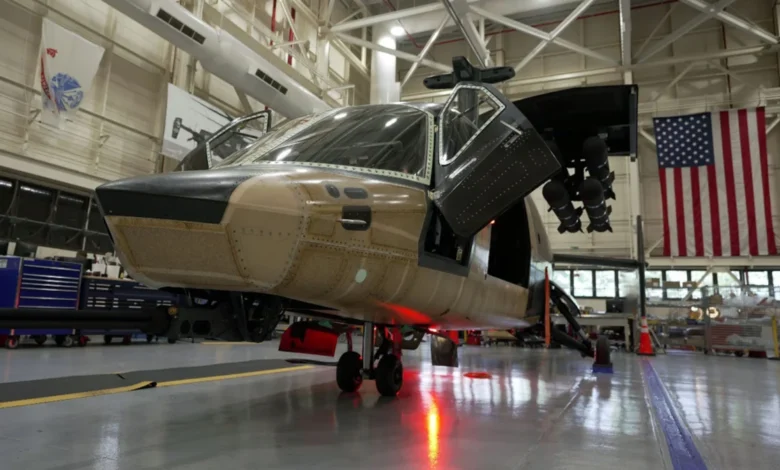
Perhaps the most poignant casualty of this modernization push is the Sikorsky Raider X. Developed by Lockheed Martin’s Sikorsky division, the Raider X was a high-tech, coaxial, armed scout helicopter designed to completely redefine tactical aviation. It was engineered to serve as the crown jewel of the Future Attack Reconnaissance Aircraft (FARA) program, an ambitious undertaking launched by the U.S. Army in 2018 to leapfrog conventional helicopter limitations. However, despite achieving a 92% completion rate on its primary prototype by late 2022, the Raider X was abruptly grounded. In February 2024, the Army canceled the FARA program entirely, choosing instead to redirect billions of dollars toward unmanned aerial systems (drones) and powerplant retrofits for legacy platforms.
The cancellation marks a pivotal turning point in modern military aviation history. It exposes the profound friction between legacy defense acquisition strategies and the harsh, rapid-fire lessons learned from contemporary mechanized warfare. To understand how the Raider X progressed from a celebrated technological marvel to a high-profile budgetary cut, one must examine the operational history that birthed the FARA initiative, the cutting-edge engineering behind the aircraft, and the modern combat dynamics that ultimately sealed its fate.
From the Kiowa Warrior to the FARA Mandate: A Chronology of Scout Aviation
To appreciate the strategic void that the Sikorsky Raider X was designed to fill, military analysts must look back to the retirement of the U.S. Army’s OH-58D Kiowa Warrior. Developed during the 1980s, the Kiowa Warrior was an armed reconnaissance helicopter derived from the civilian-derived OH-58A Kiowa platform, which first saw combat utility during the Vietnam War. Though categorized as an armed scout rather than a heavy attack chopper, the Kiowa Warrior became an essential component of armored cavalry squadrons. It provided vital target acquisition, laser designation, and light fire support across multiple theaters of operation, including Operation Desert Storm, the Iraq War, and the War in Afghanistan.
By the mid-2010s, however, the Kiowa fleet was suffering from severe structural fatigue, chronic component obsolescence, and a lack of modern electronic warfare defenses. In 2016, the Army made the controversial decision to officially retire the OH-58D without a direct, purpose-built successor in the pipeline. To bridge the capability gap, the service improvised. Attack aviation units flying the AH-64 Apache were tasked with absorbing the armed reconnaissance mission, often working in tandem with the RQ-7 Shadow tactical unmanned aerial vehicle. While this manned-unmanned teaming (MUM-T) model proved moderately successful, military leadership acknowledged that it was an operational stopgap. The Apache, optimized for heavy anti-armor warfare and close combat support, lacked the agility, speed, and low-observable profile required for deep, high-threat armed reconnaissance in contested airspace.
Recognizing the vulnerability of relying on a retired airframe and makeshift workarounds, the U.S. Army formally initiated the Future Attack Reconnaissance Aircraft (FARA) program in October 2018. FARA was structured as part of the broader Future Vertical Lift (FVL) modernization portfolio—an expansive enterprise aimed at completely overhauling the military’s rotary-wing capabilities. The primary objective of the FARA program was clear yet extraordinarily demanding: design, build, and field a next-generation, armed scout helicopter capable of operating in heavily defended, "anti-access/area-denial" (A2/AD) environments, such as those anticipated in potential peer-to-peer conflicts against adversaries equipped with advanced integrated air defense systems (IADS).
The competition quickly narrowed down to two prominent defense contractor teams: Bell Textron, proposing the Bell 360 Invictus, and Sikorsky (a Lockheed Martin company), offering the radical, coaxial-rotor Raider X.
Engineering the Edge: Inside the Sikorsky Raider X
When Sikorsky formally unveiled the Raider X in October 2019, it immediately drew attention for its departure from traditional single-main-rotor-and-tail-rotor helicopter physics. Built around Lockheed Martin’s proprietary X2 coaxial rotor system, the Raider X featured two rigid, counter-rotating main rotors paired with a massive pusher propeller mounted at the rear of the tail boom. This compound helicopter design was not entirely unprecedented; it evolved directly from the experimental Sikorsky X2 technology demonstrator and the intermediate S-97 Raider prototype.
The engineering rationale behind the coaxial-pusher configuration was to shatter the historical speed and altitude bottlenecks that have plagued conventional helicopters for decades. Traditional helicopters suffer from retreating blade stall—a phenomenon where the blade moving backward relative to the aircraft’s forward motion loses lift at high speeds, causing severe vibration, structural stress, and a hard speed ceiling typically capped around 160 to 170 knots. By employing rigid, counter-rotating blades that cancel out aerodynamic asymmetry, alongside a dedicated pusher propeller providing direct forward thrust, the Raider X was projected to cruise at speeds exceeding 250 knots (approximately 287 mph).
Furthermore, the Raider X was engineered for exceptional low-level, low-speed maneuverability, a critical requirement for scout aircraft operating in cluttered terrain like urban environments, mountainous regions, or dense forest canopies. Sikorsky designed the platform to achieve high-density altitude performance, enabling it to hover and maneuver effectively at elevations up to 9,000 feet in extreme ambient temperatures.
Internal modularity was another cornerstone of the Raider X design philosophy. To ensure longevity and adaptability, Sikorsky engineered the airframe with open-architecture mission systems and plug-and-play compatibility. This allowed the aircraft to integrate seamlessly with existing weapons architectures, such as Hellfire missiles and future precision-guided munitions, alongside advanced military computer networks and sensor suites. By the autumn of 2022, Lockheed Martin proudly announced a major developmental milestone: the Raider X prototype was 92% physically complete, with final component integration and ground-run preparations well underway ahead of anticipated maiden flight tests at Dugway Proving Ground in Utah.
The Catalyst of Change: Ukraine, Drones, and Shifting Defense Priorities
Despite the immense engineering triumph represented by the nearly completed Raider X prototype, global geopolitical events were unfolding that would fundamentally alter the strategic calculations of the Pentagon. On February 24, 2022, Russian forces launched a full-scale invasion of Ukraine. For military planners observing the conflict from Washington, the war served as a massive, real-time laboratory for modern high-intensity combat.
The conflict in Ukraine exposed profound vulnerabilities regarding traditional crewed aircraft operating in heavily contested airspace saturated with advanced surface-to-air missile systems, electronic jamming, and, most importantly, low-cost unmanned aerial systems (UAS). Military analysts watched as inexpensive FPV (first-person view) drones, loitering munitions, and tactical reconnaissance quadcopters systematically altered the geometry of the battlefield. Tasks that traditionally required specialized, expensive, crewed scout helicopters—such as artillery spotting, real-time target designation, and close-range reconnaissance—were increasingly being executed by disposable, attritable drones operating in swarms.
The hard economic and operational realities of the Ukrainian battlefield forced a brutal reassessment within the U.S. Army leadership. The service was faced with mounting fiscal pressures, rising procurement costs for next-generation weapons systems, and the imperative to prepare for a potential Indo-Pacific conflict characterized by vast maritime distances and highly lethal distributed operations. Funding a brand-new, highly complex crewed scout helicopter program like FARA—while simultaneously attempting to recapitalize the enduring tactical vehicle and armored fleets—became an untenable financial burden.
Consequently, on February 8, 2024, Army leadership officially announced the termination of the FARA program. The decision sent shockwaves through the defense aerospace sector, effectively halting decades of research and development just as Sikorsky was preparing to take its premier prototype into flight testing.
Strategic Implications and the Aftermath of FARA
The termination of the Future Attack Reconnaissance Aircraft program did not merely mean the shelving of the Raider X; it triggered a comprehensive domino effect across the Army’s entire aviation modernization roadmap. Billions of dollars previously allocated to flight testing, low-rate initial production, and doctrine development for FARA were immediately reallocated toward higher-priority needs.
One of the most significant casualties of the pivot was the GE T901 turboshaft engine. Developed by General Electric Aerospace as part of the Army’s Improved Turbine Engine Program (ITEP), the T901 was originally commissioned specifically to power the FARA helicopter fleet, offering significantly greater fuel efficiency, increased horsepower, and improved reliability compared to legacy engines. Following the cancellation of FARA, the Army elected not to scrap the engine program. Instead, the service announced plans to retrofit the GE T901 into its existing fleets of Boeing AH-64E Apaches and Sikorsky UH-60M Black Hawks, ensuring that the legacy fleet receives a vital power and performance boost.
Meanwhile, the operational gap left by the retired Kiowa Warrior remains officially unfilled by a dedicated new platform. The U.S. Army has doubled down on its commitment to unmanned reconnaissance, sensor miniaturization, and advanced electronic warfare payloads deployed via autonomous or semi-autonomous drones. The Apache attack helicopter, alongside upgraded shadow and future tactical unmanned aerial systems, will continue to shoulder the reconnaissance burden for the foreseeable future.
For Sikorsky and Lockheed Martin, the shelving of the Raider X represents a bitter pill, though the proprietary X2 technology portfolio may yet find a second life. Defense analysts note that while the U.S. Army has stepped away from the armed scout requirement, the underlying coaxial-pusher technology developed for the S-97 Raider and Raider X remains highly attractive. Variants and derivatives of the X2 design continue to be pitched for other international defense markets, particularly among NATO allies seeking high-speed vertical lift solutions for future multi-domain operations.
Ultimately, the story of the Sikorsky Raider X stands as a definitive modern case study in defense procurement. It highlights a technological triumph capable of meeting extreme aerodynamic demands, only to be outpaced by an evolutionary leap in warfare where unmanned systems, cost efficiency, and electronic adaptability have rewritten the rules of modern aerial dominance. As the U.S. military pivots toward the technological demands of the future, the ghost of the Raider X serves as a constant reminder that even the most advanced engineering marvel must justify its existence in an unforgiving, ever-changing global threat landscape.