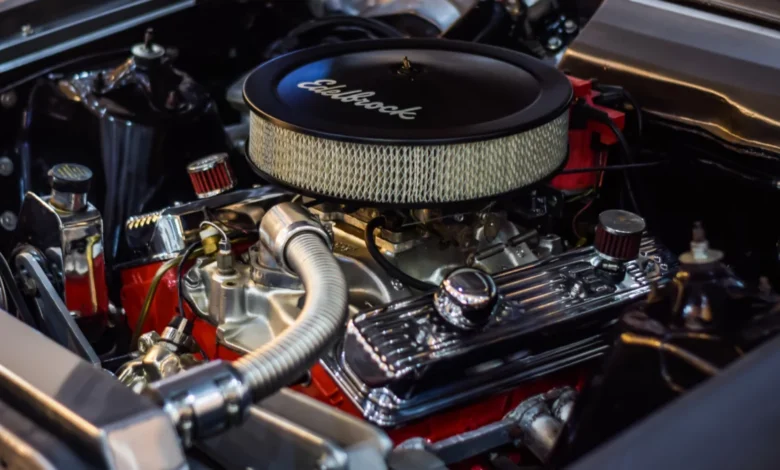
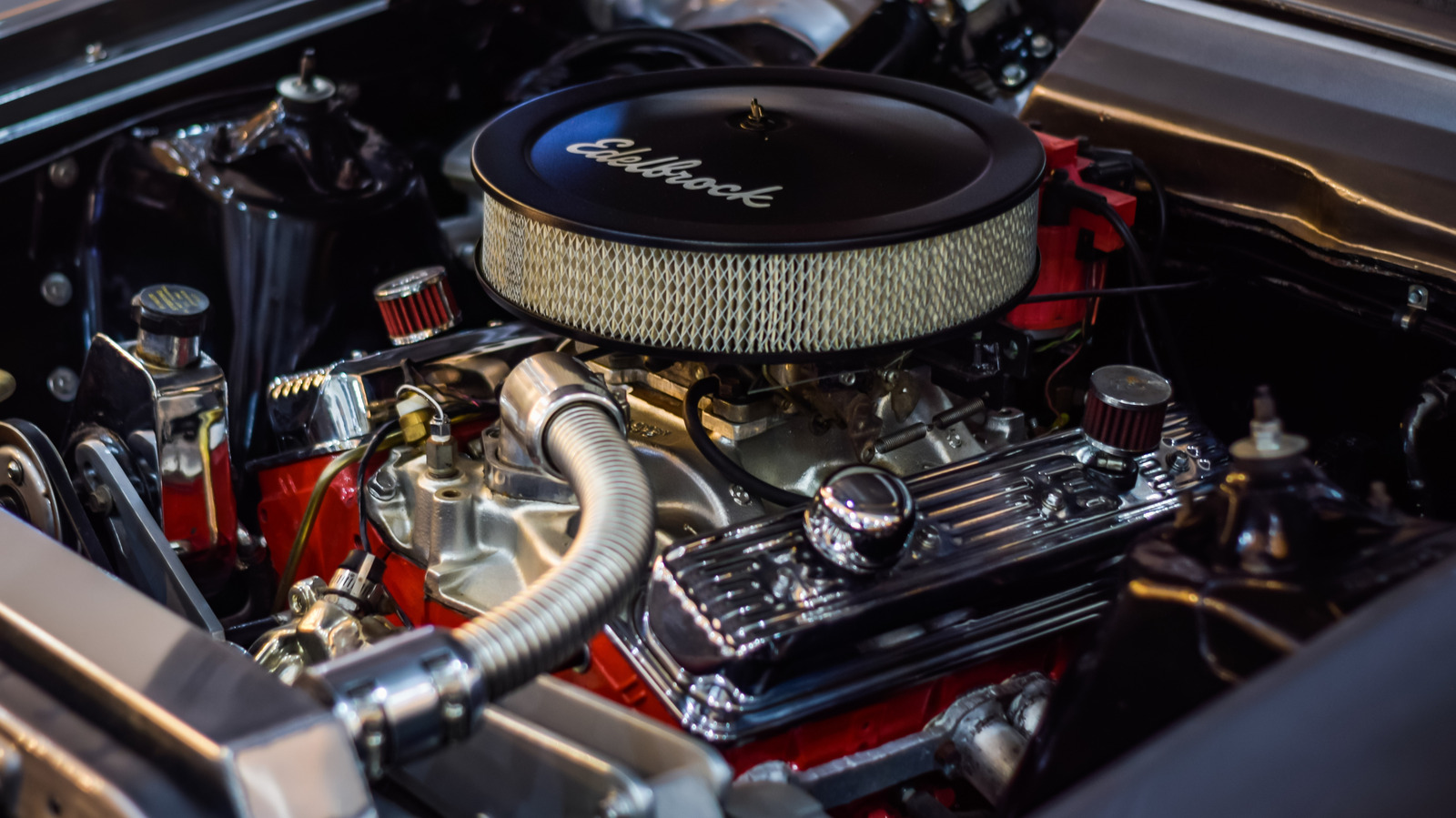
For over a century, the pushrod engine has been a cornerstone of automotive engineering, powering everything from iconic muscle cars and heavy-duty trucks to marine vessels and the ubiquitous small-block V8s that forged entire automotive legacies. This design, characterized by a camshaft housed within the engine block and actuated by lifters, pushrods, and rocker arms to control valve operation, offers inherent advantages in its compact architecture. By eliminating the need for overhead camshafts and their associated timing chains, belts, and auxiliary hardware, pushrod engines tend to be shorter, lighter, and mechanically simpler. This inherent simplicity translates into fewer components prone to failure and reduced maintenance requirements, a significant factor in why manufacturers like Chevrolet continue to utilize this venerable design in vehicles such as the Corvette, Camaro, and their full-size truck lineup.
However, the automotive industry’s trajectory has been undeniably shaped by evolving demands, particularly in the realm of emissions regulations and a global drive towards fuel efficiency through engine downsizing. This has led engineers to embrace forced induction, with small turbocharged engines increasingly replacing naturally aspirated pushrod configurations. The allure of turbocharging lies in its ability to extract more power from smaller displacements, promising improved efficiency and better fuel economy. By forcing additional air into the combustion chambers, turbochargers allow smaller engines to deliver performance figures that belie their size. Despite this widespread adoption of turbocharged downsizing, a select group of pushrod engines continue to deliver performance metrics that challenge the notion that more complex, modern forced-induction systems are always superior. This article delves into five such pushrod engines that, even by today’s standards, demonstrate remarkable power and performance capabilities, often outperforming their contemporary turbocharged counterparts.
The Reign of the HEMI: Dodge Challenger SRT Demon 170
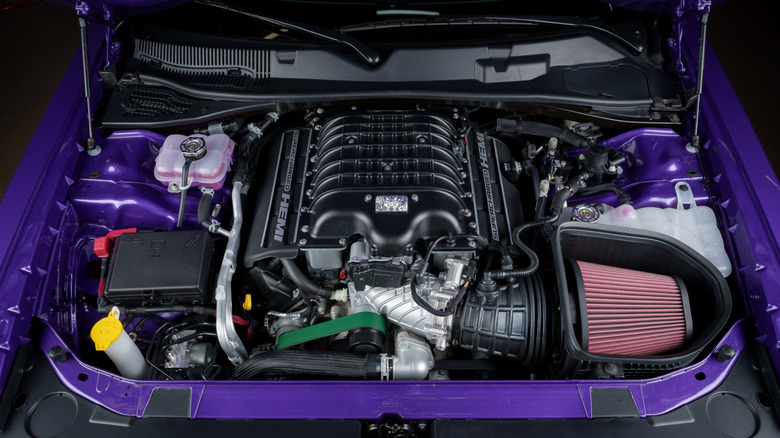
In the pantheon of modern muscle cars, the Dodge Challenger SRT Demon 170 stands as a veritable titan, its performance inextricably linked to its formidable pushrod V8 engine. At the heart of this automotive icon lies a supercharged 6.2-liter HEMI V8, a powerplant that, when fueled with E85, unleashes an astounding 1,025 horsepower and 945 lb-ft of torque. Even when operating on standard E10 pump gas, the engine still commands an impressive 900 horsepower and 810 lb-ft of torque. This output dramatically eclipses that of Dodge’s newer, more technologically advanced "Hurricane" inline-six, a 3.0-liter twin-turbocharged unit designed to replace the HEMI. In its most potent iteration, the Hurricane engine produces a peak of 550 horsepower and 531 lb-ft of torque, falling nearly 500 horsepower short of the outgoing pushrod V8.
The Demon 170’s engineering prowess is not merely measured in raw power figures but also in its visceral performance. Dodge claims the vehicle generates launch forces exceeding 2 G, a figure unmatched by any other production car. This translates to a staggering 1.66-second sprint from 0 to 60 mph. On a prepared drag strip, the Demon 170 has achieved an NHRA-verified quarter-mile time of 8.91 seconds at 151.17 mph, marking it as the first production muscle car to break into the eight-second bracket. While its top speed is electronically limited to 149 mph to preserve its drag radials, a configuration optimized for explosive acceleration rather than high-speed cruising, its quarter-mile performance remains a benchmark. For context, even hypercars like the Yangwang U9 Xtreme, with its claimed 3,000 horsepower electric powertrain, record a quarter-mile time of 9.78 seconds, nearly a full second slower than the venerable pushrod Dodge.
The Monumental Might of the Chevrolet Performance ZZ632/1000 Crate Engine
While some engines achieve their power through intricate engineering, exotic materials, and high-revving capabilities, others rely on brute force through sheer displacement. The Chevrolet ZZ632/1000 crate engine exemplifies the latter approach, representing a masterclass in extracting immense power from a massive displacement, naturally aspirated pushrod V8. This colossal engine displaces a staggering 632 cubic inches (10.4 liters), relying solely on atmospheric pressure to fill its cylinders. The result is a dyno-proven output of 1,004 horsepower at 6,600 rpm and 876 lb-ft of torque at 5,600 rpm, all while running on premium pump gas (93 octane or higher).
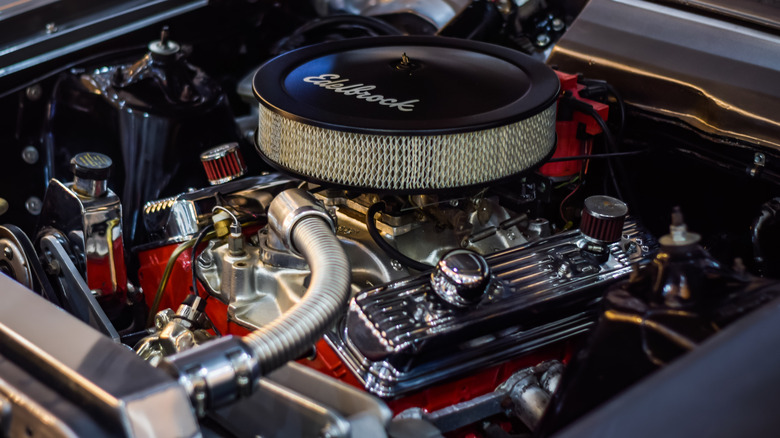
A key innovation in the ZZ632’s design is its CNC-machined aluminum heads, featuring a symmetrical port design dubbed RS-X Symmetrical Port. This meticulous machining ensures that every intake and exhaust port is identical in size and shape, a departure from the traditional variations often found in big-block Chevrolet designs. Chevrolet attributes this advanced design to Ron Sperry, a veteran of GM powertrain engineering with over five decades of experience. The engine’s robustness was thoroughly validated, with Chevrolet reporting that a single unit underwent simulated drag-strip runs equivalent to over 200 dyno tests before the engine entered production.
While official quarter-mile or 0-60 mph figures are not available for the ZZ632 as it is sold as a crate engine without a specific vehicle application, simulation data provides a compelling projection. OnAllCylinders, a specialist automotive resource, modeled the engine’s performance within a theoretical 1966 Chevelle. Their simulations, utilizing a lightweight build of 3,425 lbs on drag slicks, predicted an astonishing 8.98-second quarter-mile pass at 151.3 mph, underscoring the immense potential of this displacement-focused pushrod behemoth.
The Corvette ZR1’s Supercharged LT5: A Fitting Farewell
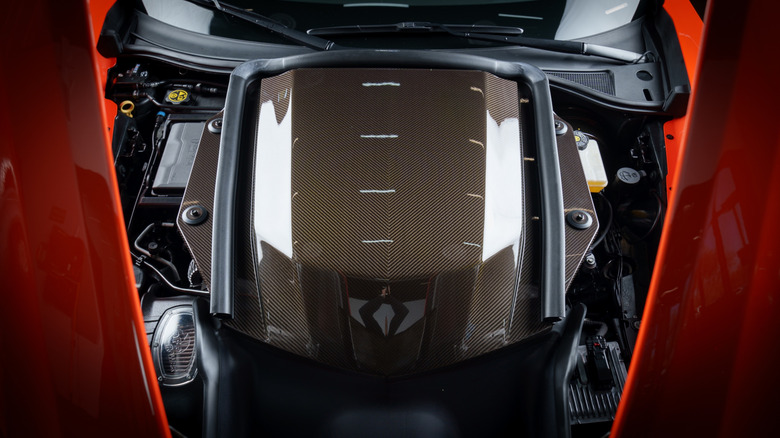
The C7 generation of the Chevrolet Corvette ZR1 may have concluded its production run, but its supercharged LT5 pushrod V8 engine remains a testament to Chevrolet’s engineering prowess, solidifying its place as one of the most potent engines ever offered in a Corvette. This 6.2-liter V8 boasts an SAE-certified output of 755 horsepower and 715 lb-ft of torque, figures that GM confidently backed with official specifications.
The heart of the LT5’s impressive performance is its substantial supercharger, a 2.6-liter unit that dwarfs the 1.7-liter Eaton supercharger found on the Z06’s LT4 engine. This larger forced-induction system spins its rotors to nearly 15,900 rpm, generating up to 13.96 psi of boost. While the supercharger itself consumes up to 110 horsepower at peak operation, its efficiency is remarkable, drawing only about 1 horsepower at a steady 80-mph cruise with virtually no boost applied. The fuel delivery system is equally sophisticated, employing a combination of direct and port injection to ensure optimal combustion.
Chevrolet’s factory performance figures for the ZR1 included a 0-60 mph time of 2.9 seconds and a quarter-mile pass of 10.6 seconds at 134 mph. Independent testing by MotorTrend, albeit with 91-octane fuel instead of the recommended 93, yielded slightly different results: 3.0 seconds to 60 mph and a 10.8-second quarter-mile at 133.1 mph. Chevrolet also highlighted the car’s aerodynamic capabilities, stating that its aero upgrades generate 950 pounds of downforce at 212 mph, a significant improvement over the Z06/Z07 models. With the subsequent LT6 and LT7 engines adopting a flat-plane crank V8 design, the LT5 in the front-engined C7 ZR1 stands as the most powerful pushrod V8 ever offered in that Corvette lineage.
The Hellcat Legacy: Dodge’s Supercharged 6.2L HEMI V8
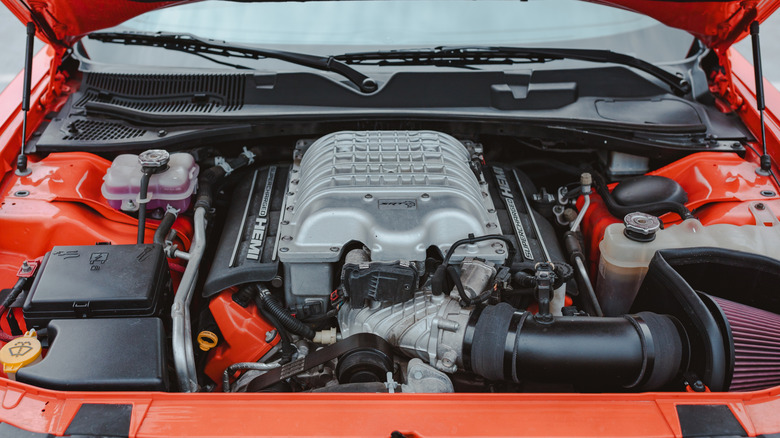
The genesis of the Demon 170’s formidable HEMI can be traced back to the legendary 6.2-liter Hellcat V8, an engine that redefined American muscle car performance. While the Demon 170 represents an evolution with a significantly redesigned supercharger and reinforced internals, the foundational Hellcat architecture continues to power a range of high-performance vehicles. The Ram 1500 TRX, for instance, utilizes a standard-tune Hellcat engine, delivering 702 horsepower and 650 lb-ft of torque. In this application, the TRX achieves a quarter-mile time of 12.9 seconds at 108 mph, with a 0-60 mph sprint of approximately four seconds. Due to its off-road tires, the TRX’s top speed is electronically limited to 118 mph.
However, when this potent HEMI V8 is transplanted into a lighter, rear-wheel-drive coupe, its performance potential is dramatically amplified. The Dodge Hellcat Redeye, equipped with the 6.2-liter supercharged HEMI, produces a formidable 797 horsepower. Dodge’s official figures indicate a 0-60 mph time of 3.6 seconds for this variant. The top-tier Super Stock trim pushes this performance even further, with Dodge claiming a blistering 3.25-second 0-60 mph time. On the drag strip, both the widebody Redeye and the standard Hellcat models achieve claimed quarter-mile times of 10.8 seconds and 11.1 seconds, respectively, with a remarkable claimed top speed of 203 mph for both versions. This demonstrates the remarkable versatility and sheer power inherent in the Hellcat’s pushrod V8 design.
The Unexpected Powerhouse: Cadillac Escalade-V’s Supercharged LT4
General Motors has a proven track record with its LT4 engine, a supercharged 6.2-liter V8 known for its potent performance. While the LT5 engine in the Corvette ZR1 can be considered an LT4 with a significantly larger supercharger, the LT4 itself remains a formidable powerplant, capable of delivering impressive results even in heavier, more luxurious vehicles. Cadillac’s decision to revive the supercharged V8 format for the Escalade-V, after a hiatus since the CTS-V’s departure, has brought this potent engine to a three-row SUV.
The Escalade-V’s supercharged 6.2-liter LT4 produces a substantial 682 horsepower at 6,000 rpm and 653 lb-ft of torque at 4,400 rpm. This engine utilizes the same cam-in-block pushrod architecture that previously powered the CTS-V and the previous-generation Corvette Z06. Cadillac’s own performance estimates for the Escalade-V include a 0-60 mph time of 4.4 seconds and a quarter-mile pass of 12.74 seconds. Independent testing by Car and Driver yielded slightly quicker results: 4.3 seconds to 60 mph and a 12.7-second quarter-mile at 111 mph.
While these figures might not initially seem as sensational as those of some other engines on this list, they are exceptionally impressive considering the Escalade-V’s considerable weight, exceeding 6,200 lbs when fully loaded. The vehicle’s top speed is electronically limited to 125 mph. To provide some perspective, BMW’s performance-oriented X5 M Competition, a direct rival in the full-size performance SUV segment, features a twin-turbo 4.4-liter V8 that produces 617 horsepower and 553 lb-ft of torque – significantly less than the supercharged Cadillac’s output.
Methodology for Selection
The selection of engines for this list was guided by a commitment to showcasing the raw, unadulterated performance of production pushrod V8s as they leave the factory. This article is not intended to be an exhaustive catalog of every high-performance pushrod engine ever produced, nor does it encompass the extraordinary power levels achieved through extensive aftermarket tuning. Many of these engines have more potent siblings or can be pushed to four-figure horsepower figures by tuners like Hennessey and Lingenfelter. For instance, aftermarket builders can significantly surpass the ZZ632’s rated output with the addition of nitrous or boost to similar 632-cubic-inch big-block configurations, and even the Demon 170 has seen owners opt for larger superchargers than those originally installed.
The core principle behind this compilation is to highlight engines that, in their as-sold, factory-spec form, represent the pinnacle of pushrod engine performance. In numerous direct comparisons, these engines continue to outperform many modern, sophisticated turbocharged rivals. The performance figures cited are rigorously sourced from official manufacturer press materials, including newsrooms and product pages from Chevrolet, Dodge, Cadillac, and Stellantis Media, ensuring accuracy for horsepower and torque ratings. Acceleration and quarter-mile times are primarily drawn from independent, instrumented testing conducted by reputable automotive publications such as MotorTrend, Car and Driver, and Motor Authority, rather than relying solely on manufacturer claims. Technical and engineering details were gathered from specialized trade outlets including Motor1, AutoEvolution, Forbes, MotorAuthority, GM Authority, CAR Magazine, and OnAllCylinders. In instances where real-world testing data was unavailable, such as for the ZZ632 crate engine, this limitation is clearly stated to maintain factual integrity.