The Second-Generation Acura NSX Resale Market Defies Standard Depreciation Curves With Surprising Resilience

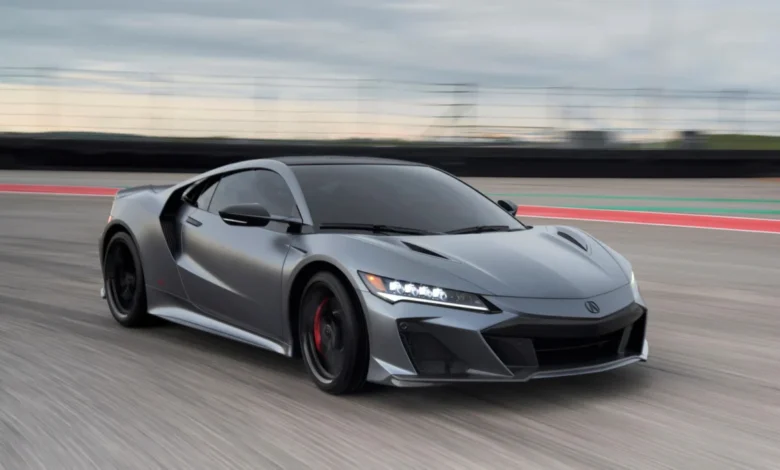
The automotive marketplace is generally governed by a predictable economic reality: luxury and performance vehicles suffer steep depreciation the moment they are driven off the showroom floor. Supercars, with their exorbitant maintenance costs, specialized insurance requirements, and rapidly evolving technological landscapes, are traditionally among the hardest hit. Yet, the second-generation Acura NSX—produced from the 2017 to the 2022 model years—has proven to be a remarkable anomaly in the pre-owned market. Rather than plunging into affordability, the hybrid, mid-engine Japanese supercar has maintained a remarkably resilient valuation, with rare variants actively appreciating beyond their original sticker prices.
When Acura revived the legendary NSX nameplate for the 2017 model year, it introduced a technologically advanced machine that bridged the gap between everyday usability and extreme track performance. Combining a twin-turbocharged 3.5-liter V6 engine with a trio of electric motors and a nine-speed dual-clutch transmission, the vehicle generated a formidable 600 horsepower in its final iterations. It achieved a top speed of 191 miles per hour and rocketed from zero to 60 miles per hour in under three seconds. Despite these impressive figures and a relatively short production run, prospective buyers hoping to find a bargain-priced second-generation NSX on the secondary market will find that the vehicle’s legendary heritage and limited supply have kept prices stubbornly high well into the six-figure territory.
Chronology and Production History of the Modern NSX
The journey of the second-generation NSX began long before its 2017 commercial release, tracing back to a developmental gestation period that spanned nearly a decade. Originally previewed by the Acura Advanced Sports Car Concept at the 2007 North American International Auto Show, the project underwent a radical redesign in 2011. Engineers abandoned the initial front-engine V10 layout in favor of a mid-engine, all-wheel-drive hybrid architecture designed to maximize both efficiency and dynamic agility.
Production officially commenced in 2016 at the Performance Manufacturing Center in Marysville, Ohio, with the first customer cars arriving for the 2017 model year bearing an MSRP of $156,000 before options. Throughout its lifecycle, the supercar received subtle updates, including a chassis retuning for the 2019 model year that improved handling and responsiveness. The culmination of the vehicle’s production run arrived with the 2022 Acura NSX Type S. Capping the generation with a strictly limited production run of just 350 units globally—with 300 allocated to the United States market—the Type S featured enhanced aerodynamics, revised turbochargers, increased battery output, and exclusive styling touches. When the final NSX rolled off the Marysville assembly line in late 2022, it marked the temporary conclusion of an automotive icon, solidifying the collectibility of the entire generation.
Current Market Valuations and Depreciation Analysis
An examination of current secondary market data reveals distinct tiers of valuation for the second-generation NSX, heavily influenced by model year, production numbers, and vehicle condition. Standard models from the initial 2017 through 2020 production years, which originally retailed in the mid-$150,000 range, currently trade hands between $120,000 and $130,000. While this represents a noticeable depreciation of roughly 15 to 20 percent over a seven-year period, it is exceptionally mild compared to legacy European competitors in the same performance bracket, many of which lose half their value within three to four years.
The financial landscape shifts dramatically when examining the flagship NSX Type S variants. Originally retailing for $169,500, these limited-edition supercars have experienced substantial appreciation. According to automotive listings and market tracking platforms such as CarGurus, well-maintained Type S models frequently command prices ranging from $250,000 to nearly $300,000 when accounting for dealership fees, taxes, and the extreme scarcity of available inventory. This inverse depreciation curve underscores the strong collector demand for final-run internal combustion and hybrid performance flagships as the global automotive industry transitions toward complete electrification.
Engineering and Performance Credentials
The enduring market strength of the second-generation NSX is rooted in its groundbreaking engineering philosophy. Rather than chasing raw track lap times through brute horsepower alone, Acura utilized its Sport Hybrid Super Handling All-Wheel Drive (SH-AWD) system to deliver instant torque vectoring and unprecedented cornering precision. The integration of dual front electric motors allowed for independent torque delivery to the front wheels, effectively pulling the car through apexes with surgical accuracy.
Furthermore, the vehicle’s multi-material space frame, constructed from aluminum, high-strength steel, and other advanced lightweight composites, provided structural rigidity that rivaled dedicated carbon-fiber tubs while remaining practical enough for daily driving. Reviewers and automotive journalists frequently praised the NSX for its docile demeanor in "Quiet" mode, transforming seamlessly into a ferocious track weapon when switched to "Sport+" or "Track" modes. This duality established the car as a usable supercar, broadening its appeal to enthusiasts who might otherwise hesitate to purchase an exotic vehicle for regular use.
Industry Context and Manufacturer Perspectives
Acura executives and brand representatives have frequently highlighted the NSX not merely as a volume-seller, but as a technological halo car designed to elevate the entire brand image. The expertise gained through the development of the NSX’s complex hybrid powertrain and advanced aerodynamics has progressively trickled down into mainstream Acura and Honda products, influencing the design language and performance ethos of subsequent Type S models across the lineup.
Industry analysts note that mainstream luxury automakers venturing into the exotic supercar space often face skepticism from purists accustomed to traditional European marques. However, the NSX successfully forged its own identity by offering Japanese reliability, everyday ergonomic comfort, and supercar-shredding performance without the notoriously fragile mechanical reputations associated with boutique Italian and British manufacturers. This reputation for robust build quality has directly contributed to the stabilization of resale values, as secondary buyers feel more confident purchasing a high-performance hybrid without an extended factory warranty.
Broader Economic Implications and Future Collectibility
The resilience of the Acura NSX resale market offers broader insights into the current collector car economy, particularly during a transitional era for the automotive industry. As stringent global emissions regulations prompt manufacturers to phase out traditional internal combustion engines in favor of battery-electric vehicles, enthusiasts and investors are aggressively targeting the final generations of analog-digital hybrid and pure gasoline supercars.
Vehicles that represent the pinnacle of an era—such as the limited-run Type S—are increasingly viewed as safe alternative asset classes. The scarcity of manual and high-output internal combustion sports cars has created a localized economic bubble where low-mileage, pristine examples command premiums that defy traditional depreciation models. For the Acura NSX, this means that the vehicle has effectively transitioned from a depreciating luxury commodity into a certified modern classic.
Conclusion: Is the Modern NSX a Sound Automotive Investment?
Ultimately, buyers approaching the second-generation Acura NSX with the expectation of finding a heavily discounted bargain will likely be disappointed. While standard early-model variants have experienced modest depreciation, they remain firmly entrenched in six-figure territory, reflecting their high-end materials, sophisticated powertrain technology, and elite performance capabilities. For those targeting the coveted Type S variants, the financial barrier to entry has only grown steeper with time.
For automotive enthusiasts prioritizing pure driving dynamics, everyday usability, and engineering excellence over immediate financial savings, the modern NSX remains one of the most compelling purchases of the past decade. It stands as a technological tour de force that honors the legendary lineage of the original 1990s model while charting a forward-thinking course for high-performance hybrid engineering. As internal combustion engines face an inevitable twilight, the market value of the second-generation NSX serves as a testament to its enduring legacy, ensuring its status as a sought-after collector’s item for decades to come.