Native Instruments and A. G. Cook Launch SuperStarSaw Synthesizer to Redefine the Legacy of the Supersaw Waveform

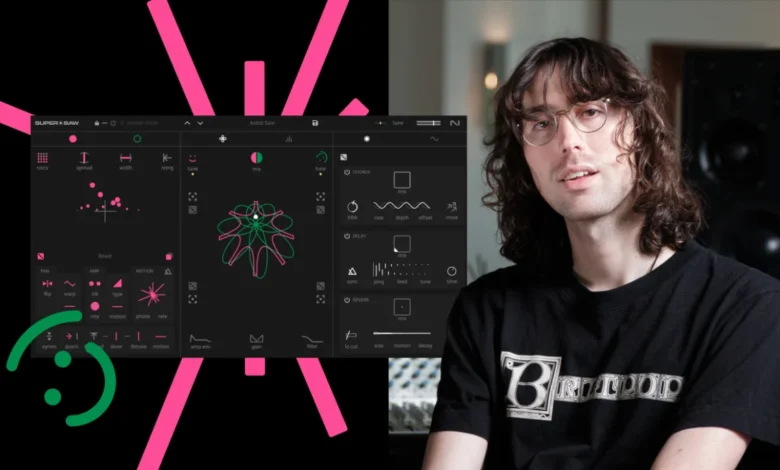
The landscape of digital music production has undergone a significant transformation with the official release of Super*Saw, a specialized software synthesizer developed through a collaborative partnership between Native Instruments and the influential producer A. G. Cook. Known phonetically as "SuperStarSaw," the instrument represents a calculated effort to distill the complex, hyper-layered soundscapes of modern pop and electronic music into a streamlined, performance-oriented tool. By focusing exclusively on the sawtooth wave—a fundamental building block of electronic synthesis—the plugin seeks to honor the "virtual analog" revolution of the late 1990s while providing the technical flexibility required by contemporary producers working in high-fidelity, maximalist genres.
The release marks a pivotal moment for Native Instruments, a company that has long dominated the software instrument market with flagship products like Kontakt and Massive. By partnering with A. G. Cook, the founder of the PC Music label and a primary architect of the "hyperpop" aesthetic, the company is targeting a demographic of creators who prioritize "wall-of-sound" textures and aggressive digital processing. The instrument is designed to alleviate the technical burdens of manual oscillator stacking, a process that has historically required significant time and CPU resources within a Digital Audio Workstation (DAW).
The Historical Context of the Supersaw Waveform
To understand the significance of Super*Saw, one must examine the history of the waveform it emulates. The original "Supersaw" was introduced in 1996 with the Roland JP-8000, a digital synthesizer that sought to replicate the warmth of analog gear while leveraging the precision of digital processing. By stacking seven sawtooth waves and slightly detuning them against one another, the JP-8000 created a lush, thick, and harmonically rich sound that became the defining characteristic of late-90s trance, hardstyle, and eurodance.
As the music industry transitioned into the 21st century, the supersaw moved from hardware to software. Early virtual instruments allowed producers to stack even more oscillators, leading to the "loudness wars" and the rise of EDM. However, the process remained somewhat rigid. Producers often had to duplicate tracks, apply individual pitch shifts, and coordinate complex automation lanes to achieve the evolving, "living" textures heard in modern experimental pop. A. G. Cook’s career has been largely defined by pushing these digital limits, using the supersaw not just as a melodic lead, but as a percussive and structural element that blurs the line between harmony and noise.
Technical Architecture and the Pink-Green Workflow
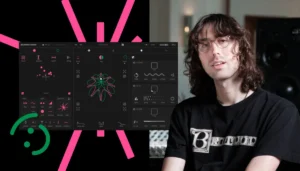
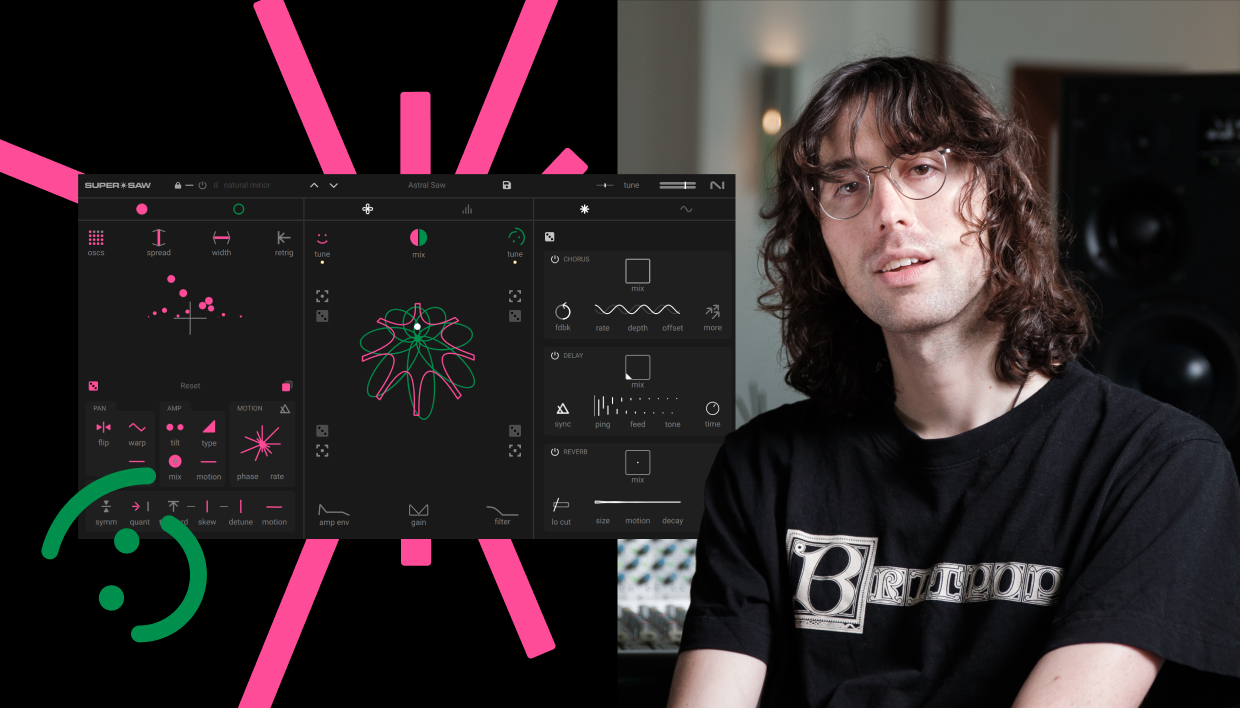
The internal architecture of SuperSaw is built around a dual 8-voice sawtooth oscillator system. Unlike multi-engine synthesizers that offer various waveforms like square, triangle, or wavetables, SuperSaw is intentionally limited to the sawtooth. This "limited-by-design" philosophy is intended to force creativity within a specific sonic palette. The interface is divided into two distinct, color-coded layers: Pink and Green. These colors are a direct reference to the visual identity of Cook’s recent triple album, Britpop, and they serve a functional purpose in the synthesis process.
According to technical specifications, the two layers can be treated as a "comedic duo," where one layer provides a stable, fundamental frequency while the other is subjected to extreme modulation, detuning, or rhythmic gating. The instrument features a "4-corner Morpher," a macro-control system that allows users to transition smoothly between four different states of a patch. This enables the creation of sounds that can shift from a delicate, thin pluck to a massive, distorted wall of sound in a single gesture.
Furthermore, the "Star-shaped modulator" provides a unique approach to movement. This modulator can be mapped to various parameters, including panning, amplitude, and pitch, allowing for the "swarming" effect characteristic of Cook’s productions. By integrating these functions into a single interface, Native Instruments has effectively removed the need for the "tedious workarounds" that Cook previously cited as a barrier to his creative flow, such as the manual alignment of automation across multiple plugin instances.
A. G. Cook and the Philosophy of Sonic Breaking
A. G. Cook’s involvement in the project extends beyond mere branding. As a producer for global icons like Charli XCX and Caroline Polachek, Cook has spent over a decade refining a production philosophy centered on the "unexplored boundaries" of digital sound. His work on albums such as 7G and Apple demonstrated a fascination with taking simple musical ideas—like a basic chord progression—and "breaking" them through extreme digital layering.
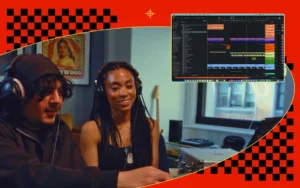
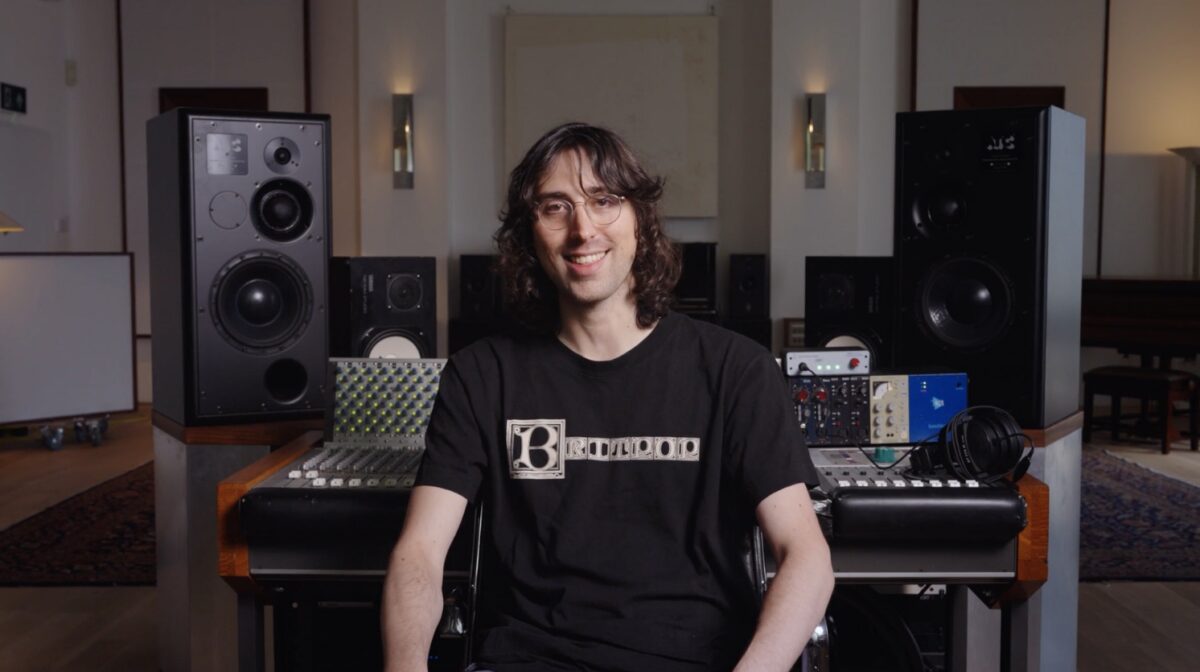
"I’m always excited when I see artists make their own tools around a specific ideology they have," Cook stated during the launch event at Baltic Studios in London. He described the supersaw as an "archetypal 90s invention" that represented the shift from analog limitations to digital abundance. For Cook, the goal of Super*Saw was to extend the "family tree" of this musical idea, moving it away from the static presets of the past and toward an instrument that feels reactive and "playable."
Industry analysts suggest that this collaboration reflects a broader trend in the music technology sector: the move toward "curated" or "signature" instruments. Rather than providing a "Swiss Army Knife" synth that does everything, companies are increasingly releasing specialized tools that capture the specific "vibe" or workflow of a high-profile artist. This approach appeals to both professional producers looking for efficiency and amateur creators seeking to emulate the sound of their favorite records.
Development Timeline and Industry Impact
The development of SuperSaw reportedly took place over a period of intensive collaboration, coinciding with the production of Cook’s Britpop* album. While Cook had long harbored the ambition to create a custom software instrument, the technical partnership with Native Instruments provided the necessary infrastructure to bring the concept to the commercial market.
The timeline of the supersaw’s evolution can be categorized into four distinct eras:
- 1996–2005 (The Hardware Era): Defined by the Roland JP-8000 and the birth of Trance.
- 2005–2012 (The Early Software Era): The rise of VSTs like Sylenth1 and Massive, which brought supersaws to every bedroom producer.
- 2013–2020 (The Hyper-Layering Era): Pioneered by the PC Music collective, characterized by manual track stacking and extreme digital processing.
- 2024–Present (The Expressive Era): Marked by the release of Super*Saw, focusing on real-time performance and integrated macro-modulation.
The impact of this release is expected to be felt across several genres. In the realm of pop music, the ability to quickly generate "thick" harmonic layers will likely influence the sound of the next generation of radio hits. In the underground club scene, the "randomization" features and the "dice" function within the Super*Saw interface will allow for the discovery of dissonant, experimental textures that were previously difficult to program.
Broader Implications for Digital Music Production
The release of Super*Saw raises important questions about the future of sound design. By simplifying a complex process into a "playable" interface, Native Instruments is contributing to the democratization of advanced synthesis techniques. However, it also highlights a shift in how producers interact with their tools. The move away from "menu-diving" and toward "performance-macro" control suggests that the industry is prioritizing speed and emotional expression over granular technical control.
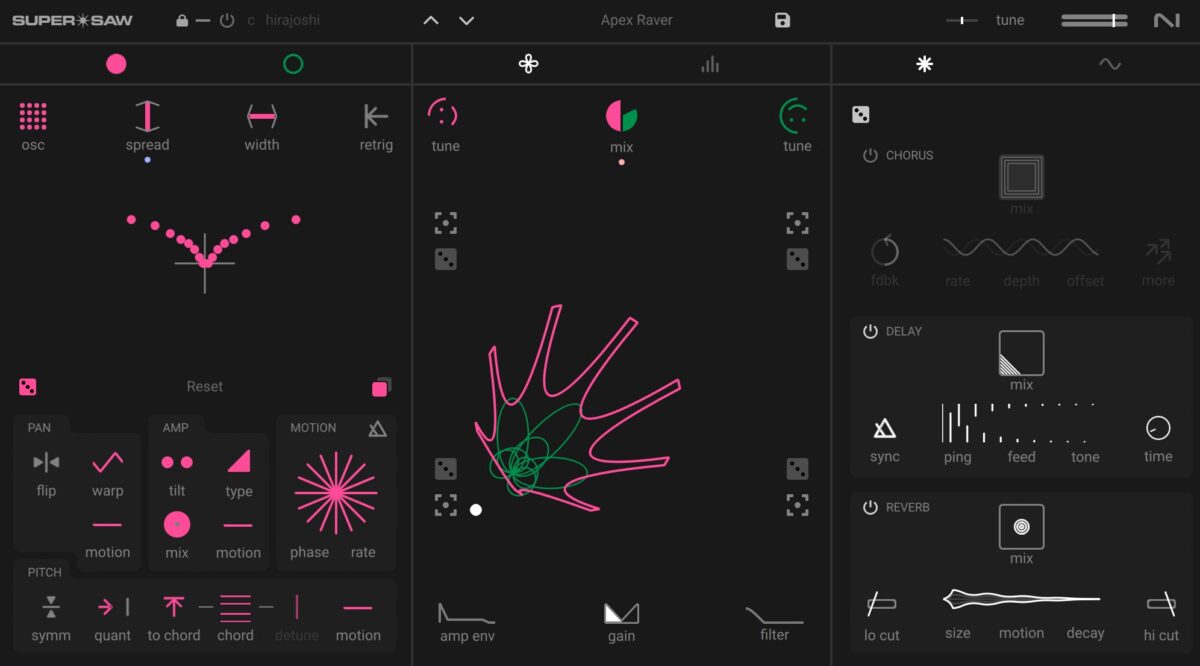
From a technical standpoint, Super*Saw is highly optimized for modern computer architectures. Despite the massive number of oscillators being generated (up to 16 per instance across the two layers), the plugin is designed to be CPU-efficient, a critical factor for producers who often run dozens of tracks simultaneously. This efficiency, combined with the visual feedback of the Pink and Green layers, makes it a formidable entry into the current market of virtual analog synthesizers.
As a "coda" or "epilogue" to A. G. Cook’s recent body of work, SuperSaw serves as both a retrospective of his career and a bridge to the future. It encapsulates the sonic world of 7G, Apple, and Britpop*, boiling down years of experimentation into a single, accessible instrument. For Native Instruments, the project reinforces their position as a company capable of bridging the gap between legacy synthesis concepts and the cutting-edge demands of the modern pop avant-garde.
The synthesizer is now available via the Native Instruments website, marking a new chapter in the ongoing history of the sawtooth wave. Whether it will lead to a resurgence of 90s-style rave anthems or fuel the creation of entirely new, unheard-of genres remains to be seen, but its arrival confirms that the "stack"—the practice of building sound through sheer digital volume—remains one of the most powerful forces in contemporary music.
Related posts: