Madlib Partners With Soul Surplus to Release His First Ever Curated Sample Pack on Splice

The landscape of hip-hop production has undergone a seismic shift as Otis Jackson Jr., universally known as Madlib, officially launched his inaugural sample pack on the industry-leading platform Splice. This release, developed in close collaboration with the production collective Soul Surplus, marks a significant departure from the enigmatic producer’s historically guarded creative process. For decades, the “Beat Konducta” has maintained an aura of mystery, rarely opening his studio doors to the public. However, this partnership provides an unprecedented glimpse into the workflow of a man who has fundamentally shaped the sound of underground hip-hop through his work with MF DOOM on Madvillainy, his collaborative masterpieces with Freddie Gibbs on the Piñata and Bandana albums, and his foundational contributions to the legacy of the late J Dilla.
A Chronology of Influence and Innovation
To understand the weight of this release, one must analyze the trajectory of Madlib’s career, which spans over three decades. Emerging from Oxnard, California, in the early 1990s, Jackson’s influence began with the Lootpack before he solidified his status as a singular force in sampling culture. His methodology—characterized by the use of unconventional hardware, dusty vinyl loops, and a “left-of-center” rhythmic sensibility—became the gold standard for lo-fi and boom-bap production.
The timeline of his evolution is marked by key milestones:
- 1993–1999: The formative years with Lootpack and the establishment of his reputation as a crate-digger extraordinaire.
- 2000–2004: The rise of the Quasimoto persona and the collaborative zenith with J Dilla on Champion Sound. This era cemented the “Madlib sound,” which relied heavily on tape saturation, pitch shifting, and rhythmic swing.
- 2004–2010: The release of the Beat Konducta series, which served as a masterclass in instrumental hip-hop and demonstrated his ability to transform obscure international records into cohesive sonic landscapes.
- 2014–2021: The successful collaboration with Freddie Gibbs, which proved that Madlib’s “rough-around-the-edges” aesthetic could dominate contemporary hip-hop charts without sacrificing artistic integrity.
- 2026: The current expansion into the digital sample ecosystem, moving from the physical crates of his home studio to the accessible, cloud-based infrastructure of Splice.
The Technical Anatomy of the Pack
The collaboration with Soul Surplus is not merely a collection of sounds; it is a synthesis of decades of hardware-based experimentation. Soul Surplus, known for their high-fidelity reconstructions of vintage soul, funk, and jazz, provides the perfect technical foil for Madlib’s raw, analog-driven approach.
The sample pack features a diverse array of loops, including files such as MADLIB_87_music_loop_crates_Bmin.wav and MADLIB_142_music_loop_dust_Ebmaj.wav. These files are engineered to provide producers with the “Madlib signature” out of the box—specifically the tape wobble, frequency-clipped low ends, and the distinct, non-quantized swing that defines his rhythm sections. Analysts in the music production industry note that by offering these assets on Splice, the barrier to entry for aspiring beatmakers is significantly lowered, allowing for the democratization of a sound that was previously considered difficult to replicate without access to an extensive, decades-old vinyl collection and specific vintage samplers like the SP-1200 or the MPC3000.
Studio Dynamics and the Creative Process
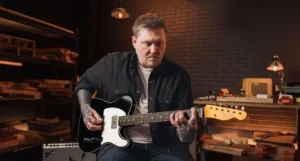
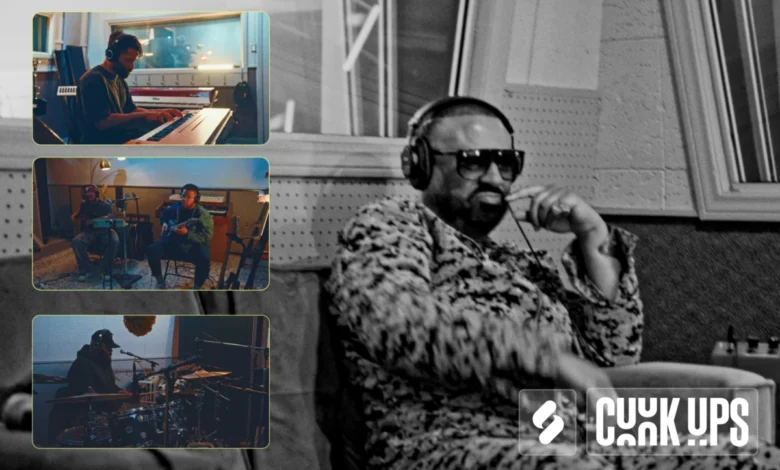
In the accompanying studio footage, the chemistry between Madlib and the Soul Surplus team is palpable. The video captures the collaborative “cook up,” where the team exchanges ideas on arrangement and sonic texture. When Madlib states, “I have everything,” while gesturing to the team, it serves as a testament to the comprehensive nature of the assets provided. The sessions reveal a workflow that prioritizes spontaneity; the loops are not hyper-polished, but rather retain the organic “dust” that characterizes the best of Madlib’s discography.
Industry observers note that this level of transparency is rare for an artist of his stature. By allowing fans to see how these loops are constructed—layering live instrumentation with chopped samples and heavy analog processing—Madlib is effectively creating an educational resource as much as a commercial product.
The Implications for Modern Music Production
The entry of an artist as legendary as Madlib into the sample-pack market signals a broader shift in the digital audio workstation (DAW) era. As production becomes increasingly digital, there is a heightened demand for “humanized” sounds—samples that possess the imperfections of human performance and analog wear.
The implications of this release are twofold:
- Standardization of Aesthetics: By providing high-quality, pre-processed samples, Madlib is establishing a new baseline for what constitutes “authentic” sound in modern hip-hop. This could lead to a wave of music that echoes his specific stylistic choices.
- Commercialization of the "Crate-Digger" Ethos: Historically, the craft of the producer was defined by the hunt for rare records. By distributing these sounds on a platform like Splice, the labor of digging is effectively replaced by the labor of curation. This shifts the producer’s role from a collector to an architect, focusing more on the arrangement of pre-vetted, high-quality loops.
Market Context and Industry Reaction
Splice, which has become the primary hub for modern producers, has seen a consistent increase in revenue and user engagement as it attracts more legendary figures to its marketplace. For Splice, signing Madlib is a strategic masterstroke, as it adds credibility to their label roster. For Madlib, the partnership allows him to extend his legacy to a new generation of creators who may never have owned a physical turntable but are eager to incorporate his sonic philosophy into their own work.
Initial industry feedback has been overwhelmingly positive, with prominent producers and engineers praising the pack for its usability and sonic depth. The focus on “dust,” “relics,” and “crates” in the naming convention of the samples acts as a nod to the origins of the genre, ensuring that even within a digital format, the historical context of the music remains front and center.
Future Trajectories
Looking forward, the success of this pack may pave the way for further collaborations between legacy producers and modern digital platforms. If the industry continues to prioritize accessibility and high-fidelity sound design, we may see more iconic figures opening their private libraries to the public.
As for Madlib, this release serves as an evolution of his brand. While he remains a reclusive figure, the decision to share his creative tools suggests a desire to influence the next generation of producers directly. By distilling his sound into a pack that is accessible to anyone with a subscription, he is ensuring that his fingerprints will remain on the future of hip-hop, regardless of the tools used by the next generation.
For those looking to utilize these sounds, the pack offers a comprehensive suite of files that are royalty-free and ready for integration into modern production environments. The release on September 15, 2026, marks the beginning of a new chapter in which the secrets of the “Beat Konducta” are no longer locked away in a private studio in California, but are available to be manipulated, re-sampled, and transformed by producers around the globe. As the industry watches to see how these sounds are integrated into future tracks, one thing remains certain: the influence of Madlib is not waning; it is merely adapting to the digital age.