How Producer Andrew Watt Kept The Rolling Stones Timeless While Sneaking Modern Synths Into Their Latest Album

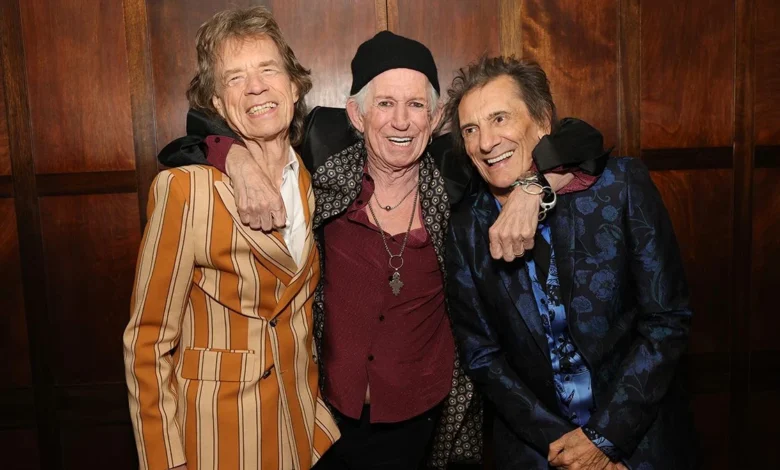
The Rolling Stones have spent over six decades defining the sound of rock and roll, proving that legendary status is not a static milestone, but an ongoing exercise in reinvention and resilience. When the iconic British band released their latest studio album, Foreign Tongues, alongside its lead single "In The Stars," music critics and die-hard fans alike were immediately struck by how effortlessly the tracks bridged the gap between their classic, swaggering 1970s aesthetic and a fresh, contemporary punch. Behind this sonic tightrope walk is producer Andrew Watt, who recently pulled back the curtain on the meticulous, organic, and occasionally surprising production techniques that shaped the record.
In a comprehensive interview with the audio engineering platform Mix with the Masters, Watt detailed the delicate process of capturing the authentic magic of Mick Jagger, Keith Richards, and Ronnie Wood in the studio. Rather than leaning heavily on modern digital editing crutches, Watt prioritized the irreplaceable chemistry that happens when seasoned musicians occupy the same physical space. The resulting work offers a masterclass in modern music production, balancing the raw, unpolished energy of a live blues-rock band with subtle, modern production enhancements—including the unexpected inclusion of digital synthesizer plugins.
The Organic Blueprint: No Click Tracks, Pure Performance
From the outset of the Foreign Tongues sessions, Andrew Watt established a strict rule to protect the organic pulse of the Rolling Stones: no click tracks and no artificial grid alignment. In contemporary pop and rock production, quantizing—locking a performance strictly to a digital time grid—is a standard industry practice designed to ensure absolute rhythmic perfection. However, Watt recognized that doing so to the Rolling Stones would strip away the very human imperfections that give their music its unmistakable heartbeat.
"You just record ’em," Watt explained during his breakdown. "You don’t want to ‘grid’ the Rolling Stones, so the entirety of this album was made with no click tracks. They set up very close together in the live room. They can see and feel each other at all times and they’re really just playing off of each other."
This proximity-based setup inevitably results in sonic "bleed," where the audio from individual instruments leaks into neighboring microphones. While many modern producers go to great lengths to gate and isolate tracks for maximum digital clarity, Watt took the opposite approach, opting to preserve the natural acoustic environment of the tracking room.
"You just leave that shit in," Watt asserted. "You don’t try and fuckin’ take it out. That’s part of the energy of the song."
This performance-based philosophy extends deeply into how the band builds their arrangements. Rather than relying on looped drum patterns or programmed MIDI sequences, every rhythm, chord change, and vocal inflection is captured in real-time. The studio methodology echoes the legendary sessions of the band’s golden era in the late 1960s and 1970s, such as Exile on Main St. or Let It Bleed, where atmosphere and spontaneity were valued over clinical precision.
Guitar Interplay: The Classic Richards and Wood Dynamic
At the core of the Rolling Stones’ unmistakable sound is the legendary guitar interplay between Keith Richards and Ronnie Wood—a phenomenon Richards famously dubbed the "ancient art of weaving." Rather than adhering to traditional lead and rhythm guitar roles, Richards and Wood weave their respective parts together, constantly listening, reacting, and leaving space for one another.
Watt captured this dynamic spatially within the stereo mix of "In The Stars," establishing a deliberate placement for the guitarists. "Every song, Keith’s on the left and Ronnie’s on the right," Watt noted.
Focusing specifically on the intricate riff work of "In The Stars," Watt highlighted how the two guitar icons approach the material. "They both play the riff slightly differently, but when they play it together, it’s got that kind of weaving thing that the Rolling Stones are known for in the way that they interact. They’re listening and feeling each other."
This symbiotic musical relationship ensures that even as the band incorporates new sonic textures, the foundational guitar architecture remains unmistakably rooted in the blues traditions they pioneered decades ago.
Vocal Prowess and Rhythm Section Continuity
Mick Jagger’s vocal delivery on Foreign Tongues has likewise drawn widespread acclaim for its remarkable power and flexibility. Despite decades of high-intensity touring, Jagger’s voice retains its characteristic grit, dynamic range, and elastic phrasing.
To capture this performance, Watt utilized a high-end Sony C800G studio condenser microphone, renowned for its clarity, detail, and ability to sit prominently in a dense mix. "He sounds so good on it. It can cut through anything," Watt remarked. Furthermore, he emphasized Jagger’s active engagement with the rhythm section—specifically drummer Steve Jordan, who joined the permanent lineup following the passing of longtime drummer Charlie Watts.
"One of Mick’s many talents is working with a drummer," Watt said. "He really gets right up against the drummer and really works to make sure the groove is making him wanna dance and feels, as he would say, ‘like a groove’. If it feels like that for him then he’s in."
This tight collaboration between Jagger’s vocal phrasing and Jordan’s pocket-oriented drumming establishes a formidable rhythmic foundation, allowing the rest of the band to lock into a relentless forward momentum.
The Modern Surprise: Integrating Sub-Bass and Serum
While preserving the traditional live-band dynamic was paramount, Watt faced the perennial challenge of ensuring the octogenarian rock icons remained relevant to contemporary listeners. Striking this balance required careful calibration—what Watt describes as toeing the line between keeping things classic and making them sound like "now."
To achieve this modern edge, the production team made a surprising technical choice that breaks sharply with traditional Rolling Stones instrumentation: the implementation of electronic sub-bass, specifically utilizing Xfer Records’ popular software synthesizer, Serum.
The integration of a digital soft-synth plugin into a Rolling Stones track represents a fascinating evolution in the band’s production history. Known primarily for organic instrumentation—guitars, acoustic drums, pianos, and brass—the inclusion of a synthesized sub-bass layer gives "In The Stars" a low-end depth and chest-rattling resonance typical of modern pop, hip-hop, and electronic music production. It allows the track to translate effectively across a wide variety of modern playback systems, from high-end studio monitors to smartphone speakers and automotive audio systems, without sacrificing the organic midrange warmth of the guitars and vocals.
Broader Implications and Industry Reception
The release of Foreign Tongues and the analytical deep-dive provided by Andrew Watt shed light on a broader trend within legacy artist management and production: how to honor a historic catalog while remaining commercially viable in a streaming-dominated music marketplace.
In recent years, veteran acts ranging from Paul McCartney to Metallica have experimented with producers known for bridging generational gaps—such as Andrew Watt, who has previously worked with artists as diverse as Ozzy Osbourne, Post Malone, Pearl Jam, and Miley Cyrus. By pairing these legacy icons with forward-thinking producers who respect their foundational history while introducing modern audio engineering tools, aging rock royalty can continue to produce vital, chart-eligible material rather than relying solely on nostalgia acts.
The commercial and critical response to Foreign Tongues suggests that this strategy is paying dividends. Fans and music journalists have praised the album for capturing a vibrant, unjaded energy that defies the conventional limitations of longevity in rock and roll.
As detailed breakdowns like Watt’s Mix with the Masters session continue to demystify the modern recording process, listeners gain a deeper appreciation for the meticulous engineering, psychological facilitation, and artistic trust required to bring the Rolling Stones into the modern era. Through a combination of live-room camaraderie, vintage microphone selection, classic guitar weaving, and—ironically—the subtle power of a digital sub-bass plugin, the Rolling Stones have once again proven that while time may be on nobody’s side, great rock and music production certainly can be.