Native Instruments Partners with A. G. Cook to Launch SuperStarSaw Synthesizer Redefining the Iconic Stacked Sawtooth Sound for Modern Production

Native Instruments, a global leader in digital music creation software and hardware, has officially announced the release of Super*Saw (pronounced SuperStarSaw), a specialized software synthesizer developed in collaboration with the influential producer and PC Music founder A. G. Cook. This partnership marks a significant milestone for the Berlin-based company, as it merges the technical heritage of 1990s digital synthesis with the avant-garde "hyperpop" aesthetic that Cook helped pioneer over the last decade. The instrument is designed to streamline the complex process of stacking and modulating sawtooth waves, a technique that has served as a cornerstone of electronic music for nearly thirty years.
The launch of Super*Saw comes at a time when music production is increasingly shifting toward highly expressive, specialized tools rather than general-purpose workstations. By focusing exclusively on the sawtooth wave—a harmonically rich waveform known for its aggressive and bright timbre—Native Instruments and Cook aim to provide producers with a tactile, performance-oriented instrument that moves beyond the static "set-and-forget" nature of traditional software presets.
The Historical Context of the Supersaw Waveform
To understand the significance of Super*Saw, one must look back to the mid-1990s, an era defined by the transition from analog hardware to digital "virtual analog" technology. The term "supersaw" was first popularized by the Roland JP-8000 synthesizer, released in 1996. Unlike traditional synthesizers that used a single oscillator to produce a sawtooth wave, the JP-8000 featured a unique "Supersaw" oscillator that simulated seven sawtooth waves detuned against one another.
This innovation created a sound that was significantly thicker, more lush, and more powerful than anything previously available in a single unit. It became the signature sound of the trance music movement, fueling the euphoric "anthems" of the late 90s and early 2000s. Over time, the supersaw transcended its trance origins, becoming a staple in hardstyle, J-pop, and eventually the "wall-of-sound" aesthetics of modern pop and electronic music.
However, as digital audio workstations (DAWs) became more sophisticated, the process of creating these sounds became increasingly clinical. Producers often found themselves duplicating tracks, manually adjusting fine-tuning parameters, and managing dozens of plugin instances to achieve the desired level of "density." A. G. Cook, whose production credits include Charli XCX’s critically acclaimed albums Pop 2 and BRAT, noted that these workarounds often stifled the creative flow. Super*Saw was conceived to address this friction, turning a tedious engineering task into a musical performance.
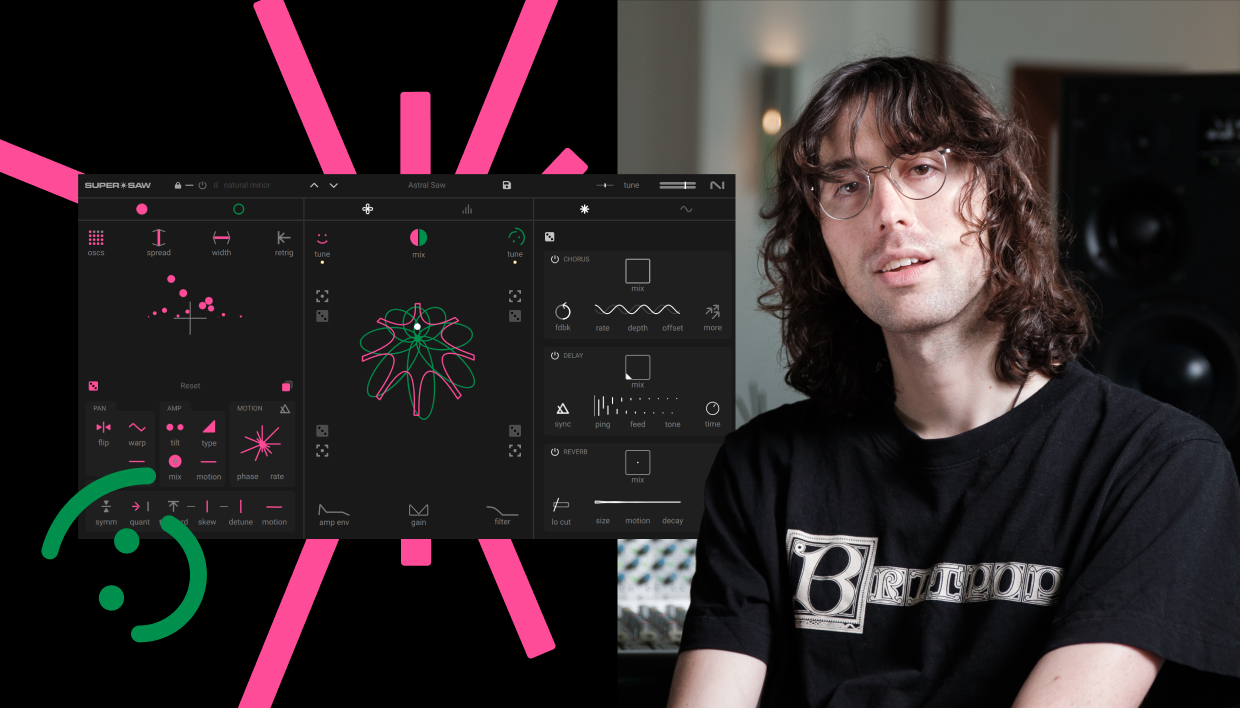
A. G. Cook and the Philosophy of Digital Extremism
A. G. Cook’s involvement in the project brings a unique philosophical perspective to software design. As the founder of the PC Music collective, Cook spent the 2010s challenging the boundaries between "high art" and "bubblegum pop," often utilizing exaggerated digital textures to create music that felt both futuristic and nostalgic.
During the development process at Baltic Studios in London, Cook emphasized that his goal was not merely to recreate the past but to extend the "family tree" of a classic musical idea. He describes his approach as "digital extremism," where the limits of a digital instrument are pushed until the sound breaks or transforms into something else entirely. In his solo work, such as the 49-track opus 7G and the 2024 triple album Britpop, Cook frequently employs stacked sawtooth waves that are so dense they function as percussion or white noise rather than traditional melodic chords.
"I find it hard to describe my own sound because I’m constantly trying to break it," Cook stated during the product launch. "That’s what makes music interesting to me. The supersaw is an archetypal 90s invention because it’s about moving from analog synths to digital instruments that can suddenly load many more oscillators. We wanted to make something thicker, weirder, and ultimately ravier."
Technical Specifications and Interface Innovation
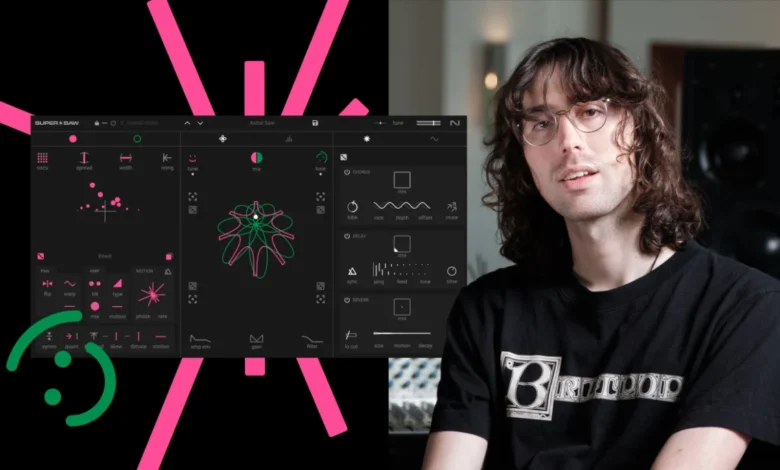
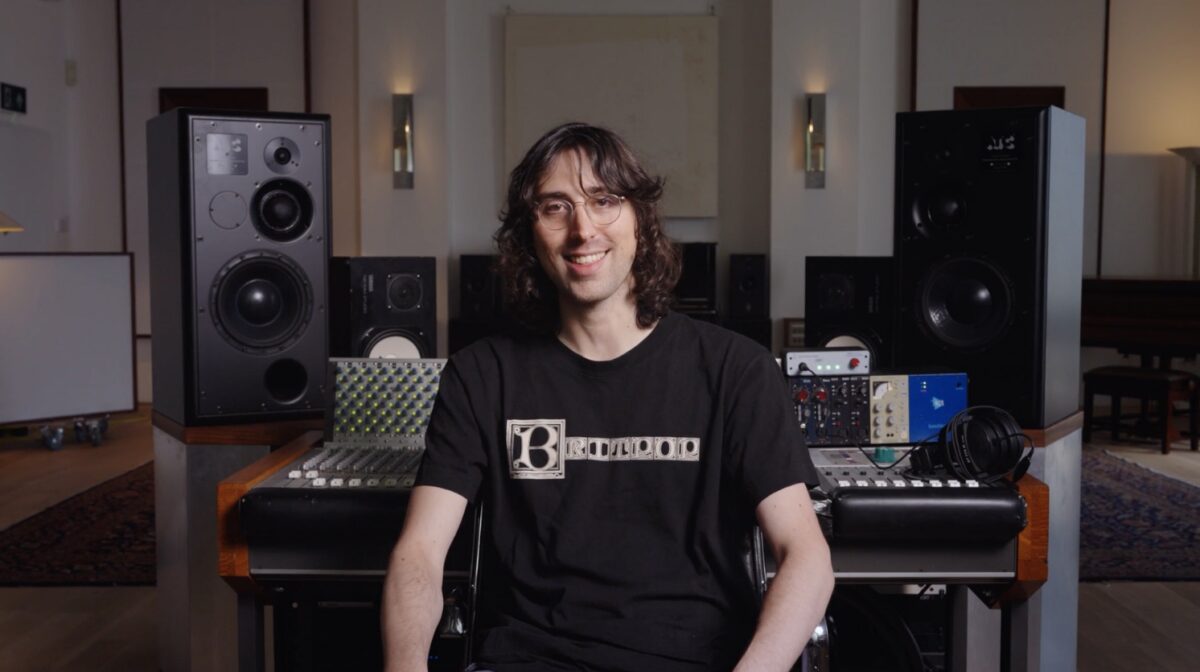
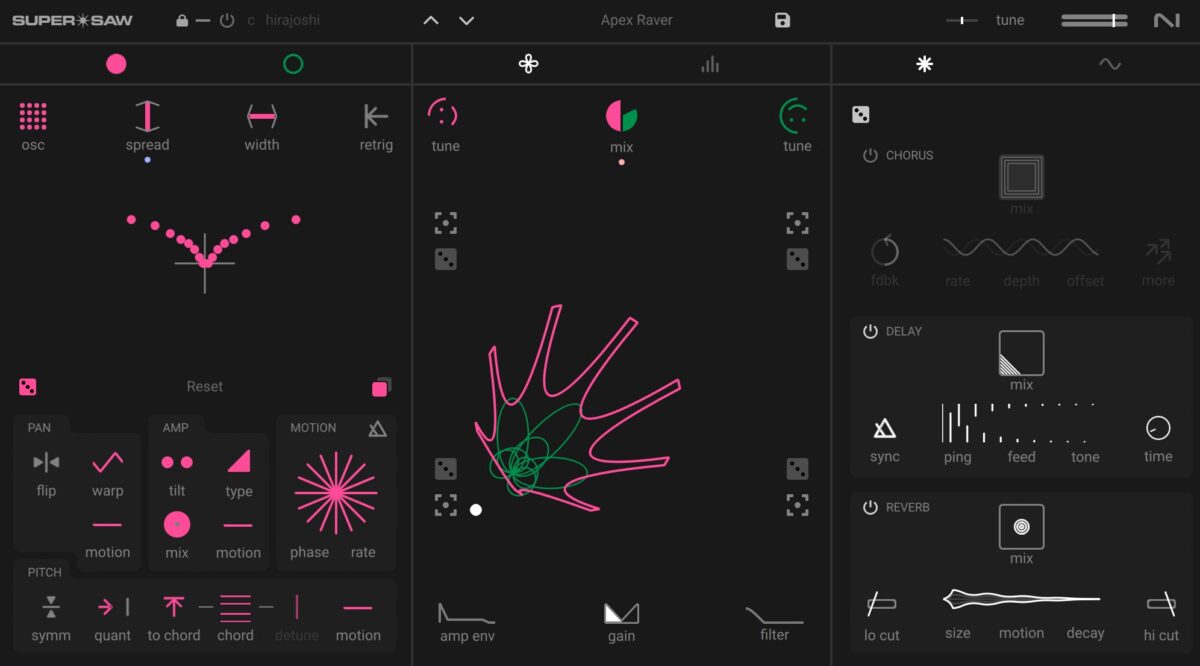
Super*Saw is built on a dual 8-voice sawtooth oscillator system. The architecture is intentionally restricted to sawtooth waves, forcing users to explore the depth of that specific timbre rather than getting lost in endless waveform options. The interface is divided into two distinct, color-coded layers: Pink and Green.
This dual-layer approach reflects Cook’s personal workflow, which he likens to a "comedic duo." One layer might provide a stable, fundamental note to anchor the sound, while the second layer is pushed into "chaotic" territory with extreme detuning and modulation. The synthesis engine allows for 16 voices of sawtooth waves to be played simultaneously, creating a massive sonic footprint.
Key features of the Super*Saw interface include:
- The 4-Corner Morpher: A central control hub that allows users to transition smoothly between four different states of the synth. This enables real-time movement between different chord shapes, detuning rates, and modulation depths, making the synth feel more like a live instrument than a static plugin.
- The Star-Shaped Modulator: A unique LFO (Low Frequency Oscillator) system that can be mapped to panning, amplitude, or pitch. This modulator is responsible for the "shimmering" or "vibrating" quality often heard in Cook’s more delicate pop productions.
- Randomization Functions: In line with Cook’s philosophy of "breaking" sounds to stay engaged, the synth includes a randomization feature (represented by a dice icon) that allows producers to instantly generate new textures, encouraging happy accidents in the studio.
- Advanced Spread and Width Controls: These parameters allow for the precise placement of the 16 oscillators across the stereo field, enabling everything from narrow, piercing leads to wide, immersive pads.
Development Timeline and Production Integration
The development of Super*Saw was a multi-year endeavor that coincided with some of Cook’s most productive years as a solo artist. The project began as a series of custom tools Cook built for his own use to simplify the production of tracks like "Stargon" and "Mad Max."
By 2023, the collaboration with Native Instruments had formalized, with the software giant’s engineering team working to translate Cook’s idiosyncratic workflows into a stable, commercial VST/AU/AAX plugin. The visual aesthetic of the plugin—specifically the pink and green color scheme—is a direct nod to the branding of Cook’s latest album, Britpop, creating a cohesive link between his music and his tools.
For Cook, the release of the plugin represents a "coda" or final chapter to his recent trilogy of albums (7G, Apple, and Britpop). It serves as a way to "boil down" his decade of sonic experimentation into a format that can be used by other artists to create entirely different genres of music.
Industry Implications and Market Impact
The release of Super*Saw is expected to resonate across several segments of the music industry. For professional pop and EDM producers, it offers a high-efficiency solution for a sound that is currently in high demand. The "hyperpop" sound, characterized by its bright, digital, and often abrasive textures, has moved from the underground to the mainstream, influencing the production of global stars like Dua Lipa and Lady Gaga.
From a market perspective, this collaboration reinforces Native Instruments’ strategy of partnering with "visionary" artists to maintain relevance in a crowded software market. While NI’s flagship products like Massive and Kontakt remain industry standards, specialized "boutique" synths like Super*Saw allow the company to capture the interest of younger, genre-specific creators who value character and ease of use over sheer complexity.
Furthermore, the launch highlights a growing trend in "democratized" sound design. By condensing professional-grade stacking and modulation techniques into an intuitive interface, Native Instruments is making complex production styles accessible to bedroom producers who may not have the technical knowledge to build these sounds from scratch in a traditional DAW environment.
Broader Impact on Electronic Music Design
As the electronic music landscape continues to evolve, the arrival of Super*Saw suggests a move away from the hyper-realistic sampling of the last decade and a return to "unapologetic" digital synthesis. While the 2010s were often defined by the quest for the perfect analog emulation, the 2020s appear to be embracing the "weirdness" and "plasticity" of digital sound.
Super*Saw stands as a testament to the enduring power of the sawtooth wave. Whether used to create the delicate, shimmering chords of a pop ballad or the "wall-of-sound" energy of a rave anthem, the instrument provides a bridge between the digital revolution of the 90s and the boundary-pushing music of the future.
Native Instruments has confirmed that Super*Saw is now available for purchase and download via their website and the Native Access portal. The company plans to follow the launch with a series of tutorials and artist preset packs, further integrating the "SuperStarSaw" sound into the global production community. As A. G. Cook concludes, the tool is now in the hands of the public, and the next stage of the "supersaw family tree" will be written by the diverse array of artists who choose to pick it up.