The Architectural Philosophy of the Music Tracker
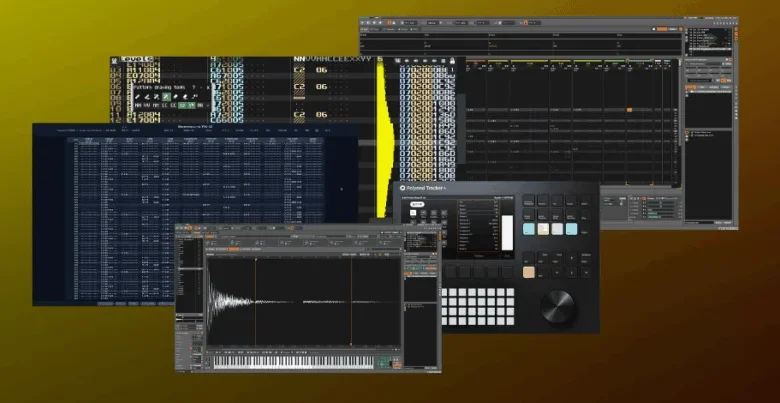
To understand the enduring appeal of the tracker, one must first grasp its unique data-driven architecture. Unlike the traditional DAW, which attempts to emulate the workflow of a multi-track tape machine, the tracker is born from the logic of computer programming. The interface is divided into columns and rows. Each column typically represents a single monophonic channel, while each row represents a division of time, such as a 16th note.

The primary advantage of this layout is the visibility of "step effects." In a standard DAW, automating a pitch slide, a volume swell, or a sample offset requires opening separate lanes of automation. In a tracker, these commands are entered directly next to the note as a series of hexadecimal codes. This proximity allows for granular, per-step control that is essential for the rapid-fire "amen break" chops and glitchy textures synonymous with experimental electronic music.

A Historical Chronology: From Demoscenes to Global Dancefloors
The lineage of the music tracker is inextricably linked to the history of personal computing. The format was pioneered in 1987 with the release of Ultimate Soundtracker for the Commodore Amiga. Developed by Karsten Obarski, the software was initially designed to allow game developers to create multi-channel music that consumed minimal system memory.

Throughout the late 1980s and early 1990s, the "demoscene"—a subculture of computer programmers who competed to create the most impressive audio-visual presentations—adopted trackers as their primary tool. This culture birthed "cracktros," the short, high-energy musical introductions attached to pirated software. As the software evolved, trackers like OctaMED became the backbone of the UK’s burgeoning jungle and hardcore scenes. Artists such as DJ Aphrodite and Bizzy B utilized the Amiga’s unique "Paula" sound chip and OctaMED’s sequencing to define the sound of a generation.

By the early 2000s, the tracker had moved to the PC and Mac. Renoise emerged as a professional-grade evolution, while specialized tools like PlayerPro were utilized by luminaries like Aphex Twin to craft the complex mechanical rhythms of his 2001 album Drukqs. Today, the tracker is experiencing a renaissance, driven by a new wave of hardware and software that bridges the gap between old-school aesthetics and modern production requirements.

1. Alexander Zolotov SunVox: The Modular Powerhouse
For those seeking an entry point into the tracker world without financial risk, SunVox by Alexander Zolotov stands as a remarkable achievement in software engineering. Available for free on desktop platforms and at a nominal cost of $5 for iOS, SunVox is far more than a simple sequencer. It is a fully modular synthesizer and effect rack with a built-in tracker engine.

SunVox is designed for maximum efficiency, capable of running on everything from high-end PCs to Raspberry Pi units and older mobile devices. Its internal architecture allows users to link modules—ranging from FM synthesizers and drum generators to complex filters and delays—in a visual "Module View." These modules are then triggered via the "Pattern Editor," the vertical tracker interface. For the modern producer, SunVox offers AUv3 support on iOS, allowing it to be integrated directly into Logic Pro or Ableton Live, providing a tracker-based "brain" within a traditional DAW environment.

2. Electronisounds TRX-12: The Specialized Tracker DAW
While many trackers are built by large teams, the tracker community remains deeply rooted in independent development. Dean Daughters of Electronisounds developed the TRX-12 to address the needs of producers who want a self-contained, modern tracker environment on Mac or PC. Priced at $29.99, it represents a middle ground between freeware and high-end professional suites.

The TRX-12 excels in its implementation of "Step-FX." It features 35 specific commands that allow for per-note ratcheting, randomization, and glides. This functionality is particularly useful for breakcore, where the "humanization" of mechanical beats often involves micro-adjustments to timing and velocity that would be tedious in a piano roll. With three polyphonic synth engines and dedicated tracks for breakbeat slicing, the TRX-12 provides a streamlined workflow for high-speed rhythmic manipulation.

3. Renoise: The Professional Industry Standard
Renoise is widely considered the most sophisticated tracker available today. Since its debut in 2002, it has evolved into a powerhouse that rivals mainstream DAWs in feature set while maintaining the vertical soul of its predecessors. Currently at version 3.5, Renoise offers full VST and AU plugin support, allowing producers to use their favorite third-party instruments and effects within a tracker interface.

The "Meta Device" system in Renoise is a significant draw for IDM producers. These devices allow one track to modulate parameters on another, creating complex, generative results. Furthermore, Renoise includes a world-class sampler and slicer, making it the premier choice for jungle producers who need to manipulate breakbeats with surgical precision. For those who prefer to work within a different DAW but desire the Renoise sampling engine, the company offers "Redux," a VST/AU version of the Renoise sampler and phrase sequencer.

4. Dirtywave M8: The Portable Revolution
The resurgence of trackers is perhaps most visible in the hardware sector, with the Dirtywave M8 leading the charge. Inspired by the "LSDJ" software used on Nintendo Gameboys for chiptune music, the M8 is a handheld tracker housed in a premium metal enclosure. It is both a powerful synthesizer and a sophisticated MIDI sequencer.

The M8 features eight monophonic tracks, but its internal engines are incredibly deep, featuring an FM engine, a virtual analog synth based on Mutable Instruments’ Braids, and a high-fidelity sampler. Its portability has made it a favorite for "laptop-free" live performances and mobile production. Despite its small form factor, the M8’s workflow is designed for speed, utilizing a series of button combinations that allow experienced users to navigate and compose faster than they could with a mouse and keyboard.

5. Polyend Tracker+: The Tactile Groovebox
Polyend changed the hardware landscape in 2020 with the release of the original Tracker, the first standalone hardware device to bring the vertical tracker workflow to a large-format groovebox. The updated Tracker+ expands on this legacy with four internal synth engines, a drum machine, and 16 tracks of sequencing.

The Tracker+ is designed to be the centerpiece of a studio. It features a large, high-resolution screen that makes the vertical scrolling of data easy to read, and a mechanical jog wheel that provides tactile feedback when editing parameters. One of its more eccentric and beloved features is the built-in FM radio, which allows producers to sample directly from the airwaves, echoing the "found sound" aesthetic often found in experimental electronic music.

Technical Analysis: Why the Tracker Workflow Persists
The persistence of the tracker in the 21st century can be attributed to the "limitation as inspiration" philosophy. Traditional DAWs offer infinite possibilities, which can often lead to "choice paralysis." Trackers, by contrast, impose a rigid, grid-based structure that encourages a different kind of creativity.

In a tracker, every action is intentional. Because the user is often typing in values (often in hexadecimal, where 00-FF represents 0-255), they develop a mathematical understanding of their music. For genres like breakcore, where a single beat might be sliced into 64 different segments with varying pitches and offsets, the vertical data view is far more legible than a screen crowded with thousands of tiny MIDI blocks.

The Broader Impact on Electronic Music Production
The influence of trackers extends far beyond the software itself. Many modern DAW features, such as "Step Sequencing" and "Parameter Locking" (popularized by hardware company Elektron), find their roots in tracker logic. The "glitch" aesthetic that dominated electronic music in the late 90s and early 2000s was a direct result of producers pushing tracker commands to their breaking points.

Furthermore, the tracker workflow fosters a unique relationship with the computer keyboard. Experienced tracker users rarely touch a mouse, utilizing QWERTY keys to input notes and effects with the speed of a touch-typist. This high-speed interaction allows for a "flow state" that is often interrupted by the menu-diving required in graphical interfaces.

Future Outlook and Conclusion
As we move further into an era of AI-assisted composition and increasingly simplified music software, the tracker stands as a bastion for the "power user." It remains the preferred tool for those who demand absolute control over every millisecond of their audio. Whether through the modular depth of SunVox, the professional polish of Renoise, or the tactile immediacy of the Polyend Tracker+, the vertical sequencer continues to prove that in the world of electronic music, the most efficient path forward is sometimes found by looking up and down rather than left to right. For the producer of jungle, IDM, or breakcore, the tracker is not just a piece of software; it is a specialized instrument that defines the very texture of the music it creates.
Related posts: