China Anneng’s Innovative Pontoon Rafts Deploy Rapidly to Save Thousands Amidst Guangxi Floods

Extreme weather events continue to pose significant threats globally, with recent widespread flooding in China’s Guangxi Zhuang Autonomous Region demanding urgent and innovative rescue solutions. As wildfires scorch parts of Canada and Iran’s Anzali Wetland grapples with its own environmental crises, the Guangxi region has been inundated by relentless torrential downpours, leading to a tragic loss of life and stranding tens of thousands of residents. In response, China Anneng Construction Group has deployed its advanced, rapidly deployable pontoon raft technology, a critical tool in the ongoing emergency response efforts to evacuate those trapped by the surging floodwaters.
The unfolding crisis in Guangxi began with several consecutive rounds of severe rainfall, overwhelming natural and man-made drainage systems. The Guangxi meteorological bureau reported cumulative rainfall exceeding historical averages for this period, with some areas receiving more than 300 millimeters in a 72-hour span. This unprecedented deluge led to significant riverine flooding, flash floods, and landslides across multiple cities and counties within the autonomous region, particularly impacting low-lying urban areas and agricultural lands. The city of Guigang, specifically its education park, became a focal point of the rescue operations, with approximately 30,000 individuals reportedly trapped by rapidly rising water levels.
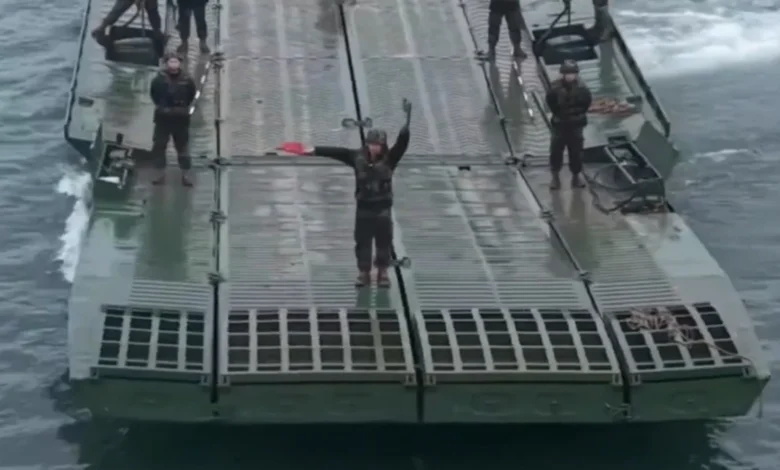
China Anneng’s intervention, showcased through images and reports from sources like @shanghaidaily on X (formerly Twitter), highlights the effectiveness of their transforming pontoon raft technology. These modular, self-propelled flotation devices are designed for swift deployment in disaster scenarios. Upon arrival at flooded locations, typically transported via specialized trucks, the pontoon sections are launched into the water. They then unfold and can be quickly assembled to form larger rafts capable of carrying hundreds of people at a time or even configured into temporary bridges to facilitate safe passage across submerged routes. This capability has proven invaluable in reaching isolated communities and evacuating large numbers of stranded individuals.
The technology behind these rescue rafts, while appearing complex in its application, is rooted in a relatively straightforward modular design. Each section of the pontoon is engineered for ease of transport and rapid assembly. Once in the water, they can be linked together by emergency personnel to create a stable, buoyant platform. The motorized rafts can then navigate treacherous floodwaters, reaching individuals cut off by the inundation. This system has been in use by Chinese emergency response agencies for several years, demonstrating a consistent track record of efficacy in various flood-related rescue missions. Its relatively simple construction and deployment process allow for minutes-long assembly, a critical factor when time is of the essence in saving lives.
Background and Chronology of the Guangxi Floods
The current flooding in Guangxi is part of a broader pattern of extreme weather events impacting China this year. While the region is historically prone to seasonal flooding, the intensity and duration of the recent rainfall have been exceptional. The meteorological data indicates a significant anomaly in precipitation patterns, potentially linked to larger climate shifts.
- Early June 2024: Initial reports emerge of heavy rainfall in southern China, with Guangxi experiencing particularly intense downpours.
- Mid-June 2024: The rainfall intensifies, leading to widespread flooding in numerous cities and counties across Guangxi. Rivers swell, and water levels rise dramatically, submerging roads, homes, and public infrastructure.
- June 18-20, 2024: The crisis escalates as tens of thousands of people become stranded, particularly in areas like Guigang. The Guangxi Emergency Management Department issues severe flood warnings and initiates large-scale rescue operations.
- June 21, 2024 onwards: China Anneng Construction Group deploys its specialized pontoon raft technology. Emergency response agencies, alongside military and civilian rescue teams, work tirelessly to evacuate stranded residents. Reports emerge of hundreds of people being moved to safety by the transforming rafts.
The economic impact of these floods is also substantial. Initial estimates suggest billions of dollars in damages to agriculture, infrastructure, and housing. Thousands of hectares of farmland have been submerged, jeopardizing crop yields and impacting the livelihoods of many rural communities. The disruption to transportation networks, including roads and railways, has further exacerbated the challenges of delivering aid and supplies.
China Anneng’s Transforming Pontoon Rafts: A Closer Look
The operational effectiveness of China Anneng’s pontoon rafts lies in their adaptability and speed. As demonstrated in videos shared by entities such as the Chinese Embassy in the United States, the rafts are not merely static flotation devices but versatile platforms that can be reconfigured for various rescue needs.
Key Features and Operational Capabilities:
- Modular Design: The rafts are composed of interconnected sections, allowing for flexibility in size and configuration. This modularity simplifies transportation and enables rapid deployment even in challenging terrain.
- Rapid Assembly: The sections are designed to be quickly linked together, often within minutes, forming a stable platform. This speed is crucial in time-sensitive rescue operations.
- Self-Propulsion System: The motorized rafts are capable of independent movement, allowing rescue teams to navigate flooded areas without external towing. This enhances maneuverability and operational autonomy.
- Scalability: The rafts can be used individually for smaller rescue missions or linked together to form larger vessels capable of carrying hundreds of people. They can also be assembled into temporary bridges, providing vital access across impassable waterways.
- Versatility: Beyond evacuation, these rafts can serve as mobile command centers, medical aid stations, or platforms for delivering essential supplies to isolated populations.
The technology has been refined over several years, with continuous improvements aimed at enhancing stability, durability, and ease of operation in diverse disaster environments. The fact that this technology has been in use since approximately 2020 underscores a strategic investment by China in developing robust disaster response capabilities.
Broader Rescue Efforts and Technological Synergies
While China Anneng’s pontoon rafts are a standout innovation, the Guangxi flood rescue is a multi-faceted operation involving a range of advanced technologies and coordinated efforts. In the spirit of leveraging diverse technological assets, as seen in various military and rescue helicopter operations globally, traditional and advanced aerial assets have also played a critical role.
- Helicopter Support: Search and rescue (SAR) helicopters and standard military helicopters have been instrumental in airlifting stranded individuals from rooftops and inaccessible areas. They have also been crucial for delivering emergency supplies, medical personnel, and equipment to affected regions. The speed and reach of helicopters are indispensable for reaching remote locations quickly.
- Heavy-Duty Drones: Advanced drones have been deployed for aerial reconnaissance, damage assessment, and even delivery of small, essential items to isolated survivors. Their ability to navigate complex environments and provide real-time imagery aids in strategic rescue planning and monitoring.
- Traditional Rescue Teams: Alongside technological solutions, well-trained human rescue teams, including firefighters, military personnel, and volunteers, remain at the forefront of the operation, conducting direct rescues, providing medical assistance, and managing evacuation centers.
The synergy between these different technologies and human efforts amplifies the overall effectiveness of the disaster response. The pontoon rafts provide a stable, high-capacity solution for mass evacuation from waterlogged areas, while helicopters and drones offer speed, reach, and specialized capabilities for reaching the most vulnerable or inaccessible individuals.
Analysis and Implications
The effectiveness of China Anneng’s transforming pontoon rafts in the Guangxi floods offers several key insights into disaster preparedness and response strategies.
- Importance of Specialized Equipment: The incident underscores the critical need for specialized equipment tailored to specific disaster types. For widespread flooding, rapid deployment, high-capacity watercraft are essential, and China Anneng’s technology appears to fill this niche effectively.
- Technological Adaptability: The ability to reconfigure the pontoon rafts for different purposes—from individual rescue craft to bridging solutions—demonstrates a valuable degree of technological adaptability, crucial for responding to the unpredictable nature of natural disasters.
- Investment in Disaster Resilience: China’s sustained investment in developing and deploying such technologies reflects a strategic focus on enhancing national resilience against natural calamities. This proactive approach, involving continuous innovation and implementation, can significantly mitigate the human and economic costs of disasters.
- Lessons for Global Disaster Response: The successful deployment of these transforming rafts could offer valuable lessons for other nations facing similar flood challenges. The principle of modularity, rapid assembly, and multi-functional design can inspire the development of similar cost-effective and efficient rescue solutions worldwide.
In conclusion, the ongoing flood crisis in China’s Guangxi Zhuang Autonomous Region has highlighted both the destructive power of extreme weather and the remarkable ingenuity of human innovation in the face of adversity. China Anneng’s transforming pontoon raft technology has emerged as a vital tool, demonstrating its capacity to save lives by enabling rapid and large-scale evacuations. As the world grapples with an increasing frequency of climate-related disasters, the deployment and effectiveness of such specialized, adaptable rescue technologies will undoubtedly play an increasingly significant role in safeguarding communities and mitigating the devastating impacts of natural calamities. The relatively simple yet ingenious design of these rafts serves as a testament to the principle that sometimes, straightforward engineering can yield profoundly impactful results, particularly when lives are on the line.