Scientists Studied Over 400K Hard Drives, And This Major Tech Brand’s Failed The Most

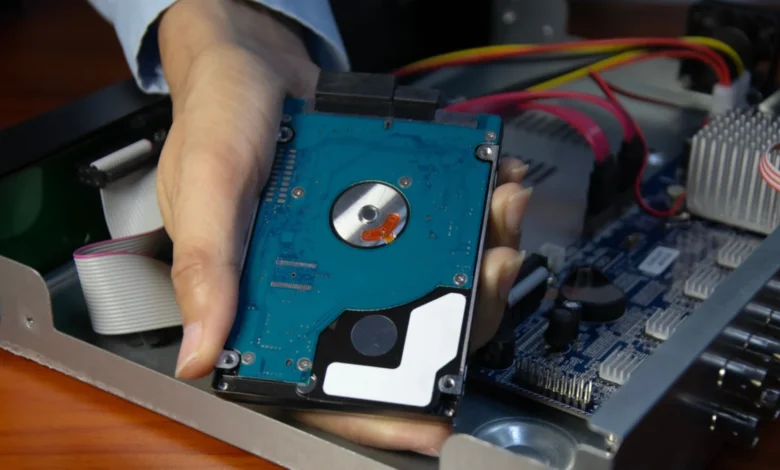
The modern digital economy rests upon an increasingly fragile infrastructure of silicon, spinning platters, and magnetic storage media. As global data creation accelerates toward unprecedented volumes, the question of hardware longevity has transitioned from a niche technical concern into a critical enterprise priority. When a hard disk drive (HDD) fails, the consequences can extend far beyond simple inconvenience, frequently resulting in catastrophic data loss, expensive system downtime, and severe operational disruptions for businesses and individual users alike.
To better understand the real-world durability of modern mechanical storage, researchers Christoph Siemroth and Yeomyung Park undertook a massive empirical investigation. Their peer-reviewed study, published on IEEE Xplore under the title "Are There Manufacturer Differences in Hard-Drive Reliability?", offers the most comprehensive look to date into how different major technology brands stack up over extended periods of operation. By analyzing an extensive telemetry dataset encompassing more than 400,000 individual hard drives, the researchers have provided clarity on a marketplace long governed by anecdotal evidence and manufacturer marketing claims.
The findings of this exhaustive research challenge several long-held assumptions regarding mechanical storage endurance. While it is an immutable physical truth that all mechanical hard disk drives will eventually fail due to the inherent wear and tear of moving parts, the study demonstrates that manufacturing provenance plays a monumental role in determining just how long a drive can be trusted before catastrophic degradation occurs.
A Massive Empirical Dataset: Methodology and Scope
To arrive at their conclusions, Siemroth and Park turned to one of the industry’s most robust and publicly accessible repositories of operational hardware telemetry: the deployment logs published by Backblaze, a prominent cloud storage and data backup provider. Operating vast server farms populated by hundreds of thousands of consumer and enterprise-grade drives, Backblaze routinely releases granular quarterly and lifetime failure statistics.
The researchers harnessed this rich data source to construct a comprehensive sample size comprising 443,156 individual hard disk drives. Spanning a twelve-year timeframe from 2013 through the second quarter of 2025, the dataset accumulated an astonishing 1.66 million drive-years of operational history. This longitudinal breadth allowed the authors to observe failure trends that simply cannot be captured in short-term laboratory stress tests or accelerated aging simulations.
Rather than relying on raw, unadjusted failure rates—which can often be skewed by external variables such as age distribution or environmental conditions—the researchers employed two distinct duration regression models. These sophisticated statistical models rigorously controlled for critical confounding variables, holding drive age, storage capacity, physical form factor, and operating temperature constant. By isolating these factors, Siemroth and Park were able to reveal the true, underlying variance in reliability attributable directly to the manufacturing brands themselves.
The study examined four dominant players in the mechanical storage industry: Hitachi Global Storage Technologies (HGST), Seagate, Toshiba, and Western Digital. By normalizing the data against a baseline set by Seagate—which was assigned a relative failure rate index of 100%—the researchers mapped out a revealing hierarchy of hardware endurance.
The Findings: Toshiba’s Elevated Failure Rates and Brand Comparisons
Among the four major manufacturers evaluated in the study, Toshiba emerged with the highest overall failure rate, particularly as the drives advanced deeper into their operational lifecycles.
When observing drives that had been in active service between 50 and 100 months, the empirical models revealed that Toshiba’s HDDs exhibited a monthly failure rate ranging between five and six out of every 1,000 drives. In stark contrast, models from competing manufacturers within the same age bracket maintained monthly failure rates of 2.5 or fewer per 1,000 drives. Furthermore, the telemetry exposed a troubling inflection point unique to Toshiba’s hardware: the monthly failure rate sharply worsened after the 60-month (five-year) mark, surging to more than four times the rate observed during the early months of deployment. This accelerated aging curve was notably absent in the sample groups representing the other brands.
When evaluated against the study’s baseline manufacturer, Seagate, Toshiba recorded a relative failure rate of approximately 107%. However, the data reveals a nuanced trajectory for Seagate as well. Seagate hard drives exhibited relatively higher failure rates during the initial phases of their operational lives, whereas Toshiba drives surpassed them in failure frequency only after crossing the 50-month threshold. Consequently, the research suggests that while Seagate drives are susceptible to early-life failures, Toshiba units present a pronounced reliability risk during extended, medium-to-long-term deployment.
Conversely, the study highlighted exceptional performance from HGST and Western Digital. HGST—a pioneering storage giant subsequently acquired by Western Digital—claimed the crown for highest reliability, recording a failure rate of just 39% to 41% relative to the Seagate baseline. Western Digital closely followed, securing second place with a relative failure rate between 51% and 52%. Across the vast majority of age brackets evaluated in the sample, HGST units demonstrated the lowest incidence of failure, followed consistently by Western Digital hardware.
Environmental and Physical Factors: Temperature and Capacity
Beyond establishing brand-specific reliability rankings, Siemroth and Park’s research sheds valuable light on the physical and environmental catalysts that accelerate hard drive degradation. Because the study utilized rigorous regression models to control for various operational inputs, the authors were able to quantify the exact impact of operating temperature and storage capacity on hardware longevity.
Operating temperature emerged as one of the most critical determinants of hard drive health. The empirical analysis demonstrated that a mere 1-degree Celsius increase in operating temperature correlates with a 2.1% increase in the drive’s monthly failure rate. When compounding this linear relationship over more realistic thermal fluctuations—such as a 10-degree or 20-degree Celsius rise in a poorly ventilated server chassis or enclosure—the risks multiply exponentially. The authors estimate that a cumulative 10-degree jump in drive temperature can elevate the failure rate by a staggering 23.1%. This finding underscores the paramount importance of robust cooling solutions within data centers and desktop computer builds alike.
Intriguingly, the study also uncovered a distinct correlation between physical storage capacity and reliability. Counter to the assumption that denser, higher-capacity drives might be inherently more fragile due to the extreme precision required to pack data onto microscopic magnetic tracks, the data revealed that larger-capacity drives within the study actually exhibited lower relative failure rates. According to the regression models, every 1 Terabyte (TB) increase in drive capacity was associated with a 3.4% reduction in the expected failure rate.
While the researchers noted that workload intensity undoubtedly influences mechanical longevity, limitations in the telemetry prevented direct measurement of write-and-read cycles. Furthermore, industry analysts have pointed out a vital caveat regarding the dataset: the vast majority of the drives analyzed in the Backblaze telemetry are enterprise-grade or high-capacity data center models designed for continuous, heavy-duty operation. Consequently, everyday consumers utilizing entry-level desktop or external drives should exercise caution before directly extrapolating these specific enterprise failure rates to consumer-grade hardware.
Broader Industry Implications and the Consumer Dilemma
The publication of "Are There Manufacturer Differences in Hard-Drive Reliability?" arrives at a pivotal moment for the storage industry. As global data requirements expand into the zettabyte era, organizations and individuals are forced to carefully weigh upfront hardware acquisition costs against long-term reliability and data security risks.
The findings carry profound implications for enterprise data architects, cloud service providers, and system builders who manage massive fleets of mechanical storage. By quantifying the long-term degradation patterns of specific manufacturers—most notably the distinct failure spikes observed in Toshiba drives past the five-year mark—IT professionals can now make more informed procurement and hardware retirement decisions. Establishing strict replacement schedules before drives reach high-risk age brackets can prevent catastrophic data loss events.
For the everyday consumer, the study reinforces several critical computing best practices. Chief among these is the stark warning against purchasing used or secondhand hard disk drives. Because drive reliability shifts dramatically over time and is profoundly influenced by cumulative operating hours and thermal history, acquiring an aged HDD introduces an unquantifiable risk of sudden failure.
Furthermore, the research highlights the indispensable value of redundancy and proactive hardware monitoring. Because all mechanical storage devices are bound by physical limitations that guarantee eventual failure, relying on a single drive—regardless of whether it bears an HGST, Western Digital, Seagate, or Toshiba label—remains an inherently perilous strategy. Modern users must remain vigilant for early warning signs of drive degradation, such as unusual mechanical noises, mounting SMART (Self-Monitoring, Analysis, and Reporting Technology) error counts, or unexplained system sluggishness.
Ultimately, Siemroth and Park’s rigorous examination of over 400,000 hard drives transforms the conversation around storage reliability from guesswork into an exact science. As the technological landscape continues to evolve, empirical insights of this caliber will remain essential tools for safeguarding the digital foundations of our interconnected world.