Behind the Screen: How Modern Visual Effects Studios Evolved from Hired Hands to Creative Partners in Film and Television


Over the past thirty years, the visual effects (VFX) industry has undergone a radical structural and creative transformation, shifting from a peripheral post-production service into an indispensable pillar of modern filmmaking. As computer-generated imagery (CGI) has permeated nearly every facet of film and television production, leading visual effects studios have evolved far beyond traditional "hired hands." Today, they operate as central creative partners, digital art departments, and strategic problem-solvers collaborating with filmmakers from the earliest pre-production stages through final delivery.
This deep industry evolution comes at a critical juncture for the entertainment business. Following the disruptions of the global COVID-19 pandemic and the subsequent Hollywood strikes of 2023, the economics of content creation have shifted dramatically. Networks, streaming platforms, and independent production companies are recalibrating budgets, establishing new workflow equilibria, and redefining how visual effects are planned, budgeted, and integrated into storytelling. Industry leaders from prominent studios such as Zoic Studios, Rocket Science VFX, CoSA VFX, and BlueBolt offer a comprehensive look into how modern productions navigate this fluid ecosystem.
The Shift Toward Vertical Integration and Early Collaboration
Historically, visual effects was a strictly linear, end-of-the-line phase in filmmaking. Directors would shoot principal photography, lock their cuts, and hand off raw footage to multiple vendors to patch in digital elements. However, modern workflows have accelerated dramatically, pushing visual effects involvement deep into the pre-production and pre-visualization phases.
"It’s an incredibly fluid world right now," explains Chris Jones, Founder and Executive Creative Director of Zoic Studios. "Each show seems to have its own ecosystem. In some scenarios, we are the sole vendor, which is advantageous for a lot of reasons. The show is not being piecemealed out across a ton of different vendors, so you have a much greater view of the overall project and can contribute at a higher level."
This transition toward early integration has been heavily supported by advancements in remote toolsets and real-time rendering software like Unreal Engine. Christa Tazzeo Morson, Vice President of Global Partnerships and Executive Visual Effects Producer at Rocket Science VFX, notes that filmmaking has successfully transitioned from a sequential pipeline to a more vertical structure.
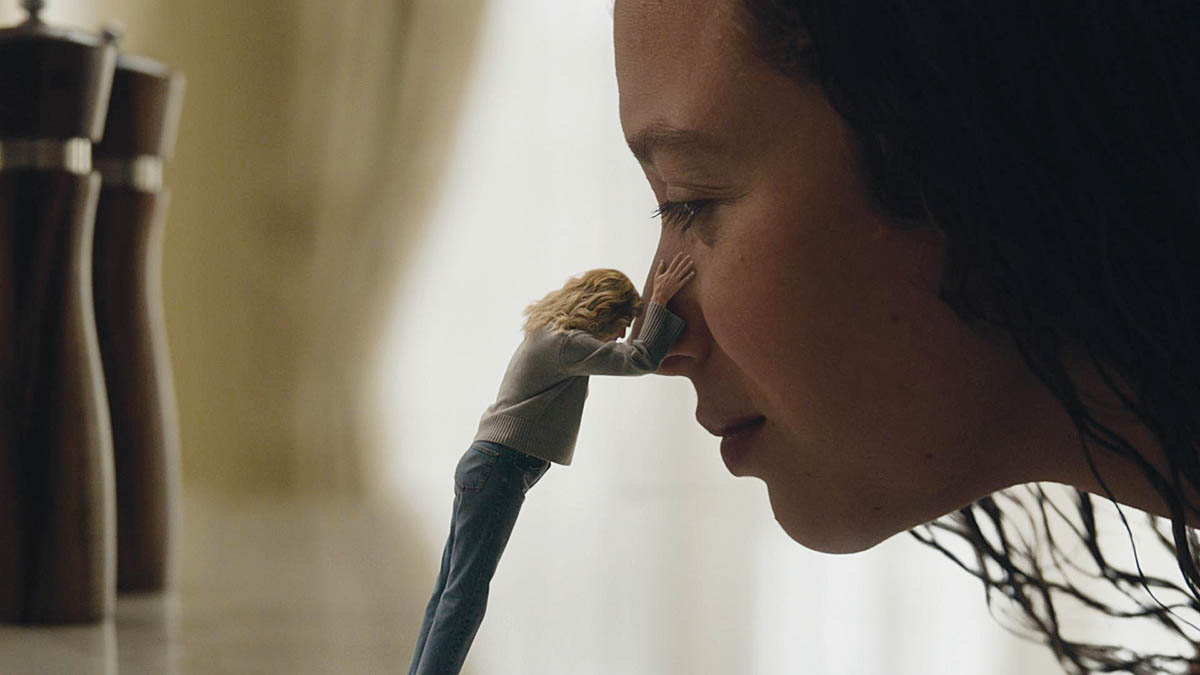
"You have many departments operating a lot earlier on the front end, rather than waiting for each department to move down the line to finish the movie or television show," Morson says. "The pandemic and remote toolsets have helped with that. Editing and sound are starting earlier. Everyone’s trying to push it as early as possible so that you’re creating a dynamic blueprint of what the finished product is going to look like."
By employing robust internal art departments, major VFX studios now help design worlds, creatures, and key sequences alongside production designers and directors long before cameras roll on set.
Real-Time Technology and Interdepartmental Synergy
The adoption of real-time game engines, specifically Unreal Engine, has fundamentally altered how creative decisions are vetted and executed. Studios can now test camera angles, digital set extensions, and character blocking dynamically in virtual space, reducing costly on-set trial and error.
"Unreal Engine helps to elevate the overall quality and finish," Morson states. "Clients are continually pushing for higher standards. They want to see more advancement and efficiency in the process. Unreal Engine allows us to work in real-time, back and forth with our clients. Also, it sets a stronger foundation for the production."
Furthermore, modern visual effects supervisors must act as master coordinators across nearly every traditional department on a production. Tom Mahoney, Founder and Partner of CoSA VFX, emphasizes that visual effects is one of the few disciplines that touches virtually every other department, from stunts and special effects to cinematography, wardrobe, makeup, and props.
"On a given project, there’s almost no way I’m not in close communication with the stunts supervisor, special effects supervisor, cinematographer, camera operators, wardrobe, makeup, transportation, and props," Mahoney notes. "There’s almost no department I don’t talk to at some point to make sure they’re aware of what we need to do and the specific parameters we may need to operate within."

Mahoney adds that effective communication prevents costly mistakes—such as actors handling props that interfere with digital tracking markers—and ensures resources are allocated efficiently. "Truth be told, if you can do it for real, do it for real," Mahoney advises, pointing out that VFX is best deployed when practical execution is physically impossible, hazardous, or prohibitively expensive.
The Economic Reset: Post-Pandemic Realities and Streaming Retrenchment
Despite the technological sophistication of modern studios, the business landscape of visual effects remains highly volatile. The industry has experienced severe economic whiplash over the past five years.
Following the initial slowdowns of the COVID-19 pandemic, traditional linear networks panicked in the face of rapid subscriber growth by streaming platforms. This triggered a speculative gold rush of high-volume content production. Networks and streamers greenlit an unprecedented volume of projects, flooding the market with work and straining the global VFX infrastructure.
However, corporate accountants eventually reined in unchecked spending. The dual Writers Guild of America and SAG-AFTRA strikes of 2023 served as a massive macroeconomic circuit breaker.
"The actors’ strike gave every accountant a chance to say, ‘Put the brakes on what you’re doing. We can’t be spending money like crazy as we’ve been doing for the past 10 months,’" Mahoney explains. While many industry insiders anticipated an immediate return to pre-strike production volumes once labor disputes resolved, the market has instead settled into a prolonged, cautious recalibration. Studios and networks are now prioritizing fiscal discipline over sheer output volume, forcing visual effects vendors to operate with leaner margins and heightened operational efficiency.
The Industry Paradox: Taboo Marketing and Audience Expectations
An ongoing irony within modern entertainment marketing is the paradox surrounding visual effects visibility. While CGI is a baseline requirement for almost all major theatrical releases and prestige television series, it is frequently treated as a taboo subject in promotional campaigns. Studios often market films by emphasizing their reliance on "practical effects," aiming to project authenticity, even when hundreds of invisible digital shots comprise the final cut.

This marketing strategy creates a psychological toll on digital artists. "As far as affecting the creative, it affects the morale of the artists more than anything," Chris Jones remarks. "We all got into this because we love creating things. Every artist goes into it knowing the work they’re putting on the screen is the best it can possibly be… When filmmakers turn around and say, ‘There were no visual effects in it,’ from a company standpoint, you understand that, smile, and know deep inside that there were hundreds of visual effects in it."
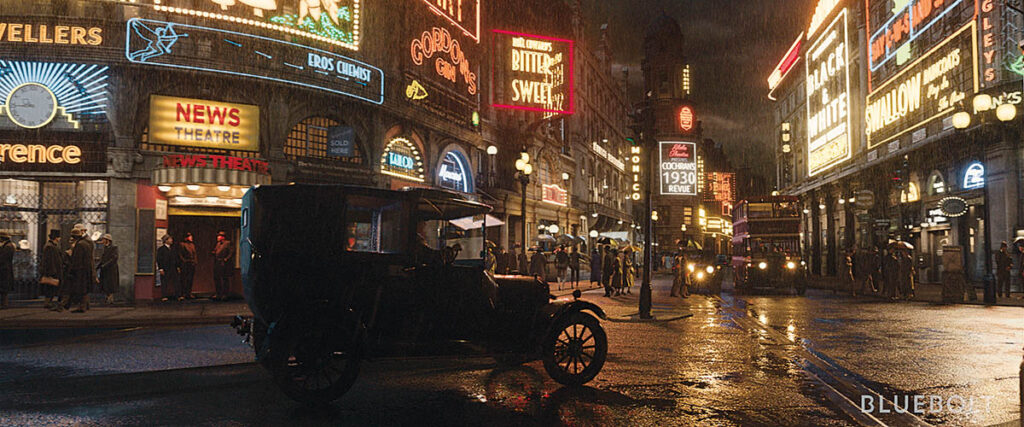
At the same time, audience expectations regarding visual fidelity have risen exponentially. Henry Badgett, Visual Effects Supervisor and Creative Director at BlueBolt, notes that the sheer volume of cleanup work—ranging from wire removals to digital set fixes—has expanded significantly.
"No film can go out there with things that need to be cleaned up remaining on the project," observes Tracy McCreary, Managing Director at BlueBolt. "They have to find the money for these things because audiences have such different expectations these days. Whereas 15 years ago, the work we did would be comprised of the big visual effects plus a bunch of other smaller stuff; the smaller stuff now ends up happening in a post house."
Collaboration Styles: Meticulous Auteurs vs. Open-Ended Explorers
As visual effects studios cement their roles as creative advisors, they routinely adapt to vastly different directorial personalities and philosophies. Some filmmakers demand absolute micro-control over every pixel in the frame.
"Some visionary filmmakers want to control every single aspect of the frame," McCreary notes, highlighting acclaimed writer-director Robert Eggers as an example of a filmmaker whose meticulousness extends to every detail of the digital canvas.
Conversely, other directors lean heavily on the expertise of their VFX partners to solve narrative or aesthetic hurdles. "Other directors come in and ask, ‘What do you have that looks good? What do you have in your toolbox? What do you recommend?’" Badgett says. "That is fun in a different way. It’s giving them the options and guidelines, then they go off and decide what they’re going to do."
Future Outlook and Strategic Implications
As the entertainment industry matures into its post-strike equilibrium, the long-term success of visual effects studios will rely heavily on relationship-building, technical innovation, and clear cross-departmental communication.
Miscommunication remains one of the costliest inefficiencies in production, capable of wasting hundreds of thousands of dollars. Industry leaders stress that treating visual effects as a core cinematic discipline—akin to cinematography, editing, or production design—rather than a mere technical fix is essential for sustainable growth.
By fostering early integration, leveraging real-time tools like Unreal Engine, and maintaining reciprocal relationships with filmmakers, visual effects studios have secured their place not merely as executors of digital pixels, but as indispensable architects of modern cinematic storytelling.