Crystal Bretz: Charting a Creative Course from Multidisciplinary Arts to Lead Modeler at Framestore

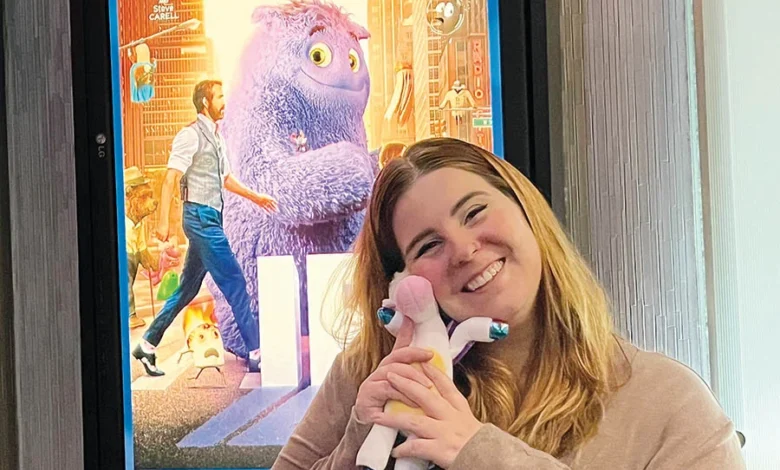
Montreal-based Lead Modeler at Framestore, Crystal Bretz, embodies a journey where a rich, multidisciplinary artistic foundation seamlessly translates into the intricate world of visual effects. Her career trajectory underscores the profound value of a broad creative education, demonstrating how early exposure to diverse art forms cultivates the unique insights required to sculpt digital worlds and characters for blockbuster films. Bretz’s formative years were steeped in artistic exploration, beginning in Richmond, British Columbia, before her family relocated to Edmonton, Alberta. It was in Edmonton that her artistic path truly solidified, largely influenced by the environment. "Where I grew up was a music-oriented place because there were not a whole lot of other things to do," Bretz reflects, highlighting the regional impetus for creative engagement. "To keep busy, you did artistic things, which were dancing, music, arts and things like that."

Her enrollment at the Victoria School of the Arts marked a pivotal period, providing an unconventional yet profoundly beneficial educational experience. Instead of traditional physical education classes, Bretz immersed herself in ballet, contemporary dance, guitar, and choral singing. Critically, it was here that she also encountered 3D animation, graphic arts, and photography, sowing the seeds for her future career. This eclectic background, she asserts, directly informs her current work. "I still play guitar and sing but don’t dance much anymore," Bretz notes, drawing a direct parallel between seemingly disparate art forms. "In general, anything art related definitely helps. Just keeping rhythm in dance and guitar can assist you in understanding the rhythm and flow of shots and sequences." This perspective is widely supported within the VFX industry, where professionals often emphasize that a strong understanding of traditional art principles – from anatomy and composition to rhythm and storytelling – provides an invaluable bedrock for digital creation. Leading studios increasingly seek artists with a deep well of creative understanding, rather than solely technical proficiency, recognizing that the former empowers more innovative and nuanced digital artistry.
Despite her parents’ non-artistic professions – her mother a mail carrier for Canada Post and her father selling parts for large oil rig machinery – Bretz’s artistic drive proved infectious within her family. This demonstrates the powerful influence an individual’s passion can exert on their immediate environment. "Part of what I do has inspired my family to become more artistic," Bretz proudly states. Her brother, for instance, has since pursued graphic design, returning to school to formalize his artistic education. Her father, in a delightful turn, has embraced bird carving, revealing a previously untapped artistic dimension. This familial ripple effect underscores the universal appeal of creative expression and the potential for inspiration across generations and diverse backgrounds.

The Educational Leap: Vancouver Film School and a Pivotal Specialization
Bretz’s formal journey into visual effects commenced at the esteemed Vancouver Film School (VFS), a global leader in entertainment arts education. Her initial inclination was towards their game design program, a burgeoning field at the time. However, astute guidance from VFS faculty steered her towards 3D animation and visual effects, positing that this path offered broader career opportunities and a foundational skillset transferable to both film and games. This advice proved prescient, aligning with industry trends that saw significant overlap in 3D asset creation for both mediums. The demand for high-quality 3D assets in both sectors meant that a strong VFX background provided a versatile entry point into the broader digital entertainment industry. Bretz ultimately graduated with a diploma with honors in 3D animation and visual effects, a testament to her dedication and talent.
It was during her time at VFS that Bretz discovered her true calling within the vast landscape of VFX: 3D modeling. "I went into that program with the goal to be an animator, but then I found a lot of love and interest in modeling," she recalls. The process of constructing something tangible from an initial void proved deeply gratifying. "Starting from nothing and building something out of it was really satisfying for me." This foundational appeal led her to specialize, a common practice in advanced VFX curricula where students refine their focus. Bretz chose character modeling, a highly specialized and technically demanding discipline. While she acknowledged the inherent difficulty of breaking into this niche professionally, her passion propelled her forward, illustrating the drive necessary to excel in competitive creative industries. Character modeling, in particular, requires an acute understanding of anatomy, form, and expression, making it a challenging yet immensely rewarding specialization for artists like Bretz who thrive on complexity. The technical intricacies of creating believable digital characters, from musculature to facial expressions, often demand years of dedicated practice and a keen eye for detail, making it one of the most sought-after and challenging roles in VFX.

Forging a Career Path: From Generalist Foundations to Senior Leadership
Upon graduating from VFS, Bretz faced a common dilemma for emerging artists: choosing between two distinct entry-level opportunities. One was an offer to join MPC’s lighting academy, a structured program for new artists focused on a specific pipeline stage within a large studio. The other was a generalist role at Artifex Studios, a smaller TV visual effects company. Following advice that a generalist position would offer broader exposure, including characters, Bretz opted for Artifex Studios. This decision proved instrumental in shaping her versatile skillset.
"At the beginning of my career, I started working at Artifex Studios, and they taught me so much," Bretz emphasizes. In this environment, she gained hands-on experience across the entire 3D pipeline, performing tasks ranging from simulations and rigging to various other 3D-related functions. This comprehensive exposure was invaluable. "That was a good kickoff to my career because it made me a lot more knowledgeable and fast about every part of the pipeline, rather than being stuck into one category." Industry experts often cite the benefits of a generalist start, as it provides a holistic understanding of how different departments interact, fostering better collaboration and problem-solving skills – qualities highly prized in complex VFX productions. This broad foundation prepared her for increasingly demanding roles at some of the industry’s most prestigious studios. The ability to understand the downstream impact of modeling decisions on animation, rigging, and lighting is a hallmark of an experienced generalist and a valuable asset for any studio.
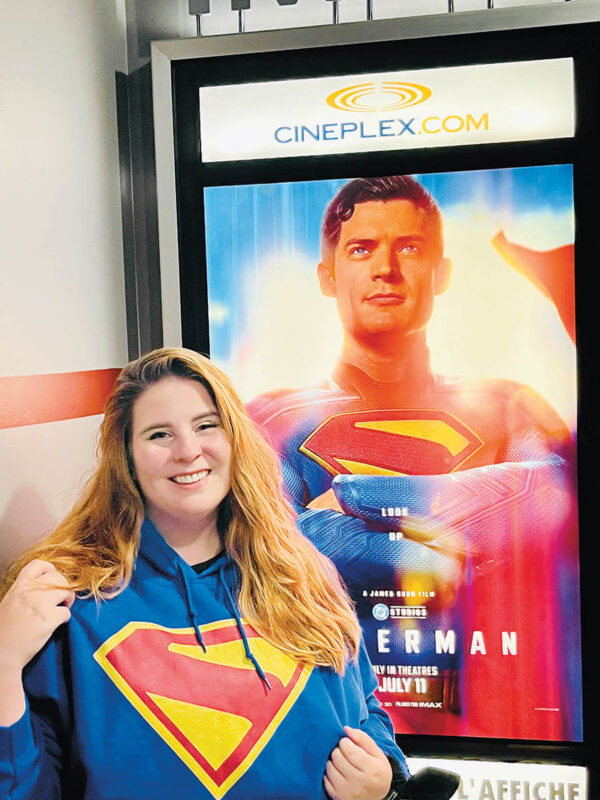
Her career progressed steadily through a series of significant positions: Senior Organic Modeler at Method Studios, a company known for its innovative visual effects work on major feature films such as Guardians of the Galaxy Vol. 2 and Black Panther; Senior Modeler at DNEG, a multi-award-winning VFX powerhouse with credits including Inception, Blade Runner 2049, and Dune; and Senior Modeler at Digital Domain, another industry titan recognized for its pioneering work in digital characters and immersive experiences on films like Avengers: Endgame. Each role honed her expertise, particularly in organic and character modeling, and exposed her to diverse production pipelines and creative challenges across a range of high-profile projects. This progression through top-tier studios demonstrates her consistent growth and recognition as a leading talent in the field.
Embracing Innovation: The Unreal Virtual Production Fellowship
A notable highlight in Bretz’s professional development was being granted an Unreal Virtual Production Fellowship. This highly competitive program, which selects a limited number of industry professionals, focuses on intensive training in the Unreal Engine. "I was so surprised that I got into the Unreal Fellowship because I know they only select a certain number of people, and I learned a lot," she recounts. Over three to four weeks, Bretz delved deep into the full capabilities of Unreal Engine, mastering its various functionalities for real-time content creation and virtual production workflows.

While her daily responsibilities at Framestore as a Lead Modeler don’t consistently require these specific real-time skills, the fellowship provided her with a crucial future-proof skillset. "I don’t technically use the skills I have developed now, but I know that if I was to go into a virtual production or even a game career in the future, I could definitely jump right in." Furthermore, she has become an internal expert. "Also, nowadays, if an Unreal Engine file comes in, I’m the person that they send it to!" This expertise positions her at the forefront of evolving VFX methodologies. Virtual production, which leverages real-time engines like Unreal to integrate live-action and digital environments on set, is rapidly transforming film and television production by offering directors immediate feedback and greater creative control. Having talent like Bretz, who can bridge traditional VFX pipelines with real-time workflows, is a significant asset for a leading studio like Framestore, ensuring adaptability and innovation in a fast-changing industry landscape that increasingly demands real-time asset creation and interactive capabilities.
The Art and Science of Character Modeling: Tackling the Toughest Challenges
Crystal Bretz’s passion for character modeling is defined by her unwavering commitment to tackling the most formidable challenges. Her philosophy is clear: "There’s so much involved with creating a character. I pick the hardest thing there is to do. If it’s not pushing the boundaries to the next level, I don’t want it. The most challenging things don’t frustrate me; they get me excited because I get to solve something." This mindset is crucial in character modeling, a discipline that demands not only artistic vision but also meticulous technical execution and problem-solving prowess.
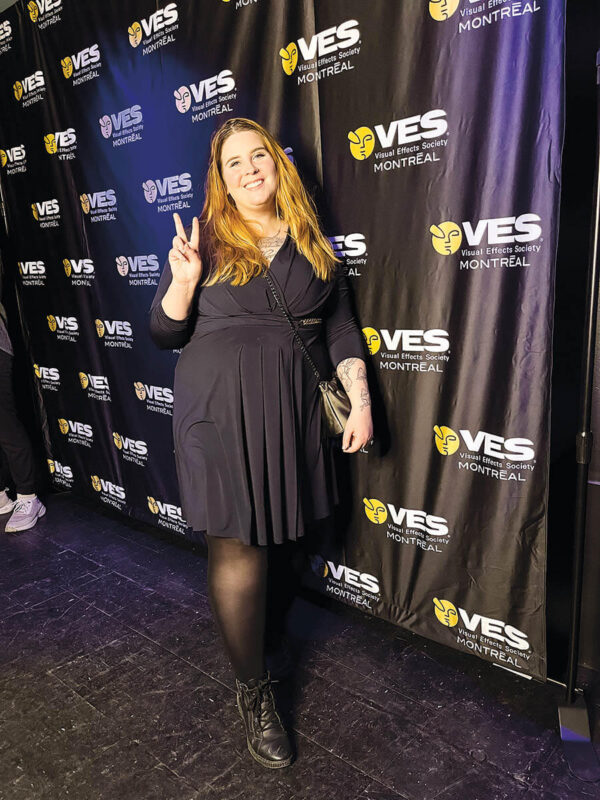
One of the most complex aspects of her work involves translating 2D concept art into fully realized 3D models, especially when the initial concepts are sparse or require significant interpretation. Bretz elaborates on this challenge with the example of Krypto from James Gunn’s upcoming Superman film. "For example, with Krypto in Superman, we only had a 2D concept to work from, and had to match James Gunn’s dog, Ozu, but his dog was very small, and the dog they wanted was a lot bigger." This presented a multi-layered problem: how to reconcile the distinct proportions of a small dog (Ozu) with the desired aesthetic of a larger canine, all while faithfully capturing Ozu’s unique look and personality. This iterative process involved constant back-and-forth adjustments to structure and design, a common practice in high-end VFX where creative vision meets technical feasibility through multiple rounds of feedback from directors and art departments. The goal is to achieve a result that is both visually compelling and functionally believable, even if fantastical. "It was a lot of problem-solving, for sure," Bretz states, underscoring the analytical rigor required. "We would go back and forth on changing structure and design and eventually landed in this nice place where things just worked. I don’t know if there’s ever a cut-and-dry answer of how to translate something from 2D into 3D." This highlights the artistic intuition and iterative refinement that are core to the modeling process, distinguishing it from purely technical execution.
Another critical consideration in character modeling is motion and anatomy. Bretz emphasizes that a model must be designed with its eventual movement in mind. "A lot of the time, you have to build things exactly how it would need to be moved practically," she explains. This involves a deep understanding of internal anatomy – where bones connect, how muscles flex, and how skin deforms under movement. For fantastical creatures, this anatomical understanding becomes even more crucial, requiring the artist to extrapolate realistic biological principles onto non-existent forms. "You have