Decoding the Sonic Disintegration Gavin Brivik on the Avant-Garde Score for the 2026 Faces of Death Reimagining


The landscape of modern cinematic soundscapes is undergoing a radical transformation, driven by a new generation of composers who blur the lines between traditional orchestration and experimental sound design. At the forefront of this movement is Gavin Brivik, an award-winning composer and producer whose latest work on the IFC and Shudder production Faces of Death (2026) represents a significant departure from conventional horror scoring. Starring Barbie Ferreira, Dacre Montgomery, Charli XCX, and Josie Totah, the film—a reimagining of the notorious 1978 "mondo" cult classic—required a sonic identity that could bridge the gap between the tactile decay of the 20th century and the frantic, hyper-mediated reality of the digital age.
Brivik, known for his work on Warner Bros’ The Pitt and the critically acclaimed How to Blow Up a Pipeline, has cultivated a reputation for blending indie rock, folk, and electronic textures with traditional orchestral elements. However, for Faces of Death, he pivoted toward a philosophy of "sonic disintegration," utilizing unconventional recording techniques and high-speed digital genres to reflect the film’s themes of internet voyeurism and psychological trauma.
The Evolution of a Cult Classic: Contextualizing the 2026 Reimagining
To understand Brivik’s approach to the score, one must first look at the legacy of the original 1978 Faces of Death. Directed by John Alan Schwartz (under the pseudonym Conan LeCilaire), the original film was a controversial anthology of footage depicting various forms of death, ranging from staged sequences to genuine newsreel footage. It became a "forbidden" staple of the VHS era, often whispered about in schoolyards and banned in multiple countries.
The 2026 version, directed by Daniel Goldhaber and written/produced by Isa Mazzei, updates this concept for the social media era. The narrative follows a content moderator who descends into a rabbit hole of disturbing internet videos, questioning the authenticity of the violence she witnesses. This thematic shift necessitated a score that felt both "found" and "fabricated," mirroring the protagonist’s struggle to discern reality from digital manipulation.
A Methodology of Decay: The Analog Influence
The primary sonic directive for the score was to emulate the physical degradation of a worn VHS tape. Brivik and the filmmaking team were heavily influenced by William Basinski’s The Disintegration Loops, a landmark ambient work created by the gradual crumbling of magnetic tape as it passed over a playback head.
Brivik’s process began long before the cameras started rolling. In a departure from the standard industry practice of scoring to a "locked cut" of the film, Brivik wrote an entire album of music during pre-production based solely on the script. This "pre-score" allowed Goldhaber and Mazzei to edit the film to the actual music, creating a more symbiotic relationship between image and sound.
To achieve the desired aesthetic of decay, Brivik engaged in a series of unconventional physical experiments:
- The VHS Archive: Brivik acquired an original 1970s VHS copy of Faces of Death via a competitive online auction. He used the physical tape as a primary sound source, recording the mechanical whirring and clicking of the tape deck as it fast-forwarded and reversed.
- Tactile Instrumentation: In one of the more avant-garde sessions, Brivik wrapped magnetic VHS tape around the fingers of instrumentalists, including saxophonists and brass players. Using contact microphones—which pick up vibrations from solid objects rather than air—he captured the "crunching" sound of the tape against the instrument keys and the musicians’ skin.
- Piano Resonation: Brivik laid strips of VHS tape across the strings of a grand piano while holding the sustain pedal down. Brass players then performed directly into the piano bed, causing the strings to vibrate sympathetically and the tape to flutter, creating a series of ASMR-inspired textures that permeate the film’s quieter, more unsettling moments.
Digital Hyper-Speed: Incorporating Hyperpop and Modern Samples
While the analog elements represent the "ghosts" of the past, the score’s second half is firmly rooted in the "hyper-modern" internet culture of the 2020s. The film’s protagonist exists in a world of rapid-fire scrolling, memes, and viral clips. To represent this, Brivik turned to hyperpop—a genre characterized by exaggerated, high-tempo production and distorted vocals.
Brivik collaborated with prominent figures in the experimental pop scene, including Cecile Believe and Umru. The goal was to create "diegetic" music—sounds that exist within the world of the film, such as music playing in a TikTok-style video or a dance reel. This created a jarring juxtaposition: the slow, crumbling sounds of 1970s-style horror synths clashing with the 160+ BPM energy of modern digital production.
The composer utilized "Moment" sample packs and Umru’s sound caches to build percussive elements. By loading these samples into a keyboard with an arpeggiator, Brivik created filtered pulses that mimic the anxiety of an endless scroll. This marriage of genres—late-70s orchestral dread and 2020s digital maximalism—serves as a sonic metaphor for the film’s central conflict.
Technical Specifications: Tools of the Trade
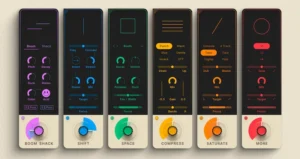
Brivik’s studio setup for Faces of Death was a hybrid of analog hardware and sophisticated digital processing. His "bread-and-butter" instrument, the Prophet 6 synthesizer, provided the foundational pads and leads, which were then subjected to extreme digital manipulation.
Key software tools used in the production included:
- Output Portal: Used for granular synthesis, allowing Brivik to take a clean sound and shatter it into thousands of tiny grains, creating a "warped tape" effect.
- Soundtoys Little AlterBoy: Essential for pitch-shifting and adding "weird artifacts" to vocal samples, giving them a non-human, demonic quality.
- XLN Audio RC-20 Retro Color: A vital plugin for adding "noise," "wobble," and "magnetic" artifacts to digital tracks, helping them sit naturally alongside the physical VHS recordings.
The composer also utilized actor-driven sound design. Lead actor Dacre Montgomery provided recordings of rhythmic breathing and moaning, which Brivik sampled and pitched to create "airy, demonic" textures. Similarly, Barbie Ferreira was recorded typing rhythmically on a keyboard, with the sounds of the mechanical switches being transformed into percussive layers for the score.
Collaborative Philosophy: Breaking the "Solo Composer" Myth
One of the most significant takeaways from the project, according to Brivik, was the necessity of a large-scale collaborative team. As his first major studio feature score, Faces of Death required a move away from the "lone genius" archetype often found in concert music and independent film.
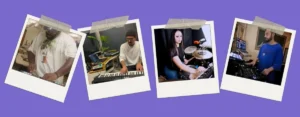
Brivik brought on a diverse team of specialists, including sound designer Yair Elezar Glotman and composer Paul Rudy, who processed smashed VHS tape recordings through modular rigs and guitar pedals. By embracing the "pop production" model—where multiple producers and specialists contribute to a single track—Brivik was able to achieve a level of sonic density that would have been impossible to replicate alone.
"I think many composers have this mentality that they need to do everything alone," Brivik noted during the production. "I’m glad I escaped that trap. Songwriters have known for a long time that collaboration is the secret to a great track."
Analysis: Implications for the Horror Genre
The score for Faces of Death represents a broader trend in the horror genre: the move away from the "jump-scare" orchestra toward psychological, texture-based soundscapes. By referencing both 1970s avant-garde composers (such as Xenakis, Berio, and the IRCAM researchers) and modern experimentalists (like Death Grips and SOPHIE), Brivik has created a score that is intellectually dense yet viscerally disturbing.
This approach reflects a growing sophistication in horror audiences, who are increasingly drawn to films that explore "liminal spaces" and the uncanny nature of digital media. The use of "found sound" and physical destruction (the sledgehammering of tapes) adds a layer of authenticity to the film, grounding the digital horrors in a tangible, decaying reality.
Conclusion and Chronology of Release
The production of the Faces of Death score followed a rigorous timeline that began in early 2025 with the acquisition of the original VHS tapes and the commencement of pre-scoring sessions. Throughout the summer of 2025, Brivik worked closely with Goldhaber and Mazzei to refine the "diegetic" pop elements, culminating in the collaboration with Cecile Believe for the standout track "Ur Mad."
The film, which premiered in early 2026, has been noted by critics not just for its visual reimagining of the mondo genre, but for its innovative use of sound as a narrative device. As the industry looks toward the future of film scoring, Gavin Brivik’s work on Faces of Death stands as a definitive example of how historical reverence and technological experimentation can coexist to create something entirely new.
The score is expected to be released on digital platforms and a limited-edition vinyl—fittingly, perhaps, with a sound quality that pays homage to the very disintegration that inspired it. For Brivik, the project marks a milestone in a career defined by the refusal to be categorized, solidifying his place as a key voice in contemporary cinematic music.