Mastering the Feed: The Definitive Analysis of Instagram Strategy and Brand Cultural Fluency in 2026

As social media platforms continue to mature, the dividing line between effective commercial communication and intrusive digital advertising has become increasingly sharp. The latest iteration of the Social Futures Report examines this dynamic by evaluating the performance of prominent institutional and commercial accounts on Instagram throughout 2026. Rather than focusing solely on creative execution, this analysis measures brand impact, audience engagement, and earned media value (EMV) across several high-profile campaigns. The findings indicate that the most successful digital strategies of the year relied less on direct product promotion and more on deep cultural integration, creative responses to regulatory constraints, and the cultivation of distinct brand worlds.
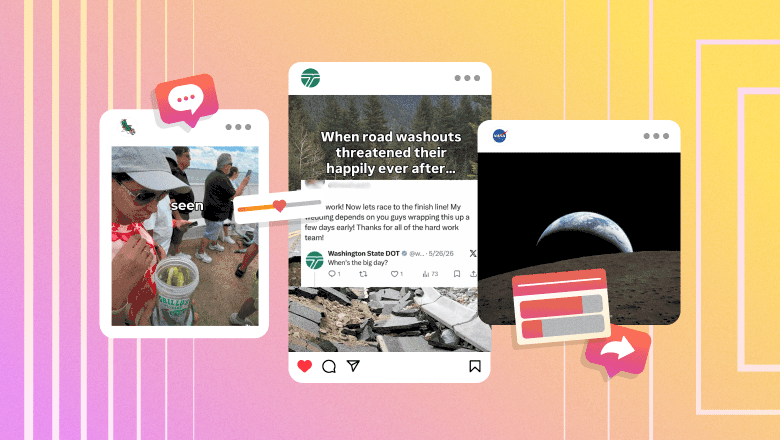
The 2026 digital landscape was heavily influenced by major international events, chief among them the global football tournament held during the summer months. For brands operating both as official sponsors and agile interlopers, the tournament served as a primary testing ground for real-time marketing, influencer leverage, and cross-platform storytelling. Concurrently, public sector entities, consumer packaged goods manufacturers, and space agencies demonstrated that cultural fluency and narrative-driven content could yield significant audience connection without relying on conventional sales funnels.
Athletic Titans Leverage Global Superstars for Record-Breaking Digital Engagement
The 2026 World Cup established itself not only as the preeminent sporting spectacle of the year but also as the defining social media moment for major multinational corporations. Official sponsors Nike and Adidas deployed contrasting yet equally effective strategies centered on the most influential athletes of their generation. The ongoing commercial rivalry between Cristiano Ronaldo, aligned with Nike, and Lionel Messi, representing Adidas, provided a ready-made narrative framework that both brands exploited to maximize digital reach.
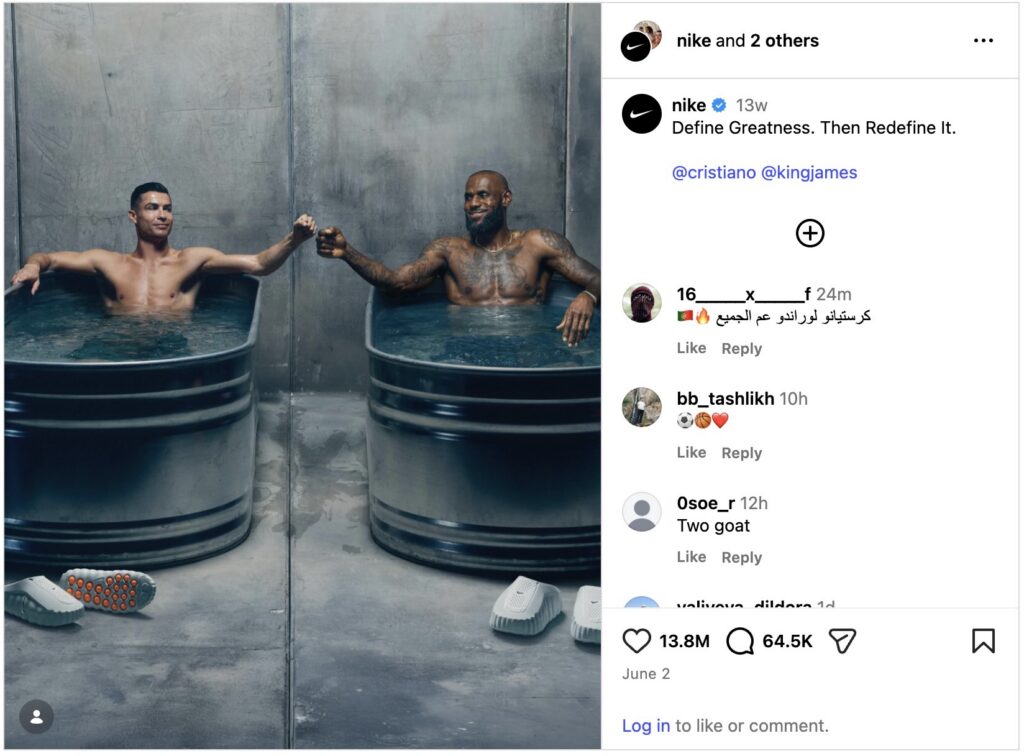
Nike utilized Ronaldo’s position as one of the most-followed individuals on Instagram to anchor its summer campaigns. By pairing the Portuguese forward with basketball icon LeBron James in a cross-disciplinary visual campaign featuring high-concept imagery—such as the athletes recovering in ice baths—Nike generated sustained engagement across multiple demographics. This approach underscored the utility of cross-industry talent pairing, merging distinct fan bases under a singular thematic umbrella of elite performance and resilience.
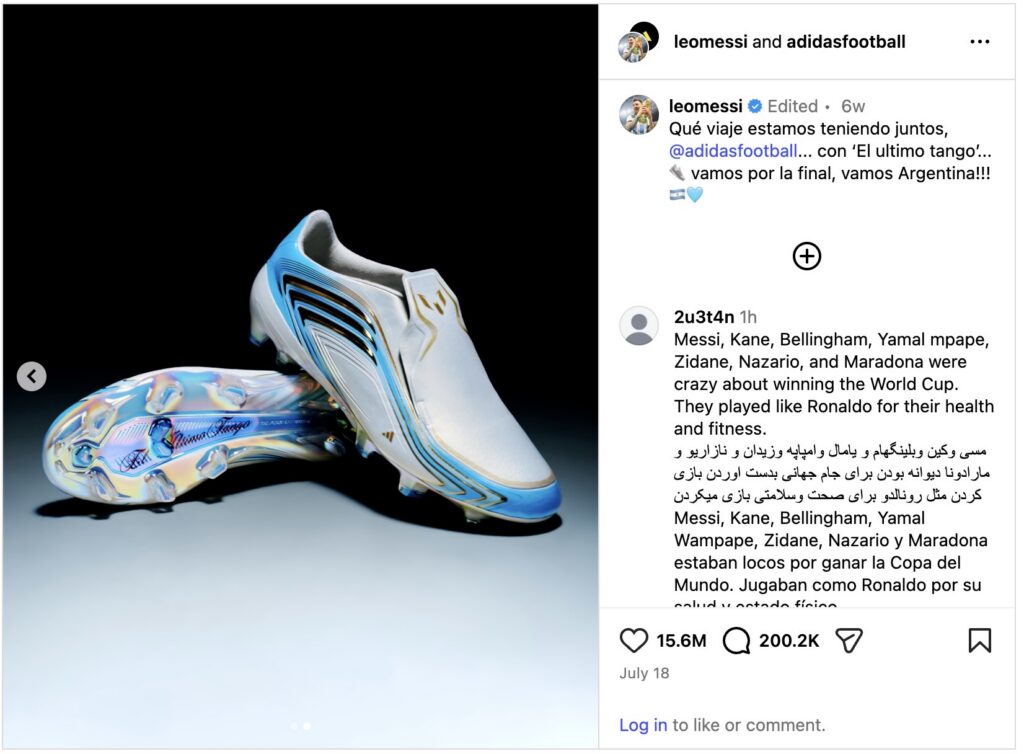
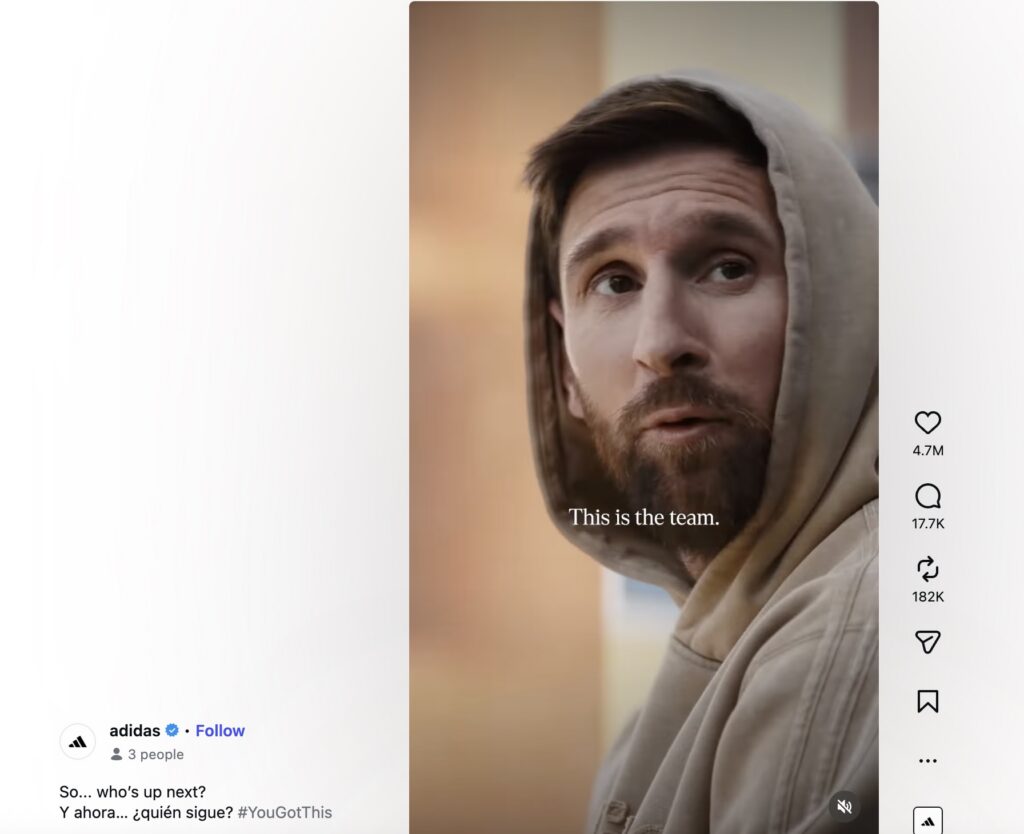
Adidas pursued a parallel strategy centered on Lionel Messi, achieving extraordinary quantitative results. According to data compiled by Sprout Social Influencer Marketing, the Adidas Football account generated nearly $100 million in estimated earned media value (EMV) on Instagram between May and July 2026. A pivotal moment occurred ahead of the tournament’s final match, when Adidas co-posted imagery of Messi’s signature boots alongside a reference to his final tournament appearance, colloquially termed el ultimo tango. This single post amassed more than 15 million interactions. Furthermore, the brand’s #YouGotThis advertising campaign, which featured Messi alongside musical artist Bad Bunny, successfully bridged the gap between traditional video advertising and native social content. By integrating culturally relevant figures into high-production assets optimized for Reels, Adidas achieved millions of engagements, proving that star power functions best when embedded within an ongoing cultural conversation rather than isolated in broadcast silos.
Regulatory Constraints as Catalysts for Creative Risk-Taking
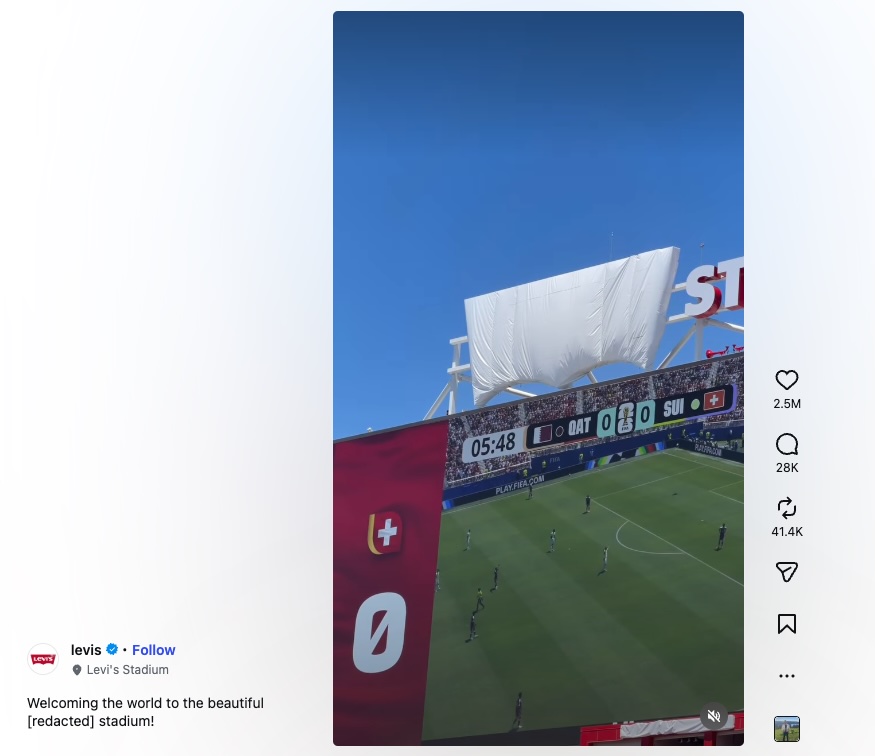
While official sponsors capitalized on their contractual privileges, non-sponsor brands were forced to adopt innovative tactics to capture audience attention amidst strict promotional guidelines. The most prominent example of this phenomenon involved Levi’s during the tournament matches hosted in the San Francisco Bay Area. Due to rigorous stadium sponsorship regulations enforced by governing bodies, Levi’s was legally required to obscure its corporate branding on the stadium bearing its name.
Rather than treating the restriction as a liability, the denim manufacturer leaned directly into the limitation. The brand published an Instagram Reel welcoming visitors to the "beautiful [redacted] stadium," utilizing trending audio and a knowing, self-deprecating tone. This unconventional acknowledgment of the censorship resonated strongly with users who appreciate transparency and humor from corporate entities.
The strategic gamble yielded unprecedented results for the company. The post became Levi’s highest-performing Instagram publication of the year, securing 2.5 million engagements and outperforming even the brand’s traditional high-budget advertising tied to the annual American football championship game. The digital success translated directly into commercial momentum; Levi’s subsequently capitalized on the viral moment by releasing a limited-edition run of apparel featuring the redacted logo motif. Analysts noted that the campaign’s success relied on decades of established brand recognition, which provided the necessary baseline for consumers to instantly grasp the subtext of the joke.
Geopolitical and Athletic Rivalries Take Flight in European Aviation
International sports competitions frequently engender cross-border banter, a dynamic that airlines British Airways and Norwegian leveraged to secure substantial digital visibility. When the national teams of England and Norway were drawn against each other in the tournament’s quarter-finals, the respective flag-carrier airlines initiated a public challenge on social media.
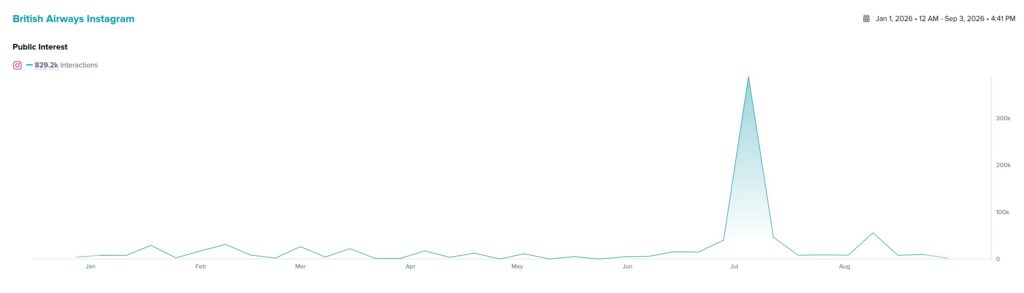
Norwegian formally proposed a wager to British Airways: the airline representing the losing nation’s country would be required to alter its official digital logo to display the opposing airline’s branding for a full twenty-four hours. The public wager generated substantial organic reach, driving a notable surge in baseline Instagram engagement for British Airways throughout the tournament cycle.
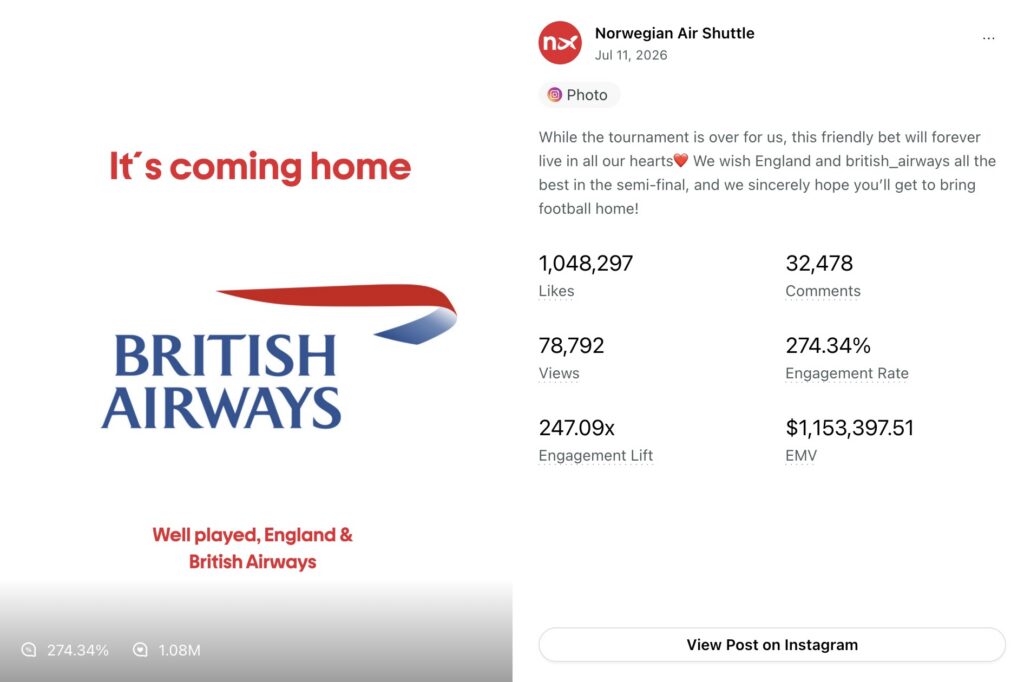
Following the conclusion of the match, which resulted in an English victory, Norwegian honored the agreement by temporarily updating its digital assets. This gesture of good sportsmanship and self-deprecation became the brand’s top-performing post of the year, accumulating over one million likes and generating an estimated $1.1 million in EMV. Media analysts highlighted the campaign as a textbook example of opportunistic partnership marketing, wherein brands identify organic moments of public interest and execute low-cost, high-reward engagements without requiring elaborate pre-planned media buys.
Public Sector Communication Blends Humor, Community, and Transparency
While commercial entities focused on entertainment and product adjacency, public service accounts demonstrated that institutional communications could achieve viral reach through distinct narrative choices. The Washington State Department of Transportation (WSDOT) emerged as a benchmark for government social media strategy by balancing critical public safety announcements with irreverent humor and community-centric storytelling.
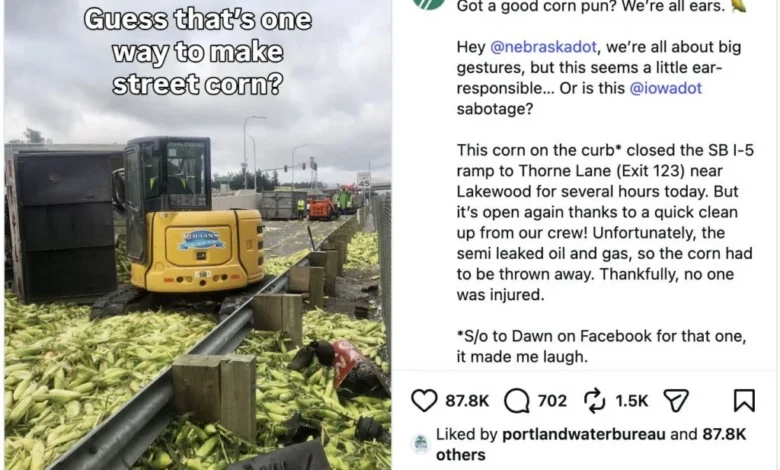
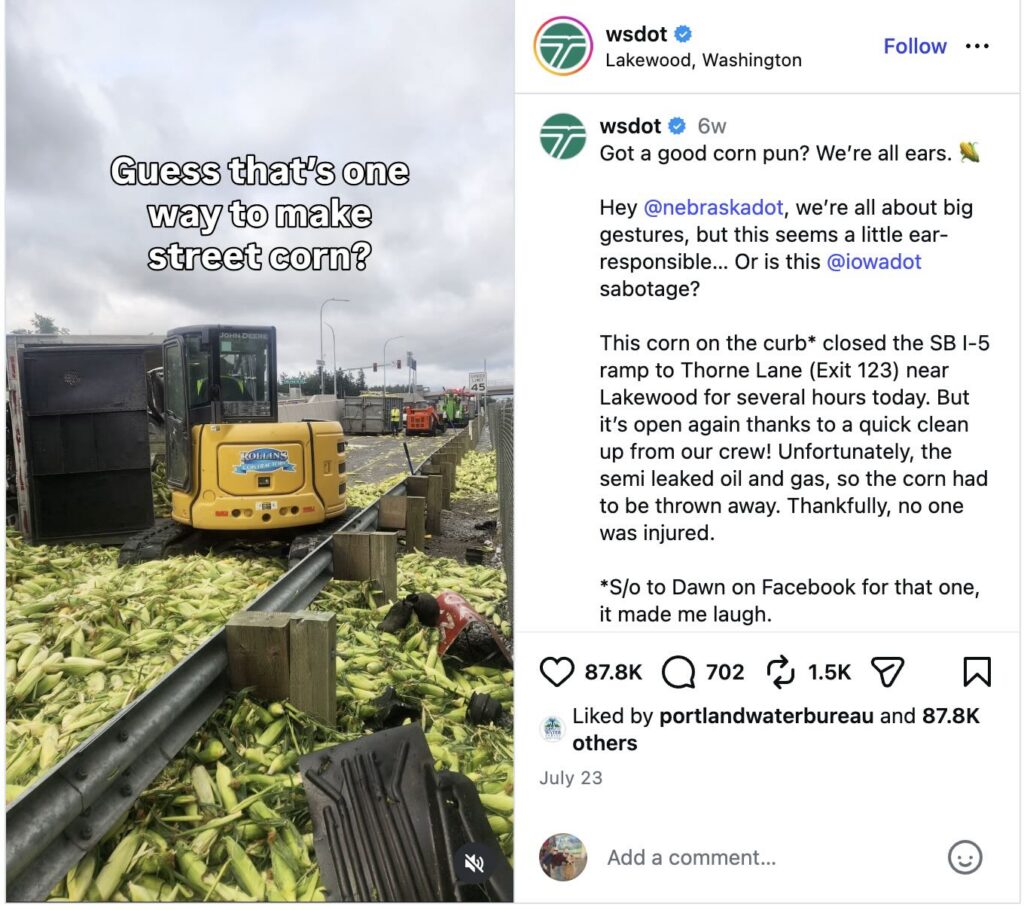
A notable instance occurred when a commercial vehicle overturned, spilling a cargo load of corn across a primary thoroughfare. WSDOT utilized the incident to publish a humorous advisory joking about street corn preparation while playfully casting blame on neighboring transportation departments in Iowa and Nebraska. Digital communications experts noted that the humor succeeded because it was anchored by a genuine public safety update, satisfying the public’s desire for relatable and accessible institutional voices.
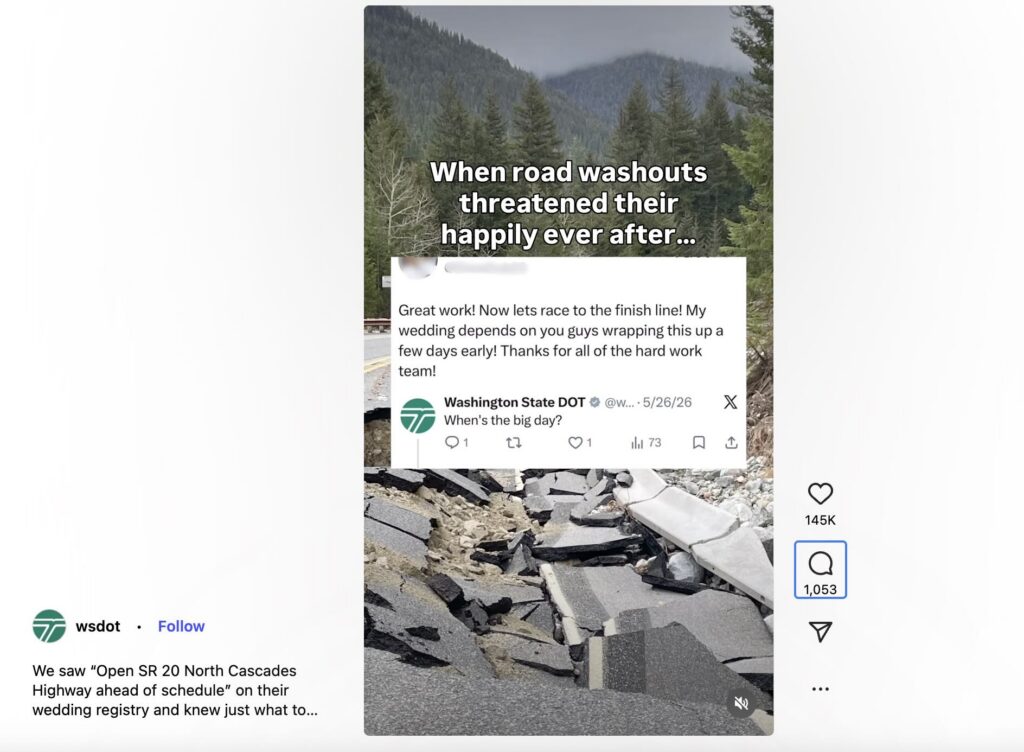
However, WSDOT’s highest-engagement campaigns extended beyond humor into direct community service and infrastructure milestones. When digital administrators discovered that a local couple had listed the reopening of a seasonal mountain pass on their wedding registry, WSDOT accelerated maintenance timelines to reopen the route four days prior to the ceremony. The resulting documentation of the early opening generated over 150,000 engagements, with citizens praising the department for its responsiveness.
Furthermore, the agency’s top-performing post of 2026 commemorated a structural milestone: the 10,000th successful animal crossing via dedicated overpasses along Snoqualmie Pass, an infrastructure initiative designed to mitigate wildlife-vehicle collisions. The Reel achieved nearly half a million engagements, accompanied by public commentary expressing satisfaction with the allocation of public funds toward ecological preservation. The overarching implication for public sector bodies is that institutional transparency and community impact, when communicated with narrative empathy, can cultivate substantial public goodwill.
Absurdist Marketing and World-Building in Consumer Goods
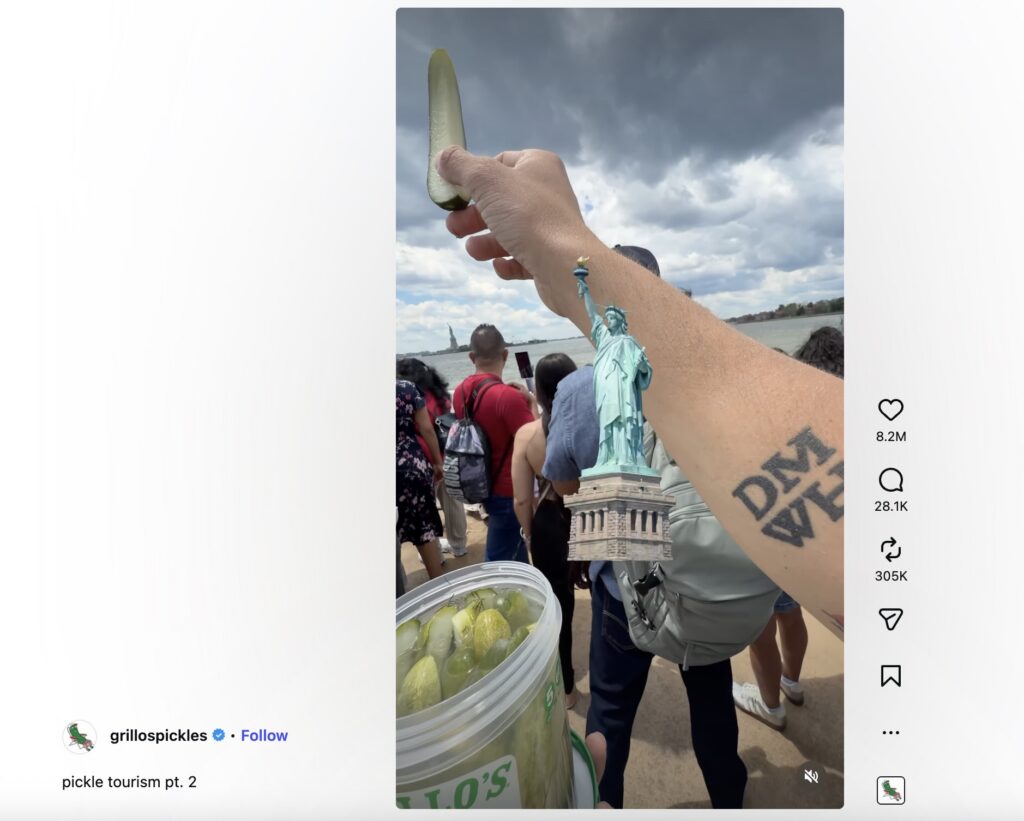
In the fast-moving consumer goods sector, Grillo’s Pickles diverged from conventional trend-replication strategies by establishing a surreal, character-driven marketing framework. Recognizing that mascot-based advertising enhances brand recognition, the company elevated its literal product—a pickle—to the status of primary protagonist, documenting its fictional adventures in various real-world scenarios.
The campaign featured video content depicting a pickle being introduced to landmark sights, such as a visit to the Statue of Liberty, which garnered over eight million engagements, alongside footage of the character participating in high-speed racing contexts. The strategy derived its comedic effect from deliberate visual juxtapositions: high-production-value environments contrasted with the low-stakes absurdity of a solitary pickle serving as the central subject.
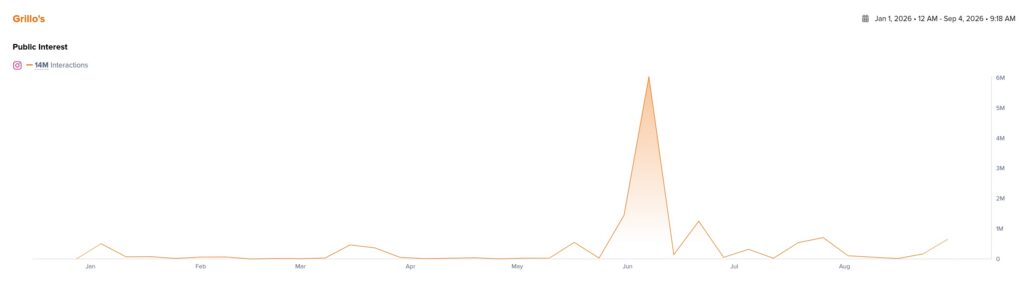
By September 2026, the brand had accumulated over 14 million total engagements and upwards of $40 million in EMV. Brand strategy consultants observed that Grillo’s approach offers a viable alternative for smaller brands operating in saturated markets. Rather than chasing ephemeral short-form video trends, building a cohesive, absurdist brand universe allows companies to foster a dedicated audience that willingly participates in the ongoing narrative.
NASA Cultivates Wonder Through Humanized Space Exploration
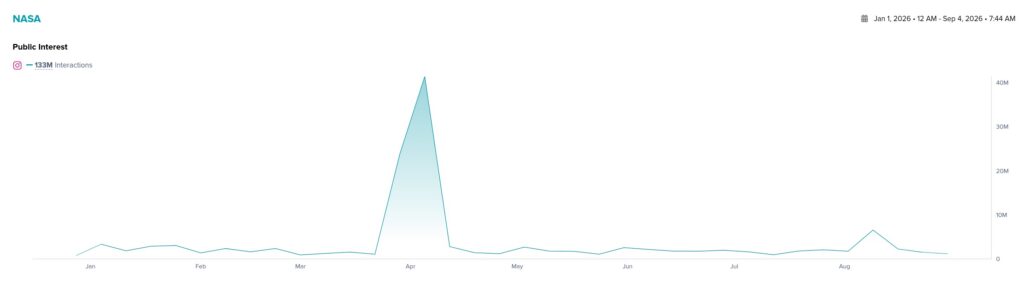
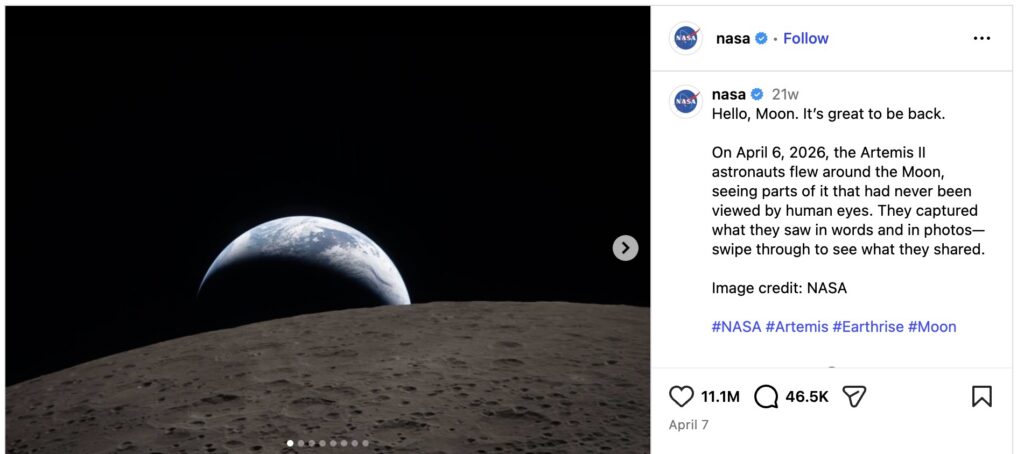
Even outside the parameters of commercial enterprise, scientific institutions achieved record-breaking digital engagement by framing complex technological endeavors through a lens of wonder and approachability. The National Aeronautics and Space Administration (NASA) leveraged the momentum of the Artemis II lunar mission throughout 2026 to secure more than 130 million engagements on Instagram.
The agency’s peak performance occurred in April, coinciding with the launch sequence and subsequent return of the lunar crew. These operational milestones accounted for over one third of NASA’s total annual engagement. Rather than limiting public communications to technical schematics or formal press releases, NASA integrated behind-the-scenes glimpses of daily life in space—such as floating containers of food supplies interspersed with high-resolution astrophotography and personal astronaut logs.
Digital analysts categorized this approach as an institutional elevation of employee-generated content. By humanizing the scale of interplanetary exploration, NASA transformed complex aerospace engineering into an accessible cultural narrative. The strategy reinforced the principle that organizations possessing unique, non-replicable operational environments can capture audience attention by prioritizing emotional resonance and visual storytelling over standard corporate reporting.
McDonald’s Sustains Relevance Through Internet Lore and Cultural Zeitgeist
Fast-food corporation McDonald’s continued to demonstrate how corporate social media accounts can serve as barometers for broader cultural phenomena. Rather than relying on isolated promotional posts, the brand consistently integrated its product offerings into ongoing cinematic and digital lore.
A primary example involved a digital video production inspired by the internet urban legend known as "the backrooms." Rather than executing a standard cross-promotion, McDonald’s constructed a liminal, corporate-themed environment mirroring the aesthetic of the viral internet myth, featuring the brand’s iconography as a protagonist navigated the surreal setting. This deliberate alignment with digital subcultures rather than mainstream advertising tropes yielded over half a million cross-platform engagements.
Marketing analysts noted that McDonald’s execution reflects a sophisticated social intelligence framework. By monitoring internet culture and identifying emerging conceptual trends prior to widespread commercial saturation, the brand achieved first-mover advantage. This proactive stance allowed the corporation to function as an active participant in digital subcultures rather than a reactive advertiser attempting to capitalize on expired trends.
Strategic Implications for Modern Brand Communication
An aggregate analysis of Instagram performance throughout 2026 reveals a distinct shift in digital communication standards. Across diverse sectors—ranging from aviation and public infrastructure to consumer goods and space exploration—successful accounts consistently avoided hard-selling tactics in favor of cultural fluency.
The empirical data gathered across the evaluated campaigns indicates that audience engagement is maximized when brands demonstrate an acute understanding of their network, their audience, and their internal identity. Whether through navigating regulatory hurdles with humor, participating in cross-border athletic wagers, or constructing absurdist narrative universes, the organizations achieving the highest earned media value and audience retention were those capable of integrating naturally into pre-existing cultural conversations. Ultimately, the 2026 data demonstrates that sustainable digital growth is driven not by intrusive product placement, but by the cultivation of shared community experiences and narrative relevance.