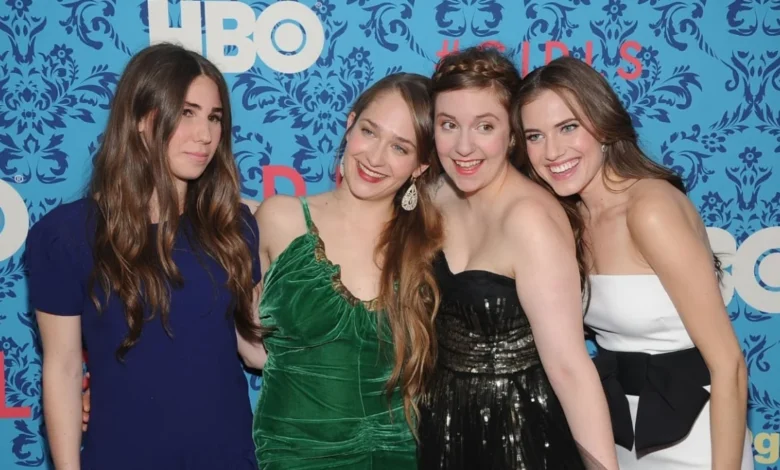
The announcement that HBO will revive the culturally divisive, generation-defining dramedy Girls for a limited five-episode run has sparked significant discourse regarding the evolution of millennial media. Premiering in 2012, Lena Dunham’s exploration of four young women navigating their twenties in New York City became a lightning rod for criticism and acclaim alike. As the industry prepares for this return, audiences are looking toward a narrative shift that reflects the maturation of both the characters and the platform that birthed them.
A Retrospective on the Girls Phenomenon
When Girls first debuted, it occupied a unique space in the cultural zeitgeist. It was positioned as an honest, often unflinching portrayal of female entitlement, professional stagnation, and the messy realities of early adulthood. Over six seasons, the show documented the lives of Hannah Horvath (Lena Dunham), Marnie Michaels (Allison Williams), Jessa Johansson (Jemima Kirke), and Shoshanna Shapiro (Zosia Mamet).
The series finale in 2017 left the characters at a crossroads. Hannah was navigating single motherhood, Marnie was grappling with her identity post-divorce, Jessa was reconciling with her sobriety and relationships, and Shoshanna was attempting to establish herself in a competitive professional landscape. The decision to revisit these characters nearly a decade later suggests an intent to explore the "mid-life" trajectory of a generation that was once defined by its uncertainty.
Industry Context and the Revival Trend
The Girls revival is part of a broader trend of "nostalgia-based programming" currently dominating streaming platforms. According to industry data from the Nielsen Streaming Video Ratings, revivals of 2010s-era prestige dramas have seen a 22% increase in viewership among the 25–45 demographic over the past two years. For HBO, this project is not merely a reboot but an analysis of the socio-economic changes that have impacted the very demographic the show once championed.

Unlike the original run, which captured the pre-social media saturation era, the revival must contend with the realities of the late 2020s. This includes the rise of the creator economy, the ubiquity of algorithmic influence, and the shifting landscape of the New York City housing market, which has fundamentally altered the feasibility of the "starving artist" lifestyle that defined the show’s early seasons.
Narrative Expectations and Character Arcs
To maintain the authenticity that made the original series a touchstone of the "mumblecore" movement, the new episodes are expected to address the evolution of these women into their late thirties. Fans and critics have identified several key narrative threads that could provide a bridge between the 2017 finale and the current climate:
- Professional Evolution: Given Shoshanna’s ambition, her trajectory toward a high-level executive or startup founder role serves as a mirror for the professionalization of the millennial generation. Conversely, Hannah’s potential for literary failure or success remains a primary hook.
- The Digital Reckoning: How the characters engage with modern social media—specifically the transition from curated lifestyle blogging to the performative vulnerability of TikTok—will be a defining feature of the revival.
- Domestic Realities: The return of supporting characters like Patrick Wilson’s Joshua, or the maturation of the next generation (such as Sample, the daughter of Caroline and Laird), provides a necessary touchstone for the passage of time.
The Changing Landscape of New York City
The setting of the series—New York City—is arguably its most important character. The gentrification that was an undercurrent in the early 2010s has reached a level where the lifestyle portrayed in the original run is largely unattainable for the average twenty-year-old today. A realistic portrayal of the city in 2026 necessitates an examination of rising costs, the homogenization of neighborhoods, and the exodus of the creative class. This environment serves as a pressure cooker for the characters, forcing them to confront the reality that they are no longer the ones defining the cultural narrative of the city.
Implications for the Creator Economy
The influence of social media on the characters’ personal development cannot be overstated. If Marnie, for example, has pivoted into the "mommy influencer" sphere, the series has an opportunity to satirize the wellness-industrial complex. The transition of Jessa from a bohemian wanderer to a potential "wellness grifter"—a common archetype in the modern digital landscape—would align with her established character traits while grounding the show in contemporary critiques of influencer culture.
Institutional Responses and Production Details
HBO has maintained a tight lid on the plot details of the five-episode limited series, though reports from industry trades indicate that Lena Dunham will serve as both lead writer and director for the majority of the episodes. In a statement to the press, representatives for the production noted that the goal of the revival is to provide a "coda that respects the original journey while acknowledging the inevitable friction between who these women thought they would be and who they have become."

While cast members have remained relatively quiet regarding specific plot points, the return of the entire lead quartet signals a commitment to the ensemble dynamic that defined the show’s success. The limited run suggests a focused, narrative-heavy approach, moving away from the sprawling episodic arcs of the original series in favor of a more concise examination of their current lives.
Analysis of Legacy and Future Impact
The cultural impact of Girls was defined by its ability to provoke debate. It challenged the audience to empathize with flawed, often unlikeable, characters. As this revival approaches, the challenge for the creative team will be to balance this legacy with the sensibilities of a modern audience that is arguably less tolerant of the "unfiltered" behavior that characterized the show’s early days.
If the revival succeeds, it will likely serve as a case study for how prestige television can successfully bridge the gap between two very different eras of cultural discourse. By focusing on the intersection of late-millennial burnout, the toxicity of online validation, and the realities of middle age, Girls has the potential to remain as relevant in 2026 as it was in 2012.
Ultimately, the revival serves as a mirror to the viewers who grew up alongside the show. Whether the characters have found success or continue to struggle in the face of a changing world, the narrative must grapple with the fundamental question that has haunted the series since its inception: What does it mean to be the "voice" of a generation when that generation is no longer the primary focus of the cultural conversation?
As production progresses toward a 2027 release window, the focus remains on whether these characters can evolve beyond their initial archetypes. The expectation is not for a neat, wrapped-up ending, but for a continuation of the messy, chaotic, and deeply human exploration that defined the series. The return of the show marks a significant moment for HBO, signaling a willingness to revisit its most controversial properties to provide a definitive, modern-day conclusion.