Meta Expands Its Video Strategy: Edits App Arrives on iPhone Duo and Enters Desktop Testing

Meta is strategically broadening the reach and capabilities of its dedicated video editing application, Edits, with two major product milestones aimed at addressing the evolving needs of digital content creators. The company has officially rolled out a specialized version of the Edits app optimized for the folding screen of the Apple iPhone Duo, while select creators are now getting their first hands-on experience with the long-awaited desktop version of the platform. These announcements mark a critical pivot for Meta as it seeks to capture a larger share of the video creation market across mobile and desktop ecosystems, providing creators with more robust, versatile tools to produce high-engagement content for platforms like Instagram, Facebook, and Threads.
The introduction of the folding-screen mobile application and the expansion of the desktop test phase come at a time when digital video production is experiencing unprecedented demand. As short-form video continues to dominate user attention across social media landscapes, the boundaries between casual smartphone content creation and professional studio-grade editing are increasingly blurring. Meta’s dual-pronged software release underscores a concerted effort to bridge this gap, ensuring that creators have seamless, cross-platform workflows capable of adapting to modern hardware innovations.
Optimized for Flexibility: The iPhone Duo Integration
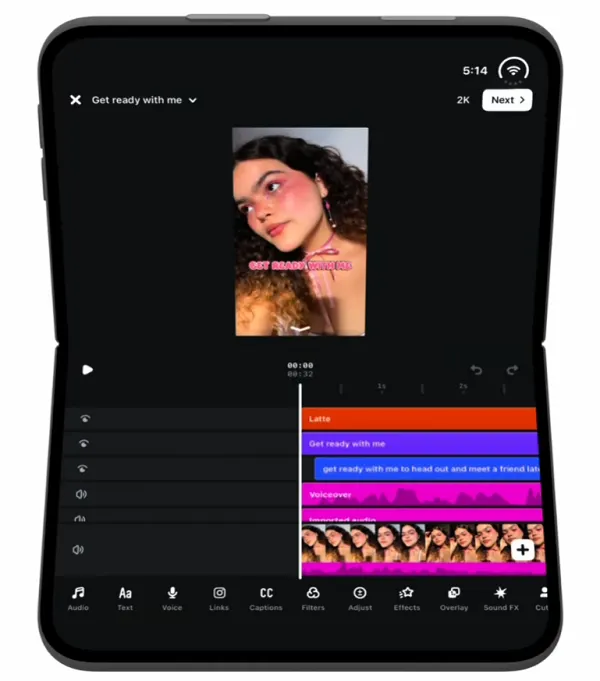
The launch of the dedicated iPhone Duo variant of Edits represents one of the first major video editing deployments specifically tailored to take full advantage of foldable display technology within the Apple ecosystem. Folding screens present unique user interface (UI) and user experience (UX) challenges, requiring software that can dynamically adjust to changing aspect ratios, physical creases, and varying physical orientations whether the device is held in portrait or landscape mode.
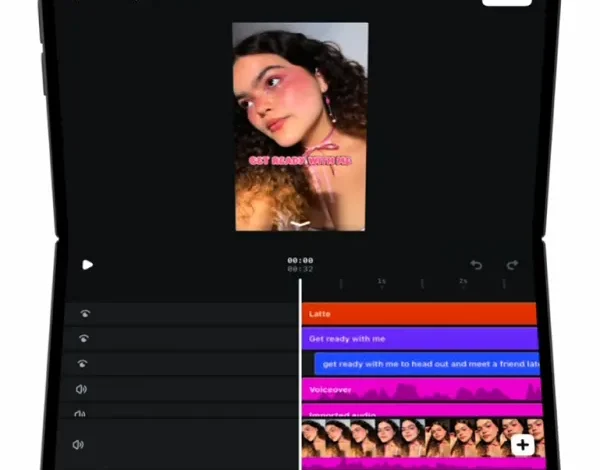
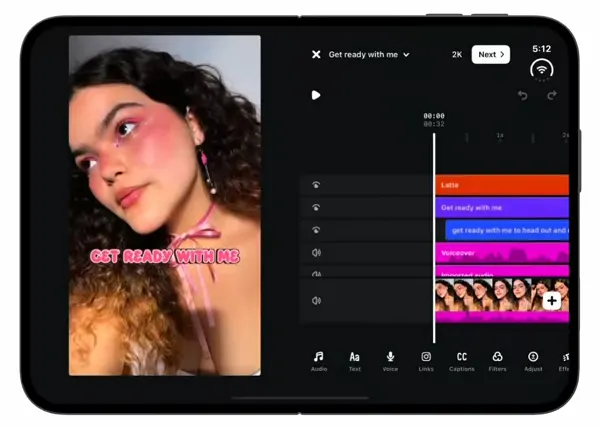
According to Meta, the UI of the Duo version of Edits is engineered to translate fluidly across these diverse formats. By leveraging the expansive, continuous canvas provided by the foldable device, the application allows users to edit and preview their production timelines side by side. This side-by-side configuration significantly enhances multitasking capabilities, giving creators granular control over cuts, transitions, audio tracks, and visual effects without feeling constrained by the physical boundaries of a traditional single-screen smartphone.
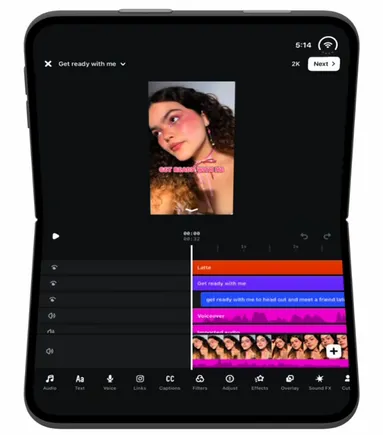
Furthermore, Meta has emphasized that the application intelligently adapts to the screen and the central crease of the hardware. This ensures that critical editing tools are never obscured or awkwardly split, enabling creators to continue working in whichever physical configuration—fully open, partially folded, or traditionally oriented—feels most ergonomic and intuitive for their workflow. Industry analysts note that as foldable devices gain mainstream adoption among tech enthusiasts and professional creators alike, software developers must prioritize this level of deep hardware integration to remain competitive.
Stepping Up to the Big Screen: The Edits Desktop App Enters Testing
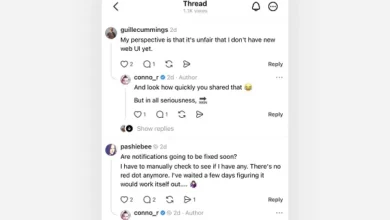
While mobile optimization caters to on-the-go content creation, Meta is simultaneously addressing the demands of studio environments through the development of a desktop version of Edits. First teased by the company back in June alongside revelations regarding upcoming AI-powered production assistants, the desktop iteration has now transitioned from concept to active testing. Creator Taylor Golub recently shared the first public screenshots of the desktop interface on Threads, offering a clearer picture of how Meta intends to layout a comprehensive video editing suite for personal computers and workstations.
The visual evidence from the early testing phase indicates that the desktop alignment allows users to oversee a significantly larger array of editing elements on a single, expansive monitor. Traditional desktop video editing software typically relies on multi-panel workspaces where timelines, media libraries, effect controls, and preview monitors occupy distinct, customizable windows. The Edits desktop interface appears to follow this industry-standard paradigm, making it considerably easier for creators to integrate the app’s diverse suite of creation functions into a unified workspace.
The transition to desktop is widely viewed as a natural evolution for Meta’s creator ecosystem. While mobile devices are exceptional for quick captures and on-the-spot adjustments, complex video projects involving multi-layered timelines, color grading, intricate audio mixing, and high-resolution exports invariably benefit from the processing power, precision input devices (mouse and keyboard), and screen real estate afforded by desktop computers. By bringing Edits to the desktop, Meta is positioning the application to compete more directly with established professional editing suites, potentially drawing creators away from standalone third-party software and keeping them within the broader Meta family of products.
Chronology and Development Timeline
To fully understand the current trajectory of the Edits application, it is helpful to examine the chronological sequence of events that brought Meta to this juncture. The journey of Edits reflects a systematic expansion of Meta’s creator toolset, designed to counter competitive pressures from rival video-first platforms like TikTok and YouTube Shorts.
- Early 2024: Industry rumors and initial leaks suggest Meta is quietly developing a standalone video editing utility designed to streamline content production for Instagram and Facebook creators, bypassing the sometimes clunky native in-app editors.
- June 2024: Meta officially confirms the existence of the Edits ecosystem, announcing broader plans for the platform—including the initial roadmap for a desktop version and early integrations of artificial intelligence production assistants.
- Fall 2024: Meta rolls out iterative updates to the core mobile application, refining the timeline interface, adding advanced audio-ducking features, and expanding its stock asset library.
- Late 2024 / Early 2025: With the arrival of the Apple iPhone Duo, Meta fast-tracks hardware-specific optimizations, culminating in the release of the dedicated foldable-screen version of Edits.
- Present Day: Creator Taylor Golub surfaces the first live look at the Edits desktop app currently undergoing restricted testing among select digital creators. Concurrently, leadership comments signal strong institutional backing for the desktop platform as a cornerstone of future feature rollouts.
Official Responses and Leadership Insights
The strategic importance of these updates has not been understated by Meta’s executive leadership. Following the public disclosure of the desktop app’s testing phase, Instagram Chief Adam Mosseri took to Threads to share his perspective on the platform’s long-term trajectory. In a comment responding to Taylor Golub’s preview, Mosseri expressed high expectations for the software, stating that he anticipates the desktop version of Edits will become "a foundation for a lot of interesting features to come."
Mosseri’s endorsement highlights a broader organizational shift within Meta toward empowering professional-grade content creators. By validating the desktop app as a foundational architecture rather than a mere peripheral tool, leadership is signaling that future technological integrations—particularly advancements in generative artificial intelligence, automated captioning, smart scene detection, and cloud-based collaborative editing—will likely anchor themselves to this desktop environment before trickling down to mobile clients.
Industry reaction has similarly focused on the strategic positioning of the software. Content creation experts point out that while platforms like Instagram have historically prioritized rapid, in-app publishing tools, the modern creator economy demands sophisticated post-production workflows. Providing a dedicated desktop suite allows Meta to capture users who previously relied on desktop-exclusive NLEs (Non-Linear Editors) for their primary cutting before exporting files to mobile devices for final publishing.
Broader Impact and Strategic Implications
The dual release of the iPhone Duo optimization and the desktop testing phase carries significant implications for the digital media landscape. As the lines between casual social media sharing and professional content enterprise continue to dissolve, software ecosystems that offer frictionless transitions between mobile capture, foldable flexibility, and desktop precision hold a distinct market advantage.
For Meta, the ultimate goal of the Edits app is twofold: to reduce friction in the content creation pipeline and to maximize retention within its ecosystem. If creators can shoot on an iPhone, execute rough cuts on the folding screen of an iPhone Duo while commuting, and finalize complex color grading and audio mixing on a desktop version of Edits before instantly publishing to Instagram or Threads, the necessity of utilizing fragmented third-party software diminishes entirely.
Furthermore, the integration of AI-assisted production tools—hinted at during Meta’s summer announcements and expected to be deeply intertwined with the new desktop foundation—could democratize high-end video production techniques. Features such as automated rhythm matching, smart b-roll suggestions, and AI-driven voice isolation stand to lower the barrier to entry for novice creators while saving professional studios countless hours of tedious post-production labor.
As the testing phase for the desktop app broadens and adoption of the iPhone Duo variant of Edits gains momentum among early adopters, the industry will be watching closely to see how quickly Meta scales these offerings. If executed successfully, Edits could transition from a supplementary utility into an indispensable hub for the global creator community, reshaping how short- and long-form video content is conceptualized, edited, and distributed across the social web.