Inaugural LA Silicon Valley AI Film Festival 2026: Recap on AI Filmmaking, Creativity & Copyright

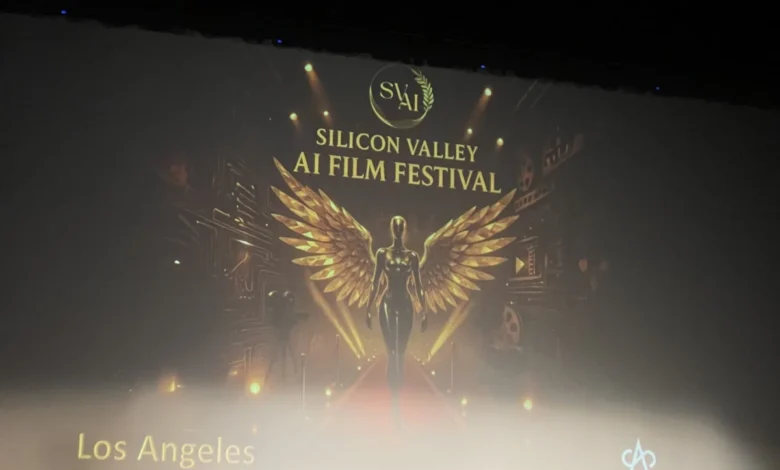
The intersection of artificial intelligence and cinematic arts took center stage on November 1, 2026, as industry pioneers, technology leaders, and global investors gathered at the historic Saban Theatre in Beverly Hills for the inaugural Silicon Valley AI Film Festival (SVAIFF). Presented by Star Alliance Culture Inc., the landmark event served as a major litmus test for how Hollywood and the tech sector are navigating the rapid integration of machine learning tools into professional entertainment production.
The day-long summit opened with remarks from Sing Chang, CEO of Star Alliance Culture Inc. and founder of SVAIFF, alongside Sarah Wang, CEO of the LA-Silicon Valley AI Film Festival. Their joint address set a collaborative tone, emphasizing that the event was designed not to pit Silicon Valley against Hollywood, but rather to forge a sustainable pathway where computational efficiency meets traditional artistic craftsmanship.
The Evolution of AI in Modern Cinema
Over the past decade, artificial intelligence has quietly permeated post-production workflows, visual effects, and administrative pipelines. However, the 2026 festival marked a definitive shift from passive utility to active, generative storytelling. As studios face mounting economic pressures and audiences demand increasingly immersive content, AI-native production models have transitioned from experimental novelties to mainstream commercial considerations.
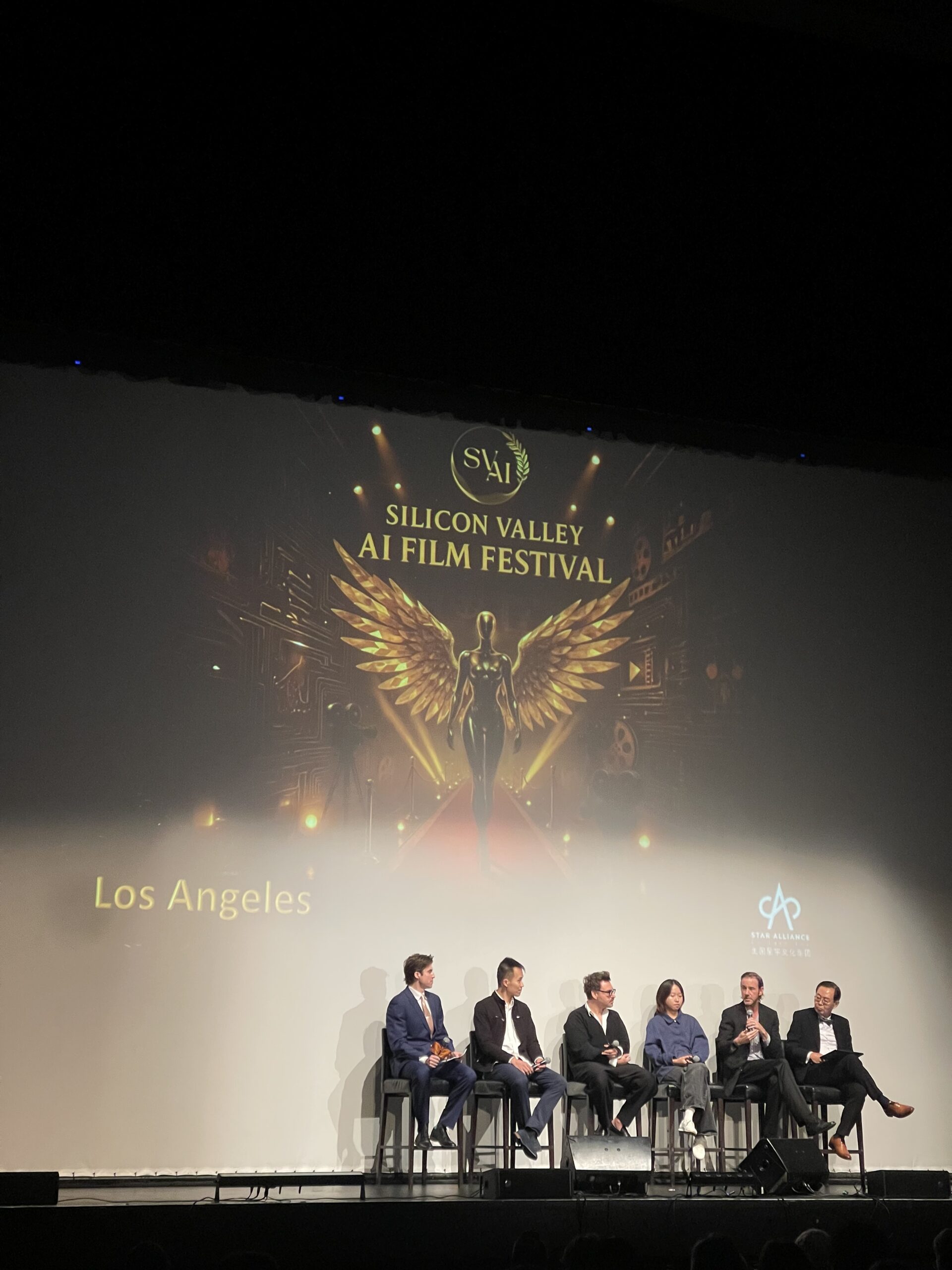
The centerpiece of the morning sessions was Panel A, titled Investment, AI-Native Production, Brand Strategy & IP Innovation. This high-profile discussion brought together a diverse roster of global experts to dissect the economic viability, strategic deployment, and legal frameworks surrounding AI-assisted media.
Defining Boundaries: Storytelling Over Shortcuts
A recurring theme among the panelists was the necessity of maintaining artistic integrity in an era where software can generate photorealistic environments and synthetic performances in seconds.
Wanyi Zhao, representing Storyverse AI, underscored the primacy of narrative substance over technical novelty. Drawing on collaborations with veteran Hollywood creatives, Zhao argued that while AI drastically lowers production overhead and democratizes access to complex visual effects, technological prowess is ultimately secondary to emotional resonance. An AI-generated sequence that fails to connect with an audience, she noted, remains an expensive distraction regardless of how efficiently it was produced.
This sentiment was echoed by Hank Leber, who addressed the commercial branding side of the equation. Leber cautioned against corporate entities utilizing AI merely as a superficial shortcut to cut corners. By analyzing long-term consumer conversations and social media engagements through machine learning, Leber’s organization seeks to extract genuine audience insights. His core thesis maintained that artificial intelligence should serve to amplify human connection and strategic clarity, rather than replace the fundamental rigor of original creative thought.
Navigating the Legal Labyrinth: Copyright and Provenance
As generative video and audio tools become ubiquitous, intellectual property (IP) remains the most contentious battleground for legal and financial stakeholders. Artem Petrov tackled this complex reality head-on, offering a pragmatic roadmap for filmmakers looking to safeguard their assets.
Petrov stressed that commercial viability in the AI era hinges entirely on rigorous documentation. Creators must meticulously track the provenance of every dataset, asset, and algorithmic generation used throughout the production pipeline. Without verifiable proof of human creative contribution and transparent asset origins, studios expose themselves to catastrophic legal challenges and uninsurable financial liabilities. The discussion highlighted an urgent industry-wide need for standardized ledger systems that record the exact lineage of AI-assisted media assets.
Venture Capital Perspectives: Investing in Founders, Not Just Code
The financial outlook for AI media startups was dissected by Han Li, whose venture capital firm has evaluated between 600 and 700 early-stage artificial intelligence companies over the past two to three years.
Li provided a candid assessment of what separates viable enterprises from fleeting market trends. According to Li, the primary determinant for investment is not the sophistication of the underlying neural network, but the caliber and execution capabilities of the founding team. Technology is viewed as a commodity; true value lies in leadership, resilience, and the capacity to build trusted bridges between the technology sector and traditional entertainment guilds. Consequently, Li’s firm frequently engages in early-stage strategic matchmaking, helping promising startups secure industry partnerships before deploying institutional capital.
International Horizons: South Korea’s Blueprint for AI Production
The global dimension of the festival was anchored by Dr. Hoyoung Lee, who detailed South Korea’s aggressive ascent as a powerhouse in AI-driven filmmaking. Dr. Lee attributed the nation’s rapid progress to three distinct competitive advantages: a deep pool of interdisciplinary talent, unmatched execution speed, and comprehensive state-backed infrastructure support.
Decades of deliberate governmental investment in digital media and telecommunications have allowed South Korean studios to pivot seamlessly from experimental applications to fully realized commercial productions. Dr. Lee’s presentation served as a global case study in how national policy can accelerate technological adaptation without compromising cultural output. Furthermore, he used the platform to formally preview the upcoming SVAIFF Korea event, scheduled for December 17, 2026, which promises to bridge Eastern and Western markets in the ongoing dialogue of digital cinema.
Industry Implications and the Road Ahead
Reflecting on more than 25 years of experience in high-end Hollywood post-production, veteran editor and technologist Vashi Nedomansky, ACE, offered a grounding perspective on the proceedings. Having integrated early-stage algorithmic tools into professional workflows for over a decade, Nedomansky categorized AI as a natural extension of the editor and filmmaker’s traditional toolkit.
The consensus emerging from the 2026 Silicon Valley AI Film Festival is clear: while artificial intelligence will continue to redefine production timelines and budgetary models, the foundational pillars of cinema remain unchanged. Craftsmanship, collaborative human judgment, and narrative intent are irreplaceable. As studios, legal experts, and technologists chart the course forward, the ultimate challenge for the creative community is to wield these powerful instruments with deliberate intent—ensuring that human ingenuity remains the driving force behind every screen story.
Related posts: