Google Unveils Its Annual Holiday 100 Gift Guide to Capture Emerging Consumer Trends and Search Behavior

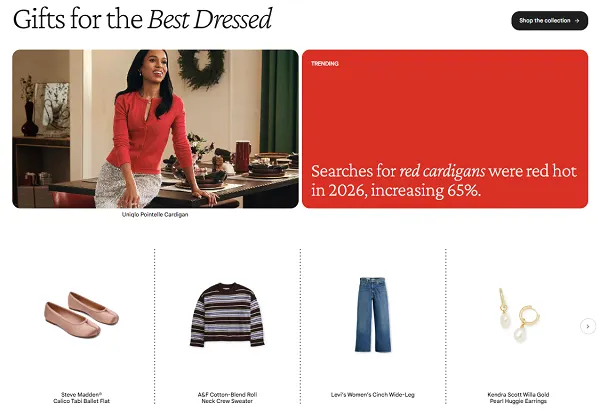
As the year-end holiday shopping season approaches, Google has officially released its highly anticipated annual Holiday 100 gift guide, offering an in-depth look at the products, brands, and search terms that have experienced the most significant surges in consumer interest over the past year. Published on Monday, the comprehensive guide functions simultaneously as a curated catalog for holiday shoppers and a vital analytical tool for marketers, retail strategists, and industry analysts seeking to decode shifting consumer behavior in an evolving economic landscape.
The launch of the Holiday 100 is accompanied by a dedicated interactive mini-site featuring categorized product lists designed to help consumers navigate gift selection. Beyond simple gift inspiration, however, the compilation serves as a mirror reflecting broader macroeconomic trends, lifestyle shifts, and digital discovery habits. By analyzing billions of search queries, Google’s latest data release provides a roadmap of what captures public attention, offering valuable context for brands aiming to align their marketing strategies with proven consumer demand.
Background and Context of the Holiday 100
Google’s annual holiday guide has evolved from a simple novelty feature into a cornerstone retail intelligence asset. In an era where digital discovery heavily influences brick-and-mortar and e-commerce sales alike, search engines act as the primary intent engine for global consumers. Long before a purchase is finalized on a retailer’s website or in a physical store, the consumer journey typically begins with exploratory searches, comparison queries, and informational lookups.
The Holiday 100 leverages this vast repository of intent data. By tracking year-over-year growth in search volume, Google identifies emerging product categories that are transitioning from niche interests into mainstream phenomena. In recent years, these guides have increasingly integrated advanced search technologies, including artificial intelligence-driven summaries, to provide deeper context on why certain items are trending. This year’s release continues that evolution, embedding direct links to AI-generated product overviews that aggregate reviews, specifications, and contextual background directly within the Google ecosystem.
Chronology of the 2026 Retail and Search Landscape
The trajectory leading up to the release of the 2026 Holiday 100 was shaped by a complex interplay of economic factors, technological advancements, and changing consumer priorities. Throughout the early months of the year, retail analysts observed a cautious yet deliberate consumer base. Inflationary pressures, while stabilizing compared to prior years, continued to influence household spending, leading shoppers to prioritize utility, durability, and high-value experiences over impulse purchases.
By mid-year, search patterns on Google began to indicate distinct behavioral shifts. Categories associated with home wellness, sustainable living, personalized technology, and experiential gifting started outperforming traditional retail metrics. Brands that successfully integrated digital storytelling and agile supply chains captured early momentum.
As the third quarter concluded, search interest shifted toward early holiday planning. Consumers increasingly utilized mobile devices and AI-assisted search tools to research gifts well in advance of traditional shopping holidays like Black Friday and Cyber Monday. This extended consideration window set the stage for the unveiling of the Holiday 100 on Monday, arriving precisely when retailers finalize their late-season promotional campaigns and shoppers begin compiling their definitive gift lists.
Structure of the Holiday 100 Mini-Site and Data Integration
The newly launched mini-site associated with the Holiday 100 is structured to maximize both user engagement and informational depth. Divided into several distinct product categories—ranging from consumer electronics and home goods to fashion, beauty, and wellness—the platform goes beyond traditional static product galleries.
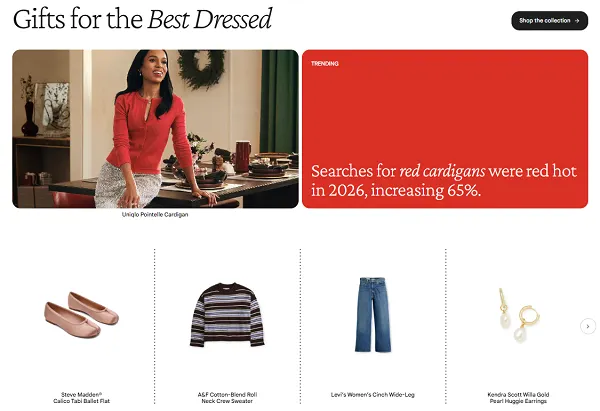
Each category overview is enriched with granular data regarding search trends. Visitors can examine statistical indicators showing the percentage growth of specific product queries over the preceding twelve months. Furthermore, Google has integrated visual elements and product highlights that seamlessly link to AI Mode overviews. These summaries synthesize vast quantities of web data to provide users with a comprehensive snapshot of a product’s features, popular variations, and prevailing consumer sentiment, thereby streamlining the research phase of the shopping experience.
Alongside these categorized lists, Google has highlighted 10 rising overarching trends for 2026. Derived directly from aggregate search volume increases, these macro-trends capture the underlying motivations driving consumer purchases. Whether reflecting a renewed focus on self-care, a preference for eco-friendly manufacturing, or an appetite for smart home automation, these trends provide a conceptual framework that transcends individual product sales.
Industry Implications for Marketers and Retail Strategists
For brands and marketing professionals, the Holiday 100 offers actionable intelligence that can significantly influence end-of-year campaigns and long-term product development. In a hyper-competitive retail environment, understanding what items are experiencing organic search momentum allows companies to allocate advertising budgets more effectively, optimize search engine marketing (SEM) campaigns around trending keywords, and tailor social media messaging to resonate with current consumer desires.
Retail analysts point out that leaning into the trends identified by Google can help brands capture high-intent traffic. When consumers search for items featured in the Holiday 100, they are typically further along the purchasing funnel, exhibiting a higher propensity to buy. Consequently, aligning product descriptions, digital advertising creatives, and inventory levels with these identified search surges can yield higher conversion rates and improved return on ad spend (ROAS).
Moreover, the inclusion of AI-driven product overviews within the Google shopping ecosystem underscores the growing importance of structured data and high-quality digital footprints. Brands that maintain clear, easily indexable product information are more likely to be featured prominently when consumers utilize advanced search features to research holiday gifts. This technical reality reinforces the necessity for modern retailers to invest heavily in comprehensive digital infrastructure and search optimization.
Broader Economic and Consumer Trends Reflected in 2026 Data
An analysis of the search data underpinning the 2026 Holiday 100 reveals broader psychological and economic currents shaping consumer behavior. Rather than signaling a retreat from spending, the data suggests that consumers are exercising greater intentionality. Gifting has become an exercise in personalization and purposeful utility, with shoppers seeking items that offer tangible improvements to daily life, mental well-being, or creative expression.
The prominence of technology-driven categories also highlights the ongoing integration of smart devices into everyday households. Consumers are increasingly comfortable adopting AI-enabled tools, connected home appliances, and advanced personal tech gadgets. This willingness to embrace innovation serves as a positive indicator for technology manufacturers and software developers looking to introduce new product lines during the peak retail window.
At the same time, the popularity of sustainable and wellness-oriented search terms points to a permanent shift in consumer values. Modern shoppers increasingly evaluate brands based on ethical practices, material sourcing, and long-term durability. Retailers that fail to communicate these attributes risk losing market share to competitors who transparently address consumer demands for sustainability and corporate responsibility.
Outlook for the Remainder of the Holiday Shopping Season
As the holiday shopping season accelerates, the release of the Google Holiday 100 serves as both a compass for consumers and a strategic benchmark for the retail industry. With supply chain conditions largely stabilized compared to previous years, retailers are positioned to meet consumer demand efficiently, provided they correctly interpret the digital signals captured by search engines.
The insights provided by Google’s latest data release will likely reverberate well beyond the immediate holiday period. As brands analyze the top-performing search terms and rising trends of 2026, the lessons learned from this year’s shopping behavior will undoubtedly inform product design, inventory planning, and digital marketing strategies for the year ahead. In an increasingly data-driven commercial ecosystem, the ability to listen to and interpret aggregate consumer intent remains one of the most powerful tools available to modern enterprises.