The Erosion of Reality: How the Digital Age Demands a New Standard of Media Literacy

The modern digital landscape is no longer merely a tool for communication; it has become the primary infrastructure through which society consumes information, conducts business, and engages in the democratic process. However, the architecture of the internet—characterized by algorithmic feeds, infinite scrolling, and an overwhelming influx of synthetic content—is fundamentally misaligned with human cognitive limitations. As more than half of the American population now relies on social media as their primary source of news, the inability to distinguish between authentic reporting and manufactured deception has reached a critical threshold. This systemic crisis, fueled by the proliferation of AI-generated content and the rapid dismantling of professional moderation teams, necessitates an urgent pivot toward comprehensive media literacy and a radical slowing of the digital experience.
The evolution of the internet from a static repository of information to an interactive, AI-driven ecosystem has occurred with startling velocity. Historically, the early web prioritized connectivity and user-generated content. By the mid-2010s, the rise of the recommendation algorithm shifted the paradigm toward "engagement at all costs." In 2023, the U.S. Surgeon General issued a formal advisory highlighting the mental health risks posed by social media, specifically citing the lack of age-appropriate design and the addictive nature of algorithmic feeds. Despite these warnings, the institutional response has been sluggish. A 2024 survey by the National Association for Media Literacy Education revealed that a mere 12 percent of U.S. schools integrate comprehensive media literacy into their core curriculum, leaving future generations ill-equipped to navigate a landscape where truth is increasingly commodified.
The current crisis is not just a matter of education; it is a matter of volume. Recent estimates suggest that AI-generated content now accounts for over one-third of all new web traffic, with some industry reports indicating that "AI slop"—low-quality, automated content—comprises more than half of the digital ecosystem. This saturation is compounded by a surge in non-human traffic. Cloudflare CEO Matthew Prince recently reported that agentic bot traffic now constitutes approximately 57.4 percent of total internet activity, while human engagement has receded to 42.6 percent. This shift suggests that for the first time in history, the internet is no longer a human-to-human network, but rather a machine-to-machine exchange where humans are often the unintended collateral or the target of manipulation.

This technological shift has created what experts term the "Indistinguishability Threshold"—the point at which human sensory perception can no longer reliably differentiate between authentic media and sophisticated deepfakes. Zohaib Ahmed, CEO of the deepfake detection firm Resemble.AI, notes that as AI models become more adept at mimicking human nuance, the burden of proof shifts onto the end-user. When platforms slash human moderation teams in favor of automated, AI-powered "community fact-checking," the margin for error narrows. These community-led systems, while well-intentioned, often struggle with the speed at which misinformation can be disseminated. Opinionated, polarizing, or emotionally charged content is prioritized by engagement-driven algorithms, which reward inflammatory rhetoric over accuracy.
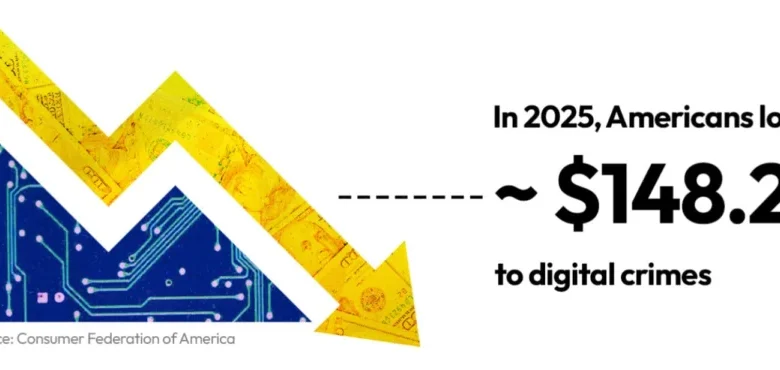
The implications for democratic stability and individual economic security are profound. In 2025 alone, Americans lost an estimated $148.2 billion to various forms of digital crime, including phishing, social engineering, and sophisticated deepfake scams. These scams are increasingly weaponizing the "cutesy" persona of AI chatbots. Eyal Elazar, head of market intelligence at the e-commerce security firm Riskified, points out that users have been conditioned to trust AI assistants, creating a psychological vulnerability that malicious actors are eager to exploit. The desire for "frictionless" digital experiences—where a single prompt replaces the need for independent research—is directly at odds with the vigilance required to stay safe online.
The design choices implemented by Big Tech companies are not accidental; they are foundational to their business models. Features such as autoplay, infinite scroll, and personalized recommendation engines are engineered to trigger dopamine responses, effectively training users to act on instinct rather than critical thought. Marijus Briedis, Chief Technology Officer at NordVPN, emphasizes that social media platforms are not neutral conduits of information. They are designed to move users rapidly through content that provokes a visceral reaction. When platforms limit the ability to link to external, verified sources—as is often the case with certain video-sharing applications—the user is effectively trapped in a closed-loop system where intuition replaces verification.
Addressing this crisis requires a two-pronged approach: structural regulatory reform and a fundamental shift in personal digital hygiene. While federal and state regulators have begun to scrutinize the addictive design patterns of major platforms, these legal processes are notoriously slow. In the interim, individual users must adopt a posture of "healthy skepticism." This does not imply cynicism, which Chuck Salter of the News Literacy Project warns is a dangerous state of mind that can lead individuals to reject all information, including verifiable facts. Instead, skepticism involves a deliberate pause—a tactical slowing down of the consumption process.

Experts recommend a simple, actionable framework for navigating the digital age: pause, reflect, and verify. When a post triggers a strong emotional response—be it anger, fear, or validation—that is the signal to stop. Before sharing or reacting, users should ask: Who created this? Why is it appearing in my feed now? Is this content being used to manipulate my emotional state? By breaking the cycle of the "instant reaction," the user regains a measure of agency. Furthermore, diversifying information sources remains vital. Relying on a single social media platform for news creates an echo chamber that is easily manipulated by both domestic and foreign influence campaigns.
The psychological toll of this constant exposure to misinformation cannot be overstated. When individuals realize that almost any form of media—video, audio, or text—can be fabricated, the tendency to doubt reality itself becomes a secondary, equally dangerous risk. Protecting the ability to trust in consensus reality is perhaps the greatest challenge of the coming decade. As Briedis notes, once that trust is eroded, it is rarely recovered.
Ultimately, the goal of media literacy is not to force users off the internet, but to help them reclaim their role as active, critical participants rather than passive consumers. As Andrew Jones of Adaptive Security argues, protecting oneself does not require a background in computer science or cybersecurity. It requires the discipline to apply critical thinking to the digital world with the same rigor one would apply to any other aspect of life. In an era where the internet has become the primary venue for the human experience, the ability to discern the real from the manufactured is no longer just a soft skill—it is an essential requirement for survival in the 21st century.
The path forward involves a collective commitment to slowing down. In a world designed to move at the speed of a fiber-optic cable, the act of stopping to verify a claim or cross-reference a source is a radical, necessary form of resistance. Whether through institutional curriculum reform, stricter platform accountability, or the simple, quiet defiance of the individual user, the restoration of a reliable information ecosystem depends on our willingness to prioritize truth over speed. The technology will continue to advance, and the "AI slop" will continue to proliferate; the only defense is a human mind that refuses to be rushed.