Navigating the Holiday Rush: Why Social Media is the Frontline for 2026 Retail Customer Service

The traditional image of holiday shoppers camping out overnight on the pavement outside big-box retailers has largely dissolved into memory, replaced instead by digital storefronts and social commerce feeds. As the Q3 2026 retail landscape takes shape, modern consumers have pivoted entirely toward social media platforms not only to discover and purchase holiday gifts, but to seek out customer support when their retail experiences encounter friction. According to data from the Sprout Social Q3 2026 Pulse Survey, an overwhelming 86% of consumers plan to utilize social media for customer service this holiday season, with 59% expecting to use it as much as last year and 27% planning an increase in their social support outreach.
This behavioral shift places immense pressure on corporate customer care teams. As peak shopping volumes compound seasonal demands, businesses face a critical imperative to modernize their digital strategies. Industry experts note that failing to integrate social channels into a comprehensive customer service framework risks not only immediate sales conversions, but long-term brand loyalty. Consequently, companies are racing against the clock to adopt sophisticated management tools, artificial intelligence, and proactive operational protocols well before the holiday decorations appear in public spaces.

The Evolving Consumer Journey: Discovery and Direct Support
Social media’s metamorphosis from a simple networking tool into a virtual shopping mall has permanently altered the consumer lifecycle. The viral phrase "TikTok made me buy it" underscores the profound influence of digital platforms on purchasing decisions. According to the Q3 2026 Pulse Survey, social media now ties directly with physical retail stores as the primary resource for holiday gift ideas and product discovery, with 46% of respondents stating they rely on these networks to find presents.
This trend is particularly pronounced among younger demographics. Among Millennials, 85% plan to use social media just as much or more for gift research in 2026 compared to previous years, while an even higher 88% of Generation Z consumers share this approach. Furthermore, consumers are increasingly completing transactions entirely within social applications. More than half (57%) of survey participants confirmed they plan to make purchases directly within social media apps this festive season—38% having already done so and 19% willing to test the capability for the first time through features like TikTok Shop, Instagram Checkout, and Facebook Marketplace.

Because shopping, discovery, and customer service now occupy the exact same digital ecosystem, consumer outreach on social platforms inevitably surges during the holidays. Direct messaging remains the preferred communication method for 55% of users reaching out to brands, followed by public comments, tagged company mentions, and story replies. Analysts emphasize that if customer care departments restrict their monitoring to legacy channels like email, phone lines, and web forms, they effectively blind themselves to a major portion of contemporary consumer needs.
Strategic Preparation: Ten Essential Steps for Retailers
To transform seasonal chaos into a streamlined operational success, customer experience leaders are revising their standard operating procedures months in advance. Implementing robust strategies requires careful alignment across marketing, sales, and support departments.

-
Comprehensive Advanced Planning
Retailers cannot afford last-minute adjustments as the holiday rush intensifies. Historical retail data demonstrates that planning must begin long before seasonal marketing campaigns launch. Organizations must align agent schedules with critical milestones such as Black Friday, Cyber Monday, and final shipping cutoff dates for guaranteed holiday delivery. This forward-looking approach directly addresses underlying consumer anxieties; the 2025 Deloitte Holiday Retail Survey revealed that 58% of consumers find holiday shopping inherently stressful, compounded in 2026 by ongoing financial constraints that have led 56% of shoppers to plan for reduced overall spending. -
Proactive FAQ Development and Resource Libraries
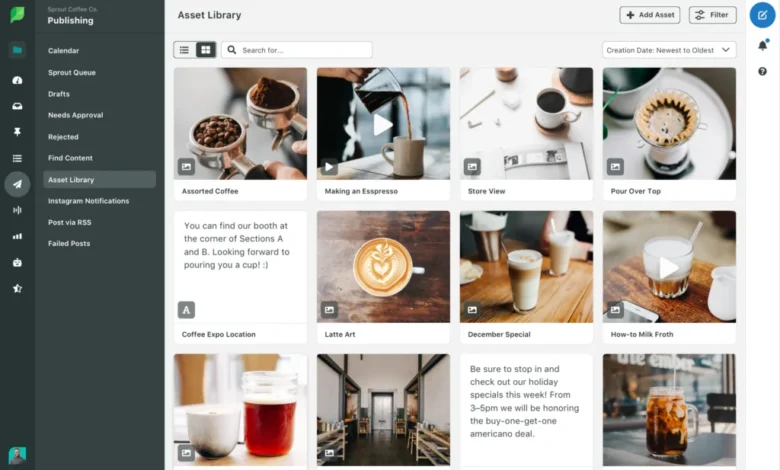
Anticipating repetitive inquiries regarding shipping deadlines, return policies, and promotional terms allows brands to deflect high volumes of basic questions. Educational Testing Service (ETS), a prominent nonprofit, successfully utilized customer data tracking to identify a 126% spike in pre-testing inquiries. By translating recurring user questions regarding registration and scoring into accessible digital resources, ETS reduced its corporate response time from two hours to one hour and twenty minutes. Furthermore, deploying centralized asset libraries and pre-drafted response templates ensures brand consistency across all customer touchpoints. -
Strategic Staffing and Onboarding
Meeting heightened consumer expectations requires additional manpower. Studies indicate that 70% of shoppers demand personalized responses, while a third (33%) expect an initial public acknowledgment followed by a private conversation. Retailers like Al’s Sporting Goods routinely hire seasonal support agents to maintain service quality. To minimize onboarding friction, organizations rely on user-friendly customer service software equipped with intuitive case management features that prevent duplicate efforts and preserve historical customer context.
-
Prioritizing Inbound Customer Inquiries
Not all messages carry the same weight. Utilizing sentiment analysis tools allows support teams to automatically segregate incoming communications into positive, negative, or neutral categories. Machine-learning models can further classify messages into specific intents, such as customer love, urgent support, or brand risk. By triaging high-priority complaints and capitalizing on positive feedback—as demonstrated by brands like Shark Beauty—support teams maximize operational efficiency. Implementing structured tagging strategies also enables brands to process hundreds of weekly cases while significantly reducing average handle times, mirroring efficiencies achieved by enterprise users like Papa Johns. -
Rigorous Protection of Customer Data
The holiday season historically correlates with a surge in digital fraud, phishing schemes, and cybercrime. The Internet Crime Complaint Center’s (IC3) 2025 report highlighted hundreds of millions of dollars lost to non-payment and non-delivery scams. Consequently, brands bear a heightened responsibility to safeguard sensitive consumer data. Best practices dictate that sensitive information, such as credit card numbers or identification details, must never be exchanged in public comment sections. Advanced security protocols, including automated data masking and PCI-compliant secure forms, are increasingly essential for financial and retail institutions managing sensitive holiday transactions. -
Deployment of Artificial Intelligence and Automation
With human capital often stretched thin, artificial intelligence serves as an indispensable assistant for modern support teams. Survey data indicates that 81% of marketers acknowledge AI’s positive impact on workplace efficiency. Furthermore, 44% of consumers express comfort with companies utilizing AI-driven chatbots for rapid query resolution, provided basic speed and accuracy standards are met. Generative AI tools can dynamically adjust the tone and length of written responses to match brand voice guidelines, while automated bot builders successfully handle routine tasks such as order tracking and FAQ dissemination.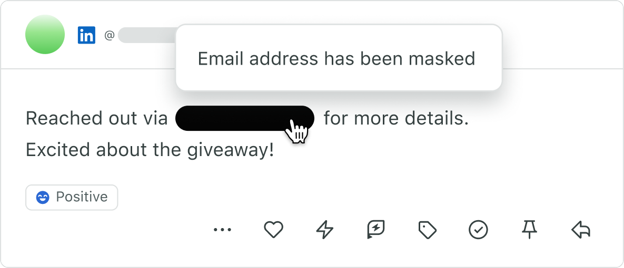
-
Unified Customer Context via Social CRM Integration
Fragmented technology stacks severely hinder support agents. Forcing staff to switch between multiple applications to resolve a single customer query increases response times and degrades service quality. Integrating social management platforms with established enterprise systems like Salesforce allows agents to access complete order histories and recent interactions within a single interface. Industry leaders, including Discount Tire, credit native CRM integrations with transforming their support workflows, while newer AI implementations like Salesforce Agentforce allow agents to retrieve comprehensive message histories in seconds. -
Establishing Clear Collaboration Norms
As temporary and seasonal staff join core support teams, establishing rigid internal protocols is vital. Organizations must determine clear approval workflows for outgoing messages to ensure brand compliance. Utilizing centralized internal communication tools allows agents to consult senior staff or specialists without resorting to disjointed external messaging threads. Structured training decks and internal team designations ensure that technical or billing questions are instantly routed to the appropriate internal department. -
Real-Time Crisis Monitoring and Predictive Analytics
Beyond managing individual customer inquiries, brands must monitor macro-level conversations to preempt public relations crises. Unforeseen supply chain disruptions, packaging defects, or weather-related delivery delays frequently drive frustrated consumers to social media, often without tagging the brand directly. Utilizing predictive media monitoring and social listening tools enables public relations and customer care teams to identify emerging negative sentiment early, projecting how rapidly a story might escalate across digital channels.
-
Continuous Feedback Collection and Performance Metrics
Refining holiday support operations requires continuous access to real-time performance analytics. Externally, deploying customer satisfaction (CSAT) and Net Promoter Score (NPS) surveys directly within social platforms like Instagram and Facebook captures immediate user sentiment. Internally, tracking quantitative metrics—such as average handle time, total replies, and resolution speed—empowers supervisors to identify operational bottlenecks. Enterprises utilizing automated routing and comprehensive reporting suites have successfully demonstrated the measurable business impact of their customer care divisions to internal stakeholders.
Broader Implications for the Retail Industry
The integration of social media into the core of retail customer service represents a permanent structural change rather than a temporary holiday accommodation. As digital platforms continue to absorb traditional e-commerce functions, consumer tolerance for delayed digital responses has vanished. Brands that successfully bridge the gap between social discovery and seamless support position themselves to cultivate enduring customer loyalty. Conversely, organizations that fail to equip their support teams with modern, AI-assisted tools risk severe reputational damage during the retail industry’s most critical revenue period. As the digital economy enters the 2026 holiday season, the message for retailers is unequivocal: operational efficiency on social media is no longer an optional luxury, but the absolute cornerstone of modern retail survival.